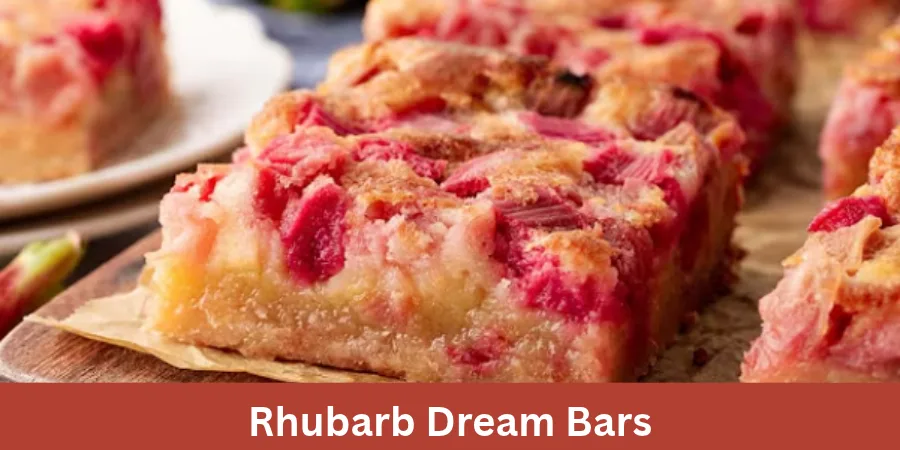
If you have rhubarb growing in your backyard garden or can get a fresh bundle from a neighbor or local farmers’ market, these Rhubarb Dream Bars are a delicious way to enjoy it. The recipe is especially useful during rhubarb season when you have plenty of fresh rhubarb to use.
Its naturally tart flavor pairs beautifully with the sweetness of the filling, making these homemade dessert bars a lovely treat to share with family and friends.
Each bar has a buttery shortbread crust topped with a creamy custard-like filling and tender pieces of rhubarb. The combination creates a pleasant contrast between the rich buttery base and the sweet-tart fruit.
Rhubarb Dream Bars-The Short Answer
The filling sets as the bars bake while the surface develops a light golden color. This style of dessert works well because the rhubarb remains the main flavor without making the bars overly complicated.
The preparation is straightforward, even for beginner bakers. The crust and filling are assembled in an 8 × 8-inch square baking pan, then baked until the center is set.
Once completely cooled and chilled, the bars can be cut into neat squares for serving. Fresh rhubarb works beautifully, but strawberries, blueberries, peaches, and mixed berries can also be used for different fruit combinations.
About This Recipe
Rhubarb Dream Bars combine a buttery shortbread crust with a soft, creamy filling made with fresh rhubarb. The tartness of the rhubarb balances the sweetness of the filling, creating a pleasant sweet-and-tart flavor.
As the bars bake, the eggs help the filling set while the flour absorbs some of the moisture released by the fruit. Once cooled and chilled, the filling develops a creamy texture that holds together when sliced.
One thing that stands out about this recipe is its simple preparation. The shortbread crust uses just flour, butter, sugar, and salt, while the filling combines eggs, sugar, flour, vanilla, and diced rhubarb.
The crust is partially baked before the filling is added, helping it stay firm underneath the creamy fruit layer. Unlike traditional rhubarb shortcake bars, this version does not have a separate crumble topping or a starch-thickened fruit layer. The eggs and flour provide the structure needed for the filling.
You can also experiment with other fruit without changing the basic crust and filling formula. Strawberries, blueberries, peaches, and mixed berries are all possible options, provided the total fruit quantity stays around 360 g.
Some fruits may need slight adjustments depending on their natural sweetness and moisture. Allow the bars to cool completely and chill before slicing so the filling can set properly. They are lovely served with powdered sugar, whipped cream, fresh berries, or a scoop of vanilla ice cream.
Why You’ll Love These Rhubarb Dream Bars
These Rhubarb Dream Bars combine a buttery shortbread crust with a soft, creamy rhubarb filling. Made with fresh rhubarb, eggs, sugar, flour, and vanilla, they have a lovely balance of sweetness and natural tartness. The creamy filling softens the sharp flavor of rhubarb to create a delicious sweet and tangy dessert without overpowering the fruit.
They are especially enjoyable during spring and summer when fresh rhubarb is in season. Cut into neat squares and lightly dusted with powdered sugar, these rhubarb bars make a lovely addition to family gatherings, summer BBQs, afternoon tea, and potlucks. The recipe also uses a simple shortbread base rather than requiring a separate crumb topping.
These bars are convenient to prepare ahead of time. You can bake them a day before serving, then allow the filling to cool and set before refrigerating.
Chilling is particularly important because it helps the creamy filling hold together and makes cutting clean squares much easier. For the best texture, refrigerate rather than freeze, as freezing may cause the filling to become gooey after thawing.
Ingredients for the Crust
Ingredients Needed
- 1 cup (125g) all-purpose flour
- ¼ cup (50g) granulated sugar
- ½ cup (113g) unsalted butter
- ⅛ teaspoon (0.75g) fine salt
Ingredients Notes
The crust uses four simple ingredients to create a tender, buttery shortbread base. Softened butter is used because it combines easily with the sugar and flour, helping create an evenly mixed dough.
The flour provides structure, while the butter gives the crust its rich flavor and delicate texture. The sugar adds mild sweetness, and a small amount of salt balances the buttery taste.
Preparing the Creamy Rhubarb Filling
Ingredients Needed
- 2 large eggs (100g without shells)
- 1 cup (200g) granulated sugar
- ¼ cup (31g) all-purpose flour
- ¼ teaspoon (1.5g) fine salt
- 3 cups (360g) fresh rhubarb
- 1 teaspoon (5ml) pure vanilla extract
Ingredients Notes
Trim the rhubarb and cut it into approximately ½-inch pieces so it softens evenly during baking. The eggs provide structure and help the filling set, while the flour absorbs some of the moisture released by the fruit. Sugar balances rhubarb’s natural tartness, and vanilla adds a gentle aroma.
Both fresh and frozen rhubarb can be used. If using frozen rhubarb, thaw it completely, drain the excess liquid, and measure 360g after thawing and draining. Additional tapioca starch is unnecessary because the eggs and flour provide sufficient structure for this filling.
Optional Finishing
Ingredients Needed
1. 1 tablespoon (8g) powdered sugar
Ingredients Notes
Use powdered sugar to dust the bars after they have cooled completely. Fresh strawberries and whipped cream are optional serving accompaniments rather than ingredients in the main recipe formula.
How to Make Rhubarb Dream Bars
Start by preheating the oven to 350°F (175°C) and positioning the rack in the center. Allow approximately 20 minutes for the oven to preheat properly.
Line an 8 × 8-inch square baking pan with two strips of parchment paper, each approximately 8 inches wide and 12 inches long, arranged in opposite directions, with about 2 inches extending over the sides. This creates a sling that makes removing the bars easier after cooling.
Before starting the crust, prepare the rhubarb so it is ready the moment the crust comes out of the oven. Prepare 360 g fresh rhubarb by washing and trimming it and removing the damaged ends.
Pat the stalks dry before cutting them into approximately ½-inch pieces. Measure the rhubarb after trimming to ensure you have the correct quantity. Set it aside and keep it separate from the filling mixture until the crust has finished its initial bake.
For the shortbread crust, combine 125 g all-purpose flour and 0.75 g fine salt in a small bowl. In a stand mixer fitted with a paddle attachment, cream 113 g softened unsalted butter with 50 g granulated sugar for 1–2 minutes until creamy and evenly combined.
Scrape down the sides and bottom of the bowl once or twice, because this small quantity can stay out of reach of the paddle. An electric hand mixer in a medium bowl works equally well.
Gradually add the flour mixture and mix on low speed for 30–45 seconds, just until incorporated. The dough should look slightly crumbly but hold together when pressed.
Transfer it to the prepared pan and distribute it evenly. Press gently into the bottom, using the flat bottom of a measuring cup to smooth the surface and reach the corners. Keep the crust approximately ¼ inch thick without compacting it too firmly.
Bake the crust at 350°F (175°C) for approximately 15 minutes. It should look set and remain pale or very lightly golden because it will return to the oven with the filling.
While the crust is baking, prepare the filling ingredients. In a small bowl, whisk together 31 g all-purpose flour and 1.5 g fine salt.
In a separate medium bowl, combine 2 large eggs (approximately 100 g without shells) and 200 g granulated sugar. Whisk for 45–60 seconds until evenly combined, then add 5 ml pure vanilla extract. The sugar will not fully dissolve at this stage, which is normal.
Gradually incorporate the prepared flour and salt mixture, whisking gently for another 30–45 seconds. Avoid prolonged whisking because the filling should have a creamy custard-like consistency rather than a heavily aerated texture.
Once the crust has finished its initial bake, remove it from the oven and gently fold the diced rhubarb into the egg mixture using a silicone spatula. Fold approximately 8–10 times, distributing the fruit evenly without crushing the pieces. Adding the rhubarb only at this point stops it from sitting in the sugar mixture and releasing extra juice.
The filling will be thick and spoonable rather than pourable, with the egg mixture coating the rhubarb pieces. Spoon the filling over the warm crust, starting in the center and gradually moving towards the edges. Use an offset spatula to spread it evenly into the corners without pressing down on the fruit.
Return the pan to the oven and bake for 40–45 minutes, checking from 35 minutes onwards. The edges should be set and lightly golden, while the rhubarb should be tender and the center should no longer look liquid.
To check doneness, insert a toothpick near the center: thin, raw-looking egg liquid should not cling to it, though sticky fruit or syrup is normal because of the rhubarb.
If the edges brown too quickly, loosely cover the pan with aluminum foil and continue baking. A slight movement in the center is normal because the filling will continue to set as it cools.
Remove the pan from the oven and place it on a cooling rack for approximately 60 minutes. Once the initial heat has dissipated, refrigerate the bars for another 1–2 hours or until completely set.
This cooling process helps the egg-based filling stabilize and makes cleaner slices possible. Expect a soft, creamy, custard-style set. The filling firms up further after chilling, but it will not become as firm as a cheesecake bar.
Lift the slab using the parchment paper overhang and transfer it to a cutting board. Cut into four equal rows and then divide each row into four squares to make 16 bars.
Wipe the knife between cuts for cleaner edges. Dust with approximately 8 g powdered sugar just before serving if desired.
Store the cooled bars in an airtight container in the refrigerator at 40°F (4°C) or below for 3–4 days. If stacking, place parchment paper between the layers. Freezing is not recommended because it may affect the creamy filling’s texture after thawing.
What Makes These Rhubarb Dream Bars Different?
These Rhubarb Dream Bars have a buttery shortbread crust topped with a creamy sweet-tart rhubarb filling. Unlike shortcake recipes that use dough for both the base and topping, this version has a single crust layer with no additional dough or crumb topping.
The combination of tender crust and creamy filling creates a dessert that is easy to slice and serve. The crust is made by creaming softened butter and sugar together before incorporating the flour and salt.
The mixture forms a slightly crumbly dough that is pressed evenly into an 8 × 8-inch baking pan. It is then pre-baked for approximately 15 minutes to help the base hold its shape before the filling is added.
The filling combines eggs, sugar, flour, salt, and vanilla extract to create a creamy base for the rhubarb. Gently fold in the diced fruit to distribute it evenly without crushing the pieces.
Spread the filling over the warm crust and bake until the edges are set and the center is no longer liquid. Allow the bars to cool before refrigerating them until completely set. This step is important for achieving clean slices and maintaining the creamy texture of the filling.
Fruit Variations
You can change the fruit in these bars while keeping the original crust and filling. Strawberries, blueberries, raspberries, peaches, and cranberries can be used with rhubarb.
The important thing is to maintain the original 360g total fruit quantity so the filling has enough structure to set properly. Each fruit combination offers a slightly different balance of sweetness and tartness.
For strawberry rhubarb bars, combine 240g diced rhubarb with 120g diced strawberries. Cut the strawberries into ½-inch pieces and pat away excess moisture before folding them into the filling.
For blueberry bars, use 240g rhubarb and 120g blueberries. Fresh blueberries can go directly into the filling, while frozen blueberries can be added without thawing.
For a mixed berry version, combine 180g rhubarb, 90g blueberries, and 90g raspberries. Fold the raspberries gently because they break apart easily.
For peach bars, use 240g rhubarb and 120g diced peaches. Remove excess surface moisture before adding them to the filling.
For cranberry bars, combine 240g rhubarb with 120g fresh or frozen cranberries. Cut larger cranberries in half and, if they are particularly tart, increase the filling sugar from 200g to 215g.
When using frozen fruit, drain thawed fruit before measuring and remove excess liquid. Avoid adding extra fruit juice or automatically increasing the flour or starch when changing the fruit.
If a substitution releases more moisture than expected, assess it before making further adjustments. These variations are development suggestions rather than independently tested versions, so keep the original crust and egg-based filling quantities unchanged when trying them.
Expert Tips
Avoid overmixing the filling when preparing these bars. Once the flour mixture and eggs are combined, gently fold in the diced rhubarb with a silicone spatula until the pieces are evenly distributed.
This gentle mixing technique helps keep the fruit intact and gives the filling a consistent texture. There is no need for vigorous stirring or prolonged mixing.
For the best flavor, use fresh garden rhubarb with firm, fresh stalks. Trim the ends, wash and dry the stalks thoroughly, then cut them into evenly sized pieces.
Their natural tartness balances the sweetness of the filling. A teaspoon of vanilla extract also adds a mild sweetness and warmth that complements the rhubarb without overpowering its flavor.
Allow the bars to cool in the pan for about 60 minutes before refrigerating them for another 1–2 hours, or until completely set. Cooling is important because the egg-based filling continues to firm up as it chills.
Once set, lift the bars out using the parchment paper and cut them into clean, even squares. Finish with a light dusting of powdered sugar just before serving for a simple, attractive presentation.
Nutritional Info
Each batch makes 16 bars with a serving size of 1 bar. Each serving contains approximately 160 kcal, 6.5g total fat, 3.9g saturated fat, 24.1g carbohydrates, 0.7g dietary fiber, 15.9g sugar, 2.1g protein, 38mg cholesterol, and 66mg sodium.
These values are estimates calculated using standard generic ingredient composition data for the complete recipe divided into 16 equal portions. Powdered sugar and optional additions are not included, and the vanilla extract (less than 1 kcal per bar) is negligible and not counted.
Actual values may vary slightly depending on ingredient brands and nutritional databases. If you need nutritional calculations for medical reasons, please use a source that you trust.
FAQ’s
Why Does Rhubarb Have a Sour Taste?
Rhubarb has a naturally sour, tart flavor with a distinctive aroma. The edible part is the stalk, which becomes softer when cooked. Because fresh rhubarb can be quite sour, it is often cooked with sugar to balance its tartness.
This sweet-and-tart combination works particularly well in Rhubarb Dream Bars. The sugar softens the sharp flavor without completely masking the fruit’s natural taste and aroma.
Do I need tapioca starch in these rhubarb bars?
This recipe does not require additional tapioca starch. Unlike fruit-layer bars that rely on starch to thicken their filling, these Rhubarb Dream Bars use two large eggs and 31 g of all-purpose flour to help the filling set.
Adding extra starch would change the intended ingredient balance, so no starch is necessary.
Is baking powder needed in the crust recipe?
No. Baking powder is not included in this recipe. The shortbread crust uses all-purpose flour, granulated sugar, softened unsalted butter, and fine salt. These ingredients create the intended buttery base without additional leavening.
How do you store rhubarb bars?
Allow the bars to cool completely before storing them in an airtight container in the refrigerator at 40°F (4°C) or below. They will keep for approximately 3–4 days.
Because the filling contains eggs, avoid leaving the bars at room temperature for extended periods. Return any remaining portions to the refrigerator within two hours. Keeping them properly covered also helps maintain their creamy filling and shortbread crust.