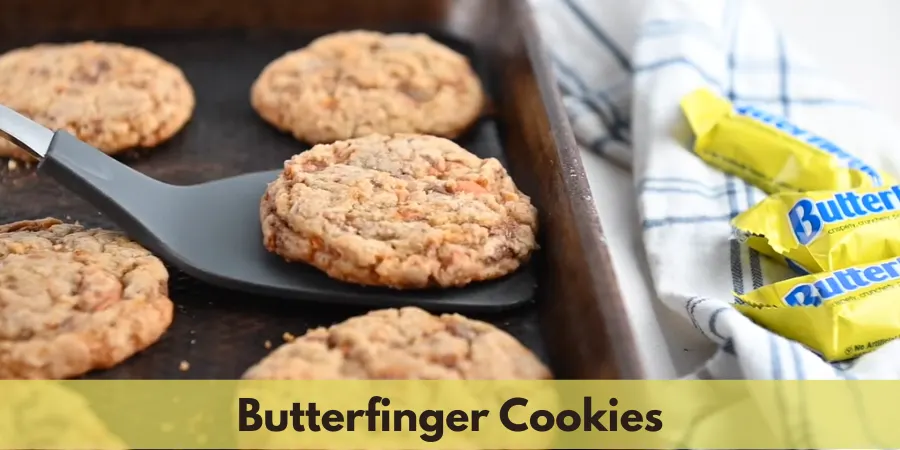
If you love soft peanut butter cookies with a crispy candy crunch, these Peanut Butter Butterfinger Cookies are the perfect homemade treat. Each cookie combines creamy peanut butter with crunchy Butterfinger pieces to create a thick, chewy texture with rich flavor and lightly crisp edges.
Whether you use Butterfinger Baking Bits or chopped Butterfinger bars, this easy cookie recipe delivers bakery-style results with simple pantry ingredients. The cookies can be baked right away for a softer texture or chilled before baking for thicker cookies with a more structured shape.
Butterfinger Cookies-The Short Answer
These cookies are also a fun way to use leftover Butterfinger candy after Halloween. They are perfect for holiday cookie trays, bake sales, family gatherings, or whenever you want a homemade dessert with the classic combination of peanut butter and crunchy candy pieces.
Why You’ll Love These Peanut Butter Butterfinger Cookies
These Peanut Butter Butterfinger Cookies are easy to make, full of peanut butter flavor, and packed with crispy candy pieces in every bite. The combination of a soft cookie base and crunchy Butterfinger creates the perfect balance of texture.
You’ll love this recipe because:
- Thick, soft, and chewy cookies with crispy Butterfinger pieces throughout.
- Rich peanut butter flavor in every bite.
- Made with simple pantry ingredients you likely already have.
- Works with Butterfinger Baking Bits or chopped Butterfinger bars.
- Optional dough chilling creates thicker bakery-style cookies.
- A great way to use leftover Halloween candy.
- Cookie dough freezes well for future baking.
- Perfect for holidays, parties, bake sales, or everyday desserts.
The best part is that this recipe is flexible and easy to customize. You can add extra chocolate chips, peanut butter chips, or chopped nuts while keeping the same soft and chewy cookie texture.
Ingredients
These Peanut Butter Butterfinger Cookies use simple ingredients that work together to create a soft, chewy cookie with rich peanut butter flavor and plenty of crunchy candy in every bite. Using room-temperature ingredients helps the dough mix evenly and creates more consistent results.
Dry Ingredients
You will need:
- 2 cups (250 g) all-purpose flour
- ½ teaspoon baking soda
- ½ teaspoon baking powder
- ¼ teaspoon salt
The flour provides structure for the cookies, while baking soda and baking powder help create the right balance between softness and slight lift. Salt enhances the peanut butter flavor and balances the sweetness from the sugars and Butterfinger pieces.
For the most accurate results, use the spoon-and-level method when measuring flour. Scooping flour directly from the bag can add too much, which may result in dry or dense cookies. A kitchen scale is also a great option for precise measurements.
Wet Ingredients
You will need:
- ¾ cup (170 g) unsalted butter, softened
- ½ cup granulated sugar
- ½ cup light brown sugar
- 1 cup creamy peanut butter
- 1 large egg
- 1½ teaspoons vanilla extract
Softened butter helps the ingredients combine smoothly and creates a tender cookie texture. The combination of granulated sugar and brown sugar adds sweetness while helping create chewy centers and lightly crisp edges.
Creamy peanut butter provides the signature flavor and smooth texture of these cookies. If using natural peanut butter, stir it well before measuring so the oil is evenly incorporated.
Butterfinger Mix-Ins
The candy pieces are what make these cookies special.
Use:
- 16 ounces Butterfinger Baking Bits, or
- 16 ounces chopped Butterfinger bars
Butterfinger Baking Bits make preparation easier, while chopped full-size or fun-size Butterfinger bars work just as well. Fold the candy pieces into the dough at the end to help keep their crispy texture and ensure every cookie has plenty of candy throughout.
Optional Add-Ins
For extra flavor and texture, you can add:
- Mini chocolate chips
- Peanut butter chips
- Chopped roasted peanuts
- Flaky sea salt for topping
These additions complement the peanut butter and Butterfinger flavors without changing the soft, chewy texture of the cookies.
How to Make Peanut Butter Butterfinger Cookies
These Peanut Butter Butterfinger Cookies are simple to prepare and come together with a classic cookie-making method. Creaming the butter and sugars properly, avoiding overmixing, and using the right baking time help create soft, chewy cookies with crisp candy pieces throughout.
Prepare the Cookie Dough
Start by preheating your oven to 350°F (177°C). Line two baking sheets with parchment paper to prevent sticking and help the cookies bake evenly.
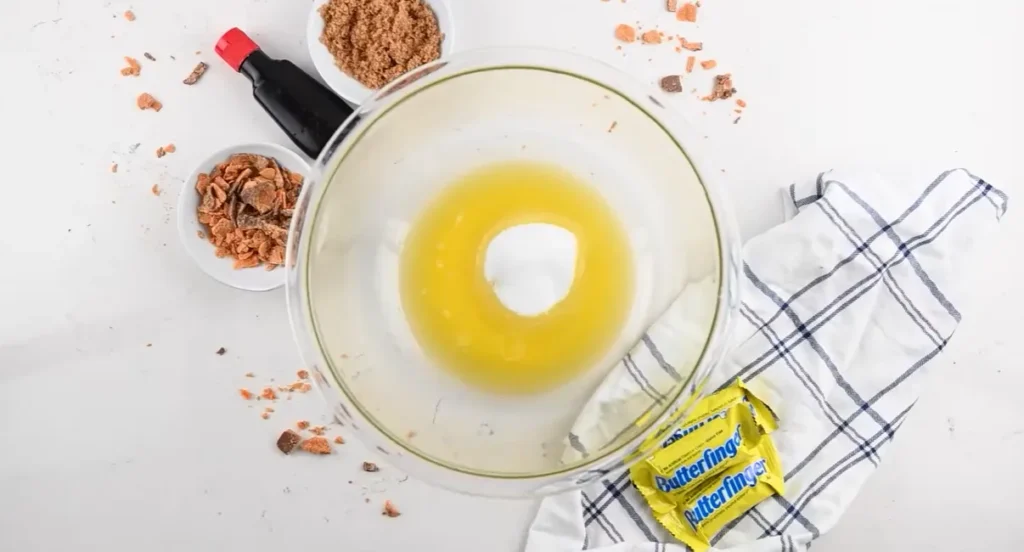
In a medium bowl, whisk together:
- 2 cups (250 g) all-purpose flour
- ½ teaspoon baking soda
- ½ teaspoon baking powder
- ¼ teaspoon salt
Mixing the dry ingredients first helps distribute the leavening agents and seasoning evenly throughout the dough.
In a separate large bowl, beat the softened butter with the granulated sugar and light brown sugar until the mixture becomes light and fluffy. This step helps create a softer texture and adds air to the dough.
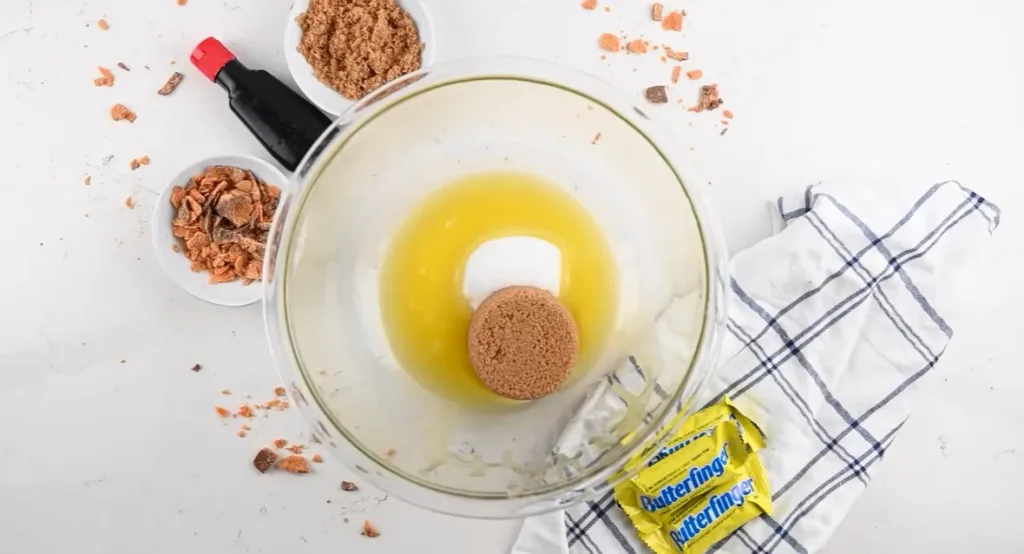
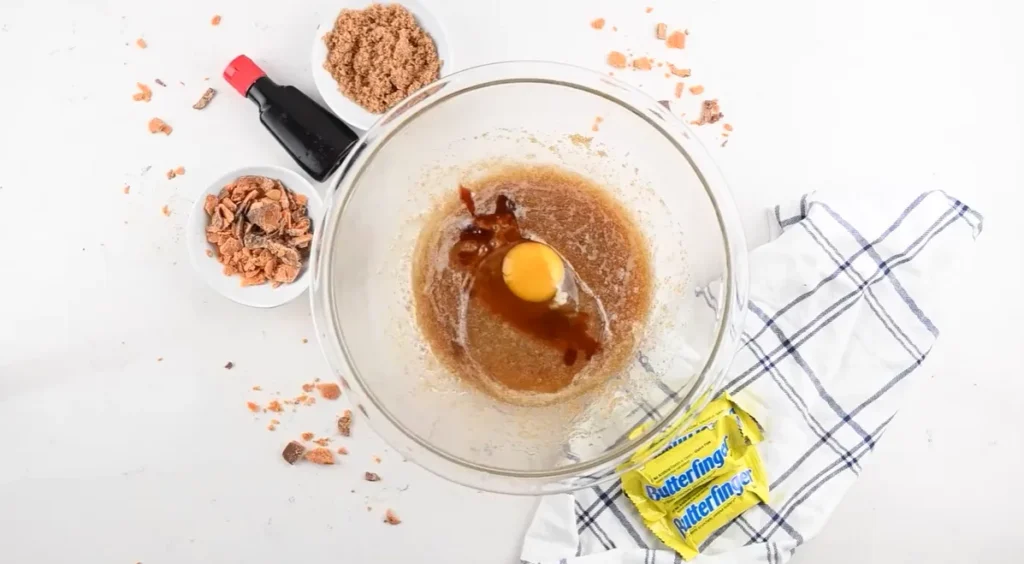
Add the creamy peanut butter and mix until smooth. Then add the egg and vanilla extract, beating until fully combined.
Combine the Dough
Gradually add the dry ingredients to the wet mixture, mixing only until no streaks of flour remain.
Avoid overmixing after adding the flour because it can make the cookies dense instead of soft and chewy.
Gently fold in the Butterfinger Baking Bits or chopped Butterfinger bars until evenly distributed throughout the dough.
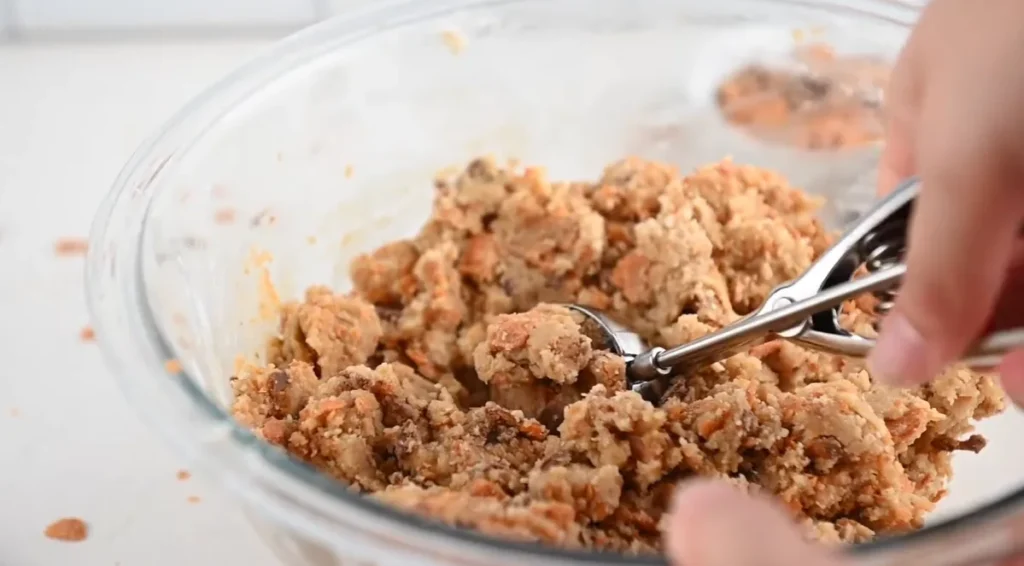
If you prefer thicker bakery-style cookies, chill the dough for 15–30 minutes before baking. Chilling helps reduce spreading and creates a thicker cookie texture.
Shape the Cookies
Scoop the dough into 2-inch balls and place them on the prepared baking sheets, leaving about 2–3 inches of space between each cookie.
Lightly flatten each dough ball before baking. For a bakery-style appearance, press a few extra Butterfinger pieces on top of each cookie.
Using a cookie scoop helps create evenly sized cookies that bake at the same rate and produce a more consistent shape.
Bake the Cookies
Bake the cookies for 10–12 minutes, or until the edges are lightly golden and the centers are just set.
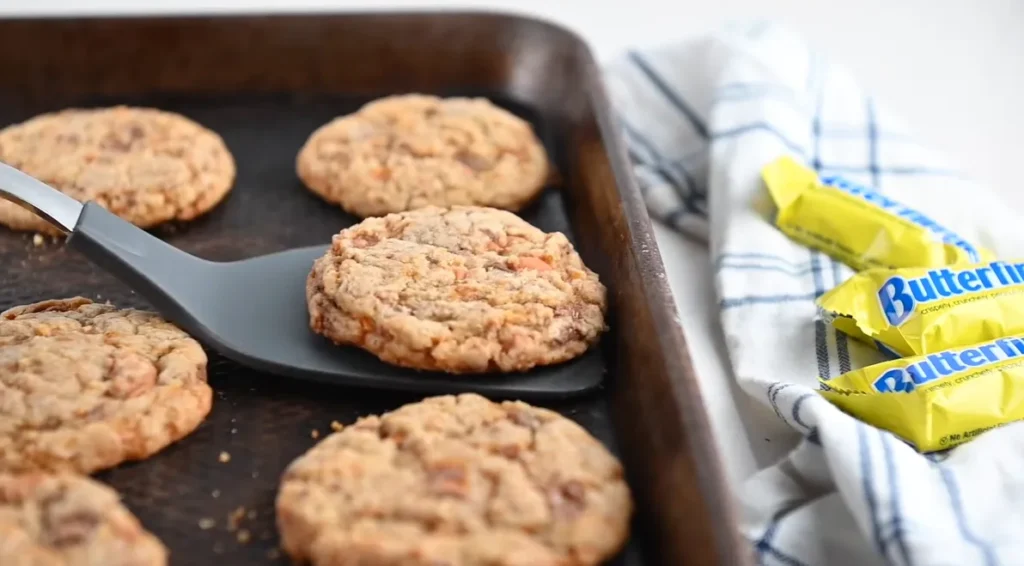
Avoid overbaking because the cookies will continue to firm up as they cool. Removing them while the centers still look slightly soft helps maintain their chewy texture.
Let the cookies cool on the baking sheet for 5 minutes before transferring them to a wire rack.
As the cookies cool, the Butterfinger pieces become crisp again while the peanut butter cookie base stays soft and chewy.
Storage
These Peanut Butter Butterfinger Cookies stay soft and chewy for several days when stored properly.
Allow the cookies to cool completely before placing them in an airtight container. Storing warm cookies can trap steam and make the texture softer or slightly soggy.
For the best texture, store the cookies at room temperature for up to 4–5 days.
If stacking cookies, place parchment paper between the layers to help prevent sticking and keep them looking their best.
Make-Ahead Instructions
The cookie dough can be prepared ahead of time, making it easy to bake fresh cookies whenever you need them.
Shape the dough into cookie dough balls and refrigerate for up to 24 hours before baking. Chilling the dough allows the flavors to develop and helps create thicker cookies.
For longer storage, place the shaped dough balls in a freezer-safe bag or container and freeze for up to 3 months.
Bake frozen cookie dough directly from the freezer by adding 1–2 extra minutes to the baking time.
Freezing Tips
Baked Peanut Butter Butterfinger Cookies also freeze well.
Once the cookies have cooled completely, place them in an airtight freezer container or freezer bag and freeze for up to 3 months.
When ready to enjoy, thaw the cookies at room temperature until soft. This makes it easy to have homemade cookies ready whenever you are craving a sweet treat.
Helpful Serving Tip
Notes and Tips
A few simple baking techniques can make a big difference in the texture, shape, and flavor of these Peanut Butter Butterfinger Cookies. Using properly measured ingredients, handling the dough correctly, and paying attention to baking time helps create soft, chewy cookies with crisp candy pieces in every bite.
Use Room-Temperature Ingredients
Using room-temperature butter and egg helps the ingredients combine smoothly and creates a more evenly mixed cookie dough.
Softened butter also helps the sugars cream properly, which contributes to the soft texture and slightly crisp edges of the finished cookies.
Avoid using melted butter because it can make the dough too soft and cause the cookies to spread more during baking.
Measure Flour Correctly
Accurate flour measurement is important for achieving the right cookie texture.
Use the spoon-and-level method by lightly spooning flour into the measuring cup and leveling it with a knife. Adding too much flour can make the cookies dry, dense, or less chewy.
For the most consistent results, a kitchen scale can also be used to measure the flour accurately.
Chill the Dough for Thicker Cookies
If the cookie dough feels too soft or you prefer thicker bakery-style cookies, chill it for 15–30 minutes before baking.
Chilling allows the butter to firm up, which helps reduce spreading and creates cookies with a thicker center and better structure.
Add Extra Butterfinger Pieces on Top
For a bakery-style appearance, reserve a small amount of Butterfinger pieces before mixing them into the dough.
Press a few extra pieces onto the tops of the cookie dough balls before baking. This creates a more noticeable candy crunch and makes each cookie look more finished.
Use a Cookie Scoop
A cookie scoop helps create evenly sized dough portions so the cookies bake at the same rate.
Consistent cookie sizes also help maintain a uniform shape and texture throughout the batch.
Common Mistakes to Avoid
Using Melted Butter
Melted butter changes the structure of the dough and can cause the cookies to spread too much.
Use softened butter instead for the best texture.
Adding Too Much Flour
Scooping flour directly from the bag can add more flour than needed.
Too much flour can result in cookies that are dry instead of soft and chewy.
Overmixing the Dough
Once the flour is added, mix only until the ingredients are combined.
Overmixing can develop too much gluten and create cookies that are dense or tough.
Overbaking the Cookies
Remove the cookies when the edges are lightly golden and the centers still look slightly soft.
The cookies will continue setting as they cool, helping maintain their chewy texture.
Skipping Cooling Time
Allow the cookies to rest on the baking sheet for 5 minutes before transferring them to a wire rack.
This short cooling period helps the cookies finish setting while allowing the Butterfinger pieces to become crisp again.
Extra Baking Tips
- Use parchment paper for easier cleanup and more even baking.
- Leave enough space between dough balls so the cookies can spread properly.
- Bake cookies of similar sizes together so they finish at the same time.
- Press extra Butterfinger pieces on top before baking for a bakery-style look.
- Store cookies properly after they have cooled completely to maintain the best texture.
Serving Suggestions
These Peanut Butter Butterfinger Cookies are delicious on their own, but they can also be served in fun ways for different occasions.
Serve them with:
- A glass of cold milk for a classic cookie pairing.
- Coffee or tea for an afternoon treat.
- Vanilla ice cream for an easy dessert combination.
- A cookie tray with other holiday desserts for parties and gatherings.
For special occasions, warm the cookies slightly before serving to bring back their soft texture and enhance the peanut butter and candy flavors.
Nutrition
The nutrition information below is an estimate based on one large cookie when the recipe makes approximately 24–26 cookies. The exact values may vary depending on the brands of peanut butter, Butterfinger, and other ingredients used.
Nutrient | Per Cookie (Approx.)
Calories: 305 kcal
Carbohydrates: 33 g
Protein: 5.5 g
Total Fat: 17 g
Saturated Fat: 7 g
Unsaturated Fat: 9 g
Cholesterol: 25 mg
Sodium: 190 mg
Fiber: 1.5 g
Sugar: 22 g
These cookies can fit into a balanced diet when enjoyed in moderation. If you want to reduce the sugar or calorie content, consider making smaller cookies or enjoying them as an occasional dessert.
Frequently Asked Questions
Why did my Butterfinger cookies spread too much?
Cookies usually spread too much when the butter is too soft, the dough is too warm, or there is not enough flour to support the structure.
Chilling the dough for 15–30 minutes before baking can help create thicker cookies. Measuring the flour correctly also improves the final texture.
Why didn’t my cookies spread?
Cookies may not spread if the dough contains too much flour or if the butter was not softened properly.
If the cookies come out too thick, gently flatten them while they are still warm to create a more bakery-style shape.
What gives Butterfinger cookies their crunchy texture?
Butterfinger candy contains a crisp peanut candy center that softens slightly during baking and becomes crunchy again as the cookies cool.
This creates the signature contrast between a soft peanut butter cookie and crispy candy pieces.
Can I use Butterfinger bars instead of Butterfinger Baking Bits?
Yes. Full-size or fun-size Butterfinger bars can be chopped into small pieces and folded into the dough.
They provide the same peanut butter flavor and crunchy candy texture.
Can I freeze the cookie dough?
Yes. Shape the dough into balls and freeze them in a freezer-safe bag or container for up to 3 months.
Bake directly from frozen and add 1–2 minutes to the baking time as needed.
Final Thoughts
These Peanut Butter Butterfinger Cookies combine everything you want in a homemade cookie: soft peanut butter flavor, chewy texture, and crispy candy pieces in every bite.
With simple pantry ingredients, easy preparation, and flexible storage options, this recipe is perfect for holidays, bake sales, or whenever you have leftover Butterfinger candy to use.
Whether you enjoy them fresh from the oven or save a batch in the freezer for later, these cookies are a fun and delicious treat that cookie lovers will want to make again and again.