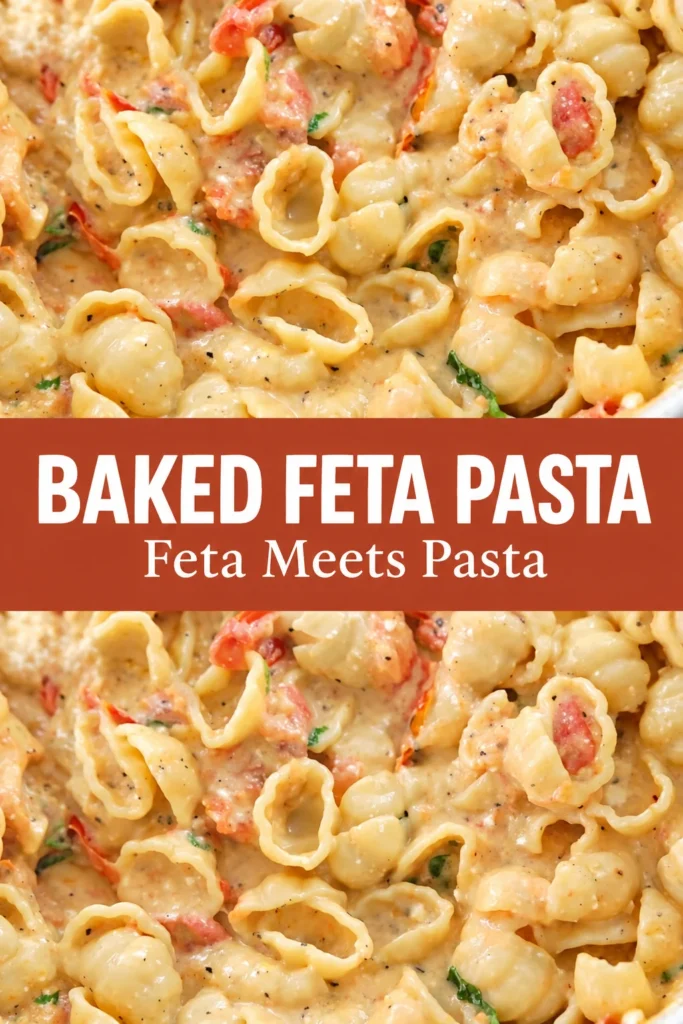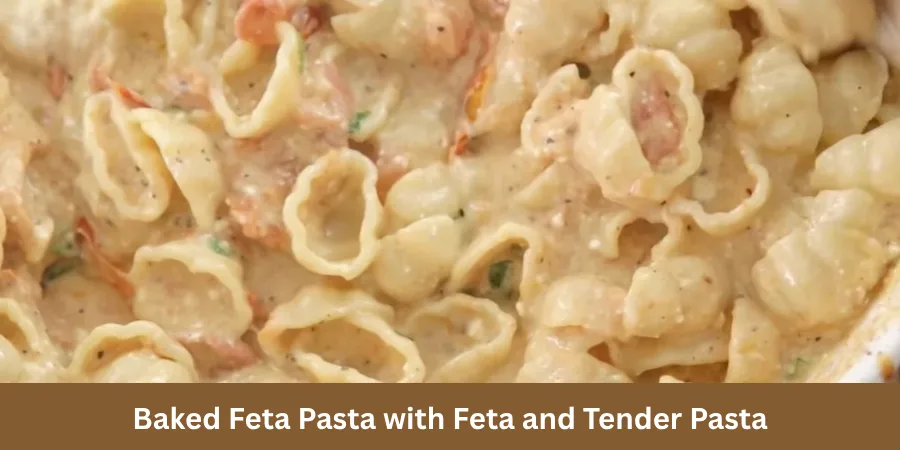
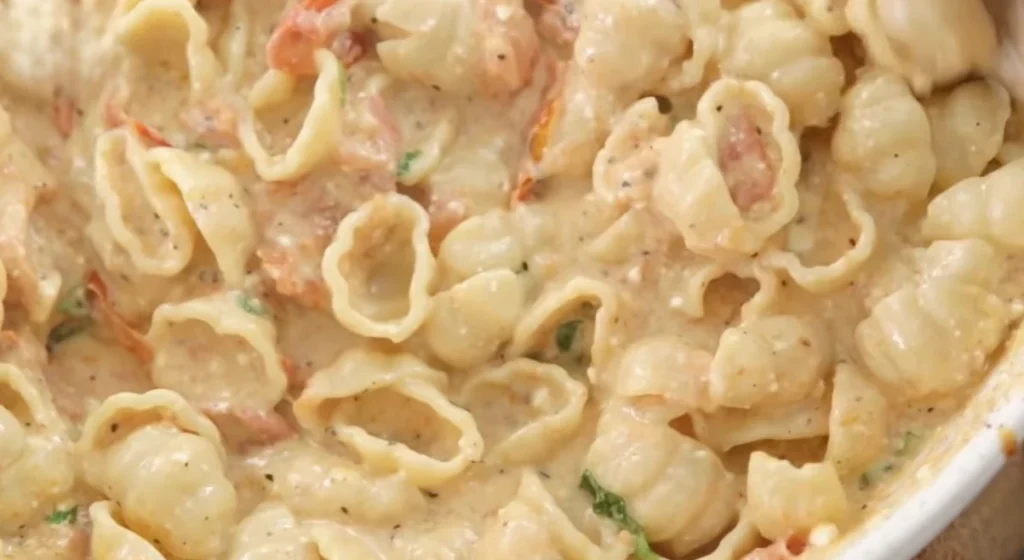
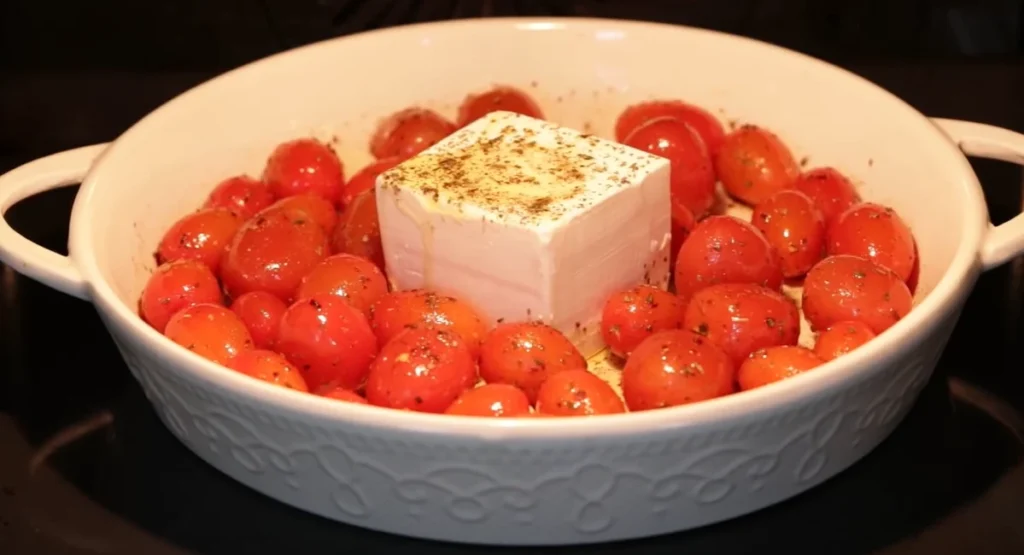
Baked feta pasta takes a handful of Mediterranean-inspired ingredients and turns them into a creamy, savory dinner with hardly any hands-on work. Cherry tomatoes roast around a whole block of feta, and their juices mix with olive oil and soft garlic. Mash it all together and you get a rich tomato-and-cheese sauce that clings to short pasta.
My version adds red bell pepper, Kalamata olives, rosemary and thyme for extra depth. A spoonful of red wine vinegar cuts the richness, and fresh basil and parsley go in at the end. You get sweet, tangy, salty and roasted flavors in one bowl.
Baked Feta Pasta-The Short Answer
Three things make the texture work: let the vegetables soften properly, mash the feta while everything is still hot, and add the reserved pasta water slowly. Skip those and you end up with oily vegetables sitting next to cheese instead of a real sauce.
About This Recipe
I was late to this TikTok food trend. My sister kept telling me how good it was, and I kept nodding and doing nothing, mostly because I don’t even have a TikTok account. I finally made it on a lazy evening, and I got it right away. It’s popular for a reason.
It’s a comforting dinner that doesn’t keep you at the stove. The oven does most of the work. The tomatoes burst, the garlic turns mellow, and the feta goes soft in the olive oil.
The bell pepper adds a little sweetness, and the Kalamata olives bring a salty, briny bite that works well with the cheese. Rosemary and thyme give the roast an earthy smell that plain tomato and feta can’t match.
Short pasta works best here because the curves and ridges catch the sauce. I like cavatappi, but rotini, penne and fusilli are all fine.
The recipe makes five servings. Bring the baking dish straight to the table and serve warm, with a green salad or some crusty bread.
Why You’ll Love This Feta Pasta
This is an easy weeknight meal that gives you big flavor for very little effort. Everything roasts in one dish while the pasta boils in a pot, so cleanup is short.
The tomatoes make their own juice, so you don’t need a separate saucepan. The feta turns soft enough to mash into a luscious sauce that coats every piece of pasta. It’s creamy without being heavy, and it feels nourishing too, especially if you add greens.
I change it up a lot. Sometimes I add spinach, sometimes mushrooms or broccoli, and sometimes leftover chicken. A pinch of chili flakes also works if you like a little heat.
Ingredients Needed
Measure everything before you start. It makes the pasta and the roasted sauce come together at the same time.
For the roasted tomato and feta sauce
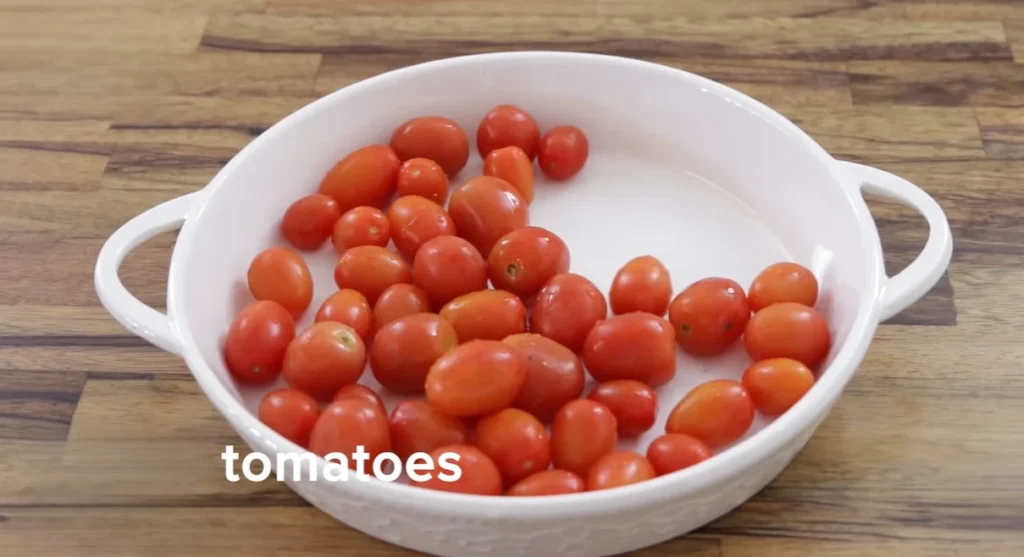
- 20 ounces cherry tomatoes or grape tomatoes
- 1 block sheep’s milk feta cheese (8 oz, about 227 g)
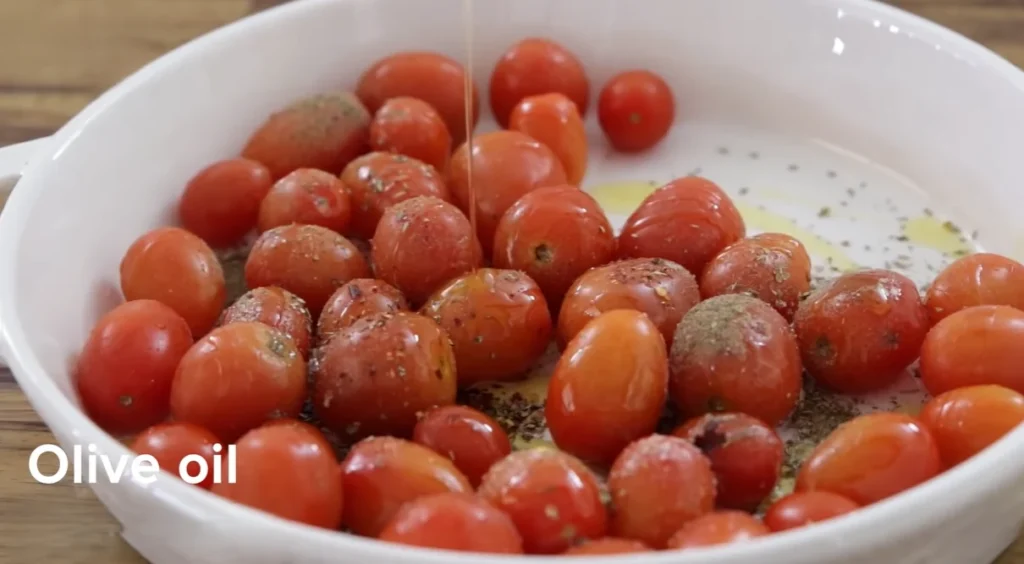
- ⅓ cup extra-virgin olive oil (80 ml)
- 1 medium red bell pepper (about 150 g), cut into pieces
- ⅓ cup pitted Kalamata olives (about 50 g)
- 6 medium garlic cloves, peeled
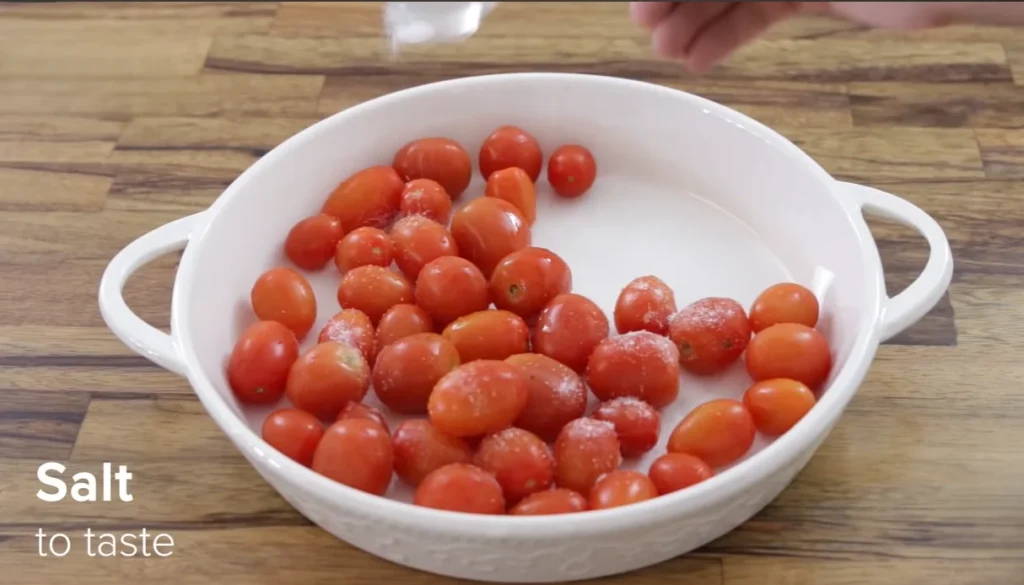
- ½ teaspoon fine salt
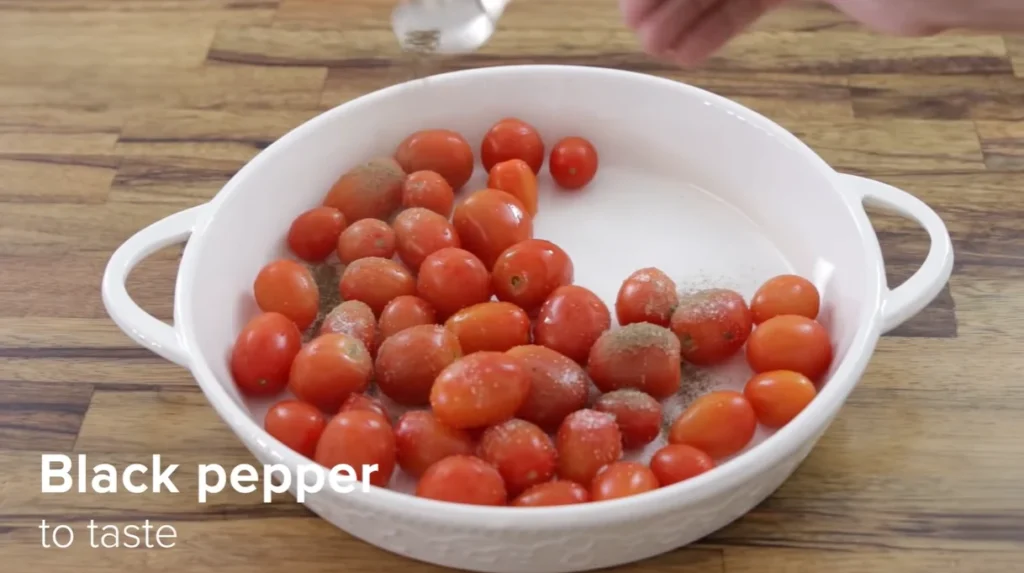
- ¼ teaspoon freshly ground black pepper
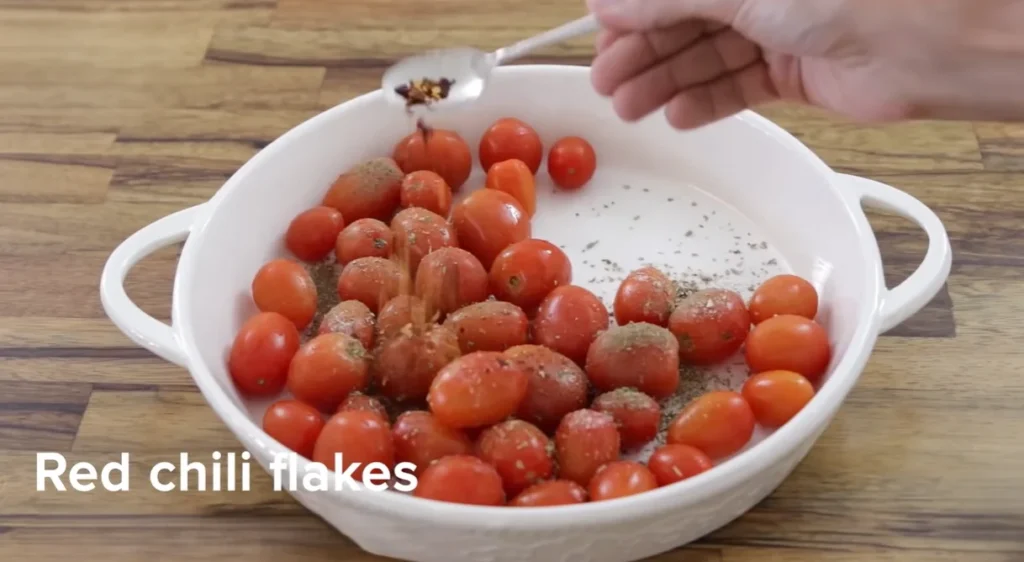
- ¼ teaspoon crushed red pepper flakes
- 2 fresh rosemary sprigs
- 4 fresh thyme sprigs
For the pasta and finishing
- 10 ounces dry pasta
- Up to ½ cup reserved pasta water (about 120 ml)
- 1 tablespoon red wine vinegar (15 ml)
- ¼ cup fresh basil (about 12 g)
- 2 tablespoons fresh parsley (about 8 g)
Ingredients Notes
Tomatoes. Cherry and grape tomatoes are small enough to roast evenly and burst. Their juice, mixed with the oil and feta, becomes the liquid base of the sauce. If you can’t find them, whole tomatoes cut into small pieces or canned diced tomatoes will do, but cherry tomatoes taste best.
Feta. Use a whole block, not crumbled feta. The block softens in the middle of the dish while the vegetables roast around it. Sheep’s milk feta is creamier. Cow’s milk feta is more crumbly and drier, and low-fat feta doesn’t melt well, so I’d skip it. You don’t want a smooth purée. A few streaks of feta in the sauce are fine.
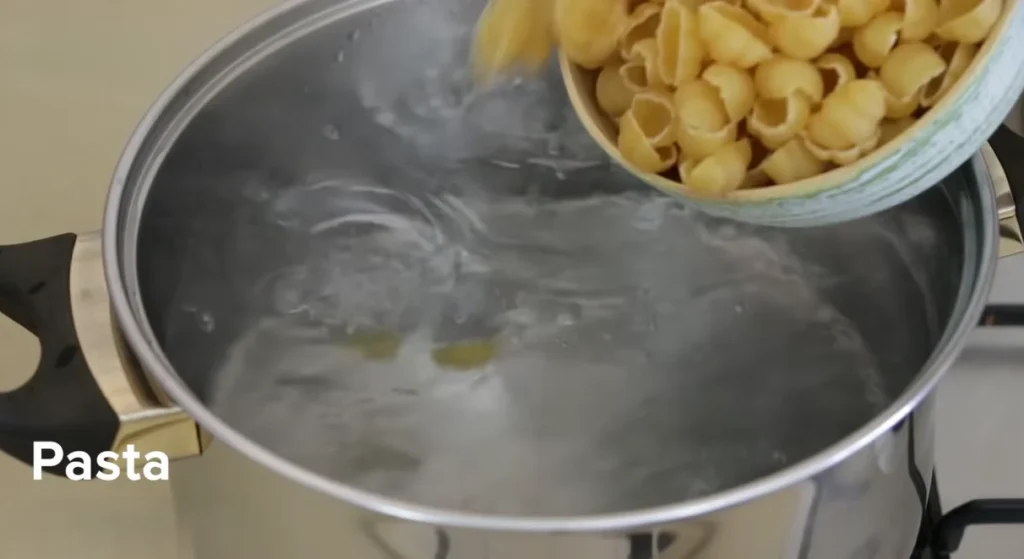
Pasta. Pick a short shape that holds sauce. Cavatappi is my favorite, and rotini, fusilli, penne and campanelle all work. Cook it al dente and follow the package directions. Gluten-free pasta works too, but check its cooking time, because it varies by brand.
Olive oil. The oil coats the vegetables and gives the sauce its richness, so don’t cut the ⅓ cup too much.
Bell pepper and olives. The pepper adds sweetness. The olives add a sharp, salty bite. Feta and olives are both salty, so taste the finished sauce before you add more salt.
Garlic and herbs. Six cloves sounds like a lot, but roasting makes the garlic soft and mellow. Rosemary and thyme go in for roasting. If you want a stronger garlic taste, you can stir in a little fresh minced garlic at the end, but this is optional and not part of the base recipe. The basil and parsley go in at the end so they stay fresh and bright.
Vinegar and pasta water. The vinegar adds acidity and balances the rich cheese and oil. Start with 2 teaspoons if your tomatoes already taste tart. The pasta water is starchy, which helps the sauce cling to the pasta. You probably won’t need all ½ cup.
How to Make Baked Feta Pasta
Step 1: Prepare the Oven and Vegetables
Heat the oven to 400°F (200°C). Use a 9×13-inch oven-safe baking dish, or any dish that holds everything in a mostly even layer.
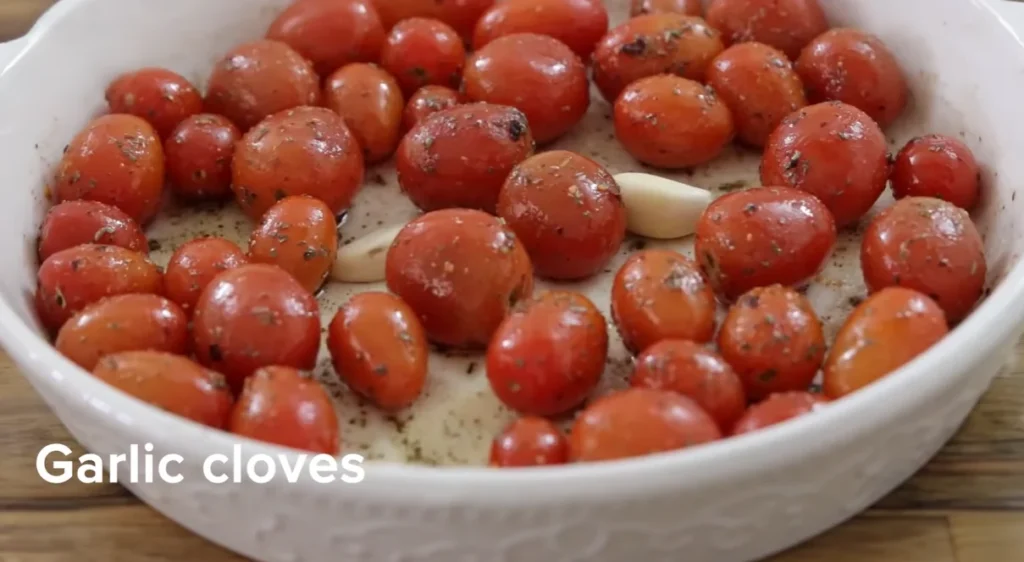
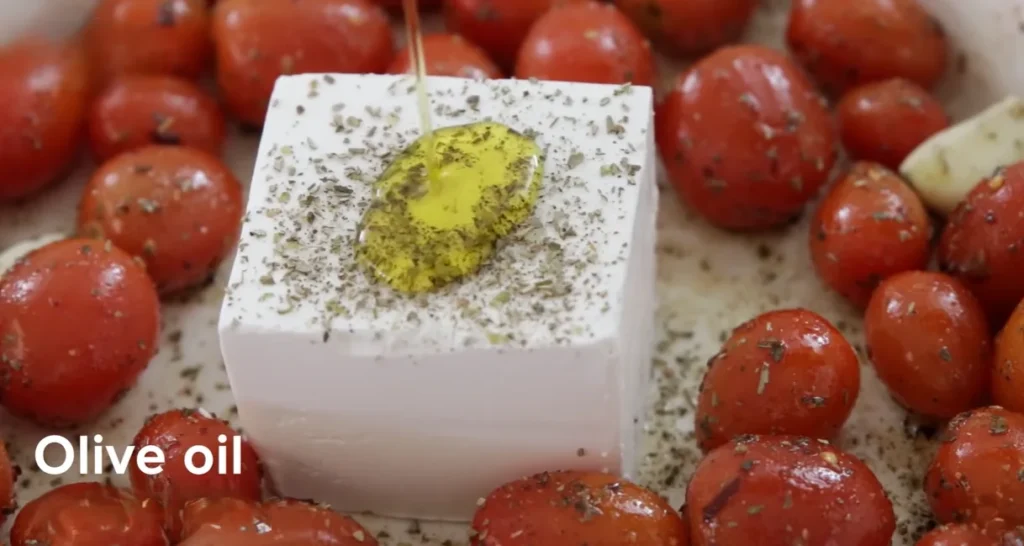
Add the tomatoes, bell pepper, olives, garlic, salt, black pepper and red pepper flakes. Pour the olive oil over the top and toss until everything is coated.
Step 2: Add the Feta and Fresh Herbs
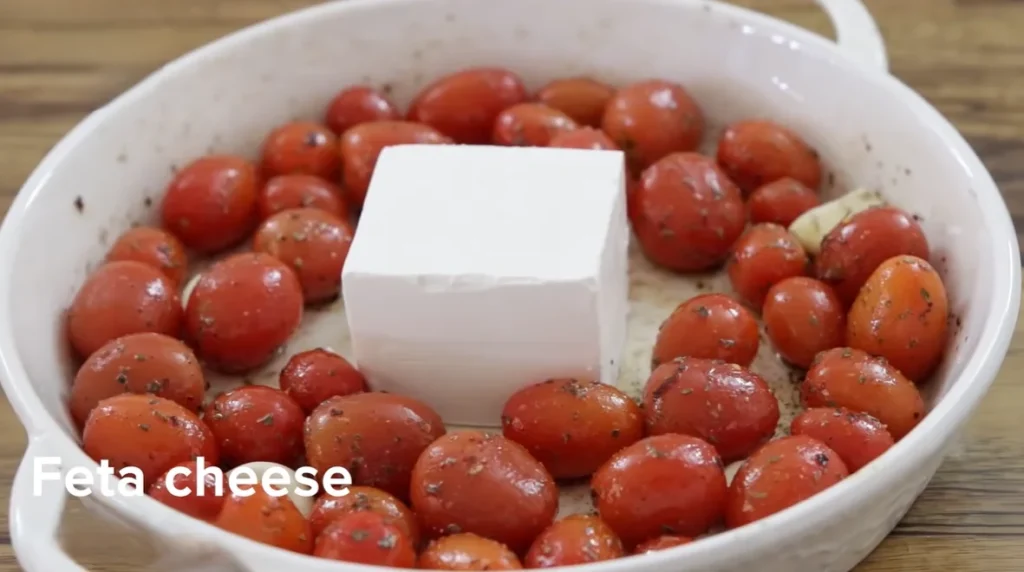
Set the block of feta in the middle and turn it once in the oil. Tuck the rosemary and thyme between the vegetables. Leave the dish uncovered so the moisture can escape and the tomatoes concentrate.
Step 3: Roast Until the Tomatoes Burst
Bake for 30 minutes. The tomatoes should be soft with some of them burst, the garlic and pepper should be tender, and the feta should mash easily. If the tomatoes still look firm, give them 5 more minutes.
Let the tomatoes get tender first. Browning is optional and only comes after that. If you want blistered tomatoes, move the oven rack to the upper 1/3 and raise the heat to 450°F for the last 5 minutes, or broil for 3–5 minutes. This gives a light char and golden spots on the feta. Watch it closely, because feta darkens fast. If you prefer a juicier sauce, skip this step.
Step 4: Cook the Pasta Separately
While the tomatoes roast, bring a pot of salted water to a boil. Start it early so the pasta finishes about when the sauce is ready. Cook the pasta until al dente, which means tender with a slight bite in the center.
Before you drain, save ½ cup of the pasta water. Don’t rinse the pasta. Rinsing washes off the starch that helps the sauce stick.
Step 5: Mash the Roasted Feta and Vegetables
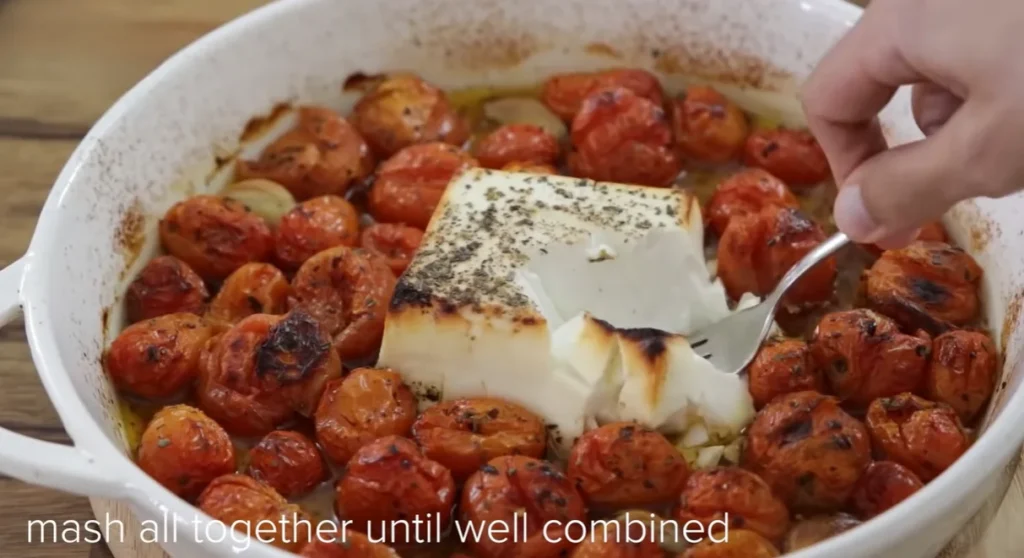
Take the dish out of the oven and remove the herb sprigs. With a sturdy wooden spoon, mash the garlic, tomatoes, pepper and feta into the oil. Press the tomatoes to release the last of their juices.
Don’t chase a perfectly smooth sauce. Small pieces of tomato and streaks of feta give it better texture. Stir in the vinegar and taste as you go.
Step 6: Combine the Pasta and Sauce
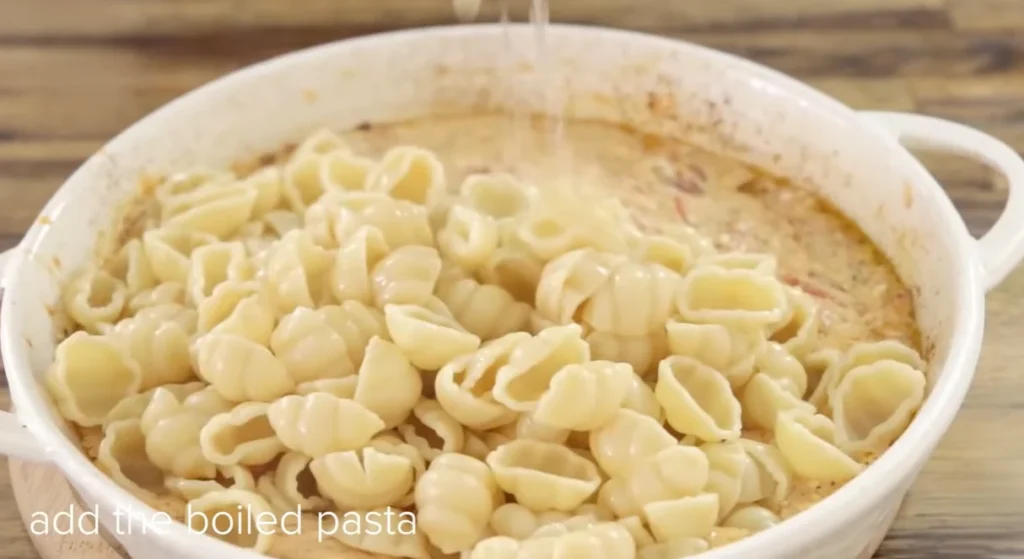
Add the drained pasta straight into the dish and toss for 30–45 seconds, until it’s well coated. Add the pasta water a few tablespoons at a time, tossing between each addition, until the sauce looks creamy and glossy and clings to the pasta.
Aim for the right consistency, not the whole ½ cup. How much you need depends on the juiciness of the tomatoes and the shape of the pasta. Warm pasta also helps stop it from sticking together.
Step 7: Add Fresh Herbs and Serve
Fold in the basil and parsley, then taste. Add a little black pepper or red pepper flakes if you want. Garnish with a few more basil leaves and serve warm, with crusty bread or a salad.
Tips for the Best Results
Use a whole block of feta. Crumbled feta can work when you’re out of options, but the texture won’t be the same.
Don’t crowd the dish. Keep the tomatoes in a mostly single layer with a little space between them, so you get saucy tomatoes instead of steamed ones.
Keep the dish uncovered. A cover traps steam and the tomatoes won’t concentrate.
Don’t overcook the pasta. It goes back into a hot sauce, so it needs to start al dente.
Taste before you season. Between the feta, olives and vinegar, the dish usually has plenty of salt and acid already.
Finish with fresh herbs. Basil and parsley give a fresh contrast to the rich cheese.
Easy Variations to Try
Spinach. Fold fresh spinach into the hot pasta until it wilts, or add it to the pasta water just before draining.
More vegetables. Broccoli, mushrooms, zucchini, asparagus and artichoke hearts all go well with the tomato and feta base. They hold different amounts of water and cook at different speeds, so roast them until tender instead of trusting the original timing.
Chicken or sausage. For a heartier meal, add cooked chicken, Italian sausage, ground beef or ground turkey. Cook the meat separately first. It will change the nutrition numbers.
More or less heat. Add more red pepper flakes for heat, or leave them out for a milder sauce.
Lemon zest. A little fresh zest at the end adds a citrus smell that suits the feta and herbs.
No pasta. Zucchini noodles or cooked spaghetti squash work in place of pasta. They hold less starch, so the sauce may need a small adjustment.
What to Serve with Baked Feta Pasta
The pasta is filling enough to be the whole meal, but a few simple sides help:
- A green salad with a light vinaigrette
- Crusty bread for scooping up the sauce
- Roasted seasonal vegetables
- A cucumber salad, for something cool next to the warm pasta
Keep the sides plain so the tomato, feta and garlic stay the main flavors.
Storing Leftover Feta Pasta
I like this pasta best on the day I make it. Pasta keeps soaking up sauce as it sits and gets softer, but the flavor is still good, so I always save the leftovers.
Let it cool, then move it to an airtight container and refrigerate for up to 4 days. Don’t leave it out at room temperature for long. You can eat it chilled or warmed up. To reheat, use a pan on low to medium-low heat or the microwave, and add a splash of water to loosen the sauce. Heat until it’s steaming hot all the way through.
You can also freeze it for up to 2 months. Freeze individual portions and thaw them overnight in the refrigerator. The texture is softer after thawing.
Notes
- Yield: 5 servings
- Oven: 400°F (200°C), with an optional short finish at 450°F (230°C)
- Baking dish: 9×13-inch
- Pasta water: reserve up to ½ cup and use only what the sauce needs
- Vinegar: start with 2 teaspoons if the tomatoes taste tart
- Pasta: cavatappi, rotini, fusilli, penne or campanelle
- Cheese: other feta types can work, but moisture and saltiness will change the sauce
- Gluten-free: use gluten-free pasta and follow its package directions
Nutrition Facts
Serving size: 1/5 of the recipe. Servings: 5.
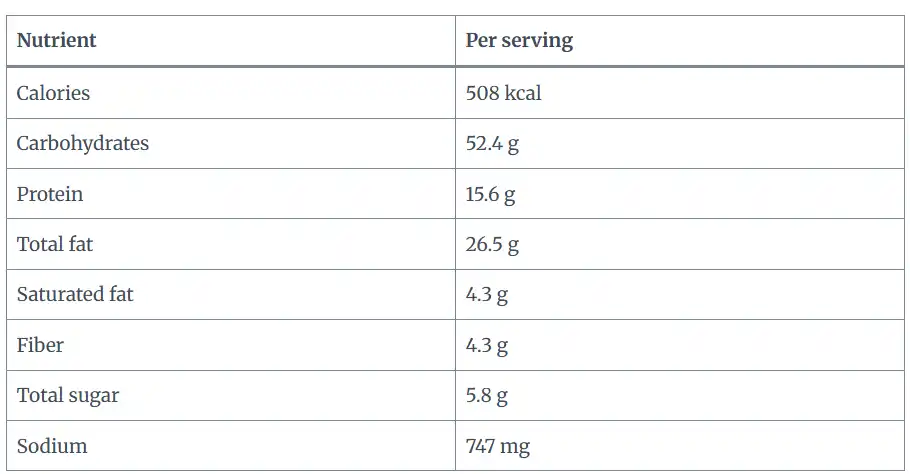
These values are estimates based on the ingredient quantities above. They can change with the pasta brand, feta variety and olive brand. Adding meat, extra cheese or more oil will change them too.
Frequently Asked Questions
Can I use crumbled feta instead of a block?
Yes, but the texture will be a little different. A block softens in the middle of the dish and mashes easily into the tomatoes and oil. Crumbled feta behaves differently in the oven, depending on its moisture.
Why is my sauce too thick?
The tomatoes may have given less juice, or the pasta may have soaked up moisture while it sat. Add pasta water a tablespoon or two at a time and toss until it loosens.
Why does my sauce look oily instead of creamy?
Mash the warm feta and tomatoes well, then toss the pasta in with a little starchy pasta water. Adding it slowly and tossing without stopping helps the sauce come together.
Which pasta shape is best?
Cavatappi, fusilli, rotini, penne and campanelle all work. Their curves and hollow centers hold the sauce. Cook whichever you choose until al dente.
Can I use a different cheese?
Goat cheese or ricotta can make a creamy sauce, but the flavor and texture will differ. Feta gives this dish its salty, tangy character. If you swap it, you may need to adjust the salt and the liquid.
Can I make it without Kalamata olives?
Yes. The dish will be less briny. Taste before you add salt, since the olives were part of the seasoning.
Can I make it ahead?
You can roast the tomato and feta mixture ahead, refrigerate it, and reheat it before tossing it with freshly cooked pasta. Add pasta water as needed to loosen it.
How long does it last in the fridge?
Up to 4 days in an airtight container. Reheat gently with a splash of water.
Can I freeze it?
Yes, for up to 2 months in airtight portions. Thaw overnight in the refrigerator. The texture will be softer than when it’s fresh.
Is it spicy?
Not very. ¼ teaspoon of red pepper flakes gives mild warmth. Leave them out or add more to suit you.
Can I use crumbled feta instead of a block?
Yes, but the texture will be a little different. A block softens in the middle of the dish and mashes easily into the tomatoes and oil. Crumbled feta behaves differently in the oven, depending on its moisture.
Why is my sauce too thick?
The tomatoes may have given less juice, or the pasta may have soaked up moisture while it sat. Add pasta water a tablespoon or two at a time and toss until it loosens.
Why does my sauce look oily instead of creamy?
Mash the warm feta and tomatoes well, then toss the pasta in with a little starchy pasta water. Adding it slowly and tossing without stopping helps the sauce come together.
Why did my feta not get soft?
It likely needed more time or a hotter oven. Give it 5 more minutes, and make sure the dish was uncovered and the oven was fully preheated. Low-fat feta also stays firm.
How much pasta water should I add?
Start with a few tablespoons, toss, and stop when the sauce clings to the pasta. Most batches need less than the full ½ cup.
Which pasta shape is best?
Short shapes like penne, fusilli, rotini, cavatappi or campanelle. Their curves and edges give the sauce more surface area to hold on to.
Can I use a different cheese?
Goat cheese or ricotta can make a creamy sauce, but the flavor and texture will differ. Feta gives this dish its salty, tangy character.
Can I make it without Kalamata olives?
Yes. The dish will be less briny. Taste before you add salt, since the olives were part of the seasoning.
Can I make it ahead?
You can roast the tomato and feta mixture ahead, refrigerate it, and reheat it before tossing it with freshly cooked pasta. Add pasta water as needed to loosen it.
How do I store and reheat leftovers?
Keep them in an airtight container in the fridge for up to 4 days and reheat gently with a splash of water.
Pinterest Pins