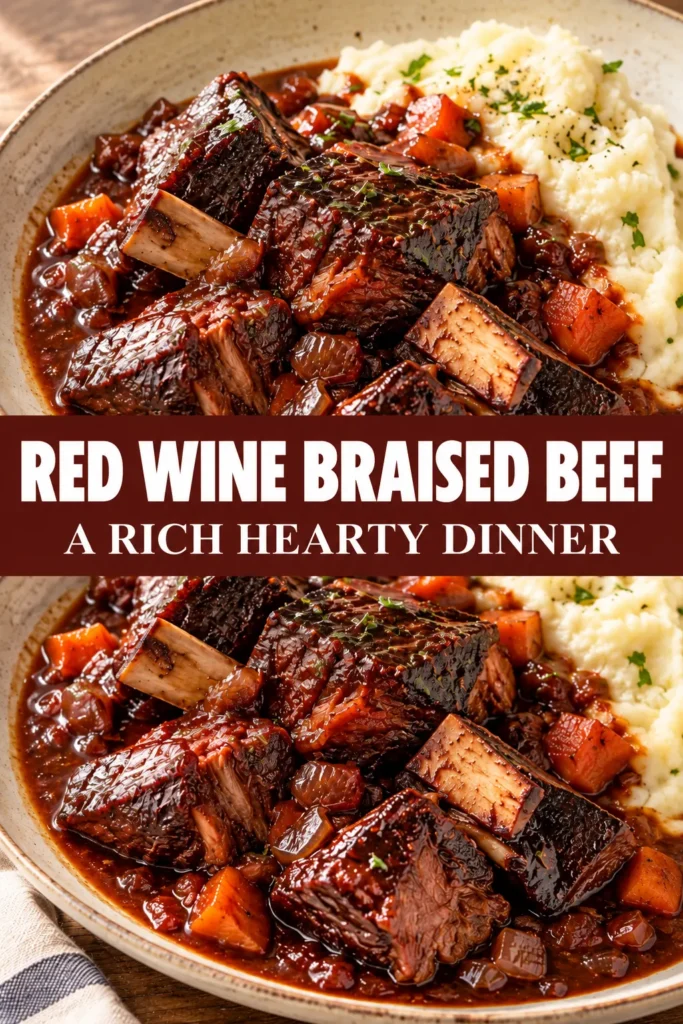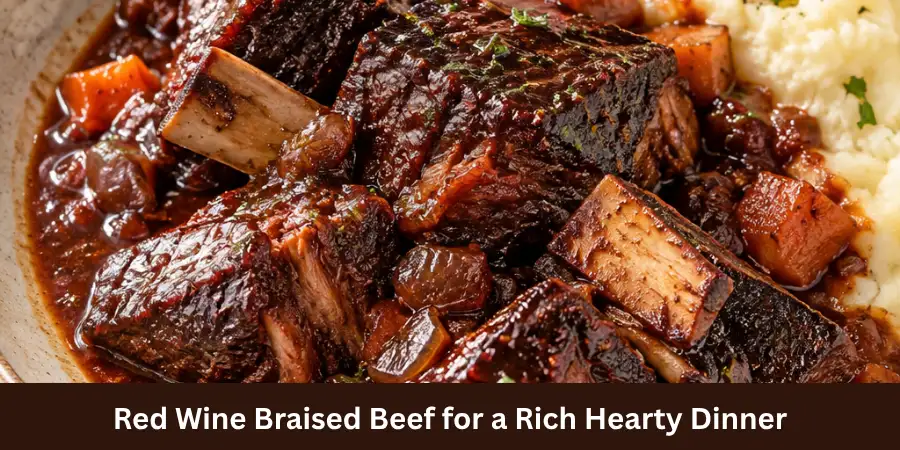
Red Wine Braised Beef made with bone-in short ribs is a comforting slow-cooked meal that is perfect for colder days.
The short ribs are gently braised on the stovetop, allowing the meat to become tender, juicy, and fall-apart soft.
As the beef cooks slowly, the red wine and other ingredients develop a deep savory flavor while creating a rich sauce that complements the meat.
Red Wine Braised Beef-The Short Answer
This recipe creates the kind of slow-cooked beef dish that feels special while still being practical for home cooking.
The long braising process allows the flavors from the wine, vegetables, herbs, and beef to come together into a rich and satisfying sauce.
Red Wine Braised Beef is also a great make-ahead option for family dinners or when serving guests.
The sauce continues to develop its deep flavor as it reduces, creating a comforting meal without requiring complicated techniques.
The combination of tender beef, aromatic vegetables, and red wine creates a hearty dish that works well for relaxed dinners.
Serve it when you want a slow-cooked meal with rich flavor and a sauce that brings everything together.
Why This Recipe Works
Red Wine Braised Beef works because slow cooking transforms short ribs into tender, flavorful meat.
Braising gently softens the beef while allowing the connective tissue to break down, creating a texture that is juicy and easy to pull apart.
The red wine sauce develops depth from simple ingredients.
The browned short ribs add richness, while the vegetables, tomato paste, herbs, and seasonings build layers of savory flavor.
Bone-in short ribs are especially useful for this cooking method because the bones contribute extra flavor during the long braise.
The slow cooking process allows the beef to absorb the flavors of the sauce while becoming incredibly tender.
This recipe is straightforward enough for a relaxed weekend meal while still feeling impressive enough for guests.
Once the ribs are cooking, the gentle braising process does most of the work while filling the kitchen with a rich aroma.
The finished dish has a silky texture and deep flavor that makes it feel like a special occasion meal.
It can also be prepared ahead, stored, and reheated while maintaining its tender texture and flavorful sauce.
About This Recipe
Red Wine Braised Beef is a classic comfort dish built around bone-in beef short ribs slowly cooked in a rich red wine sauce.
The ribs are first browned to develop flavor, then gently simmered with vegetables, herbs, wine, and broth until the meat becomes tender.
The sauce combines red wine, beef broth, tomatoes, aromatic vegetables, and seasonings to create a deep, savory flavor.
As the liquid reduces, it becomes a rich sauce that coats the tender beef. This recipe is designed for slow cooking rather than quick preparation. The total time, including prep, searing, and finishing the sauce, is approximately 4–4.5 hours.
The gentle cooking process allows the short ribs to become soft while giving the sauce time to develop a concentrated flavor.
The finished beef can be served with creamy mashed potatoes, polenta, pasta, or gnocchi.
The rich sauce pairs well with these sides because they help absorb the flavorful braising liquid.
This dish is also practical for preparation ahead of time. The short ribs can be cooled and refrigerated in the sauce, then gently reheated when ready to serve.
Ingredients Needed
3½ pounds (1.59 kg) bone-in beef short ribs
1½ teaspoons kosher salt (9 g)
½ teaspoon freshly ground black pepper (1 g)
1 tablespoon neutral oil or light olive oil (15 ml)
1 medium yellow onion (150 g), chopped
2 medium carrots (160 g), chopped
2 celery stalks (80 g), chopped
5 garlic cloves (15 g), minced
3 tablespoons tomato paste (50 g)
1½ cups dry red wine (360 ml)
2 cups low-sodium beef broth (480 ml)
1 tablespoon Worcestershire sauce (15 ml)
15-ounce (425 g) can whole peeled tomatoes
1 tablespoon light brown sugar (13 g)
1 teaspoon smoked paprika (2.3 g)
¼ teaspoon Italian seasoning (0.8 g), optional
2 fresh rosemary sprigs
6 fresh thyme sprigs
2 bay leaves
Optional cornstarch slurry:
1 tablespoon cornstarch (8 g)
2 tablespoons cold water (30 ml)
Equipment
Large heavy-bottomed Dutch oven with lid, 5.5–7 quart (approximately 5–6.5 L)
Kitchen tongs
Large plate
Wooden spoon or heat-safe spatula
Large spoon for skimming fat
Kitchen twine
Fine-mesh strainer (optional)
Medium bowl (optional)
Measuring cups and spoons
Kitchen scale
Heat diffuser (optional, if your low flame is still too strong)
Ingredients Notes
Bone-In Beef Short Ribs
Use 3½ pounds (1.59 kg) bone-in beef short ribs. Short ribs are the foundation of this recipe because they become tender and flavorful during the long braising process.
The bone, fat, and connective tissue contribute richness and help create the deep flavor expected from slow-cooked beef.
The important part is using the specified amount of beef and allowing enough time for the slow braise.
Kosher Salt and Black Pepper
Use:
- 1½ teaspoons kosher salt (9 g)
- ½ teaspoon freshly ground black pepper (1 g)
Treat the 9 g weight as the main measurement. 1½ teaspoons is correct for a dense kosher salt such as Morton. If you are using Diamond Crystal, you will need about 3 teaspoons for the same weight.
Seasoning the ribs before searing helps build the savory flavor of the finished dish. Proper seasoning also enhances the beef while supporting the flavors of the sauce.
Neutral Oil or Light Olive Oil
Use 1 tablespoon (15 ml) neutral oil or light olive oil. The oil is used for searing the short ribs and helps create a browned exterior. The browned surface adds extra depth to the final sauce.
Onion, Carrots, and Celery
Use:
- 1 medium yellow onion (150 g)
- 2 medium carrots (160 g)
- 2 celery stalks (80 g)
These vegetables create the aromatic base of the braising liquid. They add sweetness, savory flavor, and depth as they slowly cook with the beef.
Garlic
Use 5 garlic cloves (15 g), minced. Garlic adds a strong savory flavor and helps build the foundation of the sauce.
It is added after the vegetables have softened and cooked for only 30–60 seconds, so it blends into the braising liquid without burning.
Tomato Paste
Use 3 tablespoons (50 g) tomato paste. Cooking the tomato paste before the wine is added helps reduce its raw flavor and develops a deeper, more concentrated tomato character.
It adds richness and supports the flavor of the red wine sauce.
Dry Red Wine
Use 1½ cups (360 ml) dry red wine. Red wine provides acidity, depth, and richness to the braising liquid.
Choose a wine you would enjoy drinking rather than cooking wine.
Suitable options include:
- Cabernet Sauvignon
- Merlot
The wine does not need to be expensive because the long cooking process develops its flavor.
Low-Sodium Beef Broth
Use 2 cups (480 ml) low-sodium beef broth. Beef broth adds a rich, savory base to the sauce and combines with the wine to create the braising liquid.
A flavorful broth helps create a more concentrated final sauce.
Worcestershire Sauce
Use 1 tablespoon (15 ml) Worcestershire sauce. Worcestershire sauce adds extra savory depth to the braising liquid. It helps enhance the beef flavor and adds complexity to the sauce.
Whole Peeled Tomatoes
Use one 15-ounce (425 g) can whole peeled tomatoes. Whole tomatoes add moisture, body, acidity, and natural sweetness to the sauce.
They can be broken down directly in the pot as the beef cooks.
Brown Sugar
Use 1 tablespoon (13 g) light brown sugar. Brown sugar gently balances the acidity from the wine and tomatoes.
It adds a subtle sweetness that helps round out the sauce.
Smoked Paprika and Italian Seasoning
Use:
- 1 teaspoon smoked paprika (2.3 g)
- ¼ teaspoon Italian seasoning (0.8 g), optional
Smoked paprika adds gentle warmth, while Italian seasoning contributes additional herbal flavor.
These seasonings support the beef without overpowering it.
Fresh Rosemary, Thyme, and Bay Leaves
Use:
- 2 fresh rosemary sprigs
- 6 fresh thyme sprigs
- 2 bay leaves
Tie the rosemary, thyme, and bay leaves into a bundle with kitchen twine so they are easy to remove later. These herbs add layered flavor during the long braising process. They infuse the sauce while allowing the beef to remain the main focus.
Cornstarch Slurry (Optional)
Use:
- 1 tablespoon cornstarch (8 g)
- 2 tablespoons cold water (30 ml)
The slurry is optional and used only if the sauce needs additional thickening after reduction.
Mixing cornstarch with cold water first helps create a smooth mixture before adding it to the simmering sauce.
How to Cook Red Wine Braised Beef
Step 1: Prepare and Sear the Short Ribs
Pat the short ribs dry with paper towels. Season the ribs with the kosher salt and freshly ground black pepper.
For deeper flavor, the seasoned ribs can be left uncovered in the refrigerator for 8–12 hours for a simple dry brine, or they can be seared immediately.
Heat a large, heavy-bottomed Dutch oven over medium-high heat for 3–5 minutes. Add the oil and sear the short ribs in 2 batches.
Avoid overcrowding the pot because this helps the ribs develop a better browned exterior. Sear the ribs on all major sides until well browned, about 4–6 minutes per side.
Transfer the browned ribs to a plate and set them aside. Keep about 1–2 tablespoons of the rendered fat in the pot and remove any excess. Reduce the heat to medium so the browned bits do not burn.
Step 2: Build the Flavor Base
Add the onion, carrots, and celery to the same pot.
Cook for about 5–7 minutes, stirring occasionally, until the vegetables become lightly browned and partly softened. Add the garlic and cook for 30–60 seconds, without letting it turn dark brown. Add the tomato paste and cook for about 2 minutes.
The tomato paste should become slightly darker and more fragrant as its raw flavor reduces. This step helps create a deeper savory and concentrated flavor base for the sauce.
Pour in the red wine. Scrape the browned bits from the bottom of the pot while stirring.
Allow the wine to gently simmer for 3–5 minutes so it can reduce slightly and blend with the flavors already developed in the pot.
Step 3: Add the Braising Ingredients
Add:
- Whole peeled tomatoes
- Beef broth
- Worcestershire sauce
- Brown sugar
- Smoked paprika
- Italian seasoning (optional)
- Rosemary sprigs
- Thyme sprigs
- Bay leaves
Tie the herbs into a bundle with kitchen twine before adding them. Break the tomatoes apart with a spoon and bring the mixture to a gentle simmer.
Return the short ribs to the pot and arrange them evenly. The liquid should reach about two-thirds to three-quarters of the way up the ribs rather than completely covering them.
Cover the pot with a lid.
Reduce the heat to low and maintain a gentle simmer. Slow cooking allows the beef to become tender while the sauce develops a deep flavor.
Step 4: Braise the Short Ribs
Cook the ribs for 1½ hours covered, turning them over once after about 45 minutes. Then remove the lid and continue cooking for another 1½ hours uncovered, turning them over once more after about 45 minutes.
Check the liquid level during the uncovered phase. If it falls below half the height of the ribs, add ½ cup (120 ml) beef broth or water.
This creates about 3 hours of stovetop cooking time. Including prep, searing, and finishing the sauce, the whole recipe takes approximately 4–4.5 hours. During the braising process, the liquid gradually reduces while the meat becomes tender.
Avoid aggressive boiling because gentle cooking helps soften the connective tissue without drying out the beef.
The short ribs are ready when the meat separates easily from the bones and becomes fall-apart tender.
If the ribs are still firm, continue cooking in 20–30 minute intervals and check again. Do not rely only on the clock because cooking time can vary depending on the ribs.
Step 5: Finish the Sauce
Transfer the tender ribs to a plate. Skim excess fat from the surface of the sauce using a large spoon.
You do not need to remove every bit because a small amount adds flavor and richness. Remove the herb bundle and bay leaves.
For a rustic sauce, leave the vegetables in place. For a smoother sauce, strain the liquid into a bowl, pressing the tomato pieces in the strainer with a spoon to extract the liquid, then return it to the same pan.
Reduce the sauce uncovered over medium heat for about 20–40 minutes. Use the texture as your guide.
The sauce is ready when it lightly coats the back of a spoon.
Taste and adjust the seasoning after reducing. If the sauce is still too thin, prepare a slurry using:
- 8g cornstarch
- 30ml cold water
Add it gradually to the simmering sauce and cook for 2–5 minutes until thickened.
Step 6: Serve the Braised Beef
Return the short ribs to the finished sauce. Spoon some sauce over the meat and warm gently for 2–3 minutes before serving.
You can serve the ribs bone-in or remove the bones before serving.
Serve the Red Wine Braised Beef with:
- Creamy mashed potatoes
- Polenta
- Pasta
- Gnocchi
Finish with fresh chives or parsley if desired. The short ribs can also be prepared ahead.
Cool them in the sauce, refrigerate within 2 hours of cooking for 1–3 days, and gently reheat before serving.
Variations You Can Try
The classic Red Wine Braised Beef flavors work well as written, so the original recipe is a good place to start.
Small changes can create different serving options while keeping the same rich braised beef foundation.
Serving Variations
These short ribs pair especially well with:
- Gnocchi
- Creamy polenta
- Pasta
These sides work well because they absorb the rich red wine sauce.
Crusty bread is another simple option for serving. It helps soak up the extra sauce and makes the most of the flavorful braising liquid.
Mushroom Version
For a mushroom variation, add 225 g sliced mushrooms after the vegetables have softened.
Lightly brown the mushrooms before continuing with the tomato paste step.
The mushrooms add another savory element while keeping the original braising method the same.
Richer Broth Variation
For a deeper version, replace the standard beef broth with rich beef stock. Keep the
Worcestershire sauce at 15 ml. This adds more beef flavor to the braising liquid and creates a more concentrated sauce.
Herb-Forward Variation
For a more herbal finish, add a small amount of fresh rosemary and thyme at serving time. Keep the braising herb quantities unchanged.
Expert Tips
Choosing the Right Short Ribs
This recipe is written for bone-in beef short ribs. American-style short ribs are thick and blocky, with a cut similar to English-style short ribs.
The bone, fat, and connective tissue contribute flavor during cooking.
Let the Sauce Reduce Properly
If the sauce looks thin after cooking, allow it to simmer uncovered for 20–40 minutes. Natural reduction helps concentrate the flavor and create a thicker sauce.
If the sauce still needs more body, add a small amount of cornstarch slurry gradually. It is better to reduce the sauce first and only use the slurry if additional thickening is needed.
Cook Until the Beef Is Tender
If the beef is not shredding easily, it needs more cooking time. Return the ribs to the sauce and continue cooking.
The meat should become tender enough to separate easily rather than being judged only by the clock.
Make-Ahead, Storage, and Leftovers
This Red Wine Braised Beef is a great make-ahead meal because the flavors continue to develop after cooking. The short ribs can be prepared on the weekend and refrigerated before serving.
For a make-ahead dinner, cook the short ribs fully and cool them in the sauce. Refrigerate within 2 hours of cooking, and do not leave cooked short ribs at room temperature for longer than 2 hours. Store them in the refrigerator for 1–3 days before serving.
Before reheating, skim any solidified fat from the surface of the chilled sauce. Reheat the beef gently on the stove over low heat until the internal temperature reaches 74°C (165°F).
Finish with fresh herbs before serving for a fresh touch. The dish can still have the same rich flavor and tender texture as when freshly prepared.
Storing Leftovers
Store leftover short ribs with their sauce in an airtight container in the refrigerator. They will keep for 3–4 days.
Keeping the meat with the cooking liquid helps prevent it from drying out. Warm the ribs slowly over low heat in a covered saucepan until the internal temperature reaches 74°C (165°F).
If the sauce becomes too thick, add a splash of stock or water while reheating. This helps loosen the sauce while keeping the beef tender.
Freezing Instructions
Allow the ribs to cool completely before freezing. Place each portion in an airtight container with some sauce.
Freeze for up to 3 months. Thaw overnight in the refrigerator, then reheat covered over low heat, avoiding high heat so the meat does not dry out.
Keep leftover sauce because it can be used in other dishes such as:
- Soups
- Stews
- Pasta
- Rich ragù-style dishes
Notes
This Red Wine Braised Beef is convenient to prepare ahead of time. The short ribs can be cooked 1–3 days before serving and gently reheated when ready.
For the best results, keep the braising temperature low and gentle. Avoid using high heat because slow cooking helps the beef become tender while allowing the flavors to develop properly.
This recipe serves 4–6 people depending on serving size. For seasoning, kosher salt is the preferred option, and the 9 g weight is the main measurement. 1½ teaspoons works for a dense kosher salt such as Morton, while Diamond Crystal needs about 3 teaspoons.
If you are short on time, the make-ahead option makes it easier to prepare the beef in advance without affecting the final texture.
Nutrition Information
The nutrition values are calculated per serving.
Each serving is based on one portion from the final 3½-pound recipe divided into 6 servings.
One serving contains approximately:
- 690 kcal
- 18g carbohydrates
- 38g protein
- 47g total fat
- 19g saturated fat
- 2g fiber
- 9g sugar
- 930mg sodium
- 155mg cholesterol
These nutrition values are automatically calculated estimates based on the specified ingredients and quantities.
The actual amounts may vary depending on the specific short ribs, broth, wine used, and how much rendered fat is removed during cooking.
The values should be treated as a practical guide rather than exact measurements for every batch.
Frequently Asked Questions
What Are Short Ribs?
Short ribs are a flavorful beef cut that works especially well for long, slow cooking. They are prepared through braising, where the meat is first browned and then gently cooked in liquid until it becomes tender.
For this recipe, bone-in beef short ribs are used because the bones add additional beef flavor to the sauce. The recipe uses 3½ pounds (1.59 kg) of ribs, which is suitable for approximately 4–6 servings.
Which Cut of Beef Short Ribs Should I Use for This Braising Recipe?
Use the bone-in beef short ribs specified in the recipe, preferably thick, blocky American-style pieces.
The important part is using the correct amount of beef and allowing enough time for slow cooking.
The ribs are first seared, then gently cooked in the sauce until the meat becomes fall-apart tender and the connective tissue softens.
Can I Use Cooking Wine for Red Wine Braised Short Ribs?
Use a dry red wine such as Cabernet or Merlot for this recipe. The recipe uses 1½ cups (360 ml) of wine, which adds depth and acidity to the sauce.
After the tomato paste is cooked, the wine is added and gently simmered for 3–5 minutes.
This allows it to reduce slightly before the beef broth and remaining ingredients are added. The recipe does not include cooking wine or an alcohol-free substitution.
Why Are My Beef Short Ribs Greasy and How Do I Fix Them?
Short ribs naturally contain a good amount of fat. After cooking, transfer the ribs from the pot and skim excess fat from the surface of the sauce using a large spoon.
You do not need to remove every bit of fat because a small amount adds richness and flavor.
If preparing ahead, cool the cooked ribs and sauce before refrigerating. The fat will solidify on the surface, making it easier to remove before reheating.
How Can I Use Up Leftover Red Wine Braised Beef Short Ribs?
Leftover beef can be used in several ways. You can shred the meat into a pasta ragù, use it as a sandwich filling, or serve it with mashed potatoes.
The extra sauce can also be used as a base for:
- Beef stew
- Pasta dishes
- Rich ragù-style recipes
This makes it easy to use both the tender beef and concentrated sauce without serving leftovers exactly the same way.
Pinterest Pins