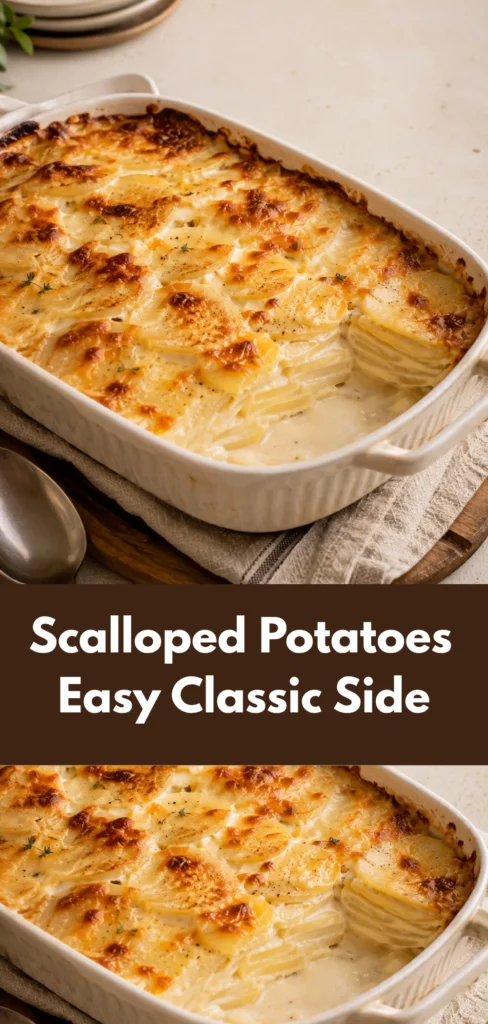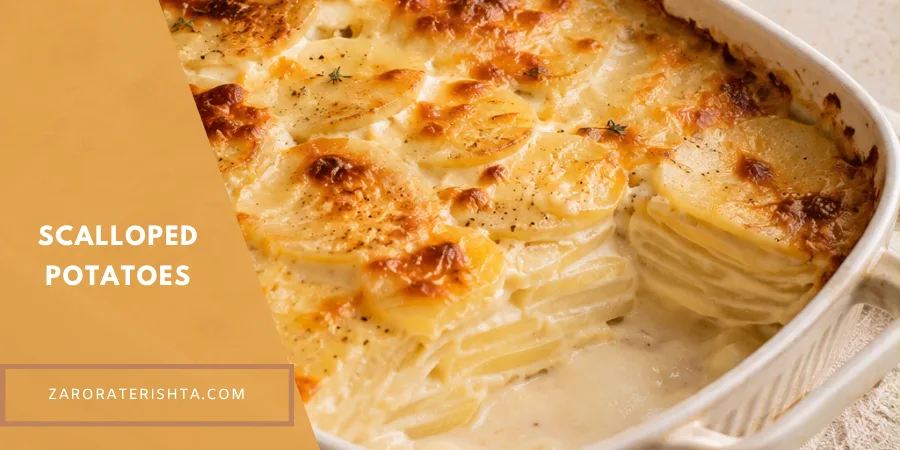
I love scalloped potatoes because this classic side dish transforms simple ingredients into something warm, comforting, and satisfying. Thinly sliced potatoes are layered in a casserole dish and baked with a creamy sauce made from whole milk and chicken broth. A simple roux of butter and flour helps create a smooth texture while keeping the potatoes tender and flavorful.
When I make this homemade recipe from scratch, I focus on a few important steps that make the biggest difference. Warming the milk and broth before adding them to the roux helps the sauce come together smoothly and creates a more consistent texture.
Scalloped Potatoes-The Short Answer
Onions and fresh thyme add savory depth without overpowering the natural flavor of the potatoes. After testing and adjusting the method, the best result is a casserole with tender potatoes, a silky sauce, and a lightly golden surface rather than a dish that feels overly heavy.
This hearty comfort food is perfect for holiday meals like Easter, Thanksgiving, or Christmas, but it is also simple enough for a regular dinner. I especially enjoy serving it with baked ham, roast beef, roast chicken, or pork chops.
The recipe can also be adapted depending on the occasion. Adding diced ham or a different cheese creates an easy variation while keeping the same creamy potato base.
Why You Love Scalloped Potatoes
What makes this dish so appealing is the balance between creamy flavor and a light, silky texture. A good scalloped potato recipe does not need an overly heavy sauce to feel satisfying.
Using a combination of whole milk and chicken broth creates a creamy base with savory depth. The broth adds flavor while helping keep the sauce balanced and smooth instead of making it feel too rich.
The thin potato slices become tender as they bake, allowing the sauce to move between the layers and create a creamy texture throughout the casserole. Each layer absorbs the flavors from the sauce, onion, garlic, and herbs.
Cheese can be added for a richer version, creating a more savory and golden finish. The recipe also benefits from a short resting period after baking because the sauce thickens slightly and the layers become more stable.
Allowing the casserole to rest for about 20 minutes makes it easier to serve while helping maintain the creamy texture and warmth of the finished scalloped potatoes.
Difference Between Scalloped Potatoes and Au Gratin
The main difference between scalloped potatoes and potatoes au gratin is the use of cheese. Traditional scalloped potatoes are typically made with thinly sliced potatoes baked in a creamy milk or cream-based sauce without cheese.
Potatoes au gratin includes cheese, creating a richer and more savory finish. The added cheese often creates a golden, melted topping and gives the dish a stronger cheesy flavor.
For this recipe, the potatoes are layered with a creamy onion sauce made from milk, broth, onion, garlic, butter, and flour. Adding cheddar creates a richer cheesy version with an au gratin-style finish.
Because cheese is included, some people may refer to this version as au gratin potatoes or potatoes au gratin. However, the base method remains similar: tender potato layers baked in a creamy sauce.
The terms are often used interchangeably, but the main distinction comes down to whether cheese is included. The traditional version focuses on tender potatoes and a smooth sauce, while the cheesy version combines the same creamy base with melted cheddar.
Ingredients Needed
For these scalloped potatoes, I keep the ingredients simple so the final dish has a creamy texture, balanced flavor, and tender potato layers without becoming overly heavy. Each ingredient plays an important role in creating the smooth sauce and comforting texture that makes this casserole special.
For the potatoes, use:
- 3 pounds (1,360 grams) Yukon Gold potatoes, sliced about ⅛ inch (3 mm) thick
Yukon Gold potatoes are the preferred choice because their thin skins do not require peeling and they hold their shape well during baking. Their naturally creamy texture works especially well with the sauce. Russet potatoes can also be used because their starch helps thicken the sauce, although they become softer during cooking. Red potatoes and Idaho potatoes are also suitable options.
For the creamy sauce, use:
- 3 tablespoons (43 grams) unsalted butter
- ¼ cup (30 grams) all-purpose flour
- 2 cups (480 ml) whole milk
- 1 cup (240 ml) chicken broth
The butter and flour create the roux that thickens the sauce, while whole milk provides a smooth creamy base. Using chicken broth along with milk adds savory depth and keeps the sauce balanced rather than making it feel too rich.
For the aromatic base and seasoning, use:
- ½ medium yellow onion (about 70 grams), thinly sliced or chopped
- 2 garlic cloves (about 6 grams), minced
- 1 teaspoon fine salt (about 5 grams)
- ½ teaspoon freshly ground black pepper (about 1 gram)
- 1 teaspoon fresh thyme leaves (about 1 gram)
The onion is softened in butter to bring out its natural sweetness, while garlic adds a deeper savory flavor. Fresh thyme gives the sauce a subtle herbal note that complements the potatoes without overpowering them.
Seasoning is added both to the sauce and between the potato layers. For each of the two potato layers, use:
- ¼ teaspoon fine salt
- ⅛ teaspoon black pepper
Adding seasoning between the layers helps the potatoes develop flavor throughout the casserole instead of relying only on the sauce.
For the cheesy version, use:
- 1½ cups freshly grated sharp cheddar (about 150 grams)
The cheddar adds a richer, more savory finish and creates a golden melted topping. The recipe can also be made without cheese for a more traditional scalloped potato style.
How To Make
Making scalloped potatoes from scratch becomes easier when the process is divided into four main steps: preparing the potatoes, making the creamy sauce, assembling the layers, and baking the casserole. Slice the potatoes as evenly as possible, aiming for approximately ⅛-inch (3 mm) thickness so they cook at the same rate.
Preheat the oven to 375°F (190°C) and lightly grease a 9×13-inch baking dish. Prepare the sauce by melting 43 grams unsalted butter in a medium saucepan over medium-low heat.
Add 70 grams onion and 6 grams garlic, then cook for about 3–4 minutes until the onion softens and becomes translucent. Stir in 30 grams flour and cook for approximately 2 minutes to create the roux.
Warm 480 ml milk and 240 ml chicken broth together in a separate container. Gradually add the warm liquid to the flour mixture while whisking after each addition. This helps create a smooth sauce without lumps.
Add the salt, black pepper, and fresh thyme. Continue cooking the sauce over medium heat for about 2–3 minutes, stirring frequently, until it lightly coats the back of a spoon.
Avoid allowing the sauce to boil because excessive heat can cause the dairy-based mixture to separate. Remove it from the heat once the desired creamy consistency is reached.
For assembly, arrange half of the sliced potatoes in the prepared baking dish. Add half of the onion, then season the layer with ¼ teaspoon salt and ⅛ teaspoon black pepper.
Pour half of the sauce over the potatoes and sprinkle ¾ cup cheddar (about 75 grams) evenly across the surface. Add the remaining potatoes and onion, then season with another ¼ teaspoon salt and ⅛ teaspoon black pepper.
Pour over the remaining sauce and finish with the remaining ¾ cup cheddar (about 75 grams). Creating two balanced layers helps distribute the sauce and cheese throughout the casserole instead of concentrating everything only on the top.
Cover the dish tightly with aluminum foil and bake for 45 minutes at 375°F (190°C). Remove the foil and continue baking uncovered for about 30–35 minutes, until the potatoes are tender, the sauce is bubbling, and the cheese develops a golden surface.
Place a baking sheet underneath the casserole if needed to catch any sauce that bubbles over. Check the center with a thin knife; it should slide easily through the potato layers.
If the potatoes are still firm, continue baking for another 5–10 minutes and check again. Once baked, allow the casserole to rest for 20 minutes before serving.
This resting time allows the sauce to thicken slightly and the layers to settle, making the scalloped potatoes easier to slice while keeping the creamy texture intact.
How to Make Scalloped Potatoes Ahead of Time
Scalloped potatoes are convenient to prepare ahead for holidays and gatherings because the dish can be assembled in advance without losing its comforting texture. The recipe can be prepared up to 48 hours ahead of time.
Prepare the potatoes, make the sauce, and fully assemble the casserole according to the recipe. Bake it covered at 375°F (190°C) for 45 minutes. At this stage, the potatoes should be substantially tender but do not need to have a browned surface.
Allow the casserole to cool completely while keeping it covered. Once cooled, cover it securely and refrigerate for up to 2 days.
When ready to serve, remove the casserole from the refrigerator at least 30 minutes before reheating. Letting it sit at room temperature while the oven preheats helps it reheat more evenly.
Preheat the oven to 350°F (175°C), then reheat the casserole covered for about 30 minutes, or until the center is heated through and the potatoes are fully tender.
If the surface needs more browning, remove the cover during the final 5–10 minutes of reheating. If the center is still cool or the potatoes need more time, continue reheating in 5–10 minute intervals until fully warmed.
For leftovers, transfer the cooled casserole to an airtight container and store it in the refrigerator for up to 4 days. Individual portions can be reheated in the microwave, while larger portions reheat best in a 350°F (175°C) oven.
Keeping leftovers covered during storage helps maintain the moisture and creamy texture of the dish.
Storage and Freezing
Leftover scalloped potatoes can be stored in the refrigerator for up to 4 days. Allow the casserole to cool completely before storing, then cover it tightly or transfer the leftovers to an airtight container.
Keeping the dish properly covered helps protect the potatoes from drying out and helps maintain the creamy texture of the sauce during storage.
Scalloped potatoes can also be frozen, although the potato texture may change after thawing. The potatoes may become softer compared with freshly baked scalloped potatoes, so refrigerator storage is preferred when possible for the best texture.
Notes
The type of potato you choose can affect the final texture and appearance of the casserole. Yukon Gold and red potatoes can be left unpeeled, while russet or baking potatoes may be peeled if preferred.
Waxy potatoes tend to hold their shape well during cooking, while russet potatoes become softer and release more starch, which can help thicken the sauce.
For a richer version, shredded cheese can be added between the potato layers. The recipe uses 1½ cups (about 150 grams), with sharp cheddar or Gruyère working well as bold cheese choices.
Avoid allowing the cheese sauce to boil because excessive heat can cause the cheese to separate. Fresh thyme or minced rosemary can also be added for extra herbal flavor.
The sauce naturally thickens as the casserole rests. Allowing the dish to sit after baking helps the layers become more stable and makes serving easier.
To make ahead, prepare the recipe up to 48 hours in advance. Bake the assembled casserole covered at 375°F (190°C) for 45 minutes until the potatoes are substantially tender.
Allow the casserole to cool completely while covered, then refrigerate it for up to 2 days. On the day of serving, remove it from the refrigerator at least 30 minutes before reheating.
Reheat the casserole covered at 350°F (175°C) for about 30 minutes until heated through and the potatoes are fully tender. For a browned surface, remove the cover during the final 5–10 minutes.
Store leftovers in an airtight container in the refrigerator for up to 4 days.
Nutrition
The nutrition values for scalloped potatoes are approximate and can vary depending on the ingredients, brands, and cooking methods used.
Based on 8 servings, each serving provides approximately:
- Calories: 350 kcal
- Carbohydrates: 40 g
- Protein: 12 g
- Total Fat: 16 g
- Saturated Fat: 8 g
- Fiber: 4 g
- Sugar: 5 g
- Sodium: 650–750 mg
- Potassium: 950–1,050 mg
- Calcium: 250–300 mg
These values are estimates and may change depending on the specific ingredients used. Sodium can vary especially depending on the chicken broth, cheddar, and amount of salt added.
Portion size also affects the final nutrition values when serving the recipe. The calculation is based on dividing the complete recipe into 8 servings.
Pinterest Pins