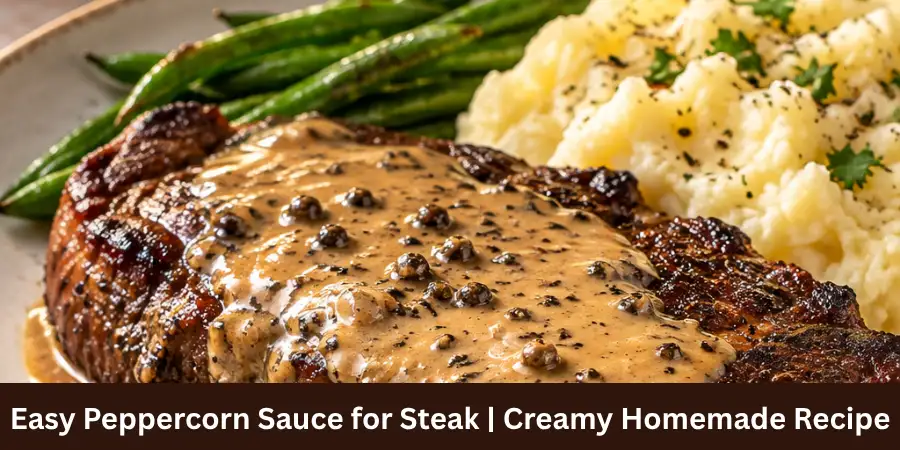
Creamy Peppercorn Sauce is an easy way to make a simple steak dinner feel more special. The sauce has a smooth texture, rich flavor, and gentle heat from crushed peppercorns, making it a natural match for steak.
Its creamy consistency and bold pepper flavor create a restaurant-style finish while still being practical to prepare at home.
This classic-style sauce has a French-inspired character and traditionally uses cognac, although brandy or whiskey can also be used.
Easy Peppercorn Sauce for Steak-The Short Answer
This creamy peppercorn sauce method uses simple reductions and gentle heat to build rich flavor and a smooth texture. It helps you avoid a thin or split sauce while making steak feel restaurant-worthy.
Heavy cream creates the rich, smooth base, while coarsely crushed whole peppercorns add texture and a noticeable peppery flavor.
Preparing the sauce in the same skillet used for cooking the steak adds another layer of flavor.
The browned bits left in the pan combine with the sauce and create additional savory depth while the steak rests.
What makes this recipe practical is its straightforward cooking process. The alcohol is reduced first, followed by beef broth, which is reduced before the cream is added.
The sauce then gently simmers until it reaches a smooth consistency that coats the spoon while remaining easy to pour.
This method creates a balance of creamy richness, concentrated flavor, and peppery warmth without making the sauce complicated.
It is a useful recipe when you want to elevate a steak dinner without preparing an overly complex sauce.
About Peppercorn Sauce for Steak
A good peppercorn sauce can turn a simple steak into a more special meal.
The combination of pungent peppercorns, heavy cream, and cognac, brandy, or whiskey creates a rich sauce with a slightly spicy pepper character.
The creamy texture balances the bold pepper flavor while complementing the natural taste of a juicy steak.
The sauce is also versatile and works well with other meats and vegetables. Preparing the sauce in the same skillet used for steak allows the browned bits and seasoning left behind from the meat to add extra depth.
The combination of beef stock, black peppercorns, cream, and the chosen alcohol creates a rich flavor profile.
Shallot and garlic provide a savory foundation without overpowering the peppercorns.
This creates a balanced sauce that feels indulgent while still being easy to pair with a home-cooked meal.
Peppercorn sauce has roots in classic French sauces and traditional steak dishes.
Steak au poivre is a well-known example of a peppercorn-crusted steak served with a creamy sauce.
Green peppercorns, which are unripe peppercorn berries usually sold brined, can be used for a milder variation.
Steak Diane follows a different style, using ingredients such as shallots and Worcestershire sauce rather than focusing on peppercorns.
These variations show how the same style of sauce can develop different flavors while remaining a natural partner for steak.
Ingredients Needed
• 2 tablespoons (28 g) unsalted butter
• 1 small shallot (about 35 g), finely minced
• 1 clove fresh garlic (about 3 g), minced
• 1 tablespoon (8 g) whole black peppercorns
• ¼ cup (60 ml) whiskey, Cognac, or brandy
• ¾ cup (180 ml) low-sodium beef broth
• ½ cup (120 ml) heavy whipping cream (about 36% milk fat)
• ⅛ teaspoon (0.7 g) fine salt, plus more if needed
Ingredients Notes
Low-Sodium Beef Broth
Use ¾ cup (180 ml) low-sodium beef broth. Beef broth creates the savory base of the sauce and adds depth before the cream is added.
Using a low-sodium option gives better control over the final seasoning because the steak, broth, and other ingredients can vary in salt content.
Homemade beef broth or another good-quality stock can also work. The goal is to create a flavorful base while keeping enough room to adjust seasoning at the end.
Heavy Whipping Cream
Use ½ cup (120 ml) heavy whipping cream with about 36% milk fat. Heavy cream creates the rich, smooth texture that defines a creamy peppercorn sauce.
Its higher fat content helps the sauce develop a thicker, more luxurious consistency. Lower-fat dairy is not a direct replacement because it may not thicken in the same way and can change the texture of the finished sauce.
Unsalted Butter
Use 2 tablespoons (28 g) unsalted butter. Butter provides the fat needed to gently cook the aromatics and helps create a smooth sauce base.
Using unsalted butter allows better control over the final salt level.
Garlic
Use 1 clove (about 3 g) freshly minced garlic. Garlic adds a subtle savory flavor that supports the peppercorns and cream without overpowering the sauce.
It works as part of the aromatic base rather than being the main flavor.
Shallot
Use 1 small shallot (about 35 g), finely minced. Shallot adds a mild savory sweetness and depth to the sauce.
It complements the pepper and cream while keeping the flavor balanced. The shallot should remain in the background so the peppercorn flavor stays noticeable.
Whole Black Peppercorns?
Use 1 tablespoon (about 8 g) whole black peppercorns. Black peppercorns provide the signature flavor of this sauce.
They add pungent heat, aroma, and texture that make the sauce a natural match for steak. The peppercorns should be coarsely crushed rather than finely ground.
A coarse texture allows the pepper pieces to remain noticeable in the finished sauce instead of disappearing into the cream.
A peppermill on the largest setting works well. A mortar and pestle can also create the same coarse texture.
Whiskey, Cognac, or Brandy
Use ¼ cup (60 ml) whiskey, Cognac, or brandy. Choose only one of these. These alcohol options provide depth and contribute to the classic character of the sauce.
Cognac or brandy gives a more traditional French-inspired flavor, while whiskey creates a deeper variation.
The alcohol is reduced before the broth and cream are added. This helps soften the sharp alcohol flavor while concentrating the overall taste of the sauce.
For an alcohol-free variation, extra beef stock can replace the alcohol. Skip the alcohol step, use an additional ¼ cup (60 ml) beef broth (1 cup or 240 ml in total), and simmer it until it reduces to about 6 tablespoons (90 ml). This takes roughly 3–4 minutes longer than the regular recipe.
Salt
Use ⅛ teaspoon (0.7 g) salt as a starting amount. The final amount may need adjustment depending on the salt level of the broth, steak seasoning, and other ingredients used.
Adding salt gradually helps maintain the right balance without making the sauce overly salty.
Equipment
• 10-inch heavy skillet
• Lid that fits the skillet
• Wooden spoon or silicone spatula
• Mortar and pestle or rolling pin
• Liquid measuring cup
• Measuring spoons
• Small bowl
• Serving spoon
How to Cook Creamy Peppercorn Sauce for Steak
Before You Start
The steps move quickly once the skillet is hot, so have everything ready first.
Crush 1 tablespoon (8 g) whole black peppercorns into coarse pieces with a mortar and pestle, a rolling pin, or a peppermill on the largest setting. Keep them coarse and set them in a small bowl.
Mince the shallot and garlic.
Measure ¼ cup (60 ml) of your chosen alcohol into a small bowl or measuring cup.
Measure ¾ cup (180 ml) beef broth and ½ cup (120 ml) heavy cream.
Keep a lid that fits the skillet within reach in case the alcohol catches fire.
Step 1: Prepare the Skillet
Start with the same skillet used to cook the steak. Remove the steak to a plate and cover it loosely with foil so it can rest for 5–10 minutes while you make the sauce. Do not wash the pan because the browned bits left behind add extra savory depth to the sauce.
If there is excess fat in the skillet, keep about 1 tablespoon and remove the rest.
Let the pan cool slightly off the heat for 30–60 seconds before continuing. This keeps the butter from burning and stops the browned bits from turning black and bitter.
If the browned bits look black and burnt rather than golden-brown, or if the steak was cooked in a different pan, wipe the pan out and use a clean 10-inch heavy skillet instead.
Step 2: Cook the Aromatics and Peppercorns
Place the skillet over medium heat. Add 2 tablespoons (28 g) butter and allow it to melt. Add the finely minced shallot and cook gently for about 2 minutes until softened.
Add the minced garlic and cook for another 30–45 seconds. Keep the garlic from browning because burned garlic can create a bitter flavor.
Add the coarsely crushed peppercorns. Stir for another 30–45 seconds until the peppercorns become fragrant.
The peppercorns should remain coarse rather than turning into a powder. Keeping their texture helps maintain the noticeable pepper flavor in the finished sauce.
Step 3: Reduce the Alcohol
Turn off the burner or move the skillet away from the heat. Then add the ¼ cup (60 ml) of whiskey, Cognac, or brandy you measured earlier. Use only one of them, and do not pour it straight from the bottle.
Keep your face, hair, and clothing away from the pan while adding the alcohol. Return the skillet to medium heat.
Use a wooden spoon to scrape the browned bits from the bottom of the pan. Allow the liquid to simmer for about 2–3 minutes.
Reduce it until about 1 tablespoon (15–20 ml) of glossy syrup remains and the bottom of the pan shows clearly when you drag the spoon through it. The strong alcohol smell should soften. If the alcohol catches fire, cover the skillet with a lid and turn off the burner. Do not add water.
Step 4: Add and Reduce the Beef Broth
Add ¾ cup (180 ml) low-sodium beef broth to the skillet. Bring the mixture to a simmer over medium heat. Cook for about 5–7 minutes until the broth reduces to roughly half its original volume, or about 6 tablespoons (90 ml).
If you are making this for the first time, pour 90 ml (6 tablespoons) of water into an empty skillet of the same size before you start to see how deep half the broth should look, then pour it out.
This step concentrates the beef flavor before the cream is added. Do not skip the reduction step because it helps create a more flavorful final sauce.
Step 5: Add the Cream
Lower the heat to medium-low. Gradually stir in ½ cup (120 ml) heavy cream. Cook gently for about 3–5 minutes.
Avoid vigorous boiling because the sauce should thicken slowly while maintaining a smooth and creamy texture. The sauce should become rich and slightly thickened without becoming too heavy.
If extra oil gathers on the surface, skim it off with a spoon.
Step 6: Check the Consistency
Test the sauce using the back of a spoon. The sauce should coat the spoon evenly while still remaining pourable.
If it is slightly thin, continue simmering for another 1–2 minutes. Check again until it reaches the desired consistency.
Step 7: Season at the End
Remove the skillet from the heat. Start with ⅛ teaspoon (0.7 g) salt. Taste the sauce before adding more because the broth and steak seasoning can affect the final salt level.
If needed, add more salt in small pinches and taste again each time.
Step 8: Serve the Sauce
Serve the creamy peppercorn sauce warm over the rested steak or spoon it alongside the meat. This same method can also be used with:
• Thick pork chops
• Pan-seared chicken breasts
The sauce works well whenever you want a creamy pan sauce with peppery flavor.
Tips & Tricks
Use Quality Ingredients
Because this peppercorn sauce has only a few main ingredients, the quality of each one can make a noticeable difference.
Using good-quality Cognac, brandy, or whiskey can add more depth to the sauce and create a smoother classic flavor.
Lower-quality alcohol may leave a harsher taste. When adding alcohol to the skillet, turn off the burner first or remove the pan from the heat.
Keep your face, hair, and clothing away from the skillet while adding the alcohol. If a flame appears, cover the pan with a lid and turn off the burner. Do not add water.
Once the pan is safe, return it to medium heat and continue reducing the alcohol until the strong smell softens.
Choose the Right Beef Broth
The beef broth also plays an important role in the final flavor. Choose a high-quality low-sodium broth or unsalted broth when possible.
This gives better control over the final seasoning because the salt level can be adjusted at the end. Broth with a simple ingredient list can help create a cleaner flavor.
The goal is a savory base that supports the peppercorns, cream, and steak without overpowering them.
Use Freshly Crushed Peppercorns
Freshly crushed peppercorns provide the best aroma, texture, and pepper flavor.
Avoid using jarred ground black pepper when possible because its fine powder texture does not create the same result.
The coarse pieces of peppercorns remain noticeable in the finished sauce and provide the signature peppery character. Green peppercorns can also be used for a milder variation. Replace the black peppercorns with 1 tablespoon drained brined green peppercorns, lightly crushed, and stir them in with the cream instead of cooking them in the butter.
Use the Same Steak Skillet
After cooking the steak, allow it to rest while preparing the sauce in the same skillet. The browned bits left from searing add extra savory depth and help create a richer pan sauce.
The skillet carries the flavors from the steak into the sauce, making the final result taste more developed.
Adjust the Flavor
Small additions can increase the depth of the sauce without changing its basic character. A little Worcestershire sauce or Dijon mustard (¼–½ teaspoon) can be added when you want extra complexity.
The finished creamy sauce works especially well with steak but can also be served with:
• Pork chops
• Pan-seared chicken
• Vegetables
• Pasta
How to Store Peppercorn Sauce for Steak
Allow the peppercorn sauce to cool completely before storing, and do not leave it at room temperature for more than 2 hours. Transfer it to an airtight container.
Refrigerate the sauce for up to 4 days. The sauce is best when freshly made, but it can be prepared ahead and reheated when needed.
Do not freeze the sauce because cream-based sauces tend to split when thawed.
After refrigeration, the sauce may become slightly thicker. This is normal because the cream-based sauce firms up when chilled.
Reheating Instructions
Reheat the sauce gently in a skillet over low-to-medium heat. If the sauce has thickened too much, add a small amount of water or beef broth.
Stir gently while warming until the sauce reaches a smooth consistency again.
Avoid vigorous boiling because gentle reheating helps maintain the creamy texture. Serve immediately once warmed.
Serving Suggestions
Creamy black peppercorn sauce is a rich complement to steak. It pairs especially well with:
• Filet mignon
• NY Strip Steak
• Tri tip
• Skirt steak
The sauce also works well with:
• Beef tenderloin roast
• Garlic butter prime rib
The creamy texture adds richness while allowing the flavor of the meat to remain the focus. This sauce can also be used beyond beef.
Serve it with:
• Chicken breasts
• Pork chops
Using the same skillet after cooking the meat helps carry those savory browned flavors into the sauce.
The versatility of this recipe makes it useful for different proteins and meals while keeping the same creamy peppercorn character.
Notes
When making this sauce after cooking steak, remove the steak from the skillet and allow it to rest, loosely covered with foil, while preparing the sauce.
Using the same skillet helps preserve the browned bits left behind from searing, which adds extra savory depth to the finished sauce. If making a larger batch of peppercorn sauce, allow extra time for the sauce to reduce.
Instead of relying on the original cooking time, check the consistency and continue reducing until the sauce reaches a smooth, spoon-coating texture.
The sauce should remain creamy and pourable. Avoid reducing it too much because a thicker sauce can become heavy rather than smooth.
Nutrition Information
The nutrition values are calculated based on one serving of about ¼ cup (58 ml) from a total yield of about 1 cup (230 ml), which makes 4 servings. One serving contains approximately:
201 kcal
4g carbohydrates
2g protein
17g total fat
11g saturated fat
1g fiber
1g sugar
150mg sodium
55mg cholesterol
These values are based on the ingredients listed in this recipe, including:
Butter
Heavy cream
Beef broth
Alcoholic ingredient
The nutrition information is an estimate and may vary slightly depending on the specific ingredients and brands used.
These values are provided for general information and are not intended as medical advice. Anyone with specific dietary needs should consult a qualified healthcare professional.
Frequently Asked Questions
Can I Make This Peppercorn Sauce Ahead of Time?
Yes, peppercorn sauce can be prepared ahead of time and gently reheated when ready to serve. After refrigeration, the sauce may become slightly thicker.
Reheat it gently and add a small amount of beef broth if needed to restore the desired consistency.
Avoid vigorous boiling during reheating because gentle warming helps maintain the smooth creamy texture.
Do You Need to Use Cognac in Creamy Peppercorn Sauce?
Cognac gives creamy peppercorn sauce its traditional flavor and depth. Brandy or whiskey can also be used to create a slightly different but useful variation.
If you prefer an alcohol-free version, the alcohol can be omitted. Replace it with extra beef broth (an additional ¼ cup or 60 ml) to maintain the structure of the sauce.
Fresh lemon juice can also be added at the end of cooking if desired to provide additional brightness. Use about ¼ teaspoon, and stir it in after removing the skillet from the heat so the cream does not split.
The alcohol-free version will have a different flavor profile from the cognac, brandy, or whiskey version, but it can still create a balanced creamy sauce when properly reduced.
What Can I Serve Peppercorn Sauce With Besides Steak?
Although this sauce is a classic pairing for steak, it also works well with other proteins. It can be served with:
• Pork chops
• Pan-seared chicken breasts
The same skillet method can be used to carry savory browned flavors from the cooked protein into the sauce.
The creamy peppercorn flavor also works well alongside vegetables and pasta when you want a rich sauce.
Why Is My Peppercorn Sauce Too Thin?
If the sauce is too thin, continue simmering gently until it reduces further. The sauce should coat the back of a spoon while remaining pourable.
Avoid using high heat because the sauce needs gentle reduction to maintain its smooth texture.
Why Is My Peppercorn Sauce Too Salty?
Remove the skillet from the heat and stir in 1–2 tablespoons of extra heavy cream or unsalted beef broth. Taste after each addition.
If the sauce becomes too thin, simmer it gently over medium-low heat for 1–2 minutes. Next time, use low-sodium broth and add the salt only at the end.
Why Is My Peppercorn Sauce Too Peppery?
Stir in 1–2 tablespoons of heavy cream to soften the pepper flavor. If it is still too strong, spoon out some of the peppercorns.
Next time, keep the peppercorns coarse, measure 1 tablespoon (8 g), and cook them for only 30–45 seconds.
Why Does My Peppercorn Sauce Taste Flat?
Stir in ¼–½ teaspoon Dijon mustard or ½ teaspoon Worcestershire sauce and simmer for 30 seconds. Then taste again, because a flat sauce sometimes just needs a pinch more salt.
Next time, use the browned bits from the steak skillet, a good-quality low-sodium broth, and reduce the alcohol properly.
Why Did My Peppercorn Sauce Split or Look Oily?
Remove the skillet from the heat right away and whisk in 1 tablespoon of cold heavy cream or warm beef broth. Skim any extra fat from the surface with a spoon.
Splitting usually happens when the cream was boiled, the heat was too high, or too much fat was left in the pan from the steak.
Can I Use Green Peppercorns Instead of Black Peppercorns?
Yes, green peppercorns can be used for a milder variation. They provide a softer pepper flavor while keeping the overall style of the sauce.
Use 1 tablespoon drained brined green peppercorns, lightly crushed, and add them with the cream rather than cooking them in the butter.
This recipe is built around whole black peppercorns, which provide the classic bold pepper flavor expected with steak.
Can I Double This Peppercorn Sauce Recipe?
Yes, the recipe can be doubled. When making a larger amount, allow additional time for the alcohol and broth to reduce.
Use a wide 12-inch skillet so the liquid can reduce properly. Measure the alcohol in advance, add it off the heat in two portions, and keep the lid within reach, because a larger amount of alcohol can flare higher.
Check the sauce consistency rather than following the original timing exactly. The finished sauce should still have a smooth, creamy texture that coats the spoon.
Pinterest Pins