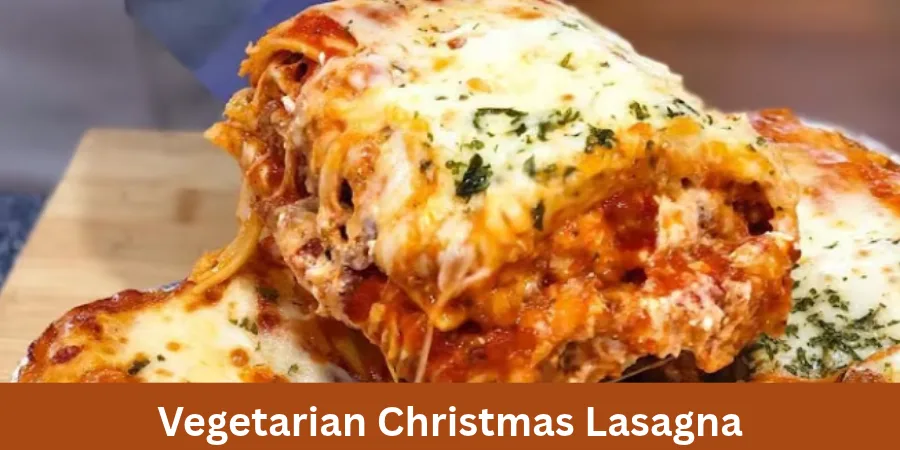
Vegetarian lasagna is a comforting choice for Christmas dinner, especially when you want a satisfying meat-free meal to share with family and friends. Layers of pasta, tomato sauce, roasted vegetables and three cheeses come together in the oven to create a rich dish with a golden, bubbling top.
The filling combines creamy ricotta and spinach with roasted zucchini, bell pepper and onion. Homemade tomato sauce adds depth, while mozzarella and Parmesan bring a savory, cheesy finish. Roasting the vegetables first helps develop their flavor and reduces excess moisture, preventing the lasagna from becoming watery.
Vegetarian Christmas Lasagna-The Short Answer
You can prepare the sauce, vegetables and spinach-ricotta filling ahead of time to make Christmas dinner easier to manage. You can also assemble the lasagna and refrigerate it before baking. Let it rest for about 15 minutes after baking so the layers settle and each portion is easier to serve. This makes it a practical meal when cooking for a crowd.
About This Recipe
This lasagna was developed by combining the strongest points of three recipes: a classic cheesy lasagna with homemade tomato sauce, a roasted vegetable and spinach-ricotta version, and a cheesy baked pasta recipe. The goal was a rich, cheesy vegetarian lasagna with tender pasta, balanced moisture and stable layers.
Each step in the method addresses a common lasagna problem. The tomato sauce is simmered until thick, the vegetables are roasted and drained, the spinach is squeezed dry, the ricotta is drained if it is watery, and the finished lasagna is rested before slicing. Together, these steps help prevent a watery or sliding lasagna.
The result is a substantial meat-free main course that suits a Christmas menu or any holiday gathering where vegetarian guests need a hearty dish.
Why You’ll Love This Lasagna
A warm, cheesy vegetable lasagna makes a comforting vegetarian Christmas dinner for family and friends. Roasted zucchini, red bell pepper and onion bring natural sweetness and texture to every layer.
These vegetables pair well with a creamy spinach and ricotta filling, creating a rich, satisfying dish without meat. Roasting the vegetables before assembling the lasagna also develops their flavor and reduces excess moisture.
The homemade tomato sauce adds depth with passata, crushed tomatoes, onion, garlic and Italian seasoning. Ricotta creates a creamy filling, while mozzarella melts into a gooey topping and Parmesan adds a savory finish. Regular dried lasagna sheets are the main choice for this recipe and should be prepared according to the package instructions.
No-boil sheets can also work when used with the appropriate sauce moisture and baking time. Spreading the sauce evenly and covering the pasta edges helps prevent dry spots, while resting the lasagna after baking allows the layers to hold together when sliced.
This lasagna is a practical choice for Christmas dinner because several components can be prepared ahead. Make the tomato sauce, roast the vegetables and prepare the spinach-ricotta filling in advance.
You can also assemble the dish and refrigerate it before baking, preferably within the recommended preparation window. Serve each portion with a fresh green salad or lightly seasoned vegetables to balance the rich cheese and sauce.
Whether you’re hosting a family gathering or planning a festive meal, this make-ahead dish brings comforting flavors to the holiday table without making the cooking process unnecessarily complicated.
Ingredients
A rich and cheesy vegetarian lasagna is a comforting choice for a vegetarian Christmas dinner. It features layers of pasta, homemade tomato sauce, roasted vegetables and a creamy spinach-ricotta filling. The combination of vegetables, herbs and cheese creates a savory dish with plenty of flavor and texture.
Ingredients Needed
- Olive oil – 1 tablespoon (15 ml) for the tomato sauce.
- Onion – 120 g, finely chopped, for the tomato sauce.
- Garlic – 12 g, minced.
- Tomato paste – 30 g.
- Passata – 500 g.
- Crushed tomatoes – 400 g.
- Italian seasoning – 1 teaspoon.
- Dried oregano – ½ teaspoon for the tomato sauce.
- Salt – ½ teaspoon for the tomato sauce.
- Black pepper – ¼ teaspoon for the tomato sauce.
- Honey – 1 teaspoon (7 g), or sugar – 1 teaspoon (4 g), if needed.
- Water – up to 60 ml, if needed.
- Zucchini – 300 g.
- Red bell pepper – 150 g.
- Onion – 150 g.
- Olive oil – 2 tablespoons (30 ml) for the vegetables.
- Salt – ½ teaspoon for the vegetables.
- Black pepper – ¼ teaspoon for the vegetables.
- Dried oregano – ½ teaspoon for the vegetables.
- Whole-milk ricotta – 400 g.
- Frozen chopped spinach – 150 g, thawed and squeezed dry.
- Large egg – 1.
- Finely grated Parmesan – 40 g for the filling.
- Fine salt – ½ teaspoon (3 g) for the filling.
- Black pepper – ¼ teaspoon for the filling.
- Ground nutmeg – a small pinch, optional.
- Dried lasagna sheets – 250 g (approximately 9–12 sheets, depending on their size).
- Shredded low-moisture mozzarella – 300 g.
- Finely grated Parmesan – 20 g for the topping.
Ingredients Notes
Tomato sauce:
Olive oil, onion and garlic create the aromatic base for the homemade tomato sauce. Tomato paste adds depth, while passata provides a smooth consistency and crushed tomatoes contribute texture. Italian seasoning and dried oregano add familiar Italian flavors. Honey or sugar can be used if needed to balance the tomato acidity.
Roasted vegetables:
Zucchini, red bell pepper and onion provide natural sweetness, flavor and texture. Olive oil helps the vegetables roast evenly, while salt, black pepper and dried oregano season them. Roasting also reduces excess moisture before the vegetables are added to the lasagna.
Spinach-ricotta filling:
Whole-milk ricotta creates a creamy filling, while thawed and squeezed spinach adds vegetable flavor. Egg helps bind the mixture, and Parmesan contributes a savory taste. A small pinch of ground nutmeg is optional and adds subtle warmth.
Pasta and cheese:
Regular dried lasagna sheets are the main pasta choice. Low-moisture mozzarella melts into a gooey topping, while Parmesan adds a savory finish to the filling and top layer. If you follow a strict vegetarian diet, choose mozzarella and Parmesan-style cheese made with vegetarian or microbial rennet.
How to Make Vegetarian Lasagna
Prepare the Vegetarian Lasagna
This Vegetarian Lasagna is a comforting option for a vegetarian Christmas dinner. It serves 8 and is a good choice for a crowd because the leftovers reheat well.
Start by preparing the roasted vegetables. Preheat the oven to 425°F (220°C). Arrange the vegetables on a baking tray, drizzle with olive oil, season with salt and pepper, and toss to coat. Roast for 20–25 minutes, until tender and lightly browned. Use a spatula to loosen the vegetables if they begin to stick to the tray. If liquid collects on the tray, drain it before assembling the lasagna.
To make the tomato sauce, heat olive oil in a medium saucepan over medium heat. Add the onion and cook for 5–6 minutes, stirring occasionally, until softened. Add the garlic and cook for 30 seconds, then stir in the tomato paste and cook for another minute.
Add the passata, crushed tomatoes, Italian seasoning, dried oregano, salt and pepper. Bring the sauce to a gentle simmer and cook over medium-low heat for 20–25 minutes, stirring occasionally.
Add a little honey or sugar if needed to balance the acidity. If the sauce becomes too thick, add a small amount of water. It should be thick enough to coat the back of a spoon. Remove from the heat and set aside.
Assemble and Bake the Lasagna
Prepare the spinach-ricotta filling by mixing the ricotta, thawed and thoroughly squeezed spinach, egg, Parmesan, salt and pepper in a bowl. Add a small pinch of ground nutmeg if you like. Drain the ricotta first if it is watery.
Boil the dried lasagna sheets in a large pot of salted boiling water. Drain them 2–3 minutes before the package cooking time ends; they should be pliable but still firm. Lay the drained sheets in a single layer on an oiled tray or parchment paper so they do not stick together.
Reduce the oven temperature to 375°F (190°C). Spread about 100 grams of tomato sauce in a thin layer over the bottom of a 9-by-13-inch baking pan that is at least 2 inches deep. Arrange a single layer of the boiled lasagna sheets in the pan, breaking them to fit if necessary.
Spread half of the roasted vegetables and half of the spinach-ricotta filling over the pasta. Add about 200 grams of tomato sauce and 75 grams of mozzarella. Repeat the layers with the remaining vegetables and ricotta filling, another 200 grams of sauce and 75 grams of mozzarella.
Finish with the final layer of pasta, covering the edges with the remaining sauce. Top with the remaining 150 grams of mozzarella and 20 grams of Parmesan. Place the dish on a rimmed baking tray.
Cover the pan with foil, ensuring it does not touch the cheese. Bake for 30–35 minutes covered, then remove the foil and bake for another 15–20 minutes, until the cheese is melted and bubbling, the top is lightly golden and the pasta is tender. If the pasta needs more time, cover the dish again and return it to the oven. Check that the center reaches at least 165°F (74°C) with an instant-read thermometer before taking the lasagna out of the oven.
Let the lasagna rest for 15 minutes before cutting and serving. This allows the sauce and filling to settle, helping the layers hold together when served.
Serving and Storing
Serve the lasagna warm with a green salad, garlic bread, roasted green beans or steamed broccoli. These sides complement the rich tomato sauce and cheesy filling.
To store leftovers, place them in an airtight container or cover the baking dish tightly and refrigerate within 2 hours. The lasagna will keep in the refrigerator for 3–4 days. For longer storage, divide it into individual portions and place them in freezer-safe containers or bags. Freeze for the best quality for 2–3 months.
Thaw frozen portions in the refrigerator overnight and reheat until the center reaches 165°F (74°C). Individual portions can be reheated in the oven or microwave until evenly hot.
To prepare ahead, make the tomato sauce, roasted vegetables and spinach-ricotta filling separately. Refrigerate them until you are ready to assemble the lasagna.
Make-Ahead Tips
Preparing a few ingredients ahead of time makes Christmas dinner easier to manage. I recommend making the tomato sauce a day in advance and roasting the vegetables separately. You can also prepare the spinach-ricotta filling beforehand and store it in a covered container in the refrigerator.
When you’re ready, assemble the vegetarian lasagna and cover the baking dish. For the best results, bake it within 24 hours of assembly.
This lasagna is also freezer-friendly, making it a convenient option for holiday meal preparation. Cooked portions can be frozen and stored for later. Refrigerate prepared ingredients and cooked lasagna promptly, and do not leave them at room temperature for more than two hours. If freezing cooked lasagna, divide it into portions and use airtight freezer-safe containers. For the best quality, use frozen portions within two to three months.
When you’re ready to serve, bake refrigerated lasagna for approximately 10–15 minutes longer than the usual cooking time and check that the center is fully cooked. Thaw frozen portions overnight in the refrigerator before reheating.
You can warm leftovers in the oven at 350°F (175°C), covered with foil to prevent the pasta from drying out, or use the microwave for individual portions. Reheat leftovers until the center reaches 165°F (74°C). These simple steps help you prepare a delicious vegetarian Christmas dinner without rushing on the day.
Notes
Whole wheat lasagna sheets can be used, but follow the package directions because cooking times and liquid requirements vary. For this recipe, regular dried lasagna sheets are the main option.
Boil them until slightly firm and drain them 2–3 minutes before the package cooking time ends. No-boil sheets are another option, but they need enough moisture from the sauce to become tender during baking.
The vegetable filling contains zucchini, red bell pepper and onion. Cut them into evenly sized pieces and roast for 20–25 minutes. Remove any excess liquid before assembling the lasagna to prevent a watery filling. The recipe uses 600 grams of vegetables in total.
For the sauce, combine tomato passata with crushed tomatoes. Passata creates a smooth base, while crushed tomatoes add texture. Simmer the sauce until thick enough to coat a spoon. If passata is unavailable, you can use crushed tomatoes instead, keeping the recipe’s total tomato quantity the same; the sauce will be chunkier and may need a little longer to simmer until thick.
Ricotta, mozzarella and Parmesan-style cheese give the lasagna its creamy filling and melted topping. If the ricotta is watery, drain it for 15–30 minutes before mixing it with the spinach. For a vegetarian dish, check that all cheeses use suitable vegetarian ingredients, as some traditional Parmesan and mozzarella products contain animal rennet.
Vegetarian Pecorino-style hard cheese can replace Parmesan. Scamorza or another low-moisture melting cheese, such as provolone, can replace the low-moisture mozzarella. Avoid fresh mozzarella, because it releases more water and can make the lasagna watery. Keep the total cheese quantities the same.
To prepare the lasagna ahead of time, assemble it in the baking dish, add the cheese topping and cover it tightly before refrigerating. Bake it preferably within 24 hours. A cold dish may need an additional 10–15 minutes in the oven.
If using a glass or ceramic dish, let it stand at room temperature for 20–30 minutes while the oven preheats. After baking, rest the lasagna for 15 minutes so the layers settle and are easier to serve. Refrigerate leftovers within two hours in an airtight container and use them within 3–4 days. Reheat individual portions in the oven or microwave until the center reaches 165°F (74°C).
Nutritional Information
For this vegetarian lasagna, each serving (based on 8 servings) provides an estimated 450–550 kcal, 45–55 g carbohydrates, 22–28 g protein and 18–26 g total fat. These preliminary values offer a general idea of the meal’s nutritional content. Actual amounts may vary depending on portion size and the brands of pasta, ricotta, mozzarella and Parmesan used.
The nutrition information is an approximation until it is calculated using the final ingredient quantities and product labels.
FAQ’s
What should I serve it with?
Vegetarian lasagna makes a satisfying main dish for a Christmas dinner. Serve it with a simple green salad, garlic bread, roasted green beans, steamed broccoli or other roasted vegetables. These sides complement the rich tomato sauce and cheesy filling without making the meal feel too heavy.
For a holiday gathering, you can prepare the salad and vegetables while the lasagna bakes, making meal preparation easier.
What other cheeses can I substitute?
This lasagna uses ricotta, mozzarella and Parmesan to create a creamy filling and a melted cheese topping. If you need to substitute any of these cheeses, choose an alternative that suits the recipe’s texture and flavor. Keep in mind that different cheeses can affect how the filling tastes and how the topping melts.
Vegetarian Pecorino-style hard cheese can replace Parmesan. Scamorza or another low-moisture melting cheese, such as provolone, can replace the low-moisture mozzarella. Avoid fresh mozzarella, because its extra moisture can make the lasagna watery.
If you follow a strict vegetarian diet, check the labels and choose cheeses made with vegetarian or microbial rennet, as some traditional Parmesan and mozzarella products may use animal rennet.
Can I make vegetarian lasagna in advance? What about leftovers?
You can prepare the tomato sauce, roast the vegetables and mix the spinach-ricotta filling ahead of time. Store each component in a covered container in the refrigerator until you are ready to assemble the lasagna. You can also assemble the dish in advance, cover it tightly and refrigerate it, preferably baking it within 24 hours.
If you use a glass or ceramic baking dish, avoid placing it directly into a hot oven while it is still cold from the refrigerator. Let it stand on the counter for 20–30 minutes while the oven preheats. A chilled lasagna may need around 10–15 minutes of additional baking time, depending on its temperature. Check that the pasta is tender, the filling is set and the center reaches 165°F (74°C).
Store leftover lasagna in an airtight container or tightly covered dish and refrigerate it within two hours. Use the leftovers within 3–4 days.
To reheat a portion, place it in an oven-safe dish and cover it with foil to help prevent drying. You can also use a microwave-safe dish for quicker reheating. Heat until the center reaches 165°F (74°C). These steps help preserve the lasagna’s texture and make leftovers convenient for another meal.