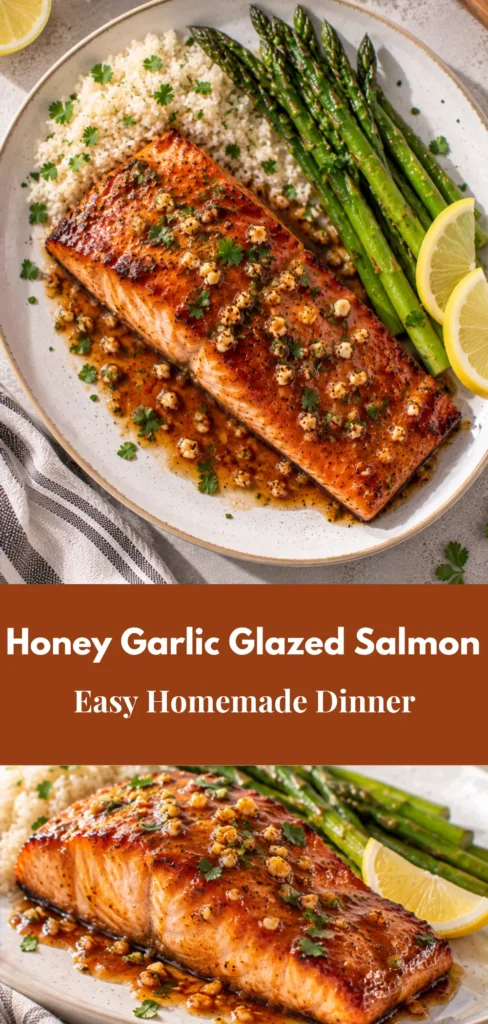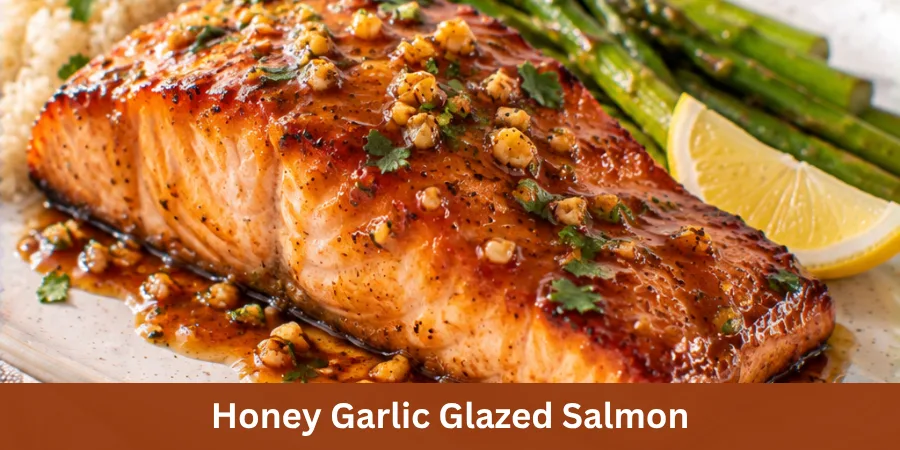
When I need a quick weeknight protein that does not require complicated preparation, this Honey Garlic Glazed Salmon is one of my go-to choices. It comes together as a 30-minute one-pan dinner with simple ingredients, while honey, garlic, soy sauce, and lemon create a sweet and savory balance.
The homemade glaze is sticky, lightly garlicky, and full of flavor without making the dish feel heavy. It is easy enough for a busy weeknight but still works well when serving guests.
Honey Garlic Glazed Salmon-The Short Answer
The salmon is first seared in a skillet and then finished in the oven, creating a tender, juicy, and flaky texture. The glaze is thickened separately before cooking and applied in stages, allowing it to coat the fish while avoiding prolonged exposure to excessive heat.
This controlled approach helps the honey garlic glazed salmon develop a glossy finish while keeping the cooking process simple and consistent. The method also gives flexibility if you prefer a pan-seared salmon technique combined with oven finishing.
As a main course, I like serving it with simple sides such as rice, quinoa, or roasted vegetables. These pairings keep the meal balanced while allowing the salmon to remain the focus.
The combination of rich fish, savory seasoning, fresh lemon, and honey creates the kind of sweet and savory balance that makes a simple dinner feel special and easily become a family favorite.
Why You’ll Love Honey Garlic Glazed Salmon
On a busy weekday, this 30-minute dinner makes salmon feel more special without requiring much effort.
The honey, garlic, and soy sauce come together into a flavorful glaze that becomes sweet and sticky, complementing the rich, flaky fish. I especially like this recipe when I want a delicious meal that does not take over the kitchen.
A few pantry staples are enough to create a dinner with the polished feel of a fine dining restaurant.
The salmon is seared in a skillet before going into the oven, where it finishes cooking without needing to be flipped again. This helps it hold its shape rather than breaking apart, which makes a difference when serving company.
Clean-up stays minimal because the salmon uses one skillet while the glaze is thickened separately. For serving, it works well with rice, salads, wraps, or favorite vegetables, making it a flexible main for different meals.
Salmon is also a nutritious food that provides omega-3s and protein, so this dish brings both flavor and useful nutrition to the table.
The finished glazed salmon has a glossy coating and fits easily into busy weeknights without feeling like the same dinner every time. It is a versatile main that can earn a regular place in your meal rotation while still feeling special enough for a more polished meal.
About This Recipe
When I want a quick meal that still feels special, this Honey Garlic Glazed Salmon is one of my favorite go-to recipes.
This 30-minute one-pan recipe gives you tender, flaky salmon with a bold sweet and savory flavor. The homemade honey garlic glaze is thick rather than watery and coats the salmon beautifully.
The salmon is cooked in one pan while the glaze is prepared separately. Basic ingredients like garlic, lemon juice, and soy sauce create a sticky sauce with plenty of flavor.
A meat thermometer helps reach flaky perfection without overcooking the fish.
This easy salmon recipe has a short prep time and works well for busy weeknights, meal prep, or family dinners.
The savory-sweet sauce pairs well with good-quality salmon, which provides B vitamins and omega-3 fatty acids.
Ingredients Needed
4 salmon fillets, each about 6 oz (approximately 170 grams each), total about 680 grams
1 tablespoon olive oil
1 teaspoon kosher salt
½ teaspoon smoked paprika
⅛ teaspoon red pepper flakes
⅓ cup low-sodium soy sauce
3 tablespoons honey
¼ cup fresh lemon juice
6 garlic cloves, finely minced
2 teaspoons cornstarch
Chopped green onion or parsley, optional garnish
Rice, quinoa, or roasted vegetables, for serving
Ingredients Notes
For this salmon dinner, use 4 salmon fillets, each about 6 oz or approximately 170 grams, for a total of about 680 grams.
Skin-on fillets are preferred because the skin helps protect the salmon during oven finishing. Before cooking, pat the fish thoroughly dry with paper towels to remove excess moisture.
Coat the fillets evenly with 1 tablespoon olive oil, then season with kosher salt, smoked paprika, and red pepper flakes.
Using similar-sized fillets helps them cook more evenly and reduces the chance of some pieces being undercooked while others become overcooked.
The honey garlic glaze combines low-sodium soy sauce, honey, fresh lemon juice, garlic, and cornstarch.
The honey provides sweetness and helps create the sticky coating that gives the salmon its glossy finish.
Soy sauce adds savory depth, while fresh lemon juice brings acidity to balance the sweetness of the glaze.
Freshly minced garlic provides the main aromatic flavor and creates the signature honey garlic profile.
Cornstarch thickens the glaze so it coats the salmon properly rather than becoming watery.
Whisk the glaze mixture until the cornstarch is completely dissolved before heating. Simmering the mixture for 1–2 minutes helps it reach the intended thick consistency.
The glaze is divided into an initial coating and a final coating.
Use about ¼ of the glaze for the initial coating before baking and reserve ¾ of the glaze for the final stage.
Applying the remaining glaze after cooking helps maintain the glossy finish without exposing the honey-based glaze to excessive heat for too long.
Use a clean spoon or brush for the final coating to keep it separate from any utensil that has touched raw salmon.
Serve the salmon with rice, quinoa, or roasted vegetables.
Chopped green onion or parsley can be used as an optional garnish.
These additions complement the sweet honey, savory soy sauce, fresh lemon, and aromatic garlic while keeping the recipe structure and ingredient quantities unchanged.
How to Make
Start by preparing the honey garlic glaze.
In a small saucepan, combine the low-sodium soy sauce, honey, fresh lemon juice, minced garlic, and cornstarch.
Whisk until the cornstarch is fully dissolved and there are no visible lumps.
Place the saucepan over medium heat and bring the mixture to a gentle simmer.
Continue cooking for 1–2 minutes, whisking frequently, until the glaze thickens to a smooth, glossy consistency.
Remove the glaze from the heat and divide it into two portions:
- Reserve about ¼ of the glaze for the initial coating before baking.
- Keep about ¾ of the glaze separate for the final coating after cooking.
Using separate portions helps keep the final glaze fresh and prevents contact between cooked salmon and utensils used with raw fish.
Preheat the oven to 425°F (220°C).
Pat the salmon fillets dry with paper towels to remove excess moisture.
Brush each fillet lightly with olive oil, then season evenly with kosher salt, smoked paprika, and red pepper flakes.
Heat an oven-safe skillet over medium-high heat.
Place the salmon fillets skin-side down and sear for 2–3 minutes until the skin becomes lightly crisp.
Flip the salmon carefully and cook the other side briefly.
Brush the fillets with about ¼ of the prepared glaze.
Transfer the skillet to the preheated oven and bake for 8–11 minutes, depending on the thickness of the fillets.
The salmon is ready when it flakes easily and reaches an internal temperature of 145°F (63°C).
For the most accurate reading, insert an instant-read thermometer into the thickest part of the fillet.
Remove the salmon from the oven and allow it to rest briefly.
Apply the remaining glaze using a clean spoon or brush.
Avoid using any utensil that has touched raw salmon.
Finish with chopped green onion or parsley if desired.
Serve immediately with rice, quinoa, or roasted vegetables.
2 Ways of Cooking Honey Garlic Glazed Salmon
This recipe uses a combined sear-and-bake method rather than two completely separate cooking methods.
The salmon is first seared in an oven-safe skillet to develop colour and lightly crisp the skin. It is then finished in the oven to cook through evenly while helping maintain a tender, flaky texture.
This approach combines the benefits of stovetop searing and oven finishing in one process.
The skillet provides direct heat for browning, while the oven allows the salmon to finish cooking more gently.
This method also helps the glaze perform properly. Applying the glaze in stages prevents the honey from being exposed to high heat for too long, which helps maintain its glossy finish.
The final result is tender salmon with a sticky honey garlic coating and balanced sweet and savory flavour.
Variations To Try
This Honey Garlic Glazed Salmon recipe is flexible enough to adjust according to your preferred flavour profile while keeping the same cooking method.
For a spicier version, increase the red pepper flakes according to your taste preference. The amount can be adjusted gradually because the glaze already contains strong flavours from garlic, soy sauce, honey, and lemon.
If you prefer a sweeter glaze, the honey can be increased slightly. However, keep the balance between sweetness, saltiness, and acidity so the sauce does not become overly sweet.
For a stronger garlic flavour, you can adjust the amount of minced garlic while keeping the glaze consistency balanced.
If you want a fresher finish, add chopped green onion or parsley before serving. These garnishes provide a fresh contrast to the rich salmon and sticky glaze.
The recipe works best when using salmon fillets with similar thickness. Similar-sized pieces help the salmon cook evenly and make it easier to reach the correct internal temperature without overcooking thinner pieces.
Make Ahead
The honey garlic glaze can be prepared ahead of time, which makes this recipe easier to manage when preparing dinner.
Prepare the glaze as directed, allow it to cool, and transfer it to an airtight container.
Store the prepared glaze in the refrigerator until you are ready to cook the salmon.
When using refrigerated glaze, warm it gently if needed so it returns to a smooth consistency before applying it to the salmon.
The salmon itself is best cooked close to serving time because freshly cooked salmon has the best texture.
Preparing the glaze in advance allows the cooking process to come together quickly while keeping the salmon tender and flaky.
What to Serve With Glazed Salmon?
Honey Garlic Glazed Salmon pairs well with simple sides that complement the sweet and savory flavour of the glaze without overpowering the fish.
Rice is one of the easiest options because it absorbs the extra honey garlic sauce and helps create a complete meal.
Quinoa is another good choice when you want a lighter grain option that still works well with the salmon.
Roasted vegetables are also a natural pairing because their caramelized flavour complements the sweetness of the honey glaze.
For a fresher side, serve the salmon with a simple salad. The crisp vegetables and fresh flavours create a nice contrast with the rich salmon and sticky glaze.
These serving options keep the meal balanced while allowing the glazed salmon to remain the main focus.
Storage and Reheating
Store leftover Honey Garlic Glazed Salmon in an airtight container and refrigerate it promptly.
For the best quality, use the leftovers within 3–4 days.
When storing, allow the salmon to cool before placing it in the refrigerator. Keeping it properly covered helps maintain moisture and prevents it from absorbing other refrigerator flavours.
For reheating, warm the salmon gently because high heat can dry out the fish and affect its tender texture.
You can reheat the salmon in the oven or microwave, but avoid overheating it.
If using leftover glaze, apply it carefully when reheating or serving to refresh the flavour.
Gentle reheating helps maintain the flaky texture of the salmon while bringing the flavours back together.
Tips
Choose salmon fillets that are similar in size and thickness so they cook evenly.
Pat the salmon dry with paper towels before seasoning. Removing excess moisture helps the fish develop better colour when seared.
Use an oven-safe skillet so the salmon can move directly from the stovetop to the oven without transferring it to another pan.
A meat thermometer is the most reliable way to check doneness. The salmon should reach an internal temperature of 145°F (63°C) in the thickest part of the fillet.
Prepare the glaze separately before cooking the salmon. This allows you to control the consistency and apply it in stages rather than exposing the honey-based sauce to high heat for too long.
Reserve the glaze portions carefully. Use the initial portion before baking and keep the final portion separate for finishing after cooking.
Always use a clean spoon or brush when applying the final glaze after cooking to avoid contact with raw salmon.
Avoid moving the salmon unnecessarily while searing. Allowing it to cook undisturbed helps develop better colour and texture.
Cooking times can vary depending on the thickness of the fillets, so use the internal temperature as the final guide rather than relying only on timing.
Nutrition Insight
Each serving of Honey Garlic Glazed Salmon contains approximately:
- 316 kcal
- 36 g protein
- 11 g fat
- 18 g carbohydrates
- 2 g fiber
- 10 g sugar
- 1,015 mg sodium
- 92 mg cholesterol
These nutrition values are based on the stated ingredient quantities divided into the recipe servings.
The exact nutritional values may vary slightly depending on the salmon used, ingredient brands, and the amount of glaze that remains on each fillet after cooking.
The salmon contributes most of the protein, while the honey and other glaze ingredients contribute the carbohydrates.
The final values should be considered an estimate rather than an exact measurement.
FAQs
Can I use frozen salmon for this recipe?
Yes, frozen salmon can be used, but it should be fully thawed before cooking.
After thawing, pat the salmon dry with paper towels to remove excess moisture.
Removing extra moisture helps the salmon sear properly and allows the seasoning and glaze to coat the fish more effectively.
Can I make the honey garlic glaze ahead of time?
Yes, the glaze can be prepared ahead of time.
Store it in an airtight container in the refrigerator until needed.
When ready to use, warm it gently if necessary so the consistency becomes smooth again before applying it to the salmon.
How do I know when salmon is fully cooked?
The most reliable way to check salmon doneness is with an instant-read thermometer.
Insert the thermometer into the thickest part of the fillet.
The salmon is ready when it reaches an internal temperature of 145°F (63°C).
Can I cook this salmon without an oven?
This recipe is designed around a combined sear-and-bake method.
The salmon is first seared in an oven-safe skillet and then finished in the oven.
This approach helps create a tender texture while allowing the glaze to develop its intended finish.
What can I serve with honey garlic salmon?
Honey Garlic Glazed Salmon pairs well with rice, quinoa, roasted vegetables, and salads.
These sides complement the sweet and savory glaze while creating a balanced meal.
Pinterest Pins