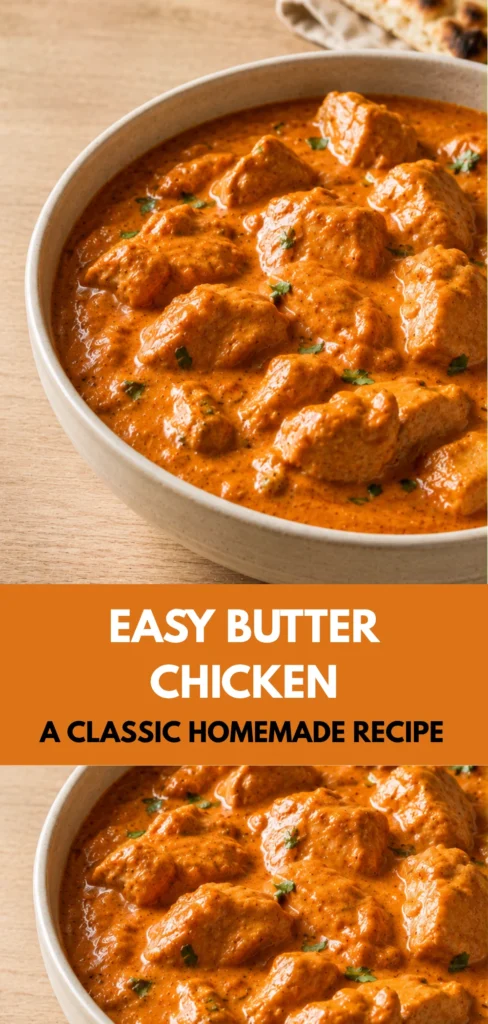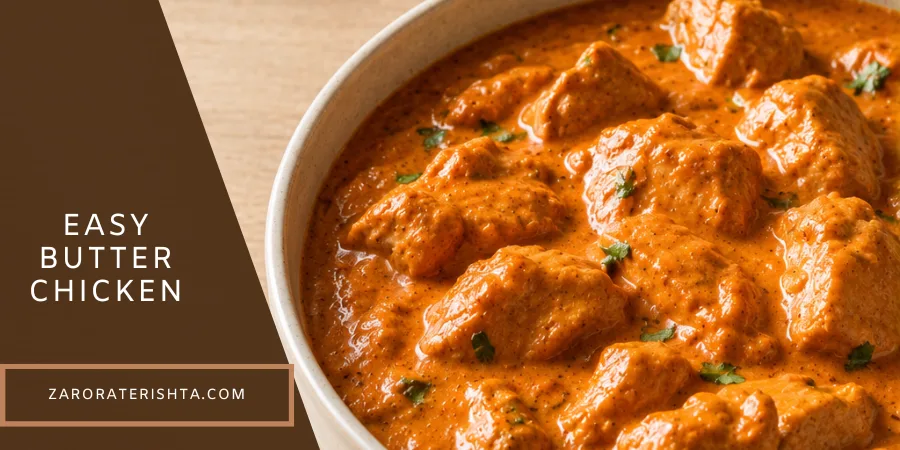
Butter Chicken is an easy recipe with savory flavor, tender chicken, and a creamy sauce built with warm spices. This mild curry features tender chunks of chicken that are first cooked in a skillet and then simmered in a creamy spiced curry sauce made with tomatoes, cream, butter or ghee, and everyday spices.
Also known as Murgh Makhani, Butter Chicken is a creamy curry from Indian cuisine. Its sauce combines tomato, cream, butter or ghee, and plenty of warm spices to create a balanced flavor rather than an overly hot curry.
Easy Butter Chicken–The Short Answer
The cooking process is straightforward, while the chicken can be marinating in yogurt ahead of time to make it incredibly tender. The marinade can be prepared the night before, making the recipe easier to manage when serving it later.
The recipe uses ingredients such as ginger, garlic, garam masala, cumin, turmeric, Kashmiri chili powder, crushed tomatoes or passata, chicken broth, and heavy cream. Each ingredient has a clear purpose in building the sauce and seasoning the chicken.
A small amount of sugar helps balance the acidity from the tomatoes, while fresh cilantro adds a fresh finish. The combination of tomato, cream, butter or ghee, and warm spices creates a rich, smooth curry without making it overly spicy or greasy.
What I especially like about this recipe is that it brings the big flavours of a good curry into a manageable home meal without requiring a complicated cooking method. The list of ingredients may look detailed at first, but each ingredient plays an important role in building the sauce and creating the final flavor.
Once the ingredients are prepared, the process is easy enough for a home cook to follow: marinate the chicken, cook it in batches, build the tomato-based sauce, then return the chicken and finish it with cream.
The result is a rich, smooth curry that pairs naturally with basmati rice or naan.
Why You’ll Love This Recipe
This easy Butter Chicken uses a practical number of ingredients while still creating a creamy, rich, and flavourful curry.
Crushed tomatoes or tomato passata give the sauce body, acidity, and colour while helping maintain a smooth and balanced texture.
Butter and cream provide the signature richness of the dish, while the controlled amount of butter or ghee helps prevent the curry from becoming overly greasy.
Warm spices such as garam masala, cumin, turmeric, and Kashmiri chili powder create the recognizable Butter Chicken flavour without making the curry excessively hot.
The chicken is marinated in full-fat yogurt with lemon juice, ginger, garlic, and spices, helping it stay tender and flavourful during cooking.
Cooking the chicken in a skillet before adding it to the sauce develops additional savoury flavour and prevents it from simply tasting poached.
The combination of creamy tomato sauce, tender chicken, and warm spices creates a comforting curry that is simple and enjoyable to make at home.
Is Butter Chicken Really Indian?
Yes, Butter Chicken, also known as Murgh Makhani, is a well-known Indian curry.
What makes it different from many other Indian curries is its balanced, creamy sauce and gentle level of heat. The recipe uses yogurt, garam masala, cumin, turmeric, Kashmiri chili, tomatoes, butter or ghee, and heavy cream to build a rich sauce without making it overly spicy or greasy.
The result is a mild curry with tender chicken and a smooth, creamy texture that pairs naturally with basmati rice or naan.
Can You Freeze Butter Chicken?
Yes, Butter Chicken is easy to freeze when it is properly chilled first.
For freezing, let the cooked curry cool completely, then transfer it to a freezer-safe airtight container. Label the container with the date before placing it in the freezer.
The curry can be frozen for:
- 2–3 months
for the best quality.
When you are ready to use it, thaw it overnight in the refrigerator and reheat gently while stirring.
Gentle reheating helps maintain the creamy texture of the sauce while warming the chicken evenly.
Ingredients Needed
For the marinade, use:
- 750 g boneless skinless chicken thighs, cut into bite-size pieces
- ½ cup full-fat plain yogurt
- 1 tablespoon fresh lemon juice
- 1 tablespoon freshly grated ginger
- 2 large cloves garlic
- 2 teaspoons garam masala
- 1 teaspoon ground cumin
- ½ teaspoon turmeric
- ½ teaspoon chili powder
- ½ teaspoon fine salt
This marinade creates a flavorful coating while the yogurt and lemon juice help tenderize the chicken. I prefer cutting the chicken into similar-sized pieces so they cook evenly and hold their texture when added to the sauce.
For the curry, start with:
- 1 tablespoon neutral cooking oil for cooking the chicken
- 3 tablespoons butter or ghee for the sauce
- 1 medium yellow onion
- 1 tablespoon freshly grated ginger
- 2 large cloves garlic
- 1 teaspoon ground cumin
- 1 teaspoon garam masala
- ½ teaspoon ground coriander
- ½ teaspoon turmeric
- ½ teaspoon chili powder
- 1 small cinnamon stick
These aromatics and spices build the foundation of the curry sauce. Cooking them briefly helps release their flavors and creates the warm, balanced spice profile expected from Butter Chicken.
Finish the curry base with:
- 1¾ cups crushed tomatoes or tomato passata
- ½ cup chicken broth
- 2 teaspoons granulated sugar
- ½ teaspoon fine salt, plus more to taste
- 1 cup heavy cream
The tomatoes provide body and acidity, while the chicken broth loosens the sauce and helps create the right consistency. The cream gives the curry the smooth, rich texture expected from Butter Chicken, while the small amount of sugar helps balance the acidity from the tomatoes.
For an optional finish, use:
- ½ teaspoon crushed kasuri methi
- 2 tablespoons chopped fresh cilantro
Kasuri methi adds a traditional earthy aroma and slightly sweet, herbaceous flavor, while fresh cilantro adds a bright finish that balances the richness of the curry.
Step By Step Instructions
Start by preparing the marinade. Combine the yogurt, lemon juice, fresh ginger, garlic, garam masala, cumin, turmeric, chili powder, and salt in a bowl.
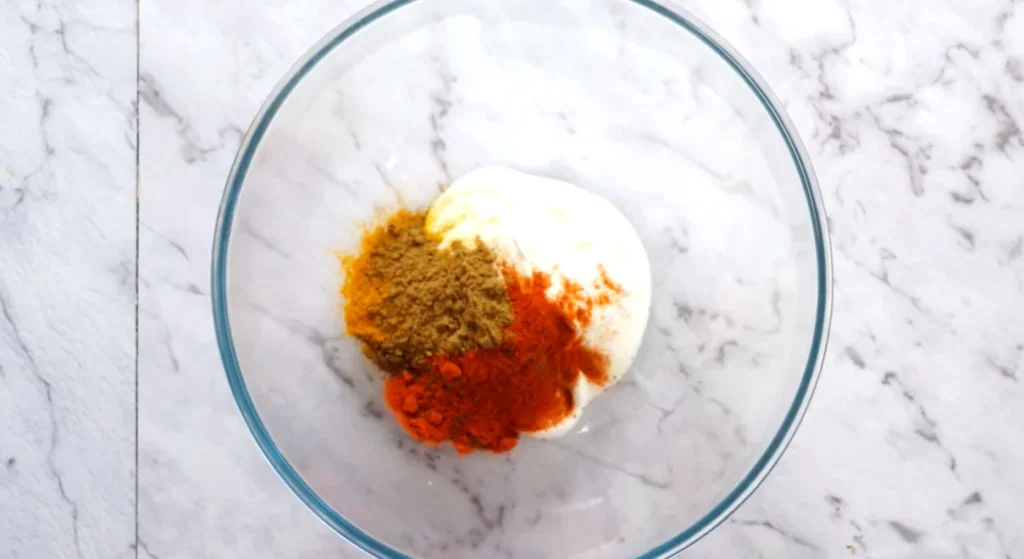
Whisk until the mixture is smooth,
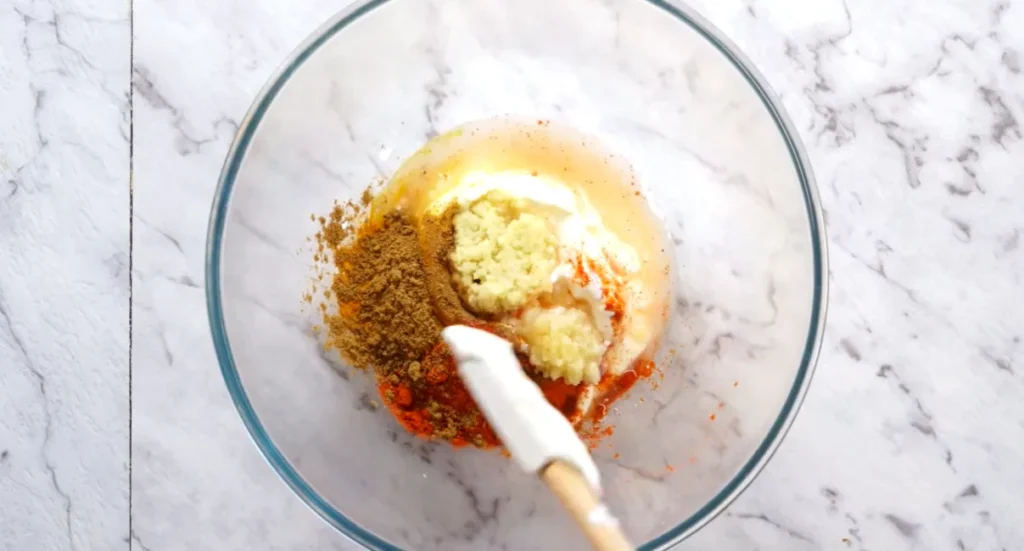
then add the chicken and mix until every piece is evenly coated.
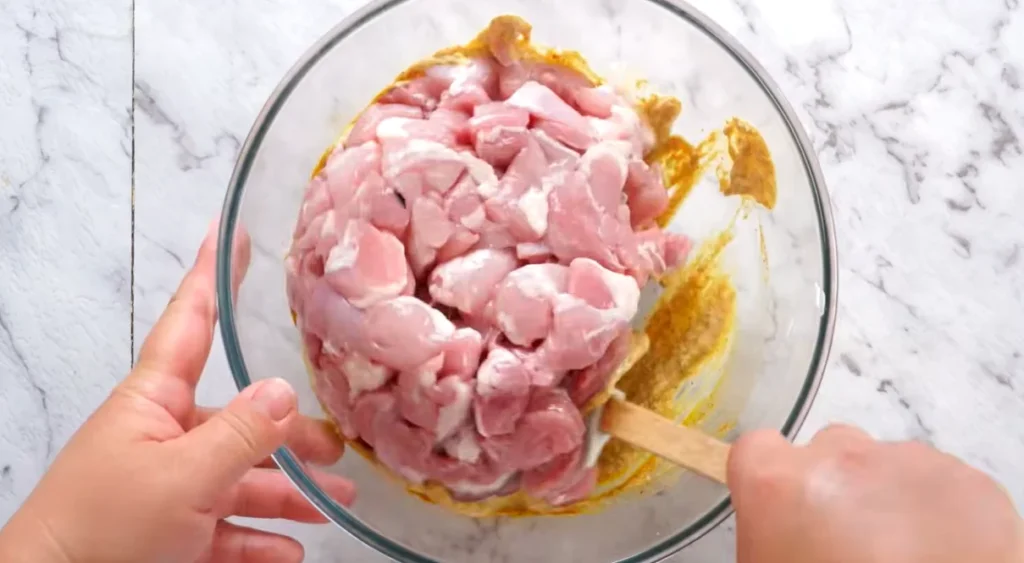
Cover the bowl and refrigerate the chicken for at least 3 hours. Although overnight marination is preferred for better flavor and tenderness, you can marinate the chicken for up to 24 hours. The yogurt and lemon juice help tenderize the chicken while the spices create a flavorful coating that carries through into the finished curry.
When you are ready to cook, remove the chicken from the refrigerator and let it sit out for about 10–15 minutes. Allow the excess marinade to drip off, but do not scrape all of it away because the remaining coating helps develop flavor while cooking.
Heat 1 tablespoon neutral cooking oil in a large skillet over medium-high heat. Cook the chicken in a single layer, working in two batches if needed so the pan does not become crowded. Cook the chicken for 3–4 minutes on the first side, then turn and cook for another 2–3 minutes.
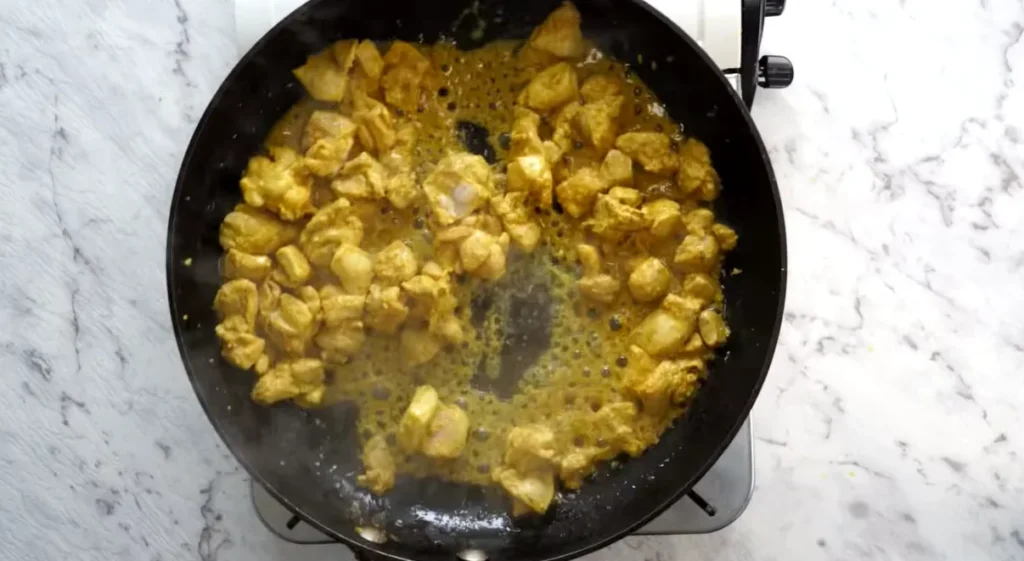
The chicken does not need to be fully cooked at this stage because it will finish cooking in the sauce. Transfer the chicken to a clean plate and keep in mind that the leftover raw marinade should not be poured into the skillet.
Using the same skillet, reduce the heat to medium and add the butter or ghee. Add the diced onion and cook for 5–7 minutes, stirring occasionally, until it becomes soft and lightly golden.
Add the ginger, garlic, cumin, garam masala, coriander, turmeric, chili powder, and cinnamon stick. Cook for 45–60 seconds while stirring constantly until the spices become fragrant. Avoid letting the garlic or spices burn because this can create a bitter flavor in the sauce.
Add the crushed tomatoes or tomato passata and scrape up the browned bits from the bottom of the skillet. Cook for another 5–7 minutes until the tomato mixture becomes slightly darker and thicker. This step helps develop the deeper tomato flavor that forms the base of the curry sauce.
Add the chicken broth and sugar, then return the chicken to the skillet along with its cooked juices. Simmer gently for 8–10 minutes. Check the thickest piece of chicken with an instant-read thermometer; it should reach 165°F (74°C) before adding the cream.
Reduce the heat to low and slowly stir in the heavy cream. Simmer gently for 5–8 minutes while avoiding a rapid boil.
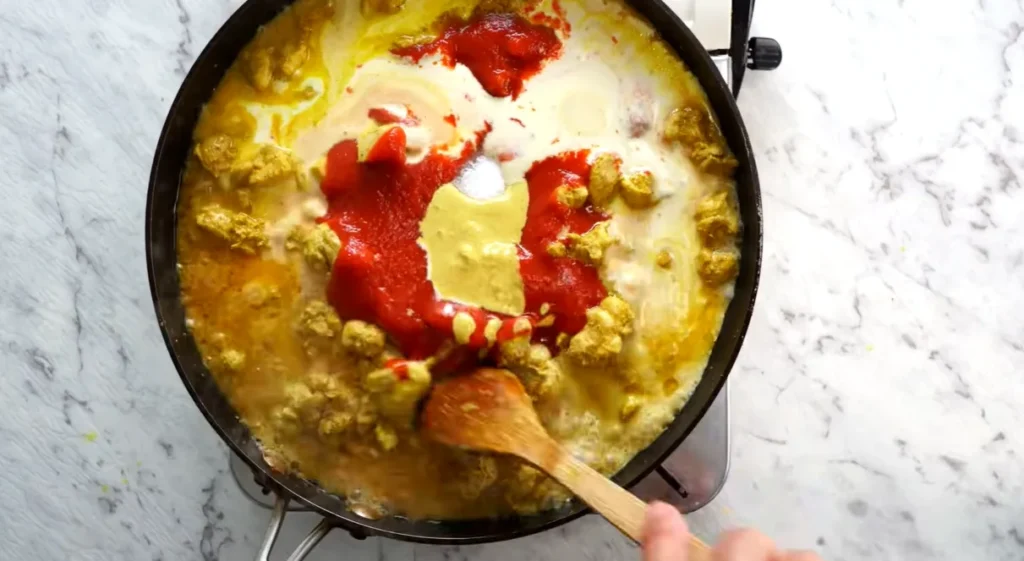
Keeping the heat low helps maintain the smooth texture of the sauce and prevents the cream from separating.
The finished sauce should be smooth, creamy, glossy, and thick enough to coat the chicken while remaining easy to spoon over rice. Remove the cinnamon stick, taste the sauce, and add more salt only if needed.
If using kasuri methi, stir in ½ teaspoon and cook for about 1 minute. Finish with chopped fresh cilantro and serve over basmati rice.
The result is a rich, balanced Butter Chicken without relying on excessive butter. The tomato, cream, and spices work together to create a deep, rounded flavor with a smooth curry sauce.
Expert Tips
Garam masala is easy to find in the spice section of most supermarkets, so there is no need to search for a specialty blend. For a balanced level of heat, this recipe uses Kashmiri chili powder or mild chili powder rather than a stronger chili blend. This helps keep the spiciness from overpowering the creamy tomato base.
Ghee, which is a form of clarified butter commonly used in Indian cooking, gives the sauce its characteristic richness, while butter works just as well. The recipe also uses neutral flavored cooking oil to cook the chicken before building the sauce.
For the sauce, tomato passata is a convenient choice because it is made from pureed tinned tomatoes and creates a smooth texture in the curry. It is usually easy to find in supermarkets near pasta sauces.
If you use canned tomatoes instead, blend them in a blender until smooth before adding them to the sauce. In America, passata may also be labeled as Tomato Puree, so checking the label can make it easier to find the right product. The recipe also allows crushed tomatoes, so either option works without changing the basic method.
For an easy side, Papadums work well with the finished curry and are included among the recommended serving options. They pair well with basmati rice, naan, and fresh cilantro for a complete meal.
One final tip is to taste the sauce before adding more salt. The recipe already includes salt and recommends making the final adjustment after the chicken and cream have been added, which helps account for differences between broth, tomatoes, dairy, and butter brands.
Variations and Substitutions
For an easy variation, the recipe already uses boneless skinless chicken thighs because they provide a tender and juicy texture.
For more colour without excessive heat, use Kashmiri chili powder as specified in the recipe. Kasuri methi can also be added as an optional finish. Use ½ teaspoon crushed kasuri methi and stir it in for about 1 minute after adding the cream.
For a dairy-free variation, full-fat coconut milk can be used instead of heavy cream and oil instead of butter or ghee. However, this will create a different flavour and consistency from the core recipe.
For a stronger garlic flavour, add 2 additional garlic cloves during the final 2–3 minutes of sauce cooking.
These variations allow you to adjust the finished curry while keeping the main cooking method straightforward.
Storage & Reheating
Allow leftover Easy Butter Chicken to cool promptly before transferring it to an airtight container. Store it in the refrigerator for 3–4 days to help maintain its flavour and texture.
When reheating, warm the curry gently over low to medium-low heat. If the sauce has thickened, add a small splash of water or broth and stir until heated through.
A microwave can also be used by reheating in 30-second intervals and stirring between each interval.
For freezing, transfer the curry to a freezer-safe airtight container and freeze for up to 2–3 months for the best quality. Thaw overnight in the refrigerator, then reheat gently while stirring.
Cream-based sauces can separate slightly after freezing, but gentle reheating can help bring the sauce back together.
Leftover Ideas
Leftover Butter Chicken can easily become another satisfying meal because the creamy sauce pairs well with simple sides and serving options.
The easiest option is to serve it over fresh basmati rice, allowing the rice to absorb the rich tomato and cream sauce. Warm naan, garlic naan, or roti can also turn leftovers into a quick lunch.
For a lighter option, serve a smaller portion with cucumber salad, tomato and cucumber salad, or simple steamed vegetables.
You can also use the chicken and sauce in a naan or flatbread wrap when you want an easy meal without preparing another full side. Extra sauce can be spooned over cooked vegetables such as cauliflower for another simple option.
When reheating, warm the curry gently and add a small splash of water or broth if the sauce has thickened. Finish with fresh cilantro for a fresh contrast.
This makes leftover Butter Chicken useful for rice bowls, wraps, quick lunches, or an easy second dinner.
Serving Suggestions
Serve Easy Butter Chicken warm with basmati rice to absorb the creamy tomato sauce. Naan, garlic naan, or roti are also excellent choices for scooping up the curry.
For a lighter side, add a simple cucumber and tomato salad to provide a fresh contrast to the rich sauce. Papadums add a light, crisp texture and pair well with the meal.
Finish each serving with a little fresh cilantro for a fresh touch. For a complete meal, serve the Butter Chicken with basmati rice, warm naan, and a simple salad.
This dish also works well for family dinners because the mild, creamy sauce pairs easily with different sides.
Nutrition Insight
The nutrition information for Butter Chicken is an estimate and can vary depending on the specific ingredients and brands used.
Based on the engineered recipe, each serving provides approximately:
- Calories: 420 kcal
- Carbohydrates: 13 g
- Protein: 30 g
- Total Fat: 33 g
- Saturated Fat: 19 g
- Fiber: 2 g
- Sugar: 8 g
- Sodium: 500 mg
- Cholesterol: 165 mg
These values are approximate because differences in ingredient brands and the exact products used can affect the final nutrition.
Rice, naan, and other serving accompaniments are not included in these estimates.ts are not included in these estimates.
FAQs
What is the best way to halve the recipe?
To halve the recipe, divide the ingredient quantities by two. Keep the same cooking method and monitor the chicken and sauce as they cook, as the smaller quantity may reach the desired consistency sooner.
What should I change when doubling the recipe?
To double the recipe, increase the ingredient quantities proportionally while keeping salt and chili flexible according to taste. Avoid overcrowding the skillet when cooking the chicken and work in batches if needed.
How can I make the recipe a little healthier?
For a lighter version, you can reduce the amount of butter or ghee, but this will slightly reduce the characteristic richness of the sauce. The engineered recipe is designed around heavy cream and a controlled amount of butter or ghee, so changing either ingredient will affect the final texture and flavour.
How can I make Butter Chicken look more yellow?
For the intended Butter Chicken colour, keep the turmeric and Kashmiri chili powder balanced as written. Kashmiri chili powder adds colour without excessive heat, while turmeric provides warm colour. Avoid adding paprika because it is not part of the core recipe.
Which chicken cut works best for Butter Chicken?
Boneless skinless chicken thighs are recommended for the best texture because they remain tender and juicy during cooking. This works well with the creamy, buttery nature of the curry. Chicken breast can also be used if preferred, although the recipe is specifically engineered around chicken thighs.
Is Paneer a good vegetarian substitute?
Paneer can be used as a vegetarian alternative to chicken, but it is a variation rather than part of the core engineered recipe. Prepare the creamy tomato sauce as directed and add paneer according to your preferred cooking method.
How can I blend the curry sauce without an immersion blender?
If you do not have an immersion blender, transfer the cooked tomato sauce to a regular blender and blend until smooth. For a smoother restaurant-style sauce, blend the tomato-based sauce before returning it to the skillet, then add the chicken and finish with cream.
Allow the sauce to cool slightly before transferring it to a blender if needed.
What is the best way to store Butter Chicken?
Cool the curry promptly and transfer it to an airtight container. Refrigerate it for 3–4 days. When reheating, add a small splash of water or broth if the sauce has thickened and heat gently until steaming hot throughout.
Can I freeze Butter Chicken for later?
Yes, Butter Chicken can be frozen in a freezer-safe airtight container for up to 2–3 months for the best quality. Thaw overnight in the refrigerator, then reheat gently while stirring.
Cream-based sauces can separate slightly after freezing, so gentle reheating helps bring the sauce back together.
What is the best way to prepare Easy Butter Chicken in advance?
You can prepare Easy Butter Chicken ahead of time. Up to 24 hours before cooking, marinate the chicken, dice the onion, prepare the ginger and garlic, and measure the spices.
On cooking day, prepare the curry close to serving for the best texture. If stored after cooking, refrigerate for 3–4 days or freeze for up to 2–3 months for the best quality.
Is chicken tikka a healthier choice than butter chicken?
This depends on the preparation method and portion size. Butter Chicken contains heavy cream and butter or ghee, while chicken tikka is generally prepared without the creamy curry sauce. The exact nutritional difference can vary depending on the recipe and serving size.
What sets butter chicken apart from chicken tikka masala?
Butter Chicken has a creamy tomato-based sauce made with butter or ghee and heavy cream, while chicken tikka masala can have a more tomato-forward and spiced sauce. The exact flavour and texture vary between recipes, but Butter Chicken is known for its rich, smooth, creamy character.
What other name is used for butter chicken?
Butter Chicken is also known as Murgh Makhani. The name refers to the same creamy Indian curry made with chicken and a rich tomato-based sauce.
What can you use instead of dairy cream?
The core recipe uses heavy cream, so replacing it will change the final flavour and consistency. A dairy-free alternative such as full-fat coconut milk can be used, but it will create a different sauce with its own flavour and texture.
What can you use instead of chicken for a vegetarian version?
Paneer can be used instead of chicken for a vegetarian variation. Cauliflower can also be used as another vegetable-based option. These are variations rather than part of the core recipe, which is engineered around boneless skinless chicken thighs.
What gives Indian restaurant butter chicken its signature flavour?
The engineered recipe builds its flavour through yogurt marination, ginger, garlic, garam masala, cumin, turmeric, Kashmiri chili powder, tomato, butter or ghee, and cream.
Cooking the chicken separately in a skillet before finishing it in the sauce develops additional savoury flavour. Kasuri methi is optional and can add a restaurant-style aromatic note.
For an extra-smooth restaurant-style sauce, cook the onion, aromatics, spices, tomatoes, and broth until softened, remove the cinnamon stick, then blend the sauce until smooth. Return it to the skillet, add the chicken, and finish with cream.
The core recipe uses a controlled tomato reduction rather than rapidly boiling the sauce.
Pinterest Pins