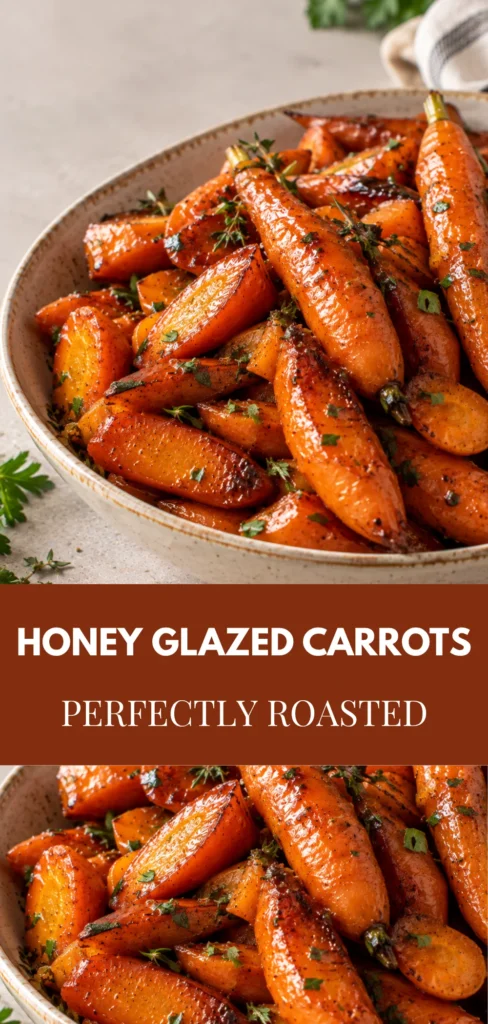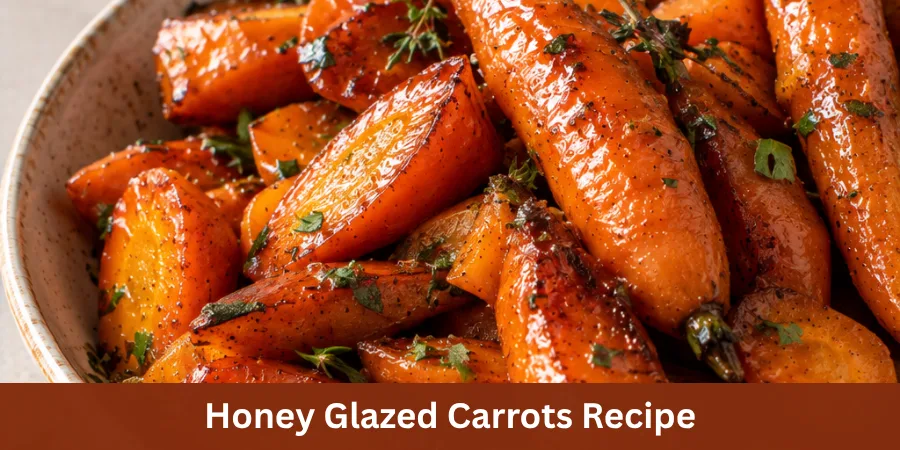
Honey glazed carrots are a simple side dish that brings out the natural sweetness of carrots through roasting. Honey and cinnamon create a warm, naturally sweet flavor, while roasting helps develop caramelized edges and a deeper roasted taste.
The combination of honey, butter, garlic, and herbs creates a balanced glaze that coats the carrots without making the recipe complicated. A small amount of olive oil helps support the roasting process, while fresh lemon juice added at the end brightens the rich honey-butter flavor.
Whether you are planning a holiday table or just need a reliable vegetable for a weeknight dinner, this recipe gives you a dependable method with clear measurements, so the result stays consistent every time you cook it.
Honey Glazed Carrots Recipe-The Short Answer
These roasted carrots use a two-stage glaze method for better flavor and texture. The carrots are coated with part of the honey-garlic glaze before roasting, then finished with the remaining glaze after cooking. This keeps the final coating fresh, glossy, and flavorful while allowing the carrots to develop browned edges in the oven.
Roasting at high heat helps the carrots become tender while creating caramelized surfaces that make the dish more enjoyable. The method is simple enough for regular meals but also works well for holiday dinners and gatherings.
These honey glazed carrots pair naturally with roast chicken, turkey, ham, steak, and other main dishes. With a main roasting time of about 30 minutes, they offer a practical way to add a flavorful vegetable side dish without a complicated preparation process.
Why This Recipe Works
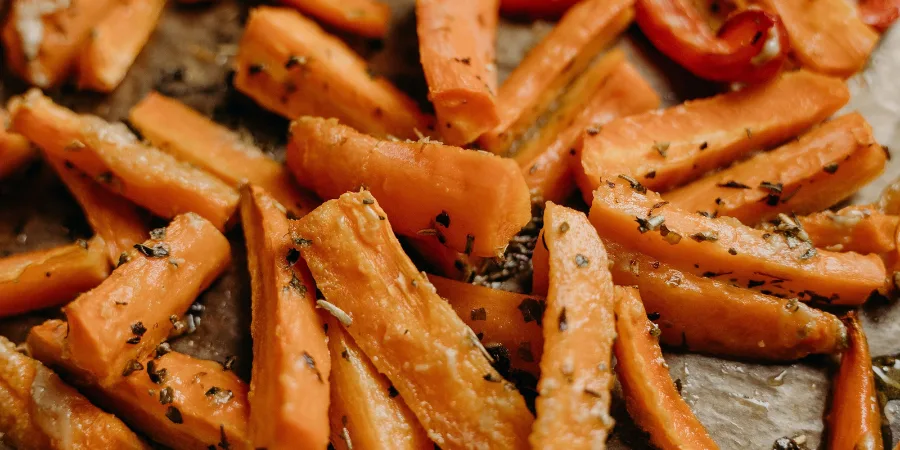
What makes this recipe enjoyable is how simple the cooking method feels. Instead of standing over the stove, the carrots roast in the oven while the heat develops their natural sweetness and creates caramelized edges.
The sheet pan roasting method keeps the preparation practical and hands-off. Once the carrots are coated with the honey-garlic glaze and arranged properly, most of the cooking happens in the oven with minimal attention needed.
The glaze combines honey, garlic, butter, spices, and herbs to complement the carrots while keeping their natural flavor as the focus. Cinnamon and ginger add gentle warmth, while the savory ingredients help balance the sweetness.
About 30 minutes of roasting allows the carrots to become tender and develop the rich caramelized flavor that makes this side dish special. The finishing glaze, lemon juice, and fresh parsley add brightness and freshness before serving.
Another reason this recipe works well is the way each ingredient has a clear job. Honey gives sweetness and caramelization, butter gives richness and a glossy finish, garlic adds savory depth, and lemon juice brightens the final flavor. Because the amounts are measured in grams, the balance stays the same each time you make it.
Ingredients Needed
- 2 pounds carrots (907 grams)
- 85 grams honey
- 42 grams unsalted butter
- 15 ml olive oil (approximately 14 grams)
- 9 grams fresh garlic, minced
- 3 grams fine salt
- 0.5 gram black pepper
- 1.3 grams ground cinnamon
- 1 gram ground ginger
- 15 ml fresh lemon juice
- 10 grams fresh parsley, chopped
Optional garnish:
- Pomegranate seeds
- Chopped walnuts
- Pecans
- Additional parsley or other fresh herbs
Ingredients Notes
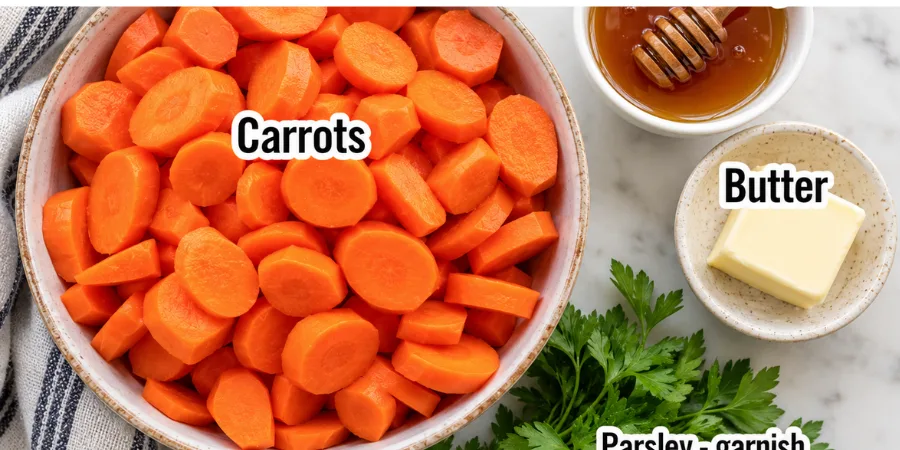
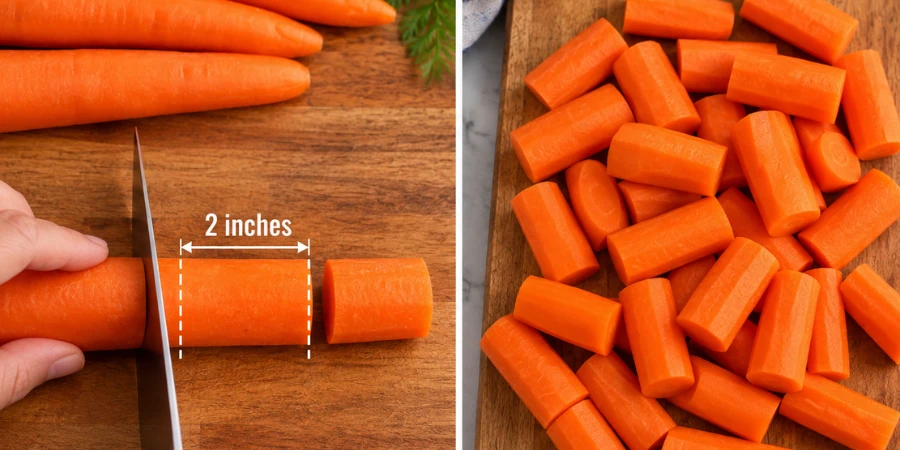
Carrots are the main ingredient in this recipe, and their natural sweetness becomes more noticeable during roasting. Use approximately 2 pounds (907 grams) of carrots. About 12 large carrots or about 15 medium carrots can provide this amount, depending on their size. Peel and cut the carrots into approximately 2-inch pieces. If the pieces are more than 1 inch thick, halve them lengthwise so they cook evenly.
Orange carrots provide the familiar appearance of the dish, while rainbow carrots can add extra color to the serving plate. The carrots can be cut diagonally, into quarters, or into oval disks depending on the preferred presentation.
Honey creates the main sweetness in the glaze and helps the carrots develop caramelized edges during roasting. A honey variety such as clover or wildflower can be used while keeping the same measured amount.
Unsalted butter adds richness and creates the glossy finish of the honey-butter glaze. Olive oil works alongside the butter by helping prevent the butter from burning during high-heat roasting.
Fresh garlic adds savory depth and balances the sweetness of the honey without overpowering the carrots. The combination of garlic with cinnamon and ginger creates a warm flavor profile that supports the roasted character of the dish.
Cinnamon and ginger add gentle warmth, while salt and black pepper help balance the sweetness. Keeping the seasoning controlled allows the carrots and honey glaze to remain the main flavors.
Fresh lemon juice is added at the end to brighten the rich glaze and prevent the finished dish from tasting too heavy. Fresh parsley provides a final touch of freshness and color when sprinkled over the roasted carrots before serving.
Optional garnishes such as pomegranate seeds, chopped walnuts, pecans, or additional herbs can add extra texture and visual appeal without changing the main recipe formula.
Equipment Needed
This recipe does not need special tools, but using the right equipment makes the process smoother and the result more consistent.
- Digital kitchen scale (1-gram accuracy)
- Measuring spoons
- Large mixing bowl (minimum 3-quart / 2.8-liter capacity)
- Small saucepan
- Small whisk
- Rimmed baking sheet
- Parchment paper suitable for 425°F (218°C)
A few more tools help during preparation and serving: a silicone spatula, tongs, a cutting board, a chef’s knife, a citrus juicer, and a serving platter.
A digital scale is especially useful here because the glaze is measured in grams. A rimmed baking sheet keeps the glaze and carrot juices from spilling in the oven, and the parchment paper reduces sticking and makes cleanup easier.
How to Make Honey Glazed Carrots
Start by preparing the carrots. Wash, peel, and trim the carrots, then cut them into approximately 2-inch diagonal pieces. If the pieces are more than 1 inch thick, halve them lengthwise so they cook evenly.
Keeping the carrot pieces similar in size helps them roast at the same rate. Very thick pieces can also be divided into smaller sections around ½ to ¾-inch thick, while smaller carrots can remain whole if preferred. Dry the carrots with a clean kitchen towel before coating them, because a wet surface makes the carrots steam instead of brown.
Position the oven rack in the middle of the oven and preheat to 425°F (218°C) for at least 20 minutes before roasting. Line a large rimmed baking sheet with parchment paper suitable for the baking temperature.
To prepare the honey-garlic glaze, melt 42 grams unsalted butter in a small saucepan over medium heat. Add 9 grams minced garlic and cook for about 30 seconds until fragrant. Avoid allowing the garlic to become dark brown.
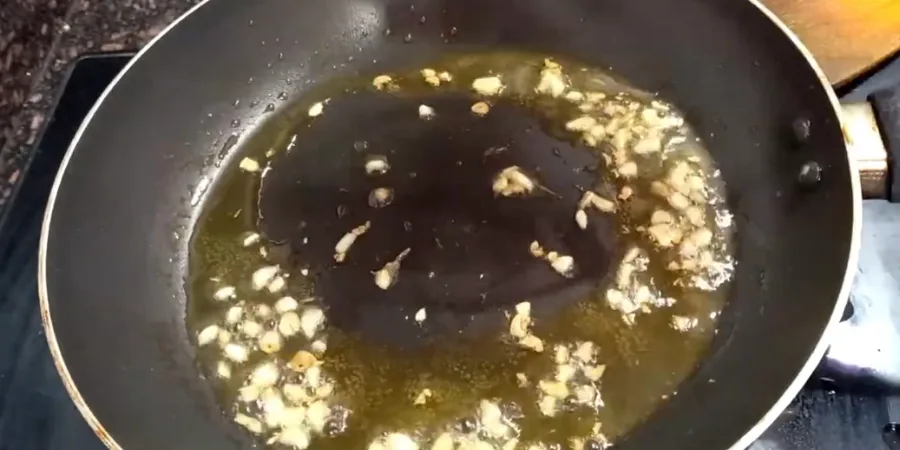
Remove the saucepan from the heat, then add 85 grams honey, 15 ml olive oil, 3 grams fine salt, 0.5 gram black pepper, 1.3 grams ground cinnamon, and 1 gram ground ginger. Whisk the mixture until the glaze becomes smooth and evenly combined.
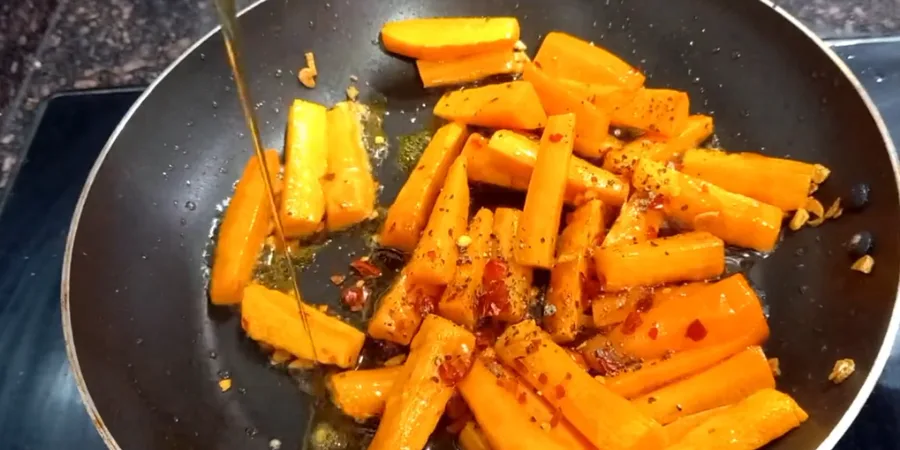
Divide the glaze into two portions. Keep one portion for coating the carrots before roasting and reserve the other portion, covered at room temperature, for finishing after cooking. Each portion is approximately 78 grams.
Place the prepared carrots in a large mixing bowl and add the initial portion of glaze. Toss until the carrots are evenly coated, making sure the glaze covers the pieces well. Every piece should have a light coating, with no excess glaze pooling in the bowl.
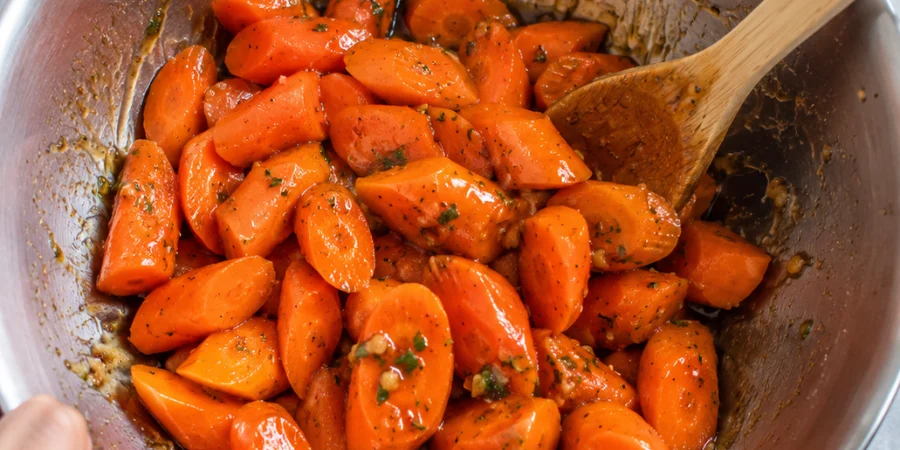
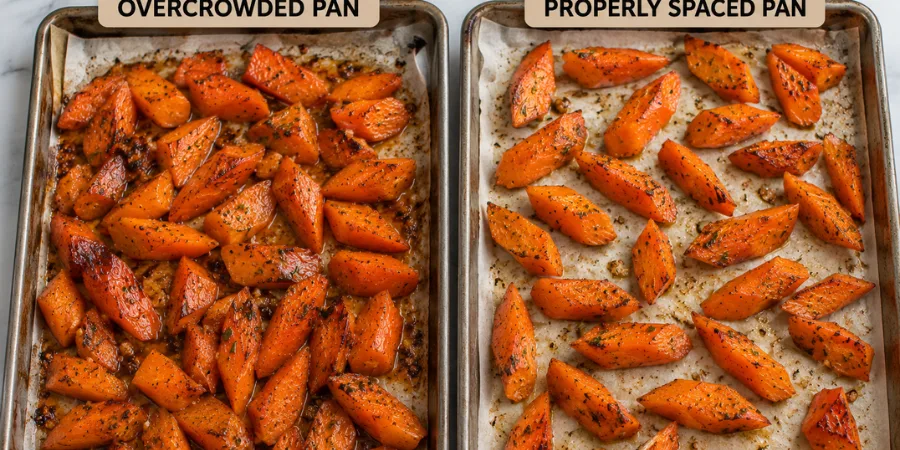
Transfer the glazed carrots to the prepared baking sheet and arrange them in a single layer with visible gaps between pieces. This spacing allows the carrots to roast properly instead of steaming.
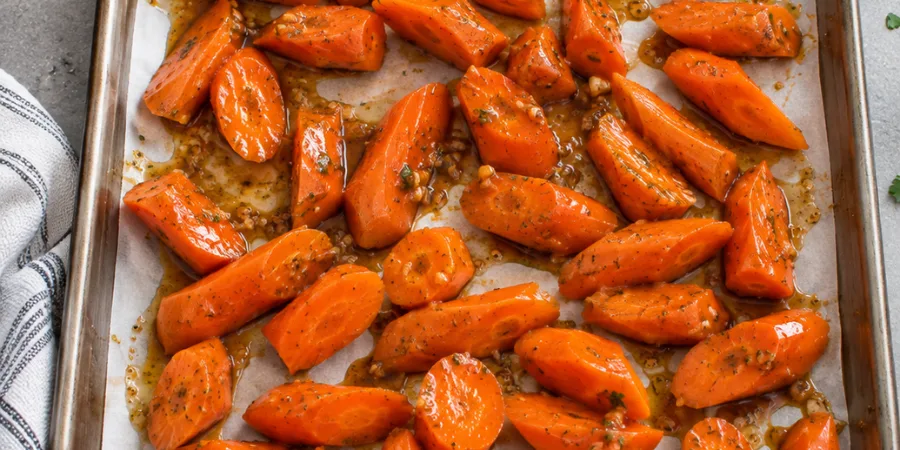
Roast the carrots for 15 minutes, then remove the baking sheet and toss the pieces so the previously bottom-facing sides are turned. Return the carrots to the oven and roast for another 15 minutes.
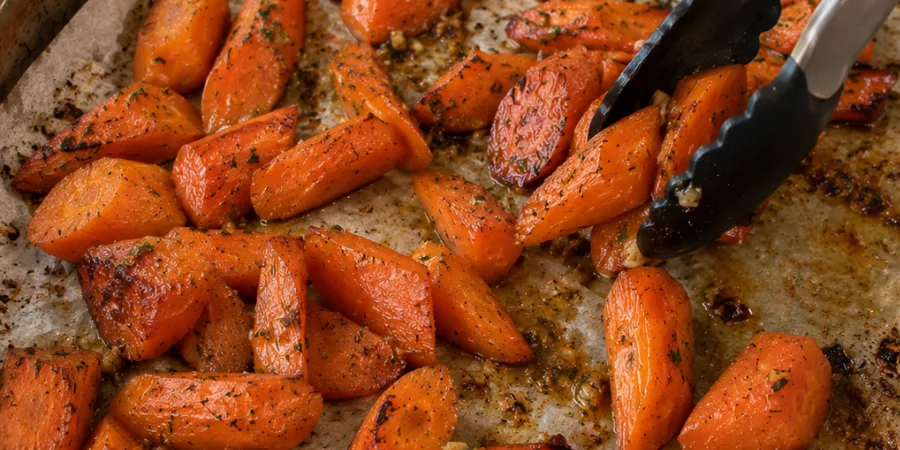
The total roasting time should be about 30 minutes. The carrots should become tender with browned, caramelized edges. Check the thickest piece with a fork; it should be fork tender without becoming mushy.
If the center is still firm, continue roasting for an additional 5 minutes and check again. The final texture should be tender while still holding its shape.
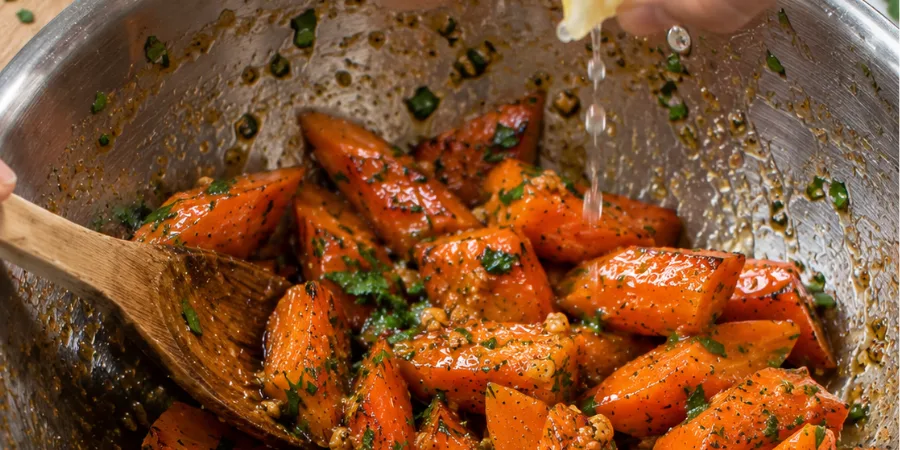
Transfer the roasted carrots to a serving bowl or dish. Drizzle the reserved glaze over the carrots, then gently toss to coat.
Finish with 15 ml fresh lemon juice and 10 grams chopped fresh parsley. Adding the lemon and parsley after roasting keeps their flavors fresh and balances the richness of the honey-butter glaze.
Keep the finishing glaze out of the oven so it maintains its fresh flavor and glossy texture.
How to Know When the Carrots Are Done
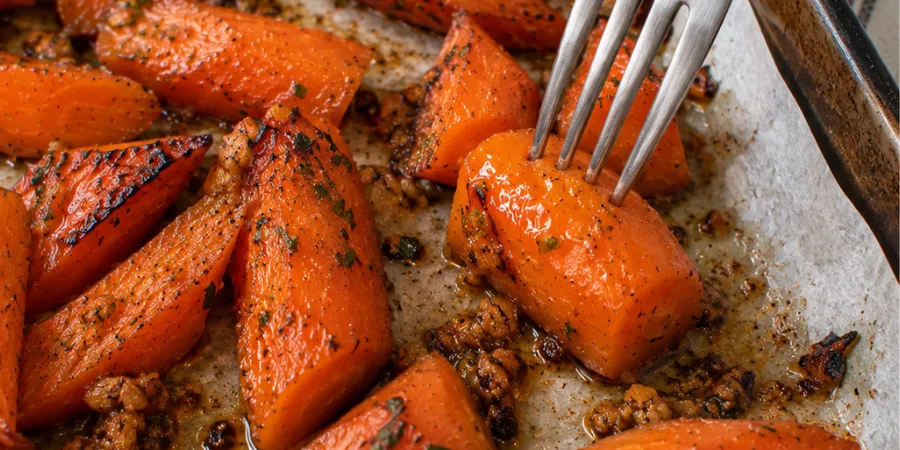
The fork test is the most reliable way to check doneness, because oven temperatures and carrot sizes can differ. At the 30-minute point, insert a fork into the thickest carrot piece.
The fork should enter easily, and the center should not feel hard. The carrot should also not be mushy. The edges should look browned and caramelized, and the glaze should look sticky and glossy.
If the center is still firm, roast for an additional 5 minutes. The main target is 30 minutes, while 35 minutes is the usual maximum checkpoint for thicker pieces. Because honey-based glaze contains concentrated sugar, it can darken quickly at the end, so keep an eye on the pan during the final minutes.
Finishing Glaze, Lemon, and Parsley
The finishing stage is what makes these carrots taste fresh instead of heavy. After roasting, the carrots go into a serving bowl, and the reserved glaze is drizzled over them and tossed gently. This gives a fresh honey-garlic flavor and a glossy coating that roasting alone does not provide.
If the reserved glaze has thickened a little, stir it gently before drizzling. Then add the lemon juice and chopped parsley, and toss one more time. The lemon brightens the sweetness, and the parsley adds color and a fresh herbal contrast.
Common Mistakes to Avoid
Most problems with roasted carrots come from a few small habits. Avoiding these mistakes helps you get tender centers, browned edges, and a glossy glaze.
- Do not bake the carrots before the oven is fully preheated.
- Do not cut the carrots into uneven sizes, and do not skip halving thick carrots lengthwise.
- Do not roast carrots with a wet surface, because they will steam.
- Do not overcrowd the baking sheet or overlap the pieces.
- Do not roast without parchment paper, because honey glaze can stick.
- Do not let the garlic turn dark brown.
- Do not heat the honey on high heat for a long time.
- Do not use the initial glaze and the finishing glaze at the same stage.
- Do not leave the finishing glaze uncovered for a long time.
- Do not skip the halfway toss.
- Do not add lemon juice before roasting.
- Do not overcook the carrots or return the finishing glaze to the oven for a long roast.
- Do not increase the salt automatically. Taste first and adjust at the end.
Roasting Troubleshooting
Carrots did not brown. The baking sheet may have been overcrowded, the carrots may have been wet, the pieces may have been too large, or the oven may not have been fully preheated. Dry the carrots, keep them in a single layer, use approximately 2-inch pieces, and preheat the oven to 425°F (218°C) fully.
Carrots stayed hard. The pieces may have been too thick or uneven, or the oven temperature may have been lower than it showed. Halve thick carrots lengthwise, keep the pieces uniform, use the fork test as the main doneness check, and add 5 more minutes if needed.
The glaze burned. Honey may have been exposed to high heat for too long, glaze may have pooled on the pan, the carrots may have been crowded, or the garlic may have browned too much. Whisk the honey into the glaze after removing the pan from the heat, coat the carrots evenly without pooling, use parchment paper, and add the finishing glaze after roasting.
The carrots tasted too sweet. This usually happens when the honey is increased, too much finishing glaze is added, or the lemon is skipped. Keep the base formula of 85 grams honey and 15 ml lemon juice, and keep the lemon at the finishing stage to balance the sweetness.
The carrots turned soggy. The pan was probably overcrowded or the carrots were too wet, so they steamed instead of roasting. Dry the carrots and keep visible spacing on the baking sheet.
The finishing glaze became too thick. It may have cooled too much or been left uncovered. Keep it covered at room temperature until the finishing stage, and stir it gently before drizzling if needed.
Make-Ahead and Storage
For easier preparation, especially before holidays or busy dinners, the carrots can be peeled and chopped up to 1 day ahead.
Store the prepared carrots in an airtight container in the refrigerator until you are ready to cook. On the cooking day, prepare the glaze, coat the carrots, and roast them just before serving.
Preparing the carrots ahead keeps the process organized while allowing the roasting stage to create the caramelized finish that makes the dish special. The glaze ingredients can also be measured ahead of time, but it is better to avoid coating the carrots with glaze and leaving them in the refrigerator for a long time.
For storing cooked glazed carrots, allow them to cool before transferring them to an airtight container. Refrigerate the leftovers for up to 5 days.
The carrots are best when served fresh from the oven, but proper refrigeration keeps them ready for later meals.
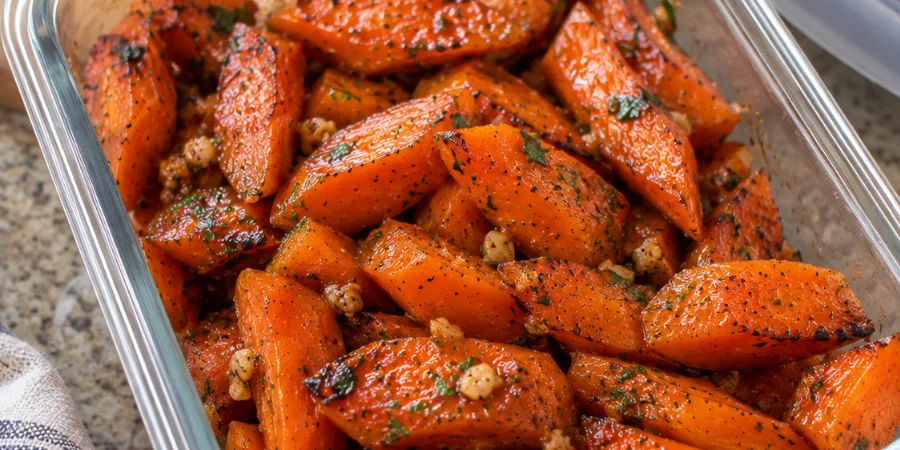
For reheating, spread the carrots in a single layer and warm them in the oven at 350°F (175°C) for about 8 minutes. This helps restore their texture without overcooking.
You can also reheat the carrots in the microwave for about 45 seconds, then stir or toss them. Continue with another 15-second interval if needed until warmed through. Oven reheating keeps the roasted texture better than the microwave.
Do not seal the carrots while they are still hot. Allow them to cool first, then transfer them to a sealed container and refrigerate promptly.
The recipe specifies refrigerator storage for a maximum of 5 days and does not provide a freezing method, so freezing instructions are not included.
What to Serve With Honey Glazed Carrots
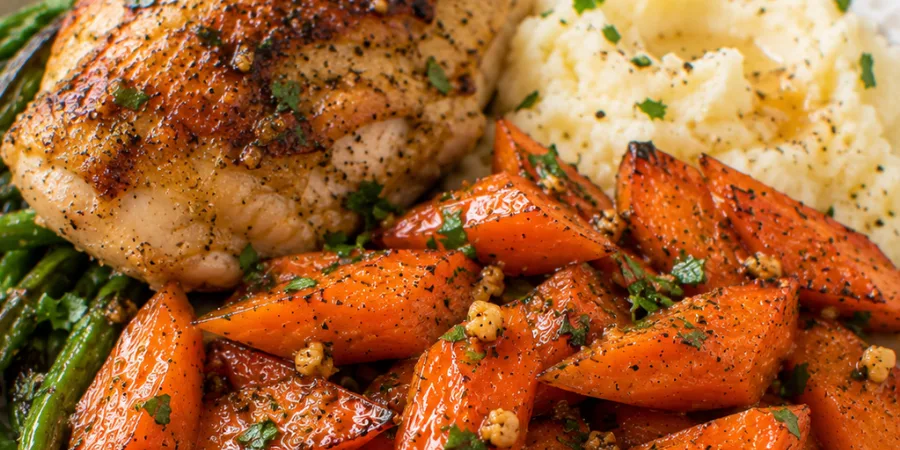
These carrots are best served warm, garnished with fresh parsley and a final touch of lemon. They pair well with roast turkey, roast chicken, ham, beef, and steak, which makes them a flexible side for both holiday dinners and weeknight meals.
They fit well on the table for Thanksgiving, Christmas, Easter, Sunday dinner, potlucks, and dinner parties. On a regular weeknight, they work as a simple vegetable side next to roast chicken or steak without adding much extra work.
How to Use Leftovers
Leftover carrots are easy to use in other meals. Add them to a warm carrot grain bowl, use them as the vegetable part of a rice bowl, or chop them into a salad or a warm grain salad. They also work as a side with a chicken dinner, with a turkey sandwich or wrap, or next to a savory breakfast plate.
Nutrition Information
The nutrition information for these honey glazed carrots is an estimate, as the final values can vary depending on the ingredients used, portion size, and preparation method.
Based on 4 servings, each serving provides approximately:
- Calories: 269 kcal
- Carbohydrates: 45 grams
- Protein: 2 grams
- Total Fat: 12 grams
- Saturated Fat: 6 grams
- Fiber: 7 grams
- Total Sugar: 29 grams
- Sodium: 600 milligrams
These values are intended as a general guide rather than fixed numbers. Ingredient brands, carrot variety, exact measurements, and preparation differences can create small variations in the final nutrition information.
Frequently Asked Questions
Can you use dried herbs instead of fresh?
Yes, dried herbs can be used when fresh herbs are not available.
However, this recipe specifically uses fresh parsley as a finishing ingredient. Dried herbs can work as a substitution, but they will provide a different texture and a less fresh finishing effect compared with fresh parsley.
Can you use baby carrots instead?
Yes, baby carrots can be used instead of standard carrot pieces, but the cooking time may vary.
Rather than automatically reducing the cooking time, check the carrots for tenderness while roasting. They are ready when a fork can enter easily without the carrots becoming mushy.
Checking the texture helps prevent both undercooking and burning, especially because carrot size can affect how quickly they roast.
Can you make these ahead of time?
Yes, these carrots can be prepared ahead to make serving easier.
For easier preparation, peel and slice the carrots up to 1 day before cooking, then store them in an airtight container in the refrigerator. The glaze ingredients can also be measured ahead of time.
The honey-garlic glaze is best prepared on the day you make the recipe. When ready to cook, coat the carrots with the initial portion of glaze, toss gently, and roast as directed.
Preparing the carrots ahead helps save time while still allowing the roasting process to create the caramelized edges and finished flavor.
Pinterest Pins