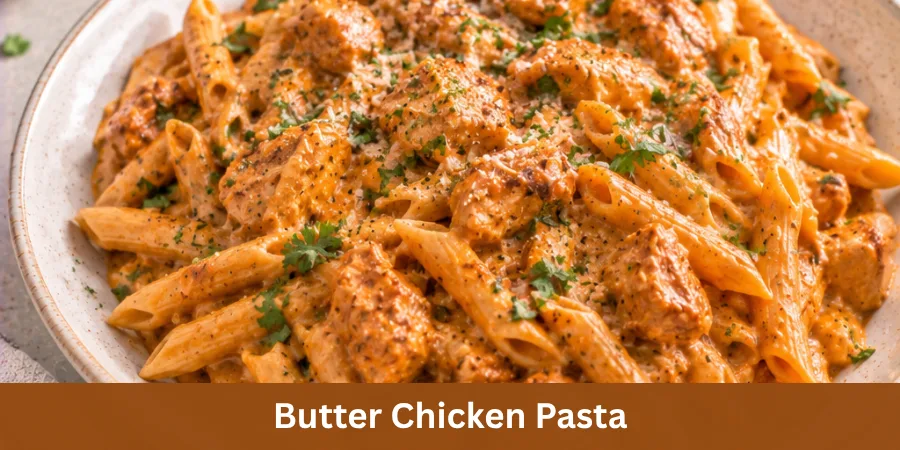
Butter chicken and pasta may come from different culinary traditions, but they work surprisingly well together. This Butter Chicken Pasta combines tender spiced chicken with a creamy tomato-based sauce and short pasta that holds onto the sauce with every bite.
The result is a comforting dish with the familiar warmth of Indian cuisine and the satisfying texture of Italian pasta. The sauce gets its character from aromatic spices, tomato, butter, and cream, while the chicken adds a hearty element that makes the dish filling without making it feel overly heavy.
Butter Chicken Pasta-The Short Answer
What I like most about this recipe is that it keeps the recognizable character of butter chicken while adapting it for a pasta dinner. The chicken is marinated with yogurt, lemon, ginger, and spices before being seared and finished in the sauce.
This builds flavor in layers instead of relying on the sauce alone. The tomato base is gently reduced before the cream and finishing butter are added, which gives the sauce a smooth, rich texture.
Short pasta such as fusilli, penne, or rigatoni works particularly well because its grooves and curves help hold the sauce. The finished dish is warm, rich, and satisfying, with a balance of tomato acidity, gentle spice, creamy richness, and tender chicken.
It is not meant to be traditional butter chicken served with pasta. It is an Indian-inspired pasta recipe that brings the two styles together in a practical weeknight meal.
From my own testing, keeping the pasta al dente and adding reserved pasta water gradually makes a noticeable difference because the sauce stays creamy and coats the pasta rather than becoming watery or sitting separately in the pan.
Why You’ll Love This Recipe
I love this butter chicken pasta because it brings together the comforting flavors of Italian and Indian cuisine in a simple meal. It is easy to make on busy weeknights, and the recipe is adaptable if you want to adjust it to your own taste.
Tender chicken is coated in a creamy tomato sauce, while the pasta adds a hearty texture that makes the dish satisfying. It is the kind of dinner that feels special without requiring a complicated cooking process.
The chicken and sauce are cooked in one skillet while the pasta cooks separately in boiling water. This keeps the cooking process straightforward and leaves only a few dishes to wash afterward.
I also find that using short pasta works especially well because its shape helps the creamy sauce cling to the pasta instead of collecting at the bottom of the plate.
The flavors are similar to what you might expect from butter chicken, but they are toned down and adjusted to work naturally with pasta. Warm spices such as cumin, turmeric, and garam masala provide the familiar Indian flair, while the creamy tomato sauce keeps everything balanced.
This is not meant to be a traditional butter chicken recipe. It is an Indian-Italian fusion dish that takes the familiar flavor profile and gives it a pasta-friendly direction.
About Butter Chicken Pasta
Butter chicken pasta combines butter chicken, a creamy Indian curry, with Italian pasta for a simple fusion recipe. Butter chicken, also known as murg makhani, is traditionally made with tender boneless chicken in a rich tomato and butter-based sauce.
Here, that creamy sauce is paired with pasta instead of making rice the main starch. Short pasta shapes work especially well because their grooves and curves hold the sauce, giving every bite a good balance of pasta, chicken, and creamy sauce.
The butter chicken base is a smooth tomato sauce made with tomato, butter, aromatics, and Indian spices. The chicken is marinated before being seared and then finished in the sauce, which helps keep it tender while adding browned flavor.
The pasta is cooked al dente and added near the end so it does not become soggy. A little reserved pasta water can also be used to adjust the consistency and help the sauce cling evenly to the pasta.
This is a fusion dish rather than an authentic Indian recipe or an authentic Italian recipe. The familiar butter chicken flavor is kept, but the preparation is adjusted to pair with pasta.
It can be served on its own as a complete pasta dish, while sides such as naan, a fresh salad, or other simple accompaniments can also work well. The result brings together Indian flavors and Italian-style pasta without trying to present the dish as a traditional butter chicken recipe.
Ingredients Needed
For the chicken and marinade
1 lb (450 g) boneless skinless chicken thighs, cut into 1-inch (2.5 cm) pieces
¼ cup (60 g) plain whole-milk yogurt
1 teaspoon lemon juice
1 teaspoon grated fresh ginger
1 teaspoon garlic powder
½ teaspoon ground coriander
½ teaspoon ground turmeric
½ teaspoon kosher salt (3 g)
¼ teaspoon crushed black pepper
1 tablespoon (15 ml) neutral oil, for searing
For the sauce
2 tablespoons (28 g) unsalted butter
1 medium yellow onion (about 140 g), chopped
4 garlic cloves, minced
1 tablespoon (15 g) fresh ginger, minced
2 teaspoons garam masala
1 teaspoon ground cumin
1 teaspoon ground coriander
1 teaspoon smoked paprika
½ teaspoon turmeric
¼ teaspoon cayenne pepper
1 tablespoon (16 g) tomato paste
1¼ cups (300 g) passata
½ cup (120 ml) water
1 teaspoon (4 g) granulated sugar
½ teaspoon (3 g) kosher salt
1 tablespoon (16 g) almond butter, optional
For the creamy finish
½ cup (120 ml) heavy cream
1 tablespoon (14 g) unsalted butter
1 teaspoon (1 g) kasoori methi, crushed
For the pasta
10.5 oz (300 g) dried short pasta
3 liters water
20 g kosher salt, for the pasta water
1½ cups (360 ml) pasta water, reserved before draining
To finish
½ cup (10 g) chopped fresh cilantro
Ingredients Notes
For the chicken, use 1 lb (450 g) boneless skinless chicken thighs cut into bite-sized pieces. Chicken thighs are preferred because they remain tender during searing and finishing in the sauce.
The chicken is marinated with yogurt, lemon juice, fresh ginger, garlic powder, coriander, turmeric, kosher salt, and black pepper. This marinade adds flavor and helps the chicken stay juicy while building the butter chicken character before it reaches the sauce.
The marinade is the only place the chicken is salted, so there is no separate salting step for the chicken.
Sear the chicken in 1 tablespoon (15 ml) neutral oil. Keep the pieces in a single layer when cooking so they develop a browned surface instead of steaming.
The sauce begins with 2 tablespoons (28 g) unsalted butter, chopped onion, garlic, and fresh ginger.
The butter provides richness, while the onion creates a sweet aromatic base. Garlic and ginger add the classic flavor foundation that works with the Indian spice blend.
Cook the aromatics until softened and fragrant, but avoid browning the garlic because it can create a bitter flavor in the finished sauce.
The spice blend includes garam masala, cumin, coriander, smoked paprika, turmeric, and cayenne pepper.
These spices create the warm, aromatic flavor associated with butter chicken while keeping the heat controlled enough to work naturally with pasta.
Toast the spices briefly in the butter before adding the tomato ingredients. This helps release their aroma and creates a deeper flavor base.
Keep kasoori methi separate from the dry spices because it is added later with the cream. Cooking it too early in hot fat can make it bitter.
For the tomato base, use 1 tablespoon (16 g) tomato paste, 1¼ cups (300 g) passata, ½ cup (120 ml) water, sugar, and salt.
Tomato paste adds concentrated flavor and helps deepen the sauce, while passata provides a smooth tomato texture.
The sugar balances the acidity of the tomatoes, and the salt seasons the sauce.
The optional almond butter adds extra body and a mild nutty depth, helping create a richer sauce texture.
For the creamy finish, use ½ cup (120 ml) heavy cream, 1 tablespoon (14 g) unsalted butter, and 1 teaspoon (1 g) crushed kasoori methi.
The cream softens the tomato and spice flavors while creating the smooth texture expected from a butter chicken-style sauce.
Adding the finishing butter gives the sauce extra richness, while kasoori methi provides the distinct dried fenugreek aroma that completes the flavor profile.
For the pasta, use 10.5 oz (300 g) dried short pasta.
Fusilli, penne, rigatoni, and medium shells all work well because their shapes and grooves help hold the creamy sauce.
Cook the pasta in about 3 liters of water with 20 g kosher salt, then reserve 1½ cups (360 ml) pasta water before draining.
The reserved pasta water helps adjust the sauce consistency and allows the creamy sauce to cling evenly to the pasta.
Finish with ½ cup (10 g) chopped fresh cilantro for a fresh herbal note that balances the richness of the dish.
How to Make Butter Chicken Pasta
Start with the chicken marinade so it has enough time to absorb the flavors. Add the bite-sized chicken pieces to a large mixing bowl with yogurt, lemon juice, grated fresh ginger, garlic powder, ground coriander, turmeric, kosher salt, crushed black pepper, and mix well until every piece is coated.
Cover the bowl and refrigerate for at least 1 hour. For deeper flavor, the chicken can be marinated for 6 to 12 hours. Before cooking, remove the chicken from the refrigerator for about 10 to 15 minutes and gently scrape or wipe off excess marinade.
Leaving a thin coating helps the chicken develop a browned surface while reducing the chance of the yogurt coating burning in the pan.
Heat a large deep skillet or sauté pan, about 12 inches (30 cm) wide with 3 to 4 quarts of capacity, over medium-high heat for around 2 minutes. Add the neutral oil and lower the heat slightly so the yogurt coating can brown without burning.
Place the chicken in a single layer and cook in batches if needed. Sear for 2 to 3 minutes on the first side and about 2 minutes on the second side.
The outside should develop a browned surface, but the chicken does not need to be fully cooked at this stage. Transfer the chicken to a plate and set aside.
Because the plate and cooking utensils have touched raw chicken, wash them before using them again. Do not wash the pan because the browned bits left behind add flavor to the sauce.
If the browned bits look very dark or burnt, add 2 to 3 tablespoons of water, scrape the pan, and discard anything black. Light golden-brown bits should stay.
Lower the heat to medium and add the butter to the same pan. Add the chopped onion and cook for 4 to 5 minutes until softened and lightly translucent.
While the onion cooks, prepare the pasta water. Add 3 liters of water and 20 g kosher salt to a large pot, cover it, and bring it to a boil.
Do not add the pasta yet because the timing needs to match the sauce finishing stage.
Add the minced garlic and fresh ginger to the onion and cook for 30 to 45 seconds without browning the garlic.
Add the garam masala, cumin, coriander, smoked paprika, turmeric, and cayenne pepper.
Toast the spices for 30 to 45 seconds while stirring constantly to release their aroma.
Do not add kasoori methi at this stage because it can burn in hot fat and develop a bitter flavor.
Add the tomato paste and cook for 60 to 90 seconds to reduce its raw taste.
Stir in the passata and water while scraping the browned bits from the bottom of the pan. Add the sugar and salt, then simmer the tomato sauce over medium-low heat for about 5 minutes.
Return the seared chicken and any collected juices back to the sauce.
Cover the pan partially and simmer over medium-low heat for 5 to 7 minutes until the chicken reaches 165°F (74°C) internally.
Check the largest piece of chicken to confirm doneness. Chicken thighs are safe at 165°F, but they often become even more tender around 175°F (80°C), so a slightly longer simmer is fine.
During this stage, the sauce should become slightly thicker and the chicken should absorb more of the butter chicken flavors.
Once the chicken returns to the sauce, add the pasta to the boiling water.
Cook the pasta for 1 minute less than the package instructions so it remains firm al dente and can finish cooking in the sauce.
If the package cooking time is longer than about 7 to 9 minutes, start the pasta slightly earlier so both components finish at the same time.
Do not cook the pasta ahead and let it sit because it can become sticky and lose its texture.
Before draining, reserve 1½ cups (360 ml) pasta water and do not rinse the pasta. Drain the pasta just before the cream sauce is finished so it goes into the sauce freshly cooked.
Once the chicken is cooked, lower the heat to low and add the heavy cream, remaining butter, and crushed kasoori methi.
If using almond butter, whisk it in at this stage so it dissolves completely into the sauce.
Simmer gently for about 2 minutes without allowing the cream to boil hard.
The finished sauce should be smooth, creamy, and thick enough to coat a spoon without becoming overly reduced.
Add the drained pasta directly into the sauce and toss for 60 to 90 seconds.
If the skillet feels too crowded, transfer the sauce to the empty pasta pot and combine everything there.
Start with ½ cup reserved pasta water and add more only if needed, preferably 1 tablespoon at a time.
The goal is a creamy sauce that coats the pasta evenly without leaving a watery layer in the pan.
Once the texture is right, turn off the heat and fold in fresh cilantro.
Taste and adjust seasoning with a small pinch of salt or cayenne if needed.
Serve immediately while hot.
Easy Variations To Try
A simple change can create a different version of this butter chicken pasta while keeping the main structure of the recipe.
For extra nutrition, add 60 to 75 g baby spinach.
Fold the spinach into the sauce right before adding the pasta and allow it to wilt for 1 to 2 minutes.
Spinach blends into the creamy sauce without overpowering the butter chicken flavors.
Because spinach releases some moisture, add the reserved pasta water carefully at the end.
For a richer cheesy version, add 30 to 40 g freshly grated Parmesan after turning off the heat.
The Parmesan creates a deeper savory finish while keeping the butter chicken flavors noticeable.
Adding it off the heat helps prevent the sauce from becoming too thick.
Keep an extra 1 to 2 tablespoons of pasta water available because cheese can thicken the sauce as it sits.
If you want a more traditional meal, serve naan alongside the pasta rather than replacing the pasta.
Basmati rice is commonly served with traditional butter chicken, but changing the pasta to rice would create a different dish.
This recipe is designed as an Indian-Italian fusion meal, so keeping pasta as the main base maintains the intended combination while naan works well as an accompaniment.
What to Serve With Butter Chicken Pasta
Butter chicken pasta is satisfying on its own, but a few simple accompaniments can add freshness and contrast to the rich, creamy sauce.
Garlic naan is a natural pairing because it works well for scooping up any extra sauce left on the plate. The soft bread complements the creamy tomato base while adding another layer of texture.
A green salad can balance the richness of the pasta with something fresh and crisp on the side. Kachumber salad is another good choice when you want a vegetable-based accompaniment with a light, refreshing flavor.
For a cooling option, cucumber raita works especially well when the butter chicken pasta has noticeable spice. Its creamy texture helps balance the warmth of the spices without making the meal feel heavier.
Storage
Store leftover butter chicken pasta in a shallow airtight container and refrigerate it within 2 hours of cooking.
If the temperature is above 32°C (90°F), refrigerate the leftovers within 1 hour.
The pasta can be kept refrigerated for about 3 to 4 days.
When reheating, warm it gently on the stovetop over low to medium-low heat.
Add 1 to 2 tablespoons of water or milk if the sauce has thickened, then add more only if needed to loosen the consistency.
Heat for about 3 to 5 minutes until the pasta is steaming hot and reaches an internal temperature of 165°F (74°C).
For microwave reheating, transfer a portion to a microwave-safe dish or bowl and cover it loosely.
Heat for 45 to 60 seconds, then stir before continuing in 20 to 30 second intervals.
Stirring between intervals helps distribute the heat more evenly and prevents some areas from overheating while others remain cold.
Continue heating in short intervals until the pasta is steaming hot and reaches an internal temperature of 165°F (74°C).
Reheat only the portion you plan to eat, and avoid reheating the same portion more than once, as repeated reheating affects both texture and food safety.
For freezing, I do not recommend freezing the complete recipe because the pasta texture and creamy sauce can change after thawing and reheating.
A better option is to freeze the butter chicken sauce without the pasta.
Allow the sauce to cool completely, transfer it to an airtight freezer-safe container, and use it within 1 to 2 months.
When needed, thaw it in the refrigerator, reheat it gently on the stove, and serve it with freshly cooked pasta.
Recipe Tips
Choose short pasta shapes such as fusilli, penne, rigatoni, or medium shells because they hold the creamy sauce well.
Spaghetti is not ideal for this recipe because the sauce does not cling as evenly, which can affect the balance of pasta and sauce in each bite.
Chicken thighs are the best choice because they remain tender when seared and finished in the sauce.
Cut the chicken into even bite-sized pieces and avoid overcrowding the pan.
If needed, cook the chicken in batches so each piece has enough space to develop a browned surface.
Garam masala, turmeric, ground coriander, and kasoori methi create the main butter chicken flavor.
Use fresh garam masala when possible because older spices lose their aroma and intensity over time.
Adjust the cayenne pepper according to your preferred spice level or leave it out for a milder version.
Passata provides a smooth tomato base for the sauce, and no food coloring is needed because the tomato and spice mixture naturally creates the warm orange color.
Add reserved pasta water gradually.
It is much easier to loosen a sauce one spoonful at a time than to fix a sauce that has become too watery.
The goal is a creamy sauce that coats the pasta evenly while maintaining the rich butter chicken texture.
Notes
Marination can be tempting to skip, but properly marinated chicken thighs provide better flavor and tenderness.
Do not marinate the chicken for longer than about 12 hours.
When cooking the chicken, avoid overcrowding the pan so each piece has enough room to sear properly.
Cooking in batches when needed helps create better browning and prevents the chicken from steaming.
Measure kosher salt by weight when possible because different brands have different crystal sizes.
For example, ½ teaspoon of Diamond Crystal can weigh around 1.5 to 2 grams, while the same amount of Morton can weigh about 3 grams.
The gram measurements in this recipe are the values to follow.
Taste the finished dish before serving and adjust seasoning with a small pinch if needed.
Nutrition Insight
For Butter Chicken Pasta, the nutrition depends on the ingredients and portion size.
One serving, which is one quarter of the recipe, provides approximately:
• 699 kcal
• 69 g carbohydrates
• 35 g protein
• 35 g fat
• 17 g saturated fat
• 6 g fiber
• 11 g sugar
• 1,015 mg sodium
These values are calculated from the listed ingredients, so small differences can occur depending on the brands and exact ingredients used.
The nutrition information is an estimate rather than a fixed value.
Ingredients such as cream, pasta, and chicken can affect the final numbers, which is why the nutrition may vary slightly when the recipe is prepared with different products or portion sizes.
Frequently Asked Questions
Can I Use Chicken Breast Instead of Thighs?
This recipe is written for chicken thighs.
Chicken breast dries out more easily when it is seared and then finished in the sauce, while chicken thighs stay more tender and forgiving.
For the best texture, boneless skinless chicken thighs are the recommended choice for this recipe.
Is There a Substitute for Cilantro?
Fresh cilantro adds a fresh flavor and a little color to the finished dish.
If you do not have it, replace it with fresh basil or parsley.
Both options provide a fresh finishing note that works well with the creamy pasta.