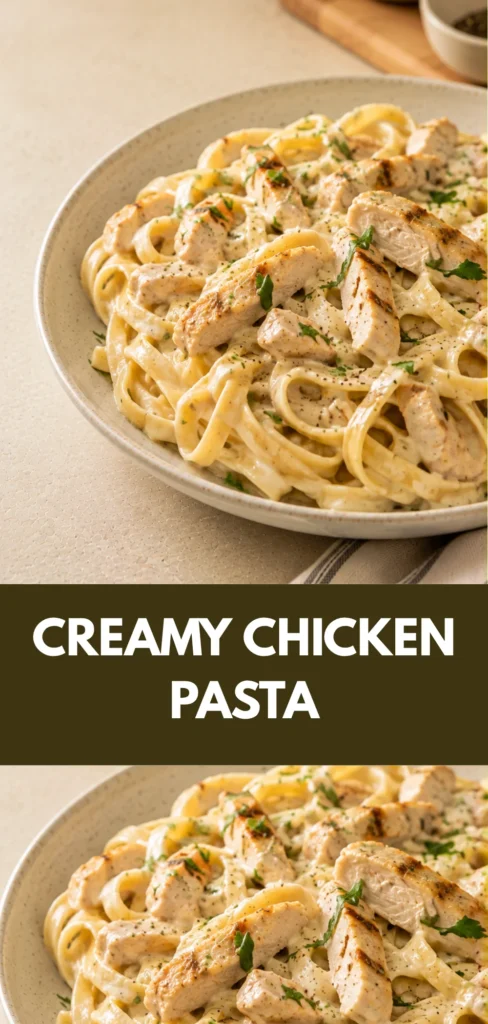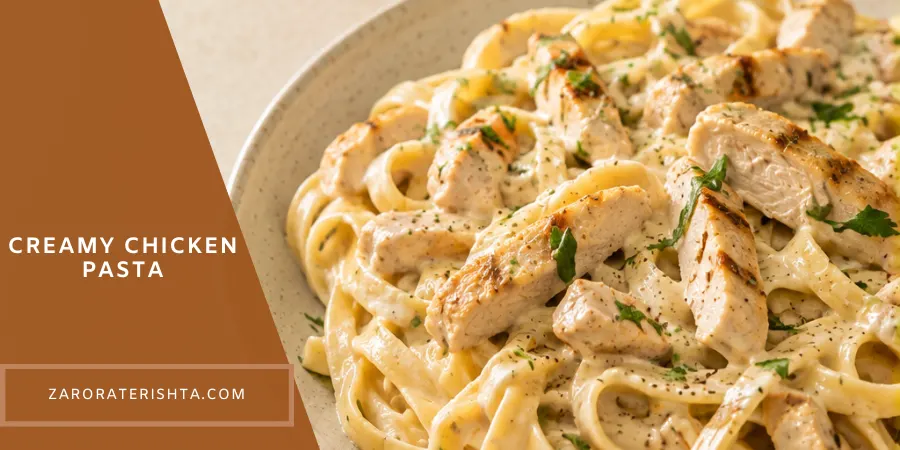
When I want a quick, filling dinner, this Creamy Chicken Pasta is an ideal choice for a busy night. It combines tender, well-seasoned chicken with pasta coated in a rich garlic-Parmesan cream sauce.
The chicken is lightly floured and seared in a skillet, creating a golden exterior while leaving flavorful browned bits behind for the sauce. From preparation through serving, the recipe takes about 30–35 minutes, making it practical for a satisfying weeknight meal.
Creamy Chicken Pasta–The Short Answer
The sauce is where the main flavors come together. Butter, cream, and chicken broth create the base, while the browned bits left from cooking the chicken are released during deglazing.
Garlic, onion, Italian seasoning, Parmesan, lemon juice, lemon zest, and a small amount of rosemary add savory depth and brightness. Pasta water provides starch that helps the sauce cling to the noodles instead of becoming thin or watery.
I find this approach especially useful because the dish can be adjusted without losing its character. The cayenne can be reduced or omitted for a milder version, while mushrooms, spinach, or broccoli can be added when desired.
Served on its own, this creamy chicken pasta makes a substantial dinner, while a simple salad and bread can round out the meal for the whole family.
Ingredients
This Creamy Chicken Pasta is built around tender chicken, pasta, and a rich garlic-Parmesan cream sauce. Each ingredient has a specific role in creating the final flavor, texture, and consistency.
For the chicken coating, use:
- ½ cup (63 g) all-purpose flour
- ¾ teaspoon fine table salt
- ½ teaspoon black pepper
- ½ teaspoon garlic powder
- ½ teaspoon smoked paprika
- ¼ teaspoon Italian seasoning
- Pinch of cayenne pepper, optional
The seasoned flour provides both the seasoning and the light coating for the chicken, so a separate seasoning layer is not needed. The coating should remain thin and even, helping the chicken develop a golden exterior without becoming heavily breaded.
For the chicken and skillet cooking, use:
- 1½ lb (680 g) boneless, skinless chicken breasts, divided into 4 portions
- 1 tablespoon (15 ml) olive oil
- 2 tablespoons (28 g) unsalted butter
The chicken breasts should be flattened at the thickest areas to approximately 1.3–1.5 cm so they cook more evenly. The olive oil and butter combination provides enough fat for searing while adding richness and helping create the browned bits that become part of the sauce.
For the pasta, use:
- 12 oz (340 g) dry linguine or fettuccine
- 1½ cups (360 ml) reserved pasta water
Cook the pasta about 1 minute less than the package’s full recommended time. Reserving extra pasta water gives better control over the final sauce consistency because the starch helps the creamy sauce cling to the noodles.
For the sauce, use:
- 1 cup (140 g) finely diced yellow onion
- 1½ tablespoons (about 22 g) fresh minced garlic
- 1¼ cups (300 ml) low-sodium chicken broth
- 1¼ cups (300 ml) heavy cream
- ¾ teaspoon Italian seasoning
- ½ teaspoon black pepper
- ¾ cup (approximately 65 g) finely grated Parmesan
- 2 tablespoons (30 ml) fresh lemon juice
- 1 teaspoon finely grated lemon zest
- 1 tablespoon (about 3 g) finely chopped fresh rosemary
The sauce combines cream, broth, Parmesan, aromatics, and herbs to create a rich but balanced flavor. Chicken broth helps loosen the sauce while also capturing the browned bits from the skillet. Parmesan adds savory depth, while lemon juice and zest brighten the creamy base. Rosemary provides a subtle herbal note without overpowering the garlic and Parmesan flavors.
For serving, use:
- Approximately 1 tablespoon fresh chopped parsley
- Additional Parmesan, lemon zest, or red pepper flakes if desired
These finishing ingredients add freshness, extra flavor, and a simple visual finish to the completed pasta dish.
How to Cook Creamy Chicken Pasta
Start by preparing the chicken so it cooks evenly. Place each chicken breast portion between sheets of plastic wrap and gently pound the thickest areas with a rolling pin or meat mallet until the pieces are approximately 1.3–1.5 cm thick.
The goal is an even thickness rather than very thin cutlets. Pat the chicken dry with paper towels before coating.
In a shallow dish, combine ½ cup (63 g) all-purpose flour, ¾ teaspoon salt, ½ teaspoon black pepper, ½ teaspoon garlic powder, ½ teaspoon smoked paprika, ¼ teaspoon Italian seasoning, and a pinch of cayenne pepper if using.
This seasoned flour mixture will be used for both seasoning and coating the chicken, so no separate seasoning mixture is necessary.
Dredge each chicken piece lightly in the seasoned flour, turning to coat both sides. Shake off the excess flour so the coating remains thin and even rather than thick or heavily breaded.
Heat 1 tablespoon (15 ml) olive oil and 2 tablespoons (28 g) unsalted butter in a large skillet over medium-high heat.
Once the butter has melted and the oil is hot, add the chicken without overcrowding the pan. Cook for about 3 minutes on the first side, then turn and cook for another 3–4 minutes, or until the thickest part reaches 165°F (74°C).
If the chicken pieces are thicker than 1.5 cm, they may require another minute or two of cooking.
Transfer the cooked chicken to a clean plate and loosely cover it. Do not wipe out the skillet. The browned bits remaining on the bottom contain concentrated flavor and will become part of the sauce.
While the chicken cooks, bring a large pot of water to a rolling boil. Season the water generously with approximately 20–25 g salt for 4 liters of water.
Add 12 oz (340 g) dry linguine or fettuccine and cook according to the package directions, reducing the cooking time by about 1 minute so the pasta remains slightly under al dente.
Before draining, reserve 1½ cups (360 ml) pasta water. You may use only ½ cup (120 ml), but keeping extra gives you better control over the final sauce consistency.
Drain the pasta without rinsing.
Return to the chicken skillet and reduce the heat to medium. Add 1 cup (140 g) finely diced yellow onion and cook for about 3–4 minutes, stirring occasionally, until softened and translucent.
Add 1½ tablespoons (about 22 g) finely minced fresh garlic and cook for 30–45 seconds, just until fragrant. Do not allow the garlic to become deeply browned.
Slowly pour in 1¼ cups (300 ml) low-sodium chicken broth while scraping the bottom of the skillet with a silicone spatula.
Continue simmering for about 2 minutes. This deglazes the pan and incorporates the flavorful browned bits into the sauce.
Reduce the heat to medium-low and add 1¼ cups (300 ml) heavy cream, ¾ teaspoon Italian seasoning, and ½ teaspoon black pepper.
Stir gently and bring the mixture to a gentle simmer. Do not allow the cream sauce to boil vigorously. Simmer for approximately 3–4 minutes, or until the sauce has slightly thickened.
Reduce the heat to low. Add ¾ cup (approximately 65 g) finely grated Parmesan in 3 additions, stirring after each addition and allowing it to mostly melt before adding more.
Freshly grated Parmesan melts more smoothly than coarse pre-shredded cheese.
Add 2 tablespoons (30 ml) fresh lemon juice, 1 teaspoon finely grated lemon zest, and 1 tablespoon (about 3 g) finely chopped fresh rosemary. Stir well and taste the sauce.
Add the drained pasta directly to the skillet. Begin with approximately 90 ml pasta water and toss the noodles with tongs for 60–90 seconds.
Add another 15–30 ml pasta water only if the sauce needs loosening. The finished sauce should look glossy and should coat the noodles rather than pool heavily at the bottom of the skillet.
If the sauce becomes too thick, add pasta water 1 tablespoon at a time. If it appears too loose, continue tossing over low heat for another 30–60 seconds.
Avoid adding large amounts of pasta water at once because the sauce can become watery.
Slice the rested chicken into strips and arrange it over the pasta or gently fold it through the sauce.
Finish with fresh parsley, a little additional lemon zest, extra Parmesan, and optional red pepper flakes. Serve immediately.
For leftovers, loosen the sauce with 1–2 tablespoons warm chicken broth, milk, or water before reheating. Warm gently and avoid boiling.
Notes & Tips
Linguine and fettuccine are the best matches for this sauce because their broad surface allows the creamy sauce to cling evenly. Spaghetti can also be used, although the finished texture will be slightly different.
Use approximately 4 liters of boiling water with 20–25 g salt for the 340 g pasta. Cook the pasta about 1 minute less than the package recommendation so it can finish cooking in the sauce.
Flattening the chicken to 1.3–1.5 cm creates more predictable cooking. The chicken should reach 165°F (74°C) in the thickest part before being removed from the skillet.
The flour coating should remain light. Shake off excess flour before the chicken enters the skillet. Too much loose flour can burn in the butter and oil and make the sauce bitter.
Keep the browned bits in the skillet. They are an important part of the flavor base and will dissolve into the chicken broth during deglazing.
Keep the cream sauce at a gentle simmer rather than a hard boil. Excessive heat can cause the dairy and Parmesan to separate or become grainy.
Freshly grated Parmesan is preferred because it melts more smoothly. Add it gradually over low heat rather than adding all of it at once.
Pasta water should be added gradually. Start with approximately 90 ml and add another 15–30 ml only if needed. The correct consistency is glossy, smooth, and thick enough to cling to the noodles.
Fresh lemon juice and zest brighten the cream sauce, while rosemary adds a subtle herbal note. Neither should dominate the Parmesan and garlic base.
Mushrooms, spinach, or broccoli can be added if desired. For best balance, use approximately 150–200 g mushrooms, 60–85 g fresh spinach, or 150 g small broccoli florets. Cook vegetables until tender before combining them with the finished pasta.
Storage & Reheating
Store leftover pasta in an airtight container and refrigerate within 2 hours of cooking. It will keep for approximately 3–4 days.
For best results, reheat individual portions gently in a skillet over low to medium-low heat. Add 1–2 tablespoons chicken broth, milk, or water and stir occasionally until warmed through.
Avoid bringing the sauce to a boil during reheating. High heat can cause the cream and Parmesan sauce to separate and become oily.
Freezing is not the preferred storage method because the cream and Parmesan sauce may lose some of its smooth texture after thawing.
Nutrition
This recipe makes approximately 4 generous servings.
Each serving provides approximately:
- Calories: 1,050–1,100 kcal
- Protein: 58–62 g
- Carbohydrates: 90–95 g
- Fat: 52–56 g
- Saturated Fat: 26–28 g
- Fiber: 4–5 g
- Sugar: 7–9 g
- Cholesterol: approximately 190–205 mg
- Sodium: approximately 1,250–1,400 mg
These values are estimates based on the complete recipe divided into four servings. Actual nutrition will vary according to the specific pasta, chicken, Parmesan, cream, flour, and chicken broth used.
The calorie level is substantial because each serving contains approximately 170 g chicken, 85 g dry pasta, 75 ml heavy cream, Parmesan, butter, olive oil, and the flour coating. The recipe is therefore designed as a hearty main meal rather than a light pasta dish.
Sodium can vary considerably depending on the chicken broth, Parmesan, and the amount of salt retained from the pasta water. Using a low-sodium broth provides better control over the final seasoning.
Frequently Asked Questions
How do I keep the chicken tender instead of dry?
Flattening the chicken to an even 1.3–1.5 cm thickness helps it cook uniformly. Cook it over medium-high heat until the thickest portion reaches 165°F (74°C), then remove it from the skillet and let it rest briefly before slicing.
Avoid leaving already-cooked chicken simmering in the sauce for an extended period because it can affect the texture.
Why does the sauce need pasta water?
Reserved pasta water contains starch released from the noodles during cooking. Adding it gradually helps loosen the cream sauce while allowing the sauce to cling to the pasta.
Start with about 90 ml and add more only when needed.
How can I prevent the Parmesan sauce from becoming grainy?
Keep the heat low when adding Parmesan and add the cheese gradually in three portions. Freshly grated Parmesan also melts more smoothly.
Avoid boiling the sauce after the cheese has been added.
What should the finished sauce look like?
The sauce should be smooth, glossy, and thick enough to coat the noodles. When the skillet is tilted, it should move slowly around the pasta rather than sitting as a watery liquid underneath.
If it is too thick, add pasta water in small amounts. If it is too loose, toss the pasta over low heat for another 30–60 seconds.
Can I make this recipe less spicy?
Yes. The cayenne is optional and can be omitted completely for a mild version. The smoked paprika and black pepper provide flavor without making the dish noticeably hot.
Can I add vegetables to the pasta?
Yes. Mushrooms, spinach, and broccoli work particularly well. Approximately 150–200 g mushrooms, 60–85 g fresh spinach, or 150 g broccoli can be added without significantly changing the sauce-to-pasta balance.
What is the best way to reheat creamy chicken pasta?
Reheat it gently over low to medium-low heat with 1–2 tablespoons of chicken broth, milk, or water. Stir occasionally and stop once the pasta is hot.
Avoid boiling because high heat can cause the cream and Parmesan sauce to separate.
Can I prepare the chicken ahead of time?
The chicken can be flattened and coated with the seasoned flour shortly before cooking, but for the best texture it is preferable to cook it immediately before assembling the pasta.
The browned bits created during fresh cooking are also important for the sauce.
Does this recipe have to use linguine?
No. Fettuccine is an equally suitable option, and spaghetti or bucatini can also work. Long pasta shapes are preferred because they provide plenty of surface area for the creamy sauce to cling to.
How is this different from traditional Alfredo?
This is a skillet-based creamy chicken pasta rather than a traditional Alfredo preparation. The sauce combines Parmesan and cream with chicken broth, garlic, onion, Italian seasoning, lemon, and rosemary.
The broth also deglazes the skillet and incorporates the browned chicken bits, giving the sauce a more layered savory flavor.
Pinterest Pins