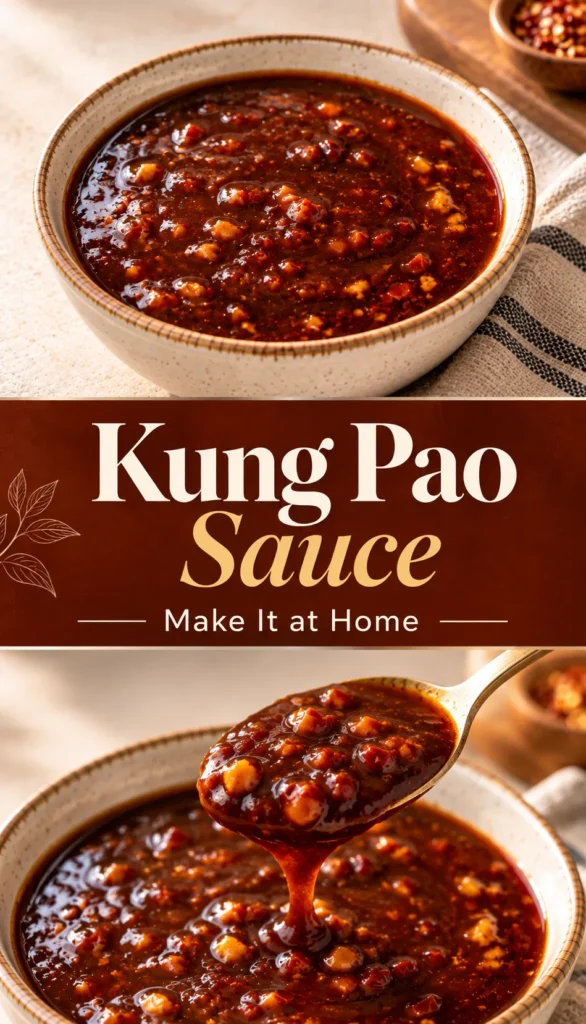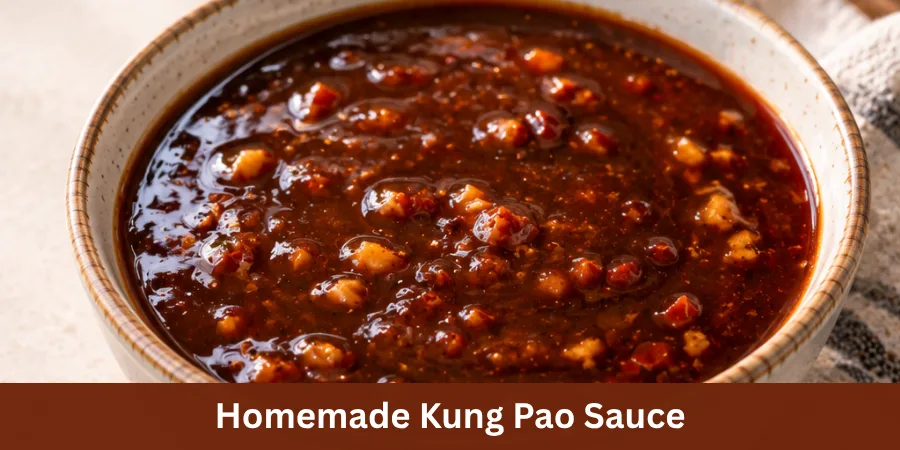
When I want a fast way to add more flavor to a meal, this homemade Kung Pao sauce is one of the most versatile options I reach for.
Inspired by Sichuan cuisine, this sauce has a spicy-sweet flavor with savory and tangy notes, along with the deep malty tang of Chinese black vinegar.
Getting the ratios right keeps the salty, sweet, and spicy flavors balanced without making the heat overpowering.
Homemade Kung Pao Sauce-The Short Answer
Tested Kung Pao sauce recipe with toasted Sichuan peppercorns for real numbing heat. Balanced sweet-tangy-spicy formula, glossy texture, ready in minutes. Make-ahead friendly — cook once, use all week.
It uses simple pantry ingredients and comes together quickly, making it a reliable choice for everyday cooking.
I like how easily this sauce works with different foods rather than being limited to one dish.
The Kung Pao sauce recipe can be used with chicken, tofu, beef, or shrimp, then tossed with noodles, a stir fry, or roasted vegetables.
The combination gives simple meals a takeout-style flavor, while Sichuan peppercorns provide the characteristic numbing spice.
With familiar everyday ingredients, the preparation stays fast and effortless, making it practical for a weeknight dinner.
Once prepared, I like to store it in the fridge so it is ready throughout the week.
A small amount can quickly add flavor to cooked protein or vegetables without requiring another complicated cooking step.
Whether I am making a restaurant-style glaze or reaching for a favorite sauce to finish a meal, its balanced flavor makes it easy to use in different ways.
About This Recipe
When I want something quick and satisfying, this homemade sauce is one I like to keep ready.
This easy Kung Pao sauce recipe is tried and tested, with a simple and reliable formula that is easy to make at home.
Soy sauce, Chinese black vinegar, and sugar create the main savory and tangy balance, while the other ingredients add sweetness and controlled heat.
The finished sauce is glossy, clingy, and smooth enough to coat the food without becoming too thick.
This versatile sauce works especially well with chicken, beef, and crispy fried tofu.
I like using it when I want the familiar character of Kung Pao without making a complicated sauce from scratch.
If you have ordered Kung Pao takeout and wanted to recreate that signature combination at home, this recipe gives you a practical starting point with a balanced savory, sweet, tangy, and spicy profile.
Why I Love This Sauce
What I like most about this sauce is the way the flavor builds in layers.
The aromatics are sautéed first, while the Sichuan peppercorns are toasted and crushed to bring out their citrusy aroma and mild numbing character.
They add depth without becoming overpowering. The soy sauce, vinegars, sweetness, and water work together for a balanced taste, while the cornstarch slurry provides a glossy, lightly thick, pourable, and clingy texture.
I have made this recipe many times, and following the same method and ratio each time makes the results more consistent.
Another reason I keep this sauce in my cooking routine is that it is make-ahead and freezer-friendly.
Once made, it can be cooled and stored in an airtight container in the refrigerator for up to a week.
For longer storage, divide it into ¼-cup or ½-cup portions in freezer-safe containers or trays, then freeze for up to 2 months.
I often double or triple the batch when preparing several meals, but a larger batch does not mean the cooking time should automatically be doubled or tripled.
The final thickness should still be checked after cooking because the sauce thickens slightly as it cools.
I also like that the recipe is customizable without changing its basic character.
The basic recipe provides controlled heat, while the documented variations allow you to make it spicier by adjusting the sambal and Sichuan peppercorns.
If you prefer to prepare the sauce ahead without vegetables, the pure sauce base is another practical option.
The fresh aromatics can then be added during the final stir-fry, which gives you better texture after storage and reheating.
Ingredients Needed
¼ cup regular soy sauce
½ cup water
1 tablespoon dark soy sauce
1 tablespoon rice vinegar
2 teaspoons Chinese black vinegar
1 tablespoon honey
1 tablespoon granulated sugar
1 tablespoon sambal oelek
1 teaspoon Sichuan peppercorns
1 tablespoon peanut oil
3 garlic cloves, finely minced
1 tablespoon fresh ginger, finely minced
4 green onions, divided
½ small red bell pepper, seeded and finely diced
2 teaspoons cornstarch
2 tablespoons cold water
Ingredients Notes
This homemade Kung Pao sauce uses a balanced combination of savory, sweet, tangy, and spicy ingredients.
The main sauce base starts with ¼ cup regular soy sauce and ½ cup water.
Soy sauce provides the salty savory foundation, while water balances the intensity and helps create the correct sauce consistency.
Add 1 tablespoon dark soy sauce for deeper color and additional savory depth.
Dark soy sauce contributes a richer appearance and a slightly deeper flavor compared with regular soy sauce.
For acidity, use 1 tablespoon rice vinegar and 2 teaspoons Chinese black vinegar.
Rice vinegar provides clean acidity that balances the sweetness and saltiness of the sauce.
Chinese black vinegar adds a deeper fermented and malty tang that gives the sauce its characteristic Kung Pao-style flavor.
For sweetness, use 1 tablespoon honey and 1 tablespoon granulated sugar.
These ingredients balance the vinegar, soy sauce, and chili heat without making the sauce overly sweet.
For a vegan version, replace the honey with 21 grams maple syrup.
The spicy layer comes from 1 tablespoon sambal oelek and 1 teaspoon Sichuan peppercorns.
Sambal oelek provides chili heat, while Sichuan peppercorns add their signature citrus aroma and mild numbing sensation.
Toast the Sichuan peppercorns briefly before crushing them.
A spice grinder, rolling pin, or mortar and pestle can be used to coarsely crush them.
Avoid turning them into a fine powder because a coarse texture helps preserve their characteristic aroma.
For the aromatics and vegetables, use:
- 1 tablespoon peanut oil
- 3 garlic cloves
- 1 tablespoon fresh ginger
- 4 green onions
- ½ small red bell pepper
The peanut oil is used to cook the vegetables and aromatics while adding a subtle nutty flavor.
Finely mince the garlic and ginger so they blend smoothly into the sauce.
Remove the seeds and membrane from the red bell pepper, then finely dice it.
Divide the green onions between cooking and finishing, using both the white and green parts.
The vegetables are cooked first, then the garlic and ginger are added so they become fragrant without burning.
For thickening, combine 2 teaspoons cornstarch with 2 tablespoons cold water to create a smooth slurry.
Whisk until the cornstarch is completely dissolved and no white clumps remain.
Adding the slurry separately helps the sauce thicken evenly and creates the desired glossy, lightly thick, pourable texture.
The final sauce should coat food without becoming a heavy paste.
How to Cook
For a simple homemade Kung Pao sauce, first toast the Sichuan peppercorns.
Place them in a dry skillet over medium-low heat and toast for about 30–60 seconds, shaking the pan occasionally until they become fragrant.
Transfer them to a plate and let them cool briefly.
Once cooled, coarsely crush them using a spice grinder, rolling pin, or mortar and pestle.
Keeping the peppercorns coarse helps preserve their citrus aroma and mild numbing character.
Combine the sauce ingredients in a medium bowl.
Add soy sauce, dark soy sauce, rice vinegar, Chinese black vinegar, chili paste, honey, sugar, water, and the toasted crushed Sichuan peppercorns.
Whisk everything together until smooth and well combined.
In a separate small bowl, mix the cornstarch with cold water to create the slurry.
Whisk until there are no lumps or white clumps remaining.
Keeping the slurry smooth at this stage helps create a better texture once it reaches the heat.
Heat the peanut oil in a medium saucepan over medium heat.
Add the diced red bell pepper and green onions, then cook for about 2 minutes while stirring occasionally until the pepper begins to soften.
Add the garlic and ginger and cook for another 45–60 seconds until the aromatics become fragrant.
Avoid cooking the garlic too long because it can become bitter.
Pour the prepared sauce mixture into the saucepan and stir well.
Increase the heat to medium-high and bring the sauce to a gentle boil.
Before adding the cornstarch slurry, stir it again because the starch can settle at the bottom.
Slowly add the slurry while stirring continuously as the sauce begins to thicken.
Once the sauce starts to bubble, reduce the heat and simmer gently for about 1–2 minutes.
The sauce may look cloudy at first, but continued cooking transforms it into a glossy glaze that is thick, smooth, and shiny without becoming a heavy paste.
This is the stage where the thickening process finishes and the final texture develops.
Let the sauce cool briefly before using it in a stir-fry where you can toss it with your desired meat, vegetables, or other ingredients.
You can serve the Kung Pao sauce immediately with additional green onions as a garnish.
If you are preparing it ahead, let the sauce cool completely before storing.
Transfer it to a jar or mason jar with a tight-fitting lid.
This makes it easy to keep ready for later use instead of relying on a premade sauce or ordering takeout.
Variations To Try
You can adjust this sauce to suit different tastes without changing its basic character.
For a vegan version, replace honey with maple syrup.
The substitution keeps the sweetness balanced while making the sauce suitable for a vegan diet.
If you prefer extra heat, add a little chili oil or increase the amount of chili paste.
Increase the heat gradually so it does not overpower the savory and tangy balance of the sauce.
The goal is to enhance the spice while keeping the other flavors noticeable.
If Sichuan peppercorns are unavailable, use ground white pepper with a little extra chili paste.
This will not provide the same citrus aroma and numbing character, but it can still add warmth to the sauce.
For added protein, serve the sauce with cubed tofu, cooked chicken, shrimp, or beef.
The sauce works well with different proteins while maintaining its signature savory, sweet, tangy, and spicy profile.
If you do not have peanut oil, avocado oil is a suitable alternative because it does not add a strong flavor.
This keeps the sauce balanced while allowing the garlic, ginger, chili, and vinegar flavors to remain the focus.
Storage
This homemade Kung Pao sauce is easy to make ahead and store.
Once the sauce has cooled, transfer it to an airtight container and refrigerate it for up to 1 week.
You can also use it straight away if you are preparing it for a meal.
Keeping it stored properly makes it easy to have a flavorful sauce ready throughout the week.
For longer storage, freeze the sauce in ¼-cup or ½-cup portions using freezer-safe containers.
It will keep fresh in the freezer for up to 2 months.
When ready to use, thaw the portion overnight in the refrigerator.
Portioning the sauce makes it easier to use only the amount needed for a meal without thawing the entire batch.
For reheating, transfer the leftover sauce to a saucepan or skillet.
Warm it gently over low-medium heat for about 1–3 minutes.
Stir gently as it heats.
If the sauce becomes too thick, add 1 tablespoon of water and warm until it reaches a smooth consistency.
Tips
I like adding the aromatics gradually so their flavors stay balanced.
Start with garlic, ginger, and green onions or scallions, then add Sichuan peppercorns for their distinctive character.
If you prefer more heat, increase the sambal or add a little chili oil rather than changing the rest of the seasoning.
This keeps the savory, sweet, tangy balance of the sauce intact while allowing you to adjust the spice level.
You can also marinate your protein in the sauce before adding it to a stir-fry.
This gives the protein time to take on the flavor.
The sauce can also be added near the end of a stir-fry so it coats the ingredients without cooking for too long.
Adding it at the right stage helps maintain the glossy texture and prevents the sauce from becoming overly reduced.
If the sauce is runny, combine a teaspoon of cornstarch with a teaspoon of water, then pour the mixture into the sauce and simmer until thickened.
If it gets too thick, add a splash of water to thin it.
Avoid adding more soy sauce because that can make the sauce too salty.
Small adjustments are enough to bring the consistency back into balance and prevent excess saltiness.
Notes
I usually toast the Sichuan peppercorns first, then coarsely grind them in a spice grinder.
A rolling pin also works if you prefer a simple method.
The coarse texture helps maintain the characteristic aroma and mild numbing quality of the peppercorns.
Store the sauce in the refrigerator for up to 1 week or freeze it in portions for up to 2 months.
Since the recipe scales well, you can double or triple it for batch cooking.
When preparing a larger batch, maintain the same ingredient ratios and check the final consistency after cooking.
The cooking time does not automatically need to double or triple.
The sauce may thicken as it cools.
If needed, add a splash of water when reheating to bring it back to a smooth consistency.
The recipe makes approximately 1¼ to 1½ cups of sauce.
About ½ cup is a practical starting amount for 1 pound of protein or vegetables.
Add more only when needed to achieve an even coating without making the finished dish overly saucy.
Nutrition Insight
For a ¼ cup serving, the calculated estimate is:
- 89 kcal calories
- 13.5 g carbohydrates
- 1.6 g protein
- 3.6 g fat
- 0.6 g saturated fat
- 0.6 g fiber
- 7.1 g sugar
- 1,050 mg sodium
This nutrition information is automatically calculated as an estimate based on the complete formula divided into four equal servings.
Since the finished yield can range from approximately 1¼ to 1½ cups, these values are an approximation until the cooked sauce is measured.
For final recipe accuracy, the nutrition should be recalculated using the actual measured yield and the exact ingredient brands used in the tested batch.
Frequently Asked Questions
Is Kung Pao sauce spicy?
The sauce has a savory, tangy flavor with a moderate level of heat from sambal oelek and Sichuan peppercorns.
I find it works well when kept moderately spicy, but you can adjust the amount of sambal to suit your preference.
If you want more warmth, add more sambal rather than increasing the soy sauce.
You can also leave out the peppercorns if you prefer a milder flavor.
Can I use it with tofu or vegetables?
Yes. It pairs well with tofu and vegetables, including stir-fried tofu, steamed broccoli, and roasted cauliflower.
It can also be served with rice or noodles.
A wok, large skillet, or sauté pan will work as long as there is enough room to stir ingredients without crowding the pan.
Otherwise, the vegetables may start steaming instead of cooking properly.
Can I make this sauce gluten-free?
Yes. Use Tamari or gluten-free soy sauce in place of regular soy sauce and dark soy sauce.
Cornstarch is naturally gluten-free, but it is still important to check the label because some packaged products can vary.
This keeps the sauce suitable for a gluten-free stir-fry.
What should I do if the sauce is too thick?
The sauce can become thick after cooking or while stored in the fridge.
To loosen it, whisk in a dash of water or chicken broth, adding about 1 teaspoon at a time.
Stop when the sauce reaches the desired consistency.
Avoid adding more soy sauce because that can make it saltier.
Should I cook the sauce before using it?
For the best texture, I recommend simmering the sauce in a saucepan before using it in a stir-fry.
This allows the sugar to dissolve and helps create a smoother, glossy glaze that coats the protein or meat evenly.
The sauce can then be added near the end of cooking rather than being cooked for an unnecessarily long time.
Can I double or triple the recipe?
Yes. The recipe scales up well.
When you double or triple it, maintain the same ratio between the ingredients and choose a suitable pan size to avoid crowding.
The cooking time does not need to increase automatically with the batch size.
Instead, use the final consistency as your guide.
How many calories are in a serving?
The expected yield is approximately 1¼ to 1½ cups. One ¼ cup serving contains about 89 calories.
Since evaporation and cooking time can affect the final yield, measuring the finished sauce after the resting period gives the most accurate result.
Pinterest Pins