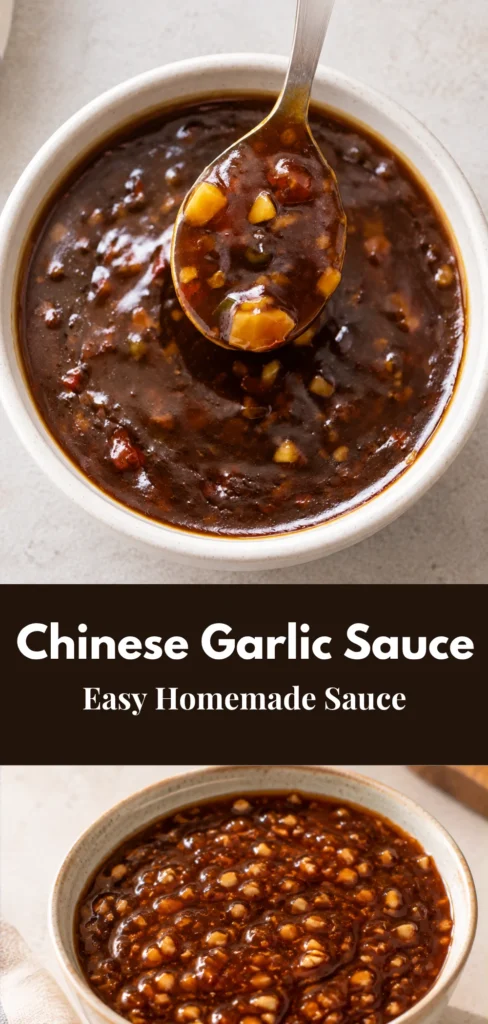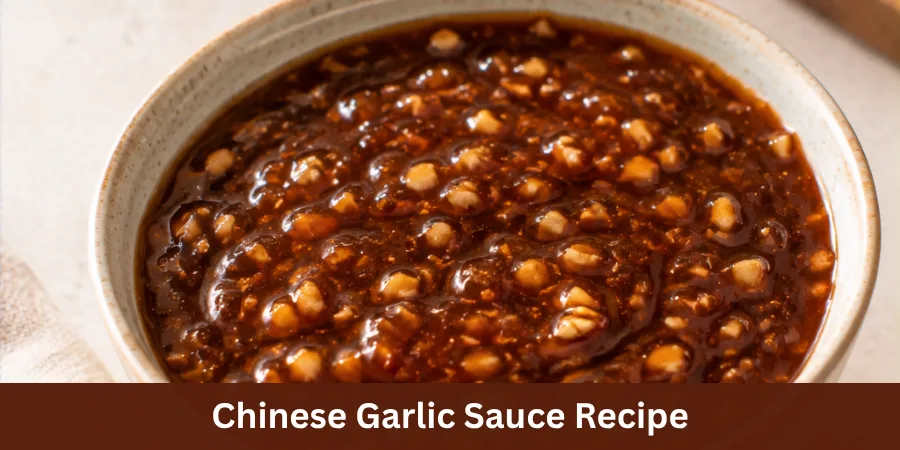
I enjoy making this Chinese garlic sauce at home because it brings a rich savory flavor to simple meals without requiring much effort.
This homemade sauce has a balanced combination of sweet, salty, and spicy flavors with a smooth brown stir-fry sauce consistency. It is a practical alternative to takeout and works especially well when you want to add more flavor to a meal without preparing a complicated sauce.
Chinese Garlic Sauce Recipe-The Short Answer
The recipe is quick and easy to prepare in a home kitchen. Fresh garlic, ginger, red pepper flakes, soy sauce, vegetable broth, rice vinegar, and brown sugar come together to create a rich base with a lightly sweet finish.
Cornstarch gives the sauce its glossy texture, while sesame oil adds a subtle nutty aroma that completes the flavor.
I like using it with vegetable stir-fries, but it also works well with beef, chicken, rice, noodles, and other vegetables.
The same sauce can also be served as a dipping sauce for dumplings and egg rolls, making it useful for both cooking and serving.
About This Recipe
I make Chinese garlic sauce when I want a flavorful sauce that brings the taste of Chinese takeout to a homemade meal.
This version has a balanced combination of vegetable broth, low-sodium soy sauce, rice vinegar, brown sugar, fresh garlic, and ginger.
Red pepper flakes and fresh green chile add adjustable heat, while cornstarch helps thicken the sauce and creates a smooth, glossy consistency.
The garlic stays prominent, while the ginger adds a fresh aromatic note that helps balance the stronger garlic flavor.
The heat can be adjusted depending on your preference, from a mild version to a spicier sauce.
I like using it with vegetables or meat in a hearty stir-fry served with rice, but it also works well as a dip for dumplings.
It can also be served with noodles, making it a flexible sauce that works across several meals.
Ingredients Needed
1 cup low-sodium vegetable broth (240 ml)
⅓ cup low-sodium soy sauce (80 ml)
3 tablespoons rice vinegar (45 ml)
3 tablespoons packed light brown sugar (38 g)
1 teaspoon red pepper flakes (2 g)
3 tablespoons finely minced fresh garlic (27 g)
1 tablespoon finely minced fresh ginger (8 g)
1 small fresh green chile, finely minced (6 g)
1 tablespoon neutral vegetable oil (15 ml)
½ teaspoon smoked paprika (1 g), optional
½ teaspoon crushed Szechuan peppercorns (1 g), optional
2 teaspoons Chinese rice wine or dry sherry (10 ml), optional
2 tablespoons cornstarch (16 g)
¼ cup cold water (60 ml)
1 tablespoon sesame oil (15 ml)
Ingredients Notes
The sauce starts with 1 cup low-sodium vegetable broth, ⅓ cup low-sodium soy sauce, 3 tablespoons rice vinegar, and 3 tablespoons packed light brown sugar.
These ingredients create the main savory, tangy, and slightly sweet base of the sauce.
The vegetable broth provides the liquid foundation, while soy sauce adds savory depth. Rice vinegar brings acidity that balances the richness, and brown sugar provides sweetness without making the sauce overly sweet.
The 1 teaspoon red pepper flakes adds adjustable heat while keeping the main flavor balance of the sauce intact.
For the aromatics, use 3 tablespoons finely minced fresh garlic, 1 tablespoon finely minced fresh ginger, and 1 small fresh green chile.
The garlic provides the dominant flavor of this sauce, while ginger adds a fresh aromatic note.
The fresh green chile adds another layer of heat that can be adjusted based on your preference.
Cook these aromatics with 1 tablespoon neutral vegetable oil.
Vegetable oil, canola oil, or another neutral cooking oil works well because it allows the garlic and ginger flavors to remain the focus.
The recipe also includes optional flavor additions.
You can add ½ teaspoon smoked paprika for a smoky note, ½ teaspoon crushed Szechuan peppercorns for additional aromatic character, or 2 teaspoons Chinese rice wine or dry sherry for extra depth.
These additions are optional and are not required for the base sauce formula.
For thickening, combine 2 tablespoons cornstarch with ¼ cup cold water to make a smooth slurry.
Preparing the slurry separately helps prevent lumps and creates a smoother final sauce.
Arrowroot powder can be used as an alternative thickener, but cornstarch is the specified thickener for this recipe.
Add the slurry near the end of cooking so the sauce develops a glossy spoon-coating consistency without becoming watery or paste-like.
Finish the sauce with 1 tablespoon sesame oil after cooking.
Adding sesame oil at the final stage helps preserve its nutty aroma and gives the sauce a more complete finish.
For a gluten-free version, use low-sodium gluten-free tamari instead of soy sauce and make sure the vegetable broth is also gluten-free.
For a soy-free version, coconut aminos can replace soy sauce, but the brown sugar should be reduced to approximately 25 grams because coconut aminos can be sweeter.
How to Make Chinese Garlic Sauce
Making Chinese garlic sauce is quick and straightforward. This recipe comes together in 4 simple steps and takes about 15 minutes, including preparation time.
Start by placing the measured ingredients for the sauce in a medium-sized bowl and whisk to combine.
Set the mixture aside while you prepare the aromatics.
For the thickening mixture, combine cornstarch with cold water in a separate bowl and whisk until fully dissolved.
Preparing the slurry ahead helps prevent lumps when it is added to the hot sauce later.
Heat the vegetable oil in a medium saucepan over medium heat.
Add the fresh ginger and fresh green chile and sauté for about 20 seconds.
Then add the garlic and cook for 45–60 seconds, stirring constantly until fragrant.
Keeping the heat controlled helps the garlic develop a strong aromatic flavor without becoming dark or bitter.
Pour the prepared sauce mixture into the saucepan and stir well.
Bring the sauce to a gentle boil, then reduce the heat and simmer for 1 minute.
This short simmer allows the flavors from the broth, soy sauce, vinegar, sugar, garlic, and ginger to come together before thickening.
Taste the sauce before adding the cornstarch slurry.
If needed, adjust the balance with a small amount of rice vinegar for more acidity, brown sugar for more sweetness, or low-sodium vegetable broth if the sauce tastes too salty.
This is the easiest stage to fine-tune the flavor before the sauce reaches its final consistency.
Whisk the cornstarch slurry again because the starch can settle at the bottom.
Slowly pour it into the hot sauce while stirring constantly.
Bring the sauce to an active bubbling stage and cook for about 30–60 seconds until it thickens and develops a smooth, glossy consistency.
The finished sauce should have a spoon-coating texture without becoming watery or paste-like.
Turn off the heat and stir in the sesame oil at the final stage.
Adding sesame oil after cooking helps preserve its nutty aroma and gives the sauce a more complete finish.
The sauce can be used immediately with a favorite stir-fry or served as a dipping sauce for dumplings and other appetizers.
For later use, cool it completely and transfer it to a clean glass jar.
Secure the lid and store leftovers in the refrigerator for up to 4 days.
Variations To Try
There are several simple ways to adjust this sauce based on the flavor and heat level you prefer.
Fresh ginger adds a warm aromatic note that works well with the garlic.
The recipe uses 1 tablespoon of finely minced fresh ginger, which helps brighten the stronger garlic flavor.
After cooking, stir the sauce and taste it so you can adjust the balance before serving.
For a stronger garlic taste, garlic lovers can keep the full 3 tablespoons of minced garlic used in the base recipe.
The heat can also be changed by adjusting the fresh green chile and red pepper flakes.
A mild version can omit the chili, while medium and spicy versions use increasing amounts to create more heat.
This keeps the core recipe the same while making it easy to match your preferred spice level.
How to Serve
I like to stir the sauce before using it, especially if the ingredients have settled during storage.
This brown garlic sauce works well as an all-purpose stir-fry sauce for many different meals.
For a simple option, toss it with broccoli and other vegetables such as peppers, carrots, and onions.
It is especially good with stir-fried broccoli because the sauce coats the vegetables without making them watery.
For extra heat and a Szechuan-style variation, crushed Szechuan peppercorns can be added to the base sauce.
For meats, add the sauce during the last few minutes of cooking so it has enough time to coat the ingredients without reducing too much.
You can also drizzle it over noodles, rice, or other dishes for extra flavor.
For serving on the side, use it as a dipping sauce with dumplings, summer rolls, vegan dumplings, or other appetizers.
These options make the sauce flexible and useful for different types of meals.
Storage
Store leftover sauce in a clean airtight container and keep it in the refrigerator for up to 4 days.
A glass jar with a lid works well for this.
Let the sauce cool briefly before refrigerating it, then stir it before use.
This keeps the sauce ready for several meals without changing the recipe.
For longer storage, freezing is possible, although the texture may change after thawing.
Small portions can be frozen in an ice cube tray, making them easy to use when cooking.
Once frozen, transfer the portions to an airtight container.
After thawing, the sauce may have some separation, a watery texture, or slight graininess.
To improve the texture after thawing, gently heat the sauce in a saucepan and whisk it until it comes together again.
If needed, add a small amount of low-sodium vegetable broth to adjust the consistency.
For the best texture, fresh or refrigerated sauce is preferred.
Expert Tips
When making this sauce, adjust the heat gradually to suit the dish and the people eating it.
For a spicier version, increase the red pepper flakes or use a small amount of fresh chilis.
If serving a toddler, child, or someone sensitive to spicy food, reduce or omit the fresh green chile and red pepper flakes.
Vegetable oil, canola oil, or another neutral vegetable cooking oil can be used for sautéing the aromatics.
The recipe uses brown sugar for sweetness.
Regular granulated sugar can be used as a direct solid-sugar alternative.
Liquid sweeteners such as maple syrup, agave syrup, brown rice syrup, or date syrup are not part of the engineered base recipe because they add extra liquid and can change the sauce consistency.
Cornstarch is used to thicken the sauce and create its glossy texture.
If you have a corn allergy, arrowroot flour, tapioca flour, tapioca starch, or potato starch may be considered as alternative starches, but these are not part of the engineered recipe.
The base recipe uses low-sodium soy sauce.
For a gluten-free version, use low-sodium gluten-free tamari.
If you need a soy-free alternative, coconut aminos can replace soy sauce, but the brown sugar should be reduced because coconut aminos can be sweeter.
The sauce is designed to have a pronounced garlic flavor.
Fresh garlic and ginger are briefly sautéed rather than used raw, which helps develop their aroma without burning the garlic.
If you prefer a milder garlic flavor, you can adjust the amount to your preference, but the engineered recipe is specifically garlic-forward.
Whisking the sauce mixture first and preparing the cornstarch slurry separately also helps keep the finished sauce smooth and lump-free.
For storage, transfer the cooled sauce to a clean airtight glass jar with a lid and keep it in the refrigerator for up to 4 days.
Sesame seeds can be added for extra flavor or used as a garnish.
Chinese rice wine or dry sherry can also be used as an optional flavor addition.
The stovetop method is the recommended approach for this recipe, with the wine added to the sauce base during cooking.
Notes
For this recipe, the heat can be adjusted based on the type and amount of chile used.
The base recipe uses fresh green chile and red pepper flakes, while green chilis or serranos can describe suitable fresh chile options.
The amount of red pepper flakes can also be reduced or increased to suit the preferred heat level.
The sauce uses vegetable broth as its liquid base and vegetable oil, canola oil, or another vegetable cooking oil for sautéing the aromatics.
The recipe uses brown sugar for sweetness rather than maple syrup.
Cornstarch is used to thicken the sauce and create its glossy spoon-coating texture.
The cornstarch should be mixed with cold water first instead of being added directly to the hot sauce.
For the savory base, low-sodium soy sauce is used with vegetable broth and rice vinegar.
If needed for celiac requirements, the engineered gluten-free version uses low-sodium tamari.
A soy-free alternative is coconut aminos, but the brown sugar should be reduced because coconut aminos can be sweeter.
The finished sauce makes approximately 2 cups.
Nutrition Insight
A 2-tablespoon (30 ml) serving of the sauce contains:
- 36 kcal
- 5 g carbohydrates
- <1 g protein
- 2 g total fat
- 0 g saturated fat
- 0 g fiber
- 2 g total sugars
- 230 mg sodium
- 0 mg cholesterol
The recipe makes approximately 2 cups (480 ml) and is divided into 16 equal servings, so these values are based on the finished sauce being portioned evenly.
These nutrition values are estimates based on the base recipe and may vary slightly depending on the brands of low-sodium vegetable broth and low-sodium soy sauce used.
FAQ‘s
What Is Chinese Garlic Sauce?
Chinese garlic sauce is a versatile and flavorful condiment that works well in many dishes.
This recipe creates a garlic-forward sauce using fresh garlic, soy sauce, vinegar, sugar, and vegetable broth to create a savory sauce with balanced sweetness and acidity.
It works as a dipping sauce for dumplings or as a flavor enhancer for stir-fries and noodle dishes. It is also easy to make at home, making it a simple way to add bold garlic flavor to a meal.
How Much Sugar Is In Chinese Garlic Sauce?
The amount of sugar can vary between restaurants, so there is no single amount that applies to every version. In this recipe, sweetness comes from 3 tablespoons of packed light brown sugar.
This gives the sauce enough sweetness to balance the soy sauce and vinegar without making it overly sweet. Because the amount is measured, you can keep the flavor consistent each time you make it.
Is Chinese Garlic Sauce High In Calories?
The calorie content depends on the ingredients and serving size. In this recipe, one 2-tablespoon serving contains 36 kcal.
The amount can add up if you use a large portion with a stir-fry, but a normal serving keeps the calorie contribution fairly modest.
How Is This Recipe Different?
Some recipes sauté the garlic first and then add the other ingredients to warm everything together.
This recipe also briefly cooks the aromatics, but the sauce base is mixed separately before it goes into the pan. The cooking process includes a short simmer followed by cornstarch slurry to thicken the sauce.
If you want to serve it as a dip, the recipe uses less cornstarch for a thinner texture that is easier for dipping. The finished sauce can be served heated with cooked dishes or used as a dip.
Can This Be Made Vegan?
Yes, this sauce can be vegan as written. If you use broth, choose vegetable broth to keep the recipe suitable for a vegan diet.
Can This Be Made Gluten-Free?
Yes. To make it gluten-free, use gluten-free ingredients, including low-sodium gluten-free tamari instead of regular soy sauce.
The vegetable broth should also be labeled gluten-free. There are no other wheat-based products required in the recipe.
Pinterest Pins