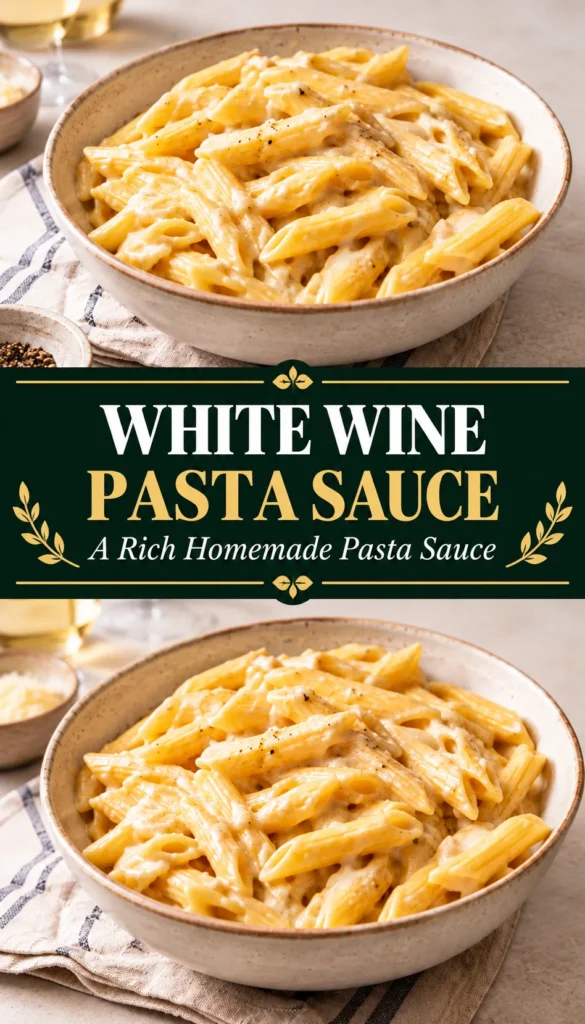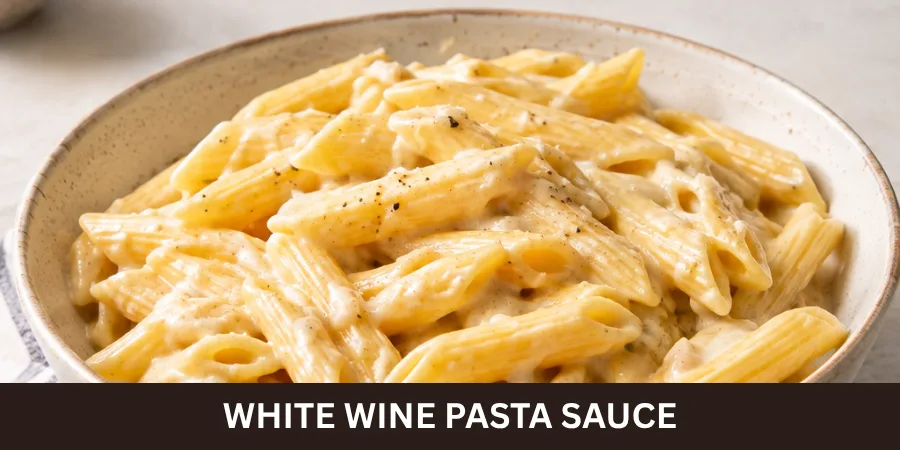
A good white wine sauce can turn simple pasta into a rich and satisfying meal without making the process complicated.
This Creamy White Wine Sauce combines butter, garlic, and Parmesan to create a smooth, savory base, while lemon and Dijon mustard add a light tangy contrast.
The result is a creamy and flavorful sauce with enough brightness to balance the richness.
White Wine Pasta Sauce-The Short Answer
This simple-to-make sauce works well with a variety of dishes, including seafood, chicken, and different pasta shapes.
It is also a natural match for an easy ravioli recipe, where the sauce coats the pasta evenly and adds savory depth.
Because it comes together without a complicated process, it makes a practical special weeknight meal when you want something rich and comforting without spending too much time in the kitchen.
Why This Recipe Works
What I love about this white wine pasta sauce is how much flavor it develops from a few simple ingredients.
Butter and flour create a light roux that helps thicken the sauce, while garlic builds the savory base.
The dry white wine is an important part of the flavor, so I recommend using one you would enjoy drinking rather than cooking wine.
A gentle simmer allows the wine to reduce and become more concentrated, creating depth and brightness without making the sauce taste overly sharp.
The heavy cream gives the sauce its rich and silky texture, while Italian seasoning adds the flavor of dried herbs.
Parmesan cheese provides savory depth and helps create a smooth finish.
I prefer grating it fresh because it melts more smoothly and gives the sauce better texture. Fresh parsley adds a clean contrast to the creamy base.
The finished sauce has a balanced combination of richness, wine flavor, creaminess, and Parmesan depth.
This makes it especially good with ravioli and other pasta dishes.
The creamy texture allows the sauce to coat the pasta while keeping the flavors of butter, wine, cheese, and herbs noticeable.
Choosing a Dry White Wine
For a balanced white wine pasta sauce, choose a dry white wine rather than a sweet one.
In Italian and French-style recipes, wine is often used to deglaze the pan and add acidity and depth to dishes. It can bring complex flavor to recipes such as risotto and creamy pan sauces.
During cooking, reducing the wine before adding cream helps concentrate its flavor and soften the raw wine aroma.
Good options include Sauvignon Blanc, Chardonnay, Pinot Grigio, and Pinot Gris.
Choose a crisp white wine without noticeable sweetness because sweet wine can change the savory balance of the sauce.
I avoid cooking wine because it can add an unpleasant bitter flavor. A dry bottle gives the sauce the acidity and concentrated wine character needed to balance the richness of butter, cream, and Parmesan.
Ingredients Needed
57 g (about 2 oz) salted butter
¼ cup finely chopped shallot
9 g minced garlic from 3 large cloves
½ cup dry white wine
¾ cup heavy cream
2 teaspoons Dijon mustard
1 tablespoon fresh lemon juice
1 tablespoon flour
30 g freshly grated Parmesan cheese
1 tablespoon finely chopped fresh parsley
¼ teaspoon fine salt
¼ teaspoon freshly ground black pepper
Ingredients Notes
The base of this white wine pasta sauce starts with butter, shallot, and garlic.
Use 57 g (about 2 oz) salted butter to create richness and help build the sauce base.
Add ¼ cup finely chopped shallot and 9 g minced garlic from 3 large cloves.
The shallot adds a mild savory sweetness, while garlic creates an aromatic foundation.
Cook the aromatics gently until softened and fragrant without browning so the sauce develops a deeper flavor.
Dry white wine is an important ingredient because it adds acidity, brightness, and concentrated flavor.
Use ½ cup dry white wine for the sauce base.
Sauvignon Blanc, Chardonnay, Pinot Grigio, and Pinot Gris are suitable choices.
A dry wine works best because sweet wine can change the savory balance of the sauce.
Heavy cream provides the rich and silky texture of the finished sauce.
Use ¾ cup (180 ml) heavy cream to create the creamy consistency.
For a lighter variation, whole milk or half-and-half can replace part of the cream, although the final sauce will be thinner.
Dijon mustard adds a mild savory tang that helps balance the richness of butter and cream. Use 2 teaspoons Dijon mustard.
Fresh lemon juice is added for brightness. Use 1 tablespoon (15 ml) fresh lemon juice to bring a light citrus contrast to the creamy base.
The sauce gets its structure from a quick roux made with butter and flour. Use 1 tablespoon flour as the primary thickening ingredient.
Gluten-free flour can be used when needed.
Cornflour or cornstarch is not required in the main recipe because the flour roux provides the primary thickening, but it can be kept as an optional adjustment if the finished sauce is too thin.
Parmesan cheese adds savory depth and helps create a smooth finish. Use 30 g freshly grated Parmesan cheese.
I prefer grating Parmesan fresh because pre-shredded cheese may contain anti-caking agents that can affect how smoothly it melts and may contribute to a grainy texture.
Finish the sauce with 1 tablespoon finely chopped fresh parsley, ¼ teaspoon fine salt, and ¼ teaspoon freshly ground black pepper.
Fresh herbs such as dill can be used as a variation, while Italian seasoning or Herbs de Provence can provide a dried herb option.
The finished sauce can be served with 20 ounces refrigerated cheese ravioli, although the same sauce also works with other pasta shapes.
How to Cook White Wine Pasta Sauce
Start by placing a skillet over medium-low heat and melting the butter.
Add the finely chopped shallot and minced garlic, then sauté for 1–2 minutes, stirring often, until the shallot softens and the garlic becomes fragrant.
Keep the heat controlled so the garlic does not brown or burn. Add the flour and stir for about 1 minute to form a light roux.
The flour should cook through without becoming dark. This creates a smooth base for the sauce and helps it thicken later.
Gradually pour in the dry white wine while whisking and scraping the bottom of the skillet to incorporate the roux.
Bring it to a gentle simmer and cook for about 3–4 minutes, allowing the wine to reduce by roughly half.
This softens the raw wine aroma and concentrates the flavor without reducing the liquid completely.
Add the heavy cream and continue cooking over medium-low heat for 3–5 minutes.
Keep the sauce at a gentle simmer rather than a hard boil. This allows the sauce to gradually become thicker and smoother.
Stir in the Dijon mustard so its tang balances the richness of the cream and butter.
Reduce the heat to low and add the freshly grated Parmesan. Whisk gently until the cheese melts into the sauce and creates a smooth finish.
If the sauce is still thinner than desired, an optional cornflour slurry can be used.
Mix the cornflour with 1 teaspoon of cold water, whisk it into the sauce, and cook for about 20 seconds until the desired consistency is reached.
Turn off the heat and stir in the lemon juice and chopped parsley. Taste the sauce and adjust the salt and pepper gradually.
Keep in mind that both the butter and Parmesan already contribute saltiness. The finished sauce should be smooth and creamy without feeling paste-like.
For pasta or ravioli, bring a salted pot of water to a boil and cook according to the package directions.
If using refrigerated ravioli, coordinate its cooking time with the sauce so everything is ready together. Before draining, reserve some hot pasta water.
Add the drained ravioli or cooked pasta to the skillet and gently toss until evenly coated.
If the sauce feels too thick, add a tablespoon of reserved pasta water to loosen it while maintaining a creamy consistency.
Avoid aggressively stirring filled ravioli because it can break. Serve immediately while the sauce is smooth and warm.
Expert Tips
For this recipe, I prefer using a dry white wine such as Pinot Grigio, Sauvignon Blanc, or Chardonnay.
Choose a wine you would actually enjoy drinking because its flavor remains noticeable after cooking.
Start by cooking the shallot and garlic over low to medium-low heat for about 1–2 minutes, stirring often.
This softens the aromatics without burning them or creating a bitter taste. When reducing the wine, keep the pan at a gentle simmer rather than a hard boil.
The wine should reduce to about half of its original volume so the flavor can concentrate without allowing the liquid to disappear completely.
This step helps build a balanced flavor and smooth texture before the cream is added.
After the reduction, add the cream and cook gently until the sauce develops a thicker consistency.
Taste before making final adjustments, then add salt, pepper, or lemon juice as needed.
A lower-fat alternative, such as half-and-half, can be used for a lighter version, although the finished consistency may be thinner.
For the best Parmesan finish, grate the cheese fresh from a block instead of using pre-grated cheese.
Freshly grated Parmesan melts more easily and incorporates better, giving the sauce improved body and a smoother finish.
These small details make a noticeable difference when serving the sauce with pasta for dinner.
Helpful Swaps
For a simple change, swap ravioli for tortellini or another suitable pasta variety.
Cheese ravioli keeps the dish comforting, while lobster ravioli can make it feel more special for a date night.
These pasta varieties work well with the creamy white wine base, so you can choose something different without changing the main recipe.
For the herbs, try Italian seasoning or Herbs de Provence when you want a different flavor option.
You can also use chopped fresh herbs, with chives being a simple choice for a fresh finish.
These herb swaps provide flexibility while keeping the overall flavor balanced.
Leftovers and Storage
When I make white wine sauce for ravioli, I prefer serving it fresh, but leftovers can be stored properly when needed.
Transfer the cooled sauce into an airtight container and keep it refrigerated for 2–3 days.
Since ravioli can absorb the sauce over time, it is best to plan on eating the leftovers within a couple of days.
The sauce may become thicker after refrigeration, but this can be adjusted during reheating.
Because the sauce takes about 20 minutes to prepare, I usually prefer making a fresh batch whenever possible for the best texture.
To reheat, place the sauce in a saucepan over low heat and stir constantly.
If it has thickened, add a splash of milk or cream and whisk gently to loosen the consistency.
Heating it slowly helps prevent burning and reduces the chance of the sauce separating.
I do not recommend freezing cream sauces or other cream-based sauces because the texture can change after thawing.
The sauce may become grainy or separate instead of returning to its original smooth consistency.
These simple storage and reheating steps help bring refrigerated sauce back to a creamy texture.
Notes
For accurate results, use standard measuring spoons and check the size of your tablespoon before starting.
In this recipe, 1 tablespoon is 3 teaspoons, so consistent measuring helps maintain the correct ingredient balance.
The nutrition details are approximate and refer to the sauce itself rather than pasta, ravioli, chicken, seafood, or other serving ingredients.
The final values can vary slightly depending on the brands used and any adjustments made to the seasoning.
Nutrition Insight
For an amount per serving, this Creamy White Wine Sauce provides:
- 333 Calories
- 7 g Carbohydrates
- 5 g Protein
- 30 g Total Fat
- 19 g Saturated Fat
- 0 g Fiber
- 2 g Sugar
The sauce contains approximately 600 mg Sodium per serving.
These values are based on dividing the sauce-only recipe into 4 equal servings.
The nutrition calculation does not include pasta, ravioli, chicken, seafood, or other ingredients served with the sauce, so the complete meal nutrition will be different.
Actual nutrition can vary slightly depending on the brands used, the type of Parmesan and cream, and the final amount of salt added.
Since salted butter and Parmesan already contribute sodium, adjust the final seasoning carefully after tasting the finished sauce.
Frequently Asked Questions
How can you prevent cream from curdling in white wine sauce?
When making a white wine sauce, start by cooking and reducing the wine before adding the cream.
This process helps soften the raw wine aroma and allows the cream to combine more smoothly into the sauce.
Once the wine has reduced, continue cooking the cream gently rather than adding it too early.
Which white wines work well in creamy sauces?
For creamy sauces, choose a wine you would actually enjoy drinking.
Dry whites such as Sauvignon Blanc, Pinot Grigio, and Chardonnay are dependable choices because their flavors work well with a rich creamy sauce.
A dry white wine adds flavor without making the sauce feel too heavy.
How can you thicken a cream and white wine sauce?
If the sauce needs more body, flour and butter provide the primary thickening through a roux.
The main recipe uses flour as the initial thickening structure, while cornflour and water can be used as an optional adjustment if the finished sauce still needs more thickness.
Cornflour should be mixed into a slurry before adding it to the sauce.
How much alcohol remains after simmering wine in the sauce?
Simmering reduces the alcohol content, but it does not eliminate it completely. According to USDA data, dishes that are simmered for 15 minutes retain about 40% of their original alcohol content, and even after 2.5 hours of cooking, around 5% can still remain.
Since this sauce only simmers the wine for a few minutes before the cream is added, a meaningful amount of alcohol is still present in the finished sauce. If you’re serving someone who is pregnant, alcohol-sensitive, or a child, keep this in mind rather than assuming the alcohol has fully cooked off.
What happens if you use red wine instead of white wine?
You can use red wine instead of white wine, but the sauce will have a pinkish color and a different flavor profile.
Red wine sauces usually pair better with beef or mushroom dishes than the lighter proteins that a white wine sauce complements.
Switching wines creates a different sauce rather than simply replacing one wine with another.
Which pasta shapes work best with white wine sauce?
Almost any pasta can work with white wine sauce, but the shape affects how well the sauce clings.
Long noodles such as spaghetti and linguine work well, while short pasta shapes like penne and rigatoni can hold more sauce in their ridges.
Both styles work well, so the choice depends on your preferred pasta shape.
Can I make white wine pasta sauce without Parmesan?
Yes, you can make white wine pasta sauce without Parmesan, although the finished sauce will have less savory depth and body.
Parmesan helps create a smooth finish and adds richness.
If you leave it out, taste the sauce before adding extra salt because the other ingredients still provide flavor.
Can I use half-and-half instead of heavy cream?
Half-and-half can replace part of the heavy cream when you want a lighter version.
The main difference is consistency because the finished sauce will be thinner than one made with heavy cream.
Keep the heat gentle so the sauce stays smooth while cooking.
Why does my white wine sauce taste too strong?
If the wine flavor tastes too strong, the wine may not have reduced enough before adding the cream.
A gentle simmer helps soften the raw wine aroma and concentrate the flavor.
A small amount of cream can also help balance the sauce, followed by Parmesan and lemon juice to adjust the final taste.
How do I keep white wine pasta sauce smooth?
Keep the heat controlled throughout cooking and avoid bringing the cream or Parmesan to a hard boil.
Freshly grated Parmesan melts more smoothly than pre-shredded cheese.
Gentle whisking helps the ingredients combine evenly and keeps the sauce creamy without becoming grainy or separated.
Can I make white wine pasta sauce ahead of time?
The sauce can be prepared ahead, but it is best fresh when possible because it takes about 20 minutes to make.
If prepared ahead, store it in an airtight container in the refrigerator for 2–3 days.
The sauce may become thicker after chilling, but a little milk or cream can help loosen it during gentle reheating.
What can I serve with white wine pasta sauce?
White wine pasta sauce works well with pasta, ravioli, tortellini, chicken, salmon, shrimp, and mild white fish.
It also pairs well with vegetables such as roasted asparagus, broccoli, green beans, and sautéed spinach.
These pairings allow the creamy sauce to remain the main flavor of the dish.
Can I freeze creamy white wine pasta sauce?
I do not recommend freezing this sauce because the cream and Parmesan can change texture after thawing.
It may become grainy or separate instead of returning to its original smooth consistency.
For the best texture, keep leftovers refrigerated and use them within a few days.
Pinterest Pins