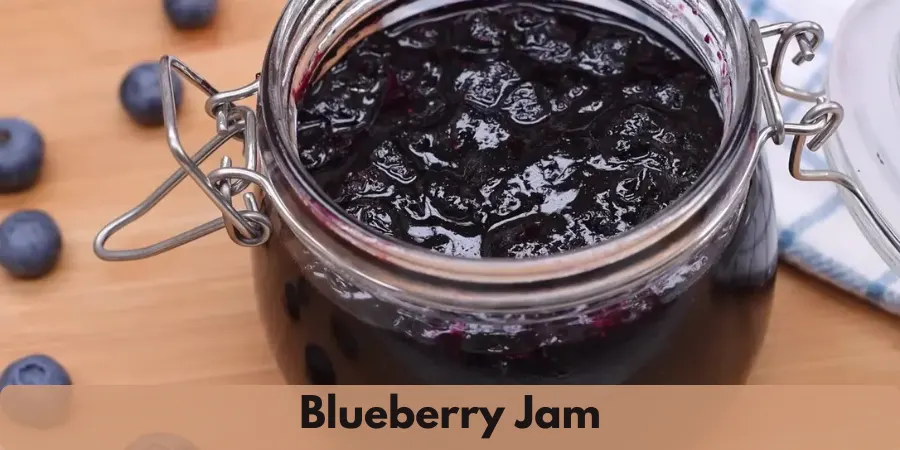
There is something special about making Easy Blueberry Jam at home. This Blueberry Jam Recipe combines fresh blueberries, sugar, and lemon juice to create a flavorful 3-ingredient preserve, with a few optional flavor additions if you’d like to customize it. It’s a simple way to make homemade fruit preserves, even if it’s your first time making jam.
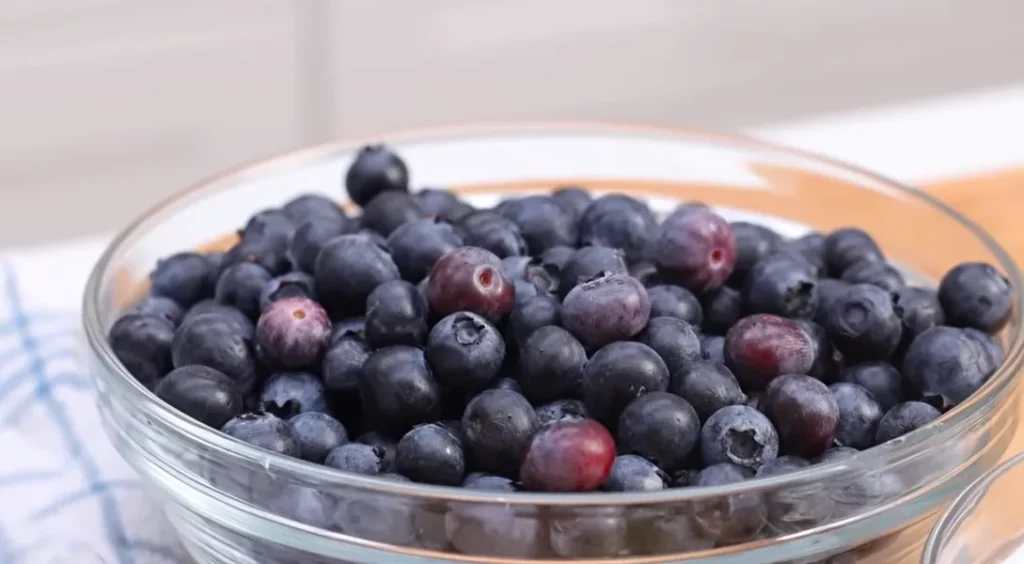
For the best results, use mostly ripe summer blueberries with a few slightly underripe berries. This combination provides the best flavor and helps the jam develop a naturally thick, spoonable texture. Their sweet-tart, lightly floral taste gives every spoonful a fresh, vibrant flavor.
Blueberry Jam-The Short Answer
Before you start, skim through the ingredients and steps below — I’ve kept everything super simple! And once you’re ready, there’s a quick video at the end to see exactly how it’s done.
Unlike jelly, which is made from fruit juice, this jam is prepared with whole fruit, giving it a rich texture filled with real blueberries. The simple ingredients and straightforward method make it easy for beginners while delivering results that taste better than many store-bought options.
Enjoy it as a breakfast spread, fruit spread, or homemade condiment. It also makes a thoughtful gift and a great way to preserve fresh blueberries throughout the season. Whether you’re making a jar for everyday breakfasts or sharing it with family and friends, this recipe delivers rich blueberry flavor in every bite.
Why You’ll Like This
- This easy, small-batch jam recipe is perfect for home cooks who want reliable instructions that are simple to follow.
- The stovetop method requires no special equipment beyond basic kitchen tools, making it ideal for beginners.
- Fresh blueberries create a naturally sweet, vibrant flavor with a rich homemade taste.
- Using only a few pantry staples keeps the recipe budget-friendly and easy to prepare.
- The jam can be refrigerated, frozen, or canned for longer storage, making it a practical recipe to enjoy throughout the year.
Ingredients Needed
A classic Blueberry Jam Recipe comes together with only 3 main ingredients, making it simple for beginners and dependable for experienced home cooks. Choosing good-quality ingredients helps create better flavor, texture, and storage life.
Blueberries
Use 6 cups (900g) fresh blueberries when they’re in season for the best flavor. For a naturally better set, choose mostly ripe berries with a few slightly underripe ones. If fresh blueberries aren’t available, frozen blueberries work well and produce excellent homemade jam without changing the recipe.
Sugar and Lemon Juice
To create the right balance of sweetness and acidity, you’ll need:
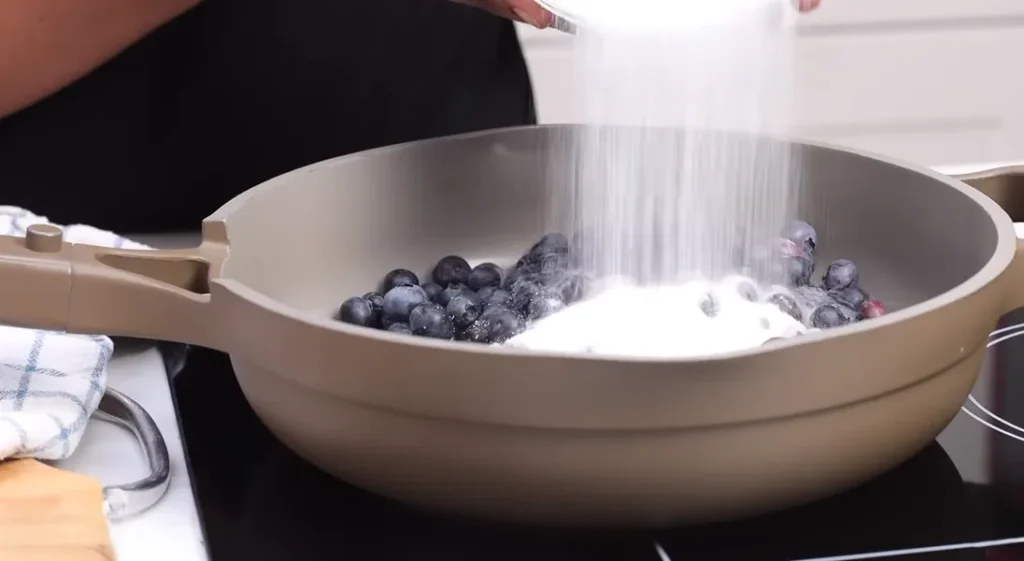
- 2 cups (400g) granulated sugar, which sweetens the jam while helping it thicken and stay fresh.
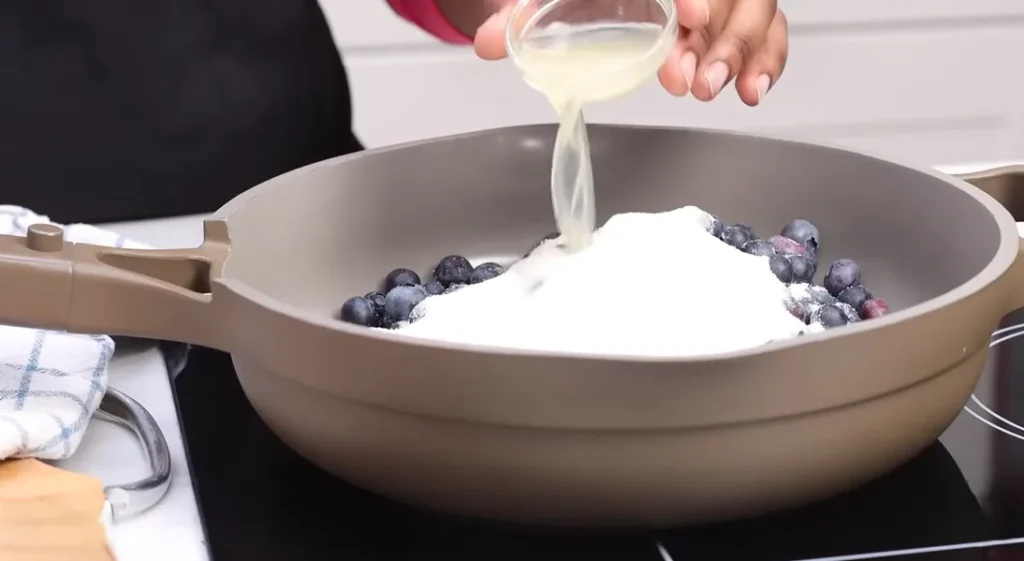
- 2 tablespoons fresh lemon juice, which brightens the flavor, supports the natural pectin, and helps maintain the jam’s color during storage.
Together, these ingredients create a balanced jam with a smooth texture and fresh blueberry flavor.
Optional Flavorings
If you’d like to customize your jam, try adding one or two of these optional ingredients:
- ¼ teaspoon ground cinnamon
- 1 teaspoon lemon zest
- 1 teaspoon orange zest
- 1 teaspoon freshly grated ginger
- ⅛ teaspoon ground cardamom
- ¼ teaspoon dried culinary lavender buds
- 1 teaspoon vanilla extract
- 1 whole star anise (remove before jarring)
- 2–3 small fresh thyme sprigs (remove before storing)
- 1 teaspoon juniper-scented gin (optional)
These additions add subtle flavor without overpowering the blueberries. For the best results, choose only one or two so the fresh fruit remains the star of the recipe.
How To Cook
Prepare the Blueberries
Wash and gently dry the blueberries, using mostly ripe berries with a few slightly underripe ones for a better natural set. Add the blueberries, granulated sugar, and fresh lemon juice to a 5-quart heavy-bottomed pot or Dutch oven. If using optional flavorings, stir them in before cooking.
Cook the Jam
Place the pot over medium heat
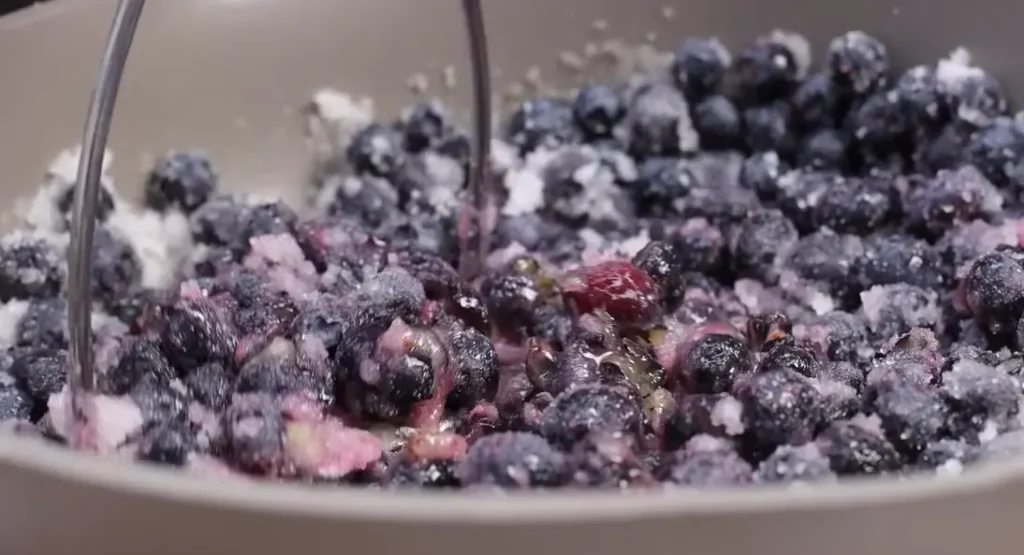
and cook until the blueberries release their juices and the sugar completely dissolves. Lightly mash about half of the blueberries with a potato masher, leaving the remaining berries whole for a pleasantly chunky texture.
- Increase the heat to medium-high until the mixture reaches a gentle boil.
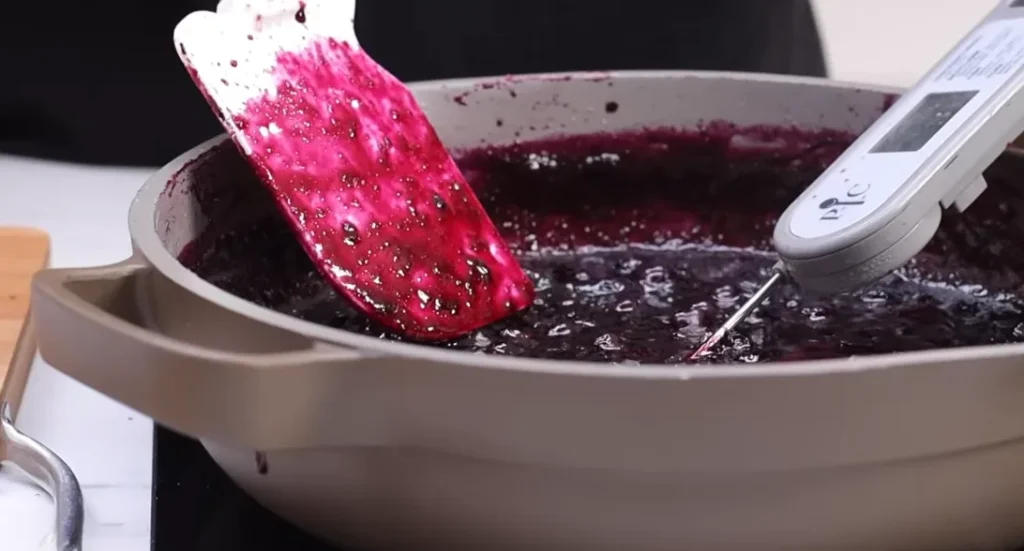
- Reduce the heat to maintain a steady simmer until the jam reaches 218–220°F (103–104°C).
- Stir frequently, scraping the bottom and sides of the pot to prevent scorching.
- As the jam cooks, the bubbles will become smaller, slower, and glossier while the mixture thickens into a rich, syrupy consistency.
- Skim off any foam from the surface if needed.
- Check the consistency with a candy thermometer or use the freezer plate test before removing the jam from the heat.
Test for Doneness
Use either of these simple methods to check that your jam is ready:
- Verify the jam reaches 218–220°F (103–104°C) using a candy thermometer.
- Place a spoonful of jam onto a chilled freezer plate. After about a minute, gently push it with your finger. If it wrinkles and holds its shape, it’s ready. If it still looks runny, continue simmering for a few more minutes before testing again.
Using both methods provides the most reliable results, especially if you’re making homemade jam for the first time.
Fill the Jars
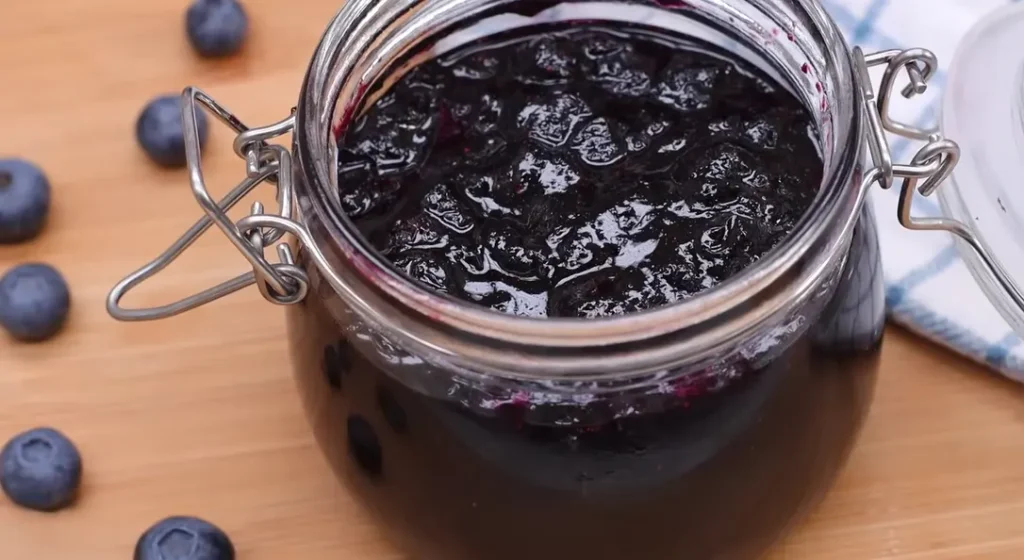
While the jam is still hot, carefully fill sterilized half-pint glass jars, leaving ¼-inch headspace. Wipe the rims clean and seal the lids. Enjoy your blueberry jam on toast, biscuits, pancakes, waffles, yogurt, oatmeal, cheesecake, ice cream, thumbprint cookies, or as a filling for cakes, pastries, and other desserts.
Expert Tips
Use the Right Pot
A 5-quart heavy-bottomed pot or Dutch oven is the best choice for making blueberry jam. The extra space helps prevent the hot, bubbling jam from boiling over, while a long-handled spoon or silicone spatula makes stirring safer and reduces the risk of scorching.
Choose the Best Blueberries
For the best flavor and natural set, use mostly ripe blueberries with a few slightly underripe ones. Avoid bruised, moldy, or overripe berries, as they can affect both the taste and texture of the finished jam.
Sterilize Jars Before Storing
Whether you plan to refrigerate, freeze, or can your jam, start with clean, sterilized jars.
- Wash the jars thoroughly with hot, soapy water.
- Submerge them in boiling water.
- Reduce the heat and simmer for about 15 minutes.
- Let the jars drain and cool before filling.
Proper sterilization improves food safety and helps extend storage life.
Store It the Right Way
Store cooled jam in clean, airtight glass jars.
- Refrigerate for up to 3 weeks.
- Freeze for up to 6 months, leaving about ½ inch of headspace for expansion.
- Thaw frozen jam overnight in the refrigerator and stir gently before serving.
- Properly processed water bath canned jars can be stored in a cool, dark place for up to 1 year.
Nutrition Insight
Homemade blueberry jam is best enjoyed in moderation. While it is naturally high in sugar, it also provides small amounts of fiber, vitamin C, potassium, and other nutrients from the blueberries.
Per recipe:
- Calories: 684 kcal
- Carbohydrates: 176g
- Sugar: 163g
- Protein: 2g
- Fat: 1g
- Saturated Fat: 0.1g
- Polyunsaturated Fat: 0.4g
- Monounsaturated Fat: 0.1g
- Fiber: 7g
- Sodium: 4mg
- Potassium: 241mg
- Vitamin A: 160 IU
- Vitamin C: 33mg
- Calcium: 20mg
- Iron: 1mg
If you follow a medically restricted diet or need to manage your sugar intake, adjust your serving size accordingly or consult your healthcare provider before making dietary changes.
FAQ’s
Can I make blueberry jam without using pectin?
Yes. Blueberries naturally contain pectin, and when combined with sugar and lemon juice, they thicken into a classic jam without the need for commercial pectin. The finished jam may have a slightly softer set than recipes made with added pectin. If you prefer a firmer consistency, you can add pectin by following the package directions.
Which other fruits work well in this jam recipe?
This recipe also works well with strawberries, blackberries, raspberries, or mixed berries. Since each fruit contains different amounts of water and natural pectin, the cooking time may vary slightly. A good starting point is about 1 cup of sugar per pound of fruit, adjusting only if the fruit is especially tart.
What happens if I replace sugar with another sweetener?
Granulated sugar is recommended because it sweetens the jam, helps it thicken properly, and acts as a natural preservative. Alternative sweeteners such as honey, maple syrup, or stevia can change the texture, consistency, and storage life. If you’d like a substitute with similar results, superfine (caster) sugar or pure cane sugar are the closest alternatives.