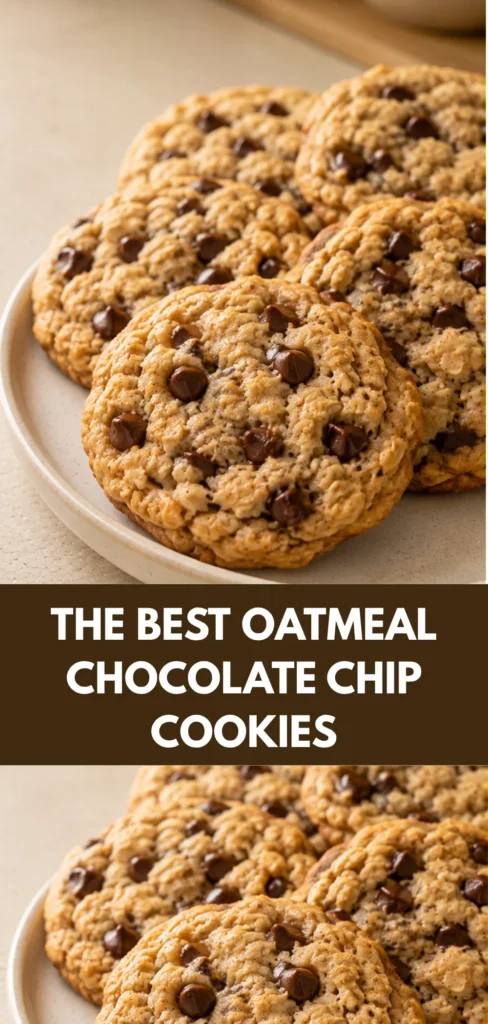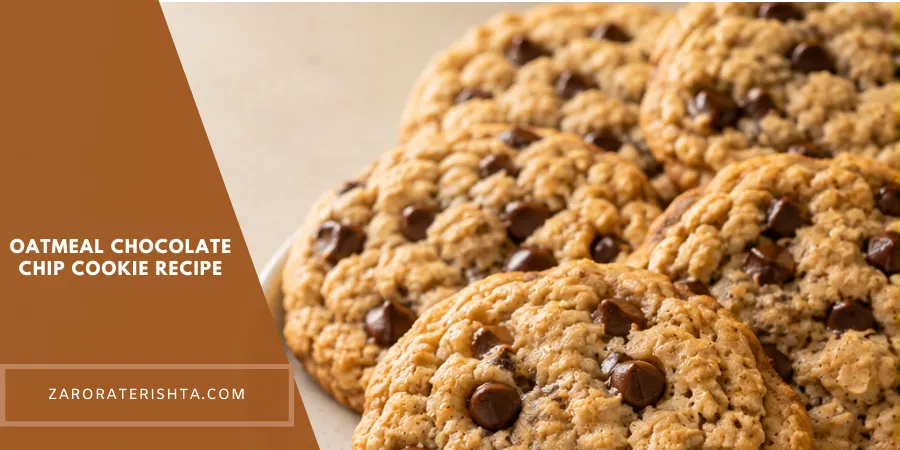
If you love oatmeal cookies but want plenty of chocolate in every bite, these chewy chocolate chip oatmeal cookies create the perfect balance between a classic oatmeal cookie and a chocolate chip cookie.
The edges bake lightly crisp while the centers stay soft and chewy, with old-fashioned rolled oats adding a hearty texture and semisweet chocolate chips creating rich pockets of chocolate throughout the dough.
Oatmeal Chocolate Chip Cookie Recipe-The Short Answer
The formula is built around softened butter, light brown sugar, granulated sugar, one large egg, rolled oats, and semisweet chocolate chips. Brown sugar provides moisture and a deeper caramel-like flavor, while the smaller amount of granulated sugar helps the edges develop a light crispness without making the cookies overly firm.
Old-fashioned rolled oats are the preferred choice because they provide noticeable oat texture without making the dough heavy. The amount is intentionally controlled so the cookies remain chewy rather than becoming dry, dense, or overly oat-heavy.
Semisweet chocolate keeps the flavor rich while still allowing the butter, brown sugar, and oats to remain noticeable.
This recipe makes 14 large cookies, with each dough portion weighing approximately 53–54 g before baking. Chilling the shaped dough for 45–60 minutes helps control spreading and gives the oats time to absorb moisture.
Baked at 350°F (175°C), the cookies should have lightly golden edges and soft centers that continue setting as they cool.
Why This Recipe Works
These cookies work because each ingredient has a specific role in creating the final texture. The combination of brown sugar, granulated sugar, butter, oats, and chocolate creates a cookie that feels rich while maintaining a chewy center.
Brown sugar helps retain moisture and contributes a deeper caramel-like flavor, while granulated sugar supports lightly crisp edges. The controlled amount of rolled oats adds texture without making the cookies dry or dense.
The chilling step is an important part of the method rather than an optional extra. It firms the butter, allows the oats to absorb moisture, and helps the cookies maintain their shape while baking.
With balanced sweetness, noticeable oat texture, and evenly distributed chocolate, this recipe creates a cookie that feels familiar while still having a carefully controlled texture.
How to Get the Best Cookie Texture
The texture of these cookies depends on a few small details during preparation and baking. For the intended result, the butter should be softened but not melted. Softened butter can be properly creamed with the sugars while still giving the dough enough structure to hold its shape.
The 45–60 minute chilling period also plays an important role. It firms the butter after mixing and gives the rolled oats time to absorb some of the moisture in the dough. This helps the cookies bake with a thicker center instead of spreading too quickly in the oven.
Baking time is another important factor. The edges should look lightly golden and set while the centers remain soft. Do not wait for the centers to become completely firm because the cookies continue to set on the hot baking sheet after they come out of the oven.
Once cooled, the finished cookies should have lightly crisp edges and soft, chewy centers. The balance between proper chilling and careful baking helps maintain this contrast without making the cookies overly firm.
Ingredients
This Chewy Chocolate Chip Oatmeal Cookies recipe uses a balanced combination of butter, sugars, oats, flour, and chocolate to create cookies with crisp edges, soft centers, and a chewy texture.
For the cookie dough, use:
- ½ cup unsalted butter (113 g), softened
- ½ cup packed light brown sugar (100 g)
- ¼ cup granulated sugar (50 g)
- 1 large egg (approximately 50 g without shell)
- 2 teaspoons pure vanilla extract (10 ml)
The combination of brown sugar and granulated sugar is intentional. Brown sugar provides moisture and a deeper caramel-like flavor, which helps create a chewy center. Granulated sugar supports a lightly crisp edge without making the cookies overly firm.
Softened butter should be used rather than melted butter because the creamed butter structure helps the cookies hold their shape during baking. The egg provides moisture and structure, while vanilla rounds out the flavors of butter, sugar, oats, and chocolate.
For the dry ingredients, use:
- 1 cup + 2 tablespoons all-purpose flour (135 g)
- 1½ cups old-fashioned rolled oats (135 g)
- ½ teaspoon baking soda (approximately 2.3 g)
- ½ teaspoon fine salt (approximately 2.5 g)
- ½ teaspoon ground cinnamon (approximately 1.3 g)
Old-fashioned rolled oats are the preferred choice for this master formula because their larger flakes provide noticeable oat texture and chew. Quick-cooking oats create a softer, less distinct oat texture, while steel-cut oats are not suitable for this baking method.
The flour quantity is intentionally kept moderate so the cookies have enough structure without becoming thick, dry, or dense. Baking soda supports spreading and browning, while salt and cinnamon balance the sweetness and enhance the overall cookie flavor.
For the chocolate portion, use:
- 1 cup semisweet chocolate chips (approximately 150 g)
This amount provides a strong chocolate presence while still allowing the butter, brown sugar, and oats to remain noticeable. Semisweet chocolate works well because it adds richness without making the cookies excessively sweet.
For the optional walnut variation, use:
- ½ cup chopped walnuts (approximately 55–60 g)
Walnuts can be added in addition to the 150 g chocolate chips. Toasted walnuts can also be used for a deeper nutty flavor.
How to Make Oatmeal Chocolate Chip Cookies
Start by preparing the dry mixture. Add 135 g all-purpose flour, 135 g old-fashioned rolled oats, 2.3 g baking soda, 2.5 g fine salt, and 1.3 g cinnamon to a medium bowl.
Whisk the ingredients together for approximately 20–30 seconds so the baking soda, salt, and cinnamon are evenly distributed throughout the flour and oats.
In a separate large mixing bowl, add 113 g softened butter, 100 g brown sugar, and 50 g granulated sugar. Beat the mixture with a stand mixer fitted with a paddle attachment or an electric hand mixer on medium speed for approximately 2–3 minutes.
The mixture should look creamy and evenly combined. It does not need to become extremely pale or heavily aerated. Excessive whipping can introduce more air than needed and may push the cookies toward a lighter, cakier texture rather than a chewy texture.
Add 1 large egg and 2 teaspoons vanilla extract. Mix for approximately 30–60 seconds, scraping the bowl once if needed.
The mixture should look smooth and the egg should be fully incorporated before adding the dry ingredients.
Add the prepared dry mixture to the butter mixture. Mix on low speed only until the flour is nearly incorporated.
A few small streaks of flour are acceptable at this stage because the final mixing will happen when the chocolate chips are added. Avoid overmixing because excessive gluten development can make the cookies less tender.
Add 150 g semisweet chocolate chips and fold gently with a silicone spatula using approximately 8–10 folds.
If using walnuts, add 55–60 g chopped walnuts at the same stage. Stop mixing as soon as the ingredients are evenly distributed.
The finished dough should be thick, cohesive, and easily scoopable. It should not look wet or loose. Do not automatically add extra flour if the dough feels soft because additional flour can make the finished cookies unnecessarily thick and dry.
Divide the dough into 14 equal portions of approximately 53–54 g each. A kitchen scale gives the most consistent result.
Dividing the dough into equal portions helps the cookies bake at a similar rate and gives the finished batch a more consistent size. Lightly round each portion without compressing the dough too much.
Arrange the portions on a parchment-lined baking sheet with approximately 2½–3 inches of space between them. Bake about 6–8 cookies per sheet depending on the size of the baking tray so each cookie has enough room to spread without running into the others.
Lightly round each portion without compressing the dough too much. Arrange the portions on a parchment-lined baking sheet with approximately 2½–3 inches of space between them.
Bake about 6–8 cookies per sheet depending on the size of the baking tray.
For a more chocolate-forward appearance, press 3–5 chocolate chips from the existing 150 g allocation onto the surface of each dough ball. This does not increase the total chocolate quantity.
Cover the portioned dough and refrigerate for 45–60 minutes. This chilling period firms the butter, gives the oats time to absorb moisture, and helps control spreading during baking.
While the dough chills, preheat the oven to 350°F (175°C) with the rack positioned in the center. Allow at least 20 minutes of preheating so the oven reaches a stable baking temperature.
Place the chilled dough portions on the prepared baking sheet and bake for approximately 10–12 minutes. Begin checking around 10 minutes.
The cookies are ready when the edges are lightly golden and set while the centers remain soft. The surface should no longer look wet, but the middle does not need to be completely firm.
Remove the cookies from the oven and leave them on the baking sheet for approximately 5–8 minutes. This allows the centers to continue setting without overbaking them.
Transfer the cookies to a cooling rack and allow them to cool for another 20–30 minutes.
Once cooled, the finished cookies should have lightly crisp edges, soft chewy centers, a noticeable oat texture, and evenly distributed chocolate throughout.
Variations
These variations adjust the flavor while keeping the original cookie structure balanced.
- For a warmer oatmeal cookie flavor, increase the cinnamon from ½ teaspoon to 1 teaspoon. The additional cinnamon works well with the brown sugar and oats without requiring other changes.
- For oatmeal walnut chocolate chip cookies, add 55–60 g chopped walnuts while keeping the 150 g semisweet chocolate chips unchanged. Toasting the walnuts first creates a deeper nutty flavor.
- For an oatmeal chocolate chip raisin variation, use 100 g semisweet chocolate chips and 50 g raisins instead of the original 150 g chocolate chips. This keeps the total mix-ins balanced at approximately 150 g.
- For a more chocolate-forward cookie, use 100 g semisweet chocolate chips plus 50 g roughly chopped semisweet chocolate. The combination creates both smaller chocolate pockets and larger melted areas.
- If salted butter is used instead of unsalted butter, reduce the added fine salt by approximately ¼ teaspoon.
When adding variations, keep the total amount of additional mix-ins controlled. Large amounts of nuts, dried fruit, or chocolate can make the dough heavier and may change how the cookies spread during baking.
Storage
For make-ahead baking, the prepared cookie dough can be refrigerated for up to 3 days. Keep the dough tightly covered or stored in an airtight container to prevent it from drying out or absorbing refrigerator odors.
For longer storage, portion the dough into individual 53–54 g portions before freezing. Place the portions on a tray until firm, then transfer them to a freezer-safe airtight bag or container.
Freeze the portioned dough for up to 3 months. Frozen dough portions can be baked directly from frozen at 350°F (175°C), allowing approximately 1–3 additional minutes compared with refrigerated dough.
Start checking the cookies once the edges begin turning golden.
For baked cookies, allow them to cool completely before storing. Keep them in an airtight container at room temperature for approximately 5–7 days for the best texture.
Baked cookies can also be frozen for up to 3 months. Once completely cooled, place parchment between layers if stacking to prevent the cookies from sticking together.
Notes and Tips
Accurate flour measurement is one of the most important parts of this recipe. Too much flour can make oatmeal cookies thick, dry, and resistant to spreading.
Weighing the flour at 135 g is the most reliable method. If measuring by volume, fluff the flour first, spoon it into the measuring cup, and level the top without packing it down.
The 45–60 minute chilling period is part of the master method rather than an unnecessary extra step. It firms the butter and allows the oats to absorb some of the available moisture, helping the cookies maintain a thicker chewy center during baking.
Avoid overmixing after the dry ingredients are added. Once the flour is almost incorporated, the chocolate should be folded in gently. Excessive mixing can develop more gluten and make the cookies less tender.
The cookies should not be judged by firmness immediately after baking. The centers will continue to set on the hot baking sheet for several minutes.
Removing them while the centers are still soft is what helps produce the intended chewy texture.
Chocolate chunks or roughly chopped semisweet chocolate can replace part of the chocolate chips while keeping the total chocolate quantity at 150 g. This creates larger melted chocolate pockets without changing the base dough.
For the walnut variation, toasted walnuts provide the best flavor. Allow them to cool completely before adding them to the dough so they do not soften the butter mixture.
A warm cookie can be served with vanilla ice cream for a simple dessert-style presentation.
Common Mistakes to Avoid
One of the easiest mistakes with oatmeal cookies is adding too much flour. Even a small increase can make the dough heavier and reduce spreading.
Weighing the flour at 135 g gives the most consistent result, while volume measurement should be done carefully without packing the flour into the cup. This helps maintain the intended balance between the flour and oats.
Adding extra oats can also change the texture. The recipe uses 135 g of old-fashioned rolled oats for a reason, and increasing the amount can make the dough heavier and may produce cookies that are less tender.
Another common mistake is skipping or shortening the chilling period. The dough may look ready to bake immediately, but the 45–60 minute chill helps control spreading and gives the oats time to absorb moisture.
This step is especially useful when the kitchen is warm. Chilling also helps the cookies maintain the thicker chewy center intended by the recipe.
Overmixing is another issue to avoid. Once the dry ingredients are added, mix only until the flour is nearly incorporated, then fold in the chocolate chips gently.
Mixing the dough more than necessary can develop gluten and make the cookies less tender. Stop mixing as soon as the ingredients are evenly distributed.
Finally, avoid judging doneness only by how firm the cookies look in the oven. The centers should remain soft when the cookies are removed.
They will continue cooking and setting on the baking sheet during the first few minutes after baking. Removing them at the right stage helps prevent the cookies from becoming overly firm or dry after cooling.
Serving Suggestions
These oatmeal chocolate chip cookies are easy to serve while still warm or after they have completely cooled. For a simple everyday treat, serve a cooled cookie with a glass of milk, coffee, or another favorite drink.
The combination of chewy oats, brown sugar, and semisweet chocolate works well without needing an additional topping. The cookies can also be arranged on a serving plate for an easy snack or casual dessert.
For a more dessert-style presentation, serve a slightly warm cookie with vanilla ice cream. The warm cookie and cool ice cream create a simple contrast in temperature and texture while keeping the cookie itself as the main part of the dessert.
You can also serve the cookies at casual gatherings, afternoon snacks, or family baking occasions. If preparing them ahead of time, allow the cookies to cool completely before placing them in an airtight container.
This helps prevent condensation from forming inside the container and keeps the cookies closer to their intended texture. For a more chocolate-forward presentation, the existing chocolate chips pressed onto the dough before baking give the finished cookies a more visible chocolate-studded appearance.
This keeps the total chocolate quantity unchanged while making the cookies look especially inviting when served.
Frequently Asked Questions
Can I Add Other Mix-Ins?
Yes, but the quantity should remain controlled so the cookie dough keeps its intended structure.
Chopped walnuts, raisins, chopped chocolate, or a combination of chocolate and dried fruit can be used.
For the tested raisin variation, use 100 g semisweet chocolate chips plus 50 g raisins. For the walnut variation, use 55–60 g walnuts in addition to the 150 g chocolate chips.
Do I Have to Chill the Cookie Dough?
Yes, for the master method the dough should be chilled for 45–60 minutes.
This firms the butter, allows the oats to absorb moisture, and helps reduce excessive spreading.
Skipping the chilling period can produce flatter cookies, particularly if the butter was very soft or the kitchen is warm.
What’s the Best Type of Oats for Oatmeal Cookies?
Old-fashioned rolled oats are the preferred oats for this master formula.
They provide a noticeable oat texture and chewy bite without making the cookies overly dense.
Quick-cooking oats can produce a softer and less distinct oat texture because their flakes are smaller. Steel-cut oats are not recommended because they do not soften in the same way during the short cookie baking time.
Why Didn’t My Cookies Spread in the Oven?
The most common reasons are excess flour, excessive oats, very cold dough, or an oven that is not fully preheated.
For this formula, keep the flour at 135 g and the oats at 135 g. Avoid adding extra flour simply because the chilled dough feels firm.
Also make sure the oven has reached 350°F (175°C) before the cookies go in.
Do I Really Have to Add 2 Teaspoons of Vanilla?
Yes, 2 teaspoons (10 ml) is the specified amount in the master formula.
Vanilla supports the butter, brown sugar, oats, and chocolate flavors without becoming the dominant flavor.
Reducing it will not ruin the cookies, but the finished flavor will be slightly less rounded.
How Long Can You Store the Cookie Dough For?
Refrigerated cookie dough can be stored for up to 3 days when tightly covered or kept in an airtight container.
For longer storage, portion the dough into 53–54 g balls and freeze for up to 3 months.
Frozen portions can be baked directly from frozen at 350°F (175°C) with approximately 1–3 extra minutes of baking time as needed.
How Long Will the Cookies Keep For?
Completely cooled baked cookies can be stored in an airtight container at room temperature for approximately 5–7 days for best quality.
They can also be frozen for up to 3 months. Allow frozen baked cookies to thaw at room temperature before serving.
What Are the Best Oats to Use for Cookies?
For this recipe, old-fashioned rolled oats are the primary choice.
They provide the hearty texture and chew that define the cookie without making the dough behave like a granola-style mixture.
The formula uses 135 g oats with 135 g flour, creating a balanced oat-to-flour ratio that gives the cookies substantial texture while still allowing them to spread and remain tender.
Nutrition
For 1 large cookie, based on the complete master formula divided into 14 equal cookies, the approximate nutrition is:
- Calories: 230 kcal
- Carbohydrates: 31 g
- Protein: 3.8 g
- Total Fat: 12.5 g
- Saturated Fat: 7 g
- Fiber: 2 g
- Total Sugars: 16 g
- Sodium: 115–120 mg
- Cholesterol: approximately 30 mg
The full batch provides approximately 3,220 calories, which works out to about 230 calories per cookie when the dough is divided into exactly 14 portions.
Nutrition is approximate because the exact values vary between brands, particularly for semisweet chocolate chips, butter, and flour.
The walnut variation will also have slightly higher calories, fat, and protein than the master formula.
Pinterest Pins