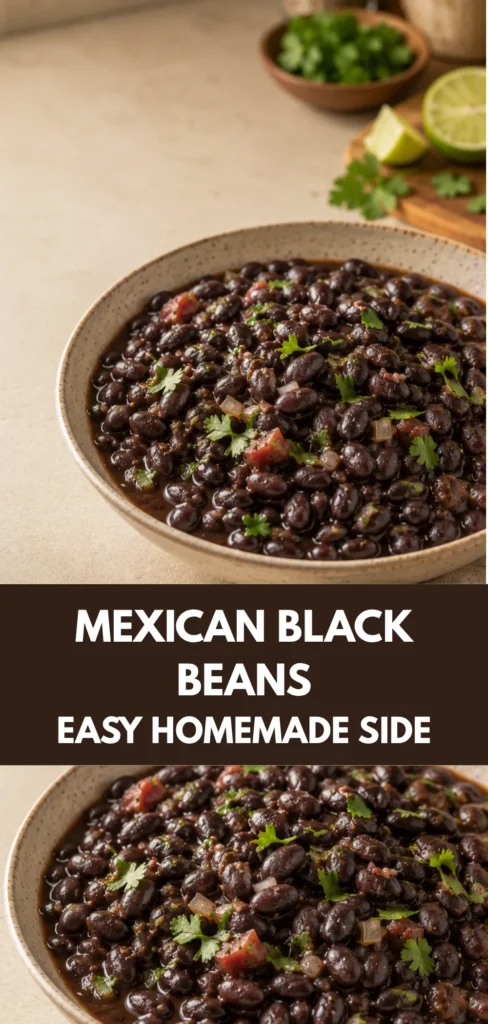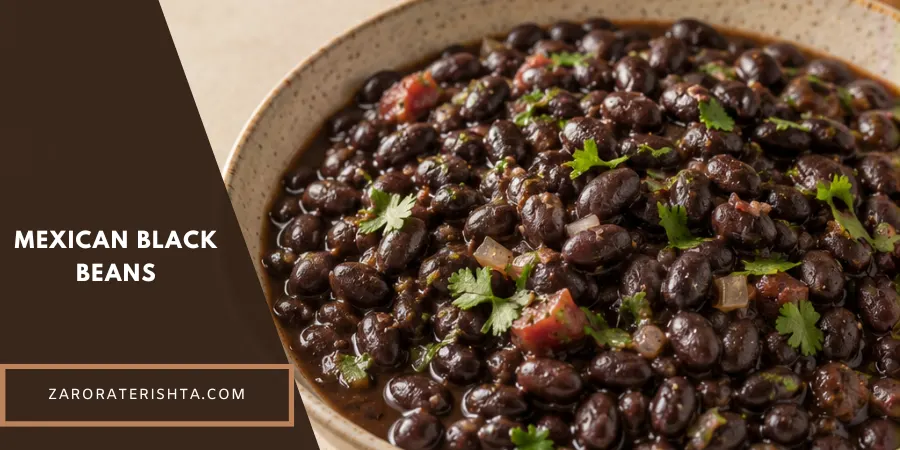
Mexican black beans are one of those simple dishes that can make an everyday meal feel much more complete. This recipe starts with canned black beans and their retained bean liquid, which helps create body and a lightly saucy consistency as the beans cook.
White onion, garlic, jalapeño, green chiles, cumin, chili powder, cayenne, and black pepper build a savory and earthy flavor base, while fresh cilantro and lime juice added near the end bring freshness and balance.
Mexican Black Beans-The Short Answer
The beans are gently simmered rather than aggressively cooked or mashed, allowing them to remain recognizable while developing a tender texture and absorbing the surrounding flavors.
I especially like how practical this recipe is for everyday cooking. The finished beans work well alongside tacos, enchiladas, Mexican rice, quesadillas, or warm tortillas, and they can also be used in burrito bowls and rice-and-bean bowls.
The recipe makes approximately 1,050 g of finished beans, providing 6 side-dish servings of about 175 g each. The same batch can also be divided into approximately 4 larger portions when the beans are used as a main component.
An optional Cotija garnish adds a salty, creamy contrast without changing the straightforward preparation of the base recipe.
The method is simple, but the small details make the difference. The recipe uses 850 g of canned black beans with approximately 180 ml of retained bean liquid. After the aromatics are sautéed, the green chiles and spices are briefly bloomed before the beans and liquid are added.
The beans simmer for 15 minutes, with up to 4 additional minutes only if further reduction is needed. After cooking, salt, cilantro, and lime juice are added once the heat is lowered or removed, followed by a 5-minute uncovered rest that allows the sauce to thicken naturally.
Why You’ll Love This Recipe
These Mexican black beans are a simple way to transform canned beans into a flavorful and satisfying side dish. The recipe begins by gently sautéing onion, garlic, and jalapeño in olive oil before adding green chiles and spices such as cumin, chili powder, cayenne, and black pepper.
This creates a savory base with earthy warmth and adjustable heat without making the beans overly spicy.
The cooking method is just as important as the ingredients. Adding the beans with 180 ml of their retained liquid helps create a naturally saucy texture while allowing the beans to absorb the seasoning.
A gentle 15-minute simmer gives the flavors time to develop while keeping the beans whole and recognizable. The controlled amount of liquid prevents the mixture from becoming watery, while occasional gentle stirring helps the beans cook evenly without breaking apart.
The final touches complete the dish. Fresh cilantro and lime juice are added after the main cooking stage so their bright flavors remain noticeable. A 5-minute rest allows the sauce to thicken slightly and gives the flavors time to settle.
This approach keeps the recipe easy enough for everyday meals while giving the finished beans enough depth and texture to serve with tacos, enchiladas, burrito bowls, quesadillas, Mexican rice, or warm tortillas.
Ingredients Needed
The ingredient list for these Mexican black beans is simple and focused, but each component plays an important role in building the final flavor and texture.
For the bean base, use:
- 2 cans 15-ounce/425 g black beans
- 180 ml retained bean liquid from the cans
Keep the beans undrained and retain the combined can liquid. The bean liquid contains starch and bean flavor, helping the finished beans develop a lightly saucy consistency without becoming watery. There is no need to use the drained bean weight as an additional quantity because the recipe is designed around the full undrained amount.
For the aromatic base, use:
- ½ cup finely chopped white onion
- 3 garlic cloves, minced
- 1 medium jalapeño, finely minced
- 1 teaspoon olive oil
- ¼ cup diced canned green chiles
The onion, garlic, and jalapeño create the savory foundation of the dish. They are gently sautéed over medium heat to soften and release their flavors without browning. The green chiles add a mild pepper flavor, while the spices added afterward build the characteristic warmth of Mexican-style black beans.
For the seasoning, use:
- 1½ teaspoons ground cumin
- 1 teaspoon chili powder
- ¼ teaspoon cayenne pepper
- ¼ teaspoon black pepper
- 3 g fine salt
The seasoning blend provides earthy depth, warmth, and adjustable heat without overpowering the beans. Salt is added conservatively at the beginning because canned beans and Cotija cheese can already contribute sodium. The final seasoning adjustment should be made after cooking.
For the finishing ingredients and garnish, use:
- ¼ cup chopped fresh cilantro
- 1 tablespoon fresh lime juice
- 25 g crumbled Cotija cheese
- 5 g chopped cilantro for garnish
Fresh cilantro and lime juice are added after the main cooking stage so their bright flavors remain noticeable. Cotija cheese provides a salty, creamy contrast when added at serving, while the extra cilantro gives the finished beans a fresh final touch.
Step By Step Instructions
Start by preparing the black beans without draining them. Use 850 g of undrained black beans and retain 180 ml of the canning liquid. This liquid contains starch and bean flavor, which helps create the correct lightly saucy texture as the beans cook.
Finely chop the white onion, mince the garlic, and finely mince the jalapeño. If you prefer a milder version, remove the jalapeño seeds before adding it. Keeping the seeds will provide a stronger heat level.
Warm 1 teaspoon olive oil in a saucepan over medium heat. Add the onion and cook for about 3 minutes until it begins to soften.
Add the garlic and jalapeño, then cook for another 60–90 seconds. The aromatics should become fragrant and softened without browning. Avoiding browning keeps the flavor balanced and allows the spices, beans, and fresh finishing ingredients to remain noticeable.
Add the diced canned green chiles, cumin, chili powder, cayenne pepper, and black pepper. Stir for 30–45 seconds so the spices can bloom gently in the oil and release their aroma.
Add the black beans and the reserved 180 ml bean liquid. Bring the mixture to a gentle simmer, then reduce the heat to medium-low.
Leave the pan partially uncovered and cook for 15 minutes, stirring gently every 3–4 minutes. The beans should remain mostly whole while the liquid gradually reduces into a lightly saucy consistency.
If the beans are still watery after the initial cooking time, simmer them uncovered for up to 4 additional minutes. If they become too thick, add 15 ml warm water or reserved bean liquid at a time until the sauce reaches the desired texture.
Lower the heat or remove the pan from the heat. Add 3 g salt, 10 g fresh cilantro, and 15 ml lime juice.
Gently fold everything together and taste before making any final seasoning adjustments. Adding the lime juice and cilantro at this stage helps preserve their fresh flavor while keeping the beans rich and savory.
Let the beans rest uncovered for 5 minutes. This allows the sauce to thicken slightly and gives the flavors time to settle.
Finish with 25 g crumbled Cotija cheese and 5 g chopped cilantro before serving. The garnish adds a salty, creamy contrast and a fresh finish without changing the simple, hearty character of the beans.
Variations
These variations adjust the flavor profile while keeping the original bean texture and cooking method balanced.
- For a smoky version, add a small amount of chipotle or adobo sauce during the seasoning stage. This adds a deeper smoky character without changing the base preparation.
- For a hotter version, use a serrano pepper instead of or in addition to the jalapeño. Adjust the amount according to your preferred heat level.
- For a milder version, remove the jalapeño seeds before mincing or reduce the amount of jalapeño used.
- For a dairy-free serving, simply omit the Cotija cheese garnish. The base black beans remain flavorful without the cheese.
- For a more substantial meal, divide the finished beans into larger portions and serve them in rice-and-bean bowls, burritos, or alongside additional toppings.
These variations are best treated as optional adjustments rather than changes to the master formula. Keeping the bean liquid, simmering method, and overall seasoning balance consistent helps maintain the intended texture.
Expert Tips for Better Mexican Black Beans
The easiest way to improve the texture is to pay attention to the bean liquid. With canned beans, keep the beans undrained and use 180 ml of the liquid from the cans. The starch and dissolved flavor in this liquid help create a naturally saucy consistency without making the beans watery.
Start the sofrito with finely chopped onion, garlic, and jalapeño in olive oil over medium heat. Cook the aromatics until softened, then add the green chiles, cumin, chili powder, and cayenne. This short spice-blooming step helps develop deeper flavor without burning the seasonings.
Once the black beans and their reserved liquid are added, bring the mixture to a gentle simmer and cook for about 15 minutes. Stir gently every few minutes so the beans heat evenly while staying mostly intact.
The goal is a sauce that lightly coats the beans while remaining spoonable. If the mixture still looks watery, simmer uncovered for up to 4 additional minutes. If it becomes too thick, add 15 ml warm water or bean liquid at a time.
Avoid vigorous stirring because it can break the beans apart and change the intended texture. A gentle approach keeps the beans recognizable while allowing the flavors to combine.
After cooking, allow the beans to rest uncovered for 5 minutes. This short resting period helps the sauce thicken naturally and gives the seasonings time to settle.
Fresh cilantro and lime juice are best added after the main cooking stage so their bright flavors remain noticeable. Cotija cheese should be added as a final garnish rather than cooked into the beans, allowing its salty, creamy contrast to stand out.
For extra depth, chipotle or adobo sauce can add a smoky character, while serrano pepper can be used for a hotter version. These adjustments should be treated as optional variations while keeping the main formula balanced.
Frequently Asked Questions
Are Mexican Black Beans a Healthy Choice?
Mexican black beans are a practical way to add protein and fiber to a meal. One 175 g serving provides approximately 110 calories, 20 g carbohydrates, 7 g protein, and 6 g fiber.
The beans also provide approximately 2 g sugar per serving, making them a filling choice for a side dish or as part of a larger meal. The nutritional value can vary depending on the canned bean brand, sodium level, and optional toppings such as Cotija cheese.
How Should Mexican Black Beans Be Stored?
After cooking, transfer the Mexican black beans to a shallow container within about 30–60 minutes.
Once completely cooled, seal the container tightly and keep it in the refrigerator. Properly stored beans will stay fresh for up to 4 days.
When reheating, add 15–30 ml water if the beans have become too thick and warm them gently until heated through.
Can Mexican Black Beans Be Frozen?
Yes, Mexican black beans can be frozen for up to 3 months.
Allow the beans to cool completely before transferring them to a freezer-safe container. Leave about 2–3 cm of headspace to allow room for expansion during freezing.
For the best texture, thaw the beans in the refrigerator overnight. When reheating, use low-to-medium heat and add a small amount of water if needed to restore the sauce consistency.
What Is the Best Way to Reheat Mexican Black Beans?
For stovetop reheating, place the beans in a saucepan with 15–30 ml water if needed. Warm them over low-medium heat for 5–8 minutes, stirring occasionally.
For microwave reheating, place the beans in a microwave-safe bowl and heat for 60–90 seconds. Stir, then continue heating in 20–30 second intervals if additional time is needed.
The beans should be warmed gently to maintain their texture and prevent them from becoming overly thick.
Nutrition Information
For this recipe, the Nutrition Information is based on 6 servings, with each serving size being 175 g (approximately ¾ cup).
Each serving provides approximately:
- Calories: 110 kcal
- Carbohydrates: 20 g
- Protein: 7 g
- Total Fat: 3 g
- Saturated Fat: 0.5 g
- Fiber: 6 g
- Sugar: 2 g
- Sodium: 500 mg
- Cholesterol: 5 mg
These values are practical estimates based on the full recipe formula and may vary depending on the canned black bean brand, sodium level, green chile brand, and amount of Cotija used.
The recipe’s finished yield is approximately 1,050 g, providing 6 servings of 175 g each. The same batch can also be divided into approximately 4 larger portions when the beans are used as a main component.
Pinterest Pins