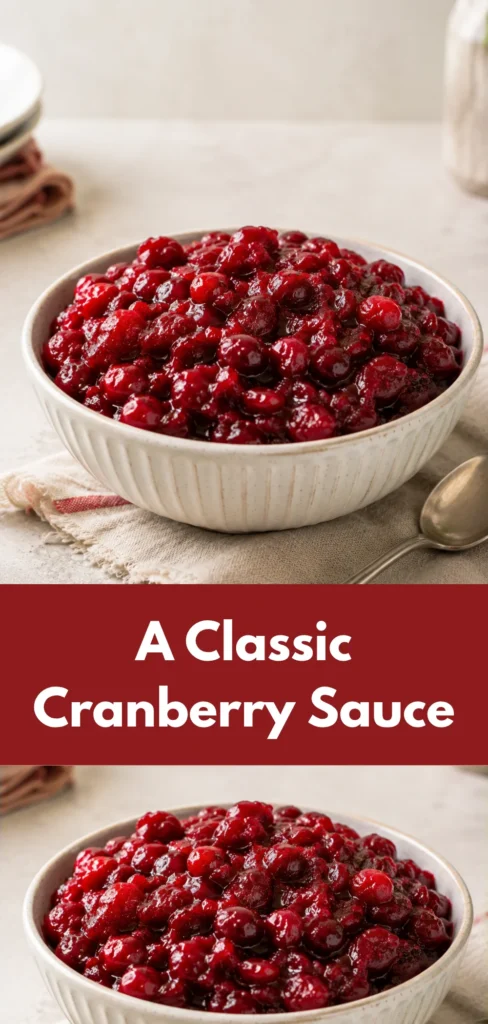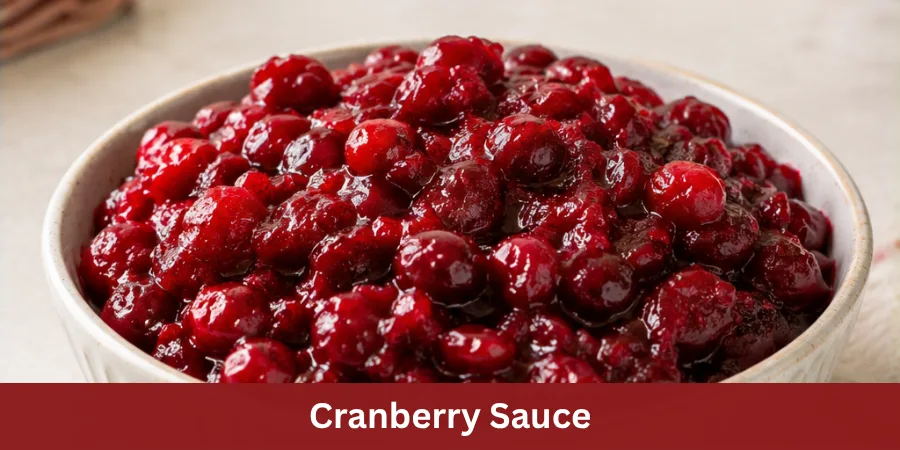
If you want a simple way to make holiday meals feel more special, this homemade cranberry sauce is an easy choice. Made with fresh or frozen cranberries, sugar, orange juice, and water, it has a bright flavor with the natural tartness that makes cranberries distinctive.
I especially like using whole cranberries because they soften and burst as they cook while still leaving some texture in the finished sauce. The sugar balances the berries’ tartness without completely covering their natural flavor, creating a sweet-tart balance that works well alongside holiday dishes.
Cranberry Sauce-The Short Answer
What makes this cranberry sauce recipe so practical is how straightforward the process is. The cranberries simmer until most of them burst and the sauce begins to thicken naturally. After cooking, it cools and sets in the refrigerator, making it a convenient make-ahead side dish for a holiday meal.
This homemade cranberry sauce is a classic choice for Thanksgiving and other holiday dinners. It does not require complicated preparation, but the fresh flavor and homemade texture make it feel more special than many store-bought versions.
Why This Recipe
I like this recipe because it keeps the process simple while creating a sauce with balanced flavor and texture. It uses a focused combination of ingredients and requires about 20 minutes of active cooking, making it practical during busy holiday preparation.
The sauce is also ideal for making ahead of time. As it cools and chills in the refrigerator, it continues to thicken and develop its spoonable consistency, which makes serving easier when preparing a larger holiday meal.
The classic version can be kept simple, or small additions can be used to create different flavor variations. Orange zest, cinnamon, vanilla, apple, and other controlled additions can add extra character while keeping the main cranberry flavor noticeable.
4 Essential Ingredients for Perfect Cranberry Sauce
For me, a good cranberry sauce starts with choosing quality ingredients and keeping the balance between tartness, sweetness, and texture. Fresh cranberries are my preferred choice, although frozen cranberries also work well. When selecting fresh berries, look for firm cranberries with a deep red color and avoid fruit that feels soft, shriveled, bruised, or damaged.
Fresh cranberries can be purchased ahead of time and stored in the refrigerator until preparation begins. Frozen cranberries can be kept until needed and can be cooked directly without thawing.
Sugar is the main ingredient responsible for balancing the natural tartness of cranberries. The master recipe uses ¾ cup granulated sugar and ¼ cup packed light brown sugar for one 12-ounce batch of cranberries.
This provides 200 grams of total sugar and creates a balanced sweet-tart flavor. Alternative sweeteners such as monk fruit sweetener, stevia, or erythritol can be used in separate versions, but they are not part of the master recipe. Because different sweeteners vary in sweetness and volume, they should not automatically be substituted using the same weight.
The liquid ratio is also important because it helps the cranberries cook evenly and affects the final consistency. This recipe uses ½ cup orange juice and ½ cup water, creating 1 cup (240 ml) of total liquid.
The orange juice adds citrus flavor and natural sweetness, while the water keeps the orange flavor balanced so it enhances the cranberries rather than overpowering them.
The optional flavor additions provide extra depth while keeping the basic structure of the recipe unchanged. Orange zest adds a brighter citrus aroma, cinnamon provides gentle warmth, vanilla adds a soft finishing note, and a small amount of salt helps balance the sweet and tart flavors.
Vanilla extract is added after turning off the heat so its delicate aroma remains noticeable. These additions can be adjusted according to preference without changing the master formula.
Ingredients Needed
For one standard batch use:
- 12 ounces (340 grams) fresh or frozen cranberries
- ¾ cup granulated sugar (150 grams)
- ¼ cup packed light brown sugar (50 grams)
- ½ cup orange juice (120 ml)
- ½ cup water (120 ml)
Optional flavor enhancers:
- 1 teaspoon finely grated orange zest (approximately 2 grams)
- 1 cinnamon stick, approximately 2–3 inches
- ½ teaspoon pure vanilla extract (approximately 2.5 ml)
- ⅛ teaspoon fine salt (approximately 0.5 gram)
Fresh cranberries should be firm and intact before cooking. Remove any soft, shriveled, bruised, or badly discolored berries during preparation.
Frozen cranberries can be added directly to the recipe without thawing. Keeping the master formula consistent with 340 grams cranberries, 200 grams total sugar, and 240 ml total liquid helps maintain the intended sweet-tart balance and final cooking texture.
How To Make
Start with 12 ounces (340 grams) cranberries. Place the cranberries in a colander and rinse them thoroughly. Remove any soft, shriveled, bruised, or damaged berries before cooking.
In a medium saucepan, combine:
- ¾ cup (150 grams) granulated sugar
- ¼ cup (50 grams) packed light brown sugar
- ½ cup (120 ml) orange juice
- ½ cup (120 ml) water
Place the saucepan over medium heat and stir occasionally for approximately 2–4 minutes, or until the sugars have completely dissolved and the liquid reaches a boil.
Add the cranberries to the boiling liquid and allow the mixture to return to a boil. Once boiling again, reduce the heat to medium-low and maintain a gentle simmer.
Cook the cranberries for approximately 10–15 minutes, stirring gently every few minutes. If the berries begin splattering aggressively, reduce the heat slightly to maintain a controlled simmer.
Continue cooking until most of the cranberries have burst and the mixture has visibly reduced. The sauce should look glossy and thickened while still appearing slightly loose because it will continue to thicken as it cools.
Some whole cranberries can remain for texture. The ideal stopping point is when most berries have burst, the sauce has reduced, and it lightly coats a spoon without looking dry or overly thick.
If using optional flavor additions, add orange zest, cinnamon, and salt during the cooking process. Turn off the heat and stir in ½ teaspoon vanilla extract if using. Remove the cinnamon stick before serving.
Remove the saucepan from the heat and allow the sauce to cool at room temperature for approximately 20–30 minutes.
Transfer the sauce to a heat-resistant bowl, cover, and refrigerate for at least 2 hours before serving. The sauce may appear slightly loose while warm, but cooling and refrigeration allow it to set into its final spoonable texture.
5 Creative Variations & Flavor Twists
Once the basic cranberry sauce recipe is established, small controlled additions can create different flavors while keeping the original structure and balance intact.
For an orange cranberry version, keep the master liquid at ½ cup orange juice and ½ cup water and add 1 teaspoon orange zest. This increases the citrus aroma while allowing the cranberry flavor to remain the main focus.
For a spiced cranberry version, add 1 cinnamon stick, ⅛ teaspoon ground nutmeg, and ⅛ teaspoon ground allspice during cooking. These amounts add warmth and complexity without overpowering the fruit.
For an apple cranberry version, add 75 grams finely diced apple along with the cranberries. Cut the apple into approximately 1–1.25 cm pieces so it softens while still adding texture.
Keep the master liquid at 240 ml when adding apple. Check the consistency during the final 2–3 minutes of cooking because the added fruit changes the amount of solids and moisture in the sauce.
For a vanilla cranberry version, add ½ teaspoon (2.5 ml) pure vanilla extract after turning off the heat. Adding vanilla at the end helps preserve its delicate aroma.
For a ginger-orange version, add 5 grams finely grated fresh ginger and 2 grams orange zest with the cranberries before simmering. The ginger adds warmth and a light zing, while the orange zest keeps the flavor bright.
These variations are designed around the same master formula. The base quantities should remain unchanged unless a variation specifically states otherwise.
Storage and Freezing
The consistency of cranberry sauce changes as it cools. If the sauce appears slightly loose immediately after cooking, allow it to cool and chill before deciding whether it needs additional cooking.
For the best spoonable texture, the sauce should be completely chilled before serving. Cooling and refrigeration allow the cranberry mixture to set naturally.
You can prepare this cranberry sauce up to 1 week before serving. Once the sauce has cooled completely, transfer it to an airtight container and refrigerate.
For leftover cranberry sauce, keep it refrigerated for up to 7 days.
For longer storage, place the completely cooled sauce in a freezer-safe airtight container and freeze for approximately 2–3 months for best quality. Thaw frozen sauce in the refrigerator, then stir gently before serving.
If the chilled sauce becomes firmer than desired, add a small amount of water or orange juice. Start with 1 tablespoon (15 ml) and add more only if needed until the desired consistency returns.
Tips and Notes
When preparing fresh cranberries, spread them on a light-colored kitchen towel or tray before rinsing. This makes it easier to identify and remove soft, wrinkled, bruised, or discolored berries.
The master formula uses 12 ounces (340 grams) cranberries, 200 grams total sugar, and 1 cup (240 ml) total liquid. The liquid is divided equally between ½ cup orange juice and ½ cup water, creating a balanced citrus flavor while providing enough moisture for the cranberries to cook properly.
For the cooking process, combine the sugar and liquid in a medium saucepan and heat until the sugars dissolve. Once the mixture reaches a full boil, add the cranberries and allow it to return to a boil.
Reduce the heat to medium-low and maintain a gentle simmer. Look for small bubbles across the surface rather than an aggressive boil because high heat is unnecessary and can cause excessive splattering.
Most cranberries should burst during the 10–15 minute simmer. A few whole berries can remain for texture. The finished sauce should look glossy and slightly syrupy while still appearing somewhat loose when hot.
For a simple consistency test, drag a spoon through the sauce. The trail should slowly fill back in. If the sauce is too thin after cooling, return it to low heat and simmer for another 2–3 minutes.
If the sauce becomes too thick, add 15 ml liquid at a time and stir gently until the desired consistency is reached.
The sauce can be made up to 1 week in advance and stored in an airtight container in the refrigerator.
Nutrition
Approximate Nutrition Per Serving
Based on the complete master recipe divided into 9 equal servings:
- Calories: 151 kcal
- Carbohydrates: 39.7 g
- Protein: 0.5 g
- Total Fat: 0.2 g
- Saturated Fat: 0 g
- Fiber: 2.0 g
- Total Sugars: 32.8 g
- Added Sugars: 22.2 g
- Sodium: 3 mg
- Vitamin C: 8.5 mg
These values are calculated from the master recipe using 340 grams cranberries, 150 grams granulated sugar, 50 grams light brown sugar, 120 ml orange juice, and 120 ml water.
Optional ingredients and variations are not included in these calculations. Actual nutrition can vary slightly depending on the specific ingredients and brands used.
Frequently Asked Questions
What takes the bitterness out of cranberry sauce?
Sugar is the main ingredient used to balance the natural tartness of cranberries. In this recipe, the combination of granulated and light brown sugar provides sweetness while allowing the cranberry flavor to remain noticeable.
A small amount of orange juice and salt also helps balance the overall flavor by adding brightness and reducing the sharpness of the tart berries.
What are the two types of cranberry sauce?
The two main types are whole berry cranberry sauce and jellied cranberry sauce.
Whole berry cranberry sauce has a chunky texture with visible pieces of cranberry, while jellied cranberry sauce is smooth, firm, and commonly served in slices.
This recipe creates a whole berry style sauce because some cranberries remain visible after cooking, giving it a more natural texture.
Can I substitute orange juice for water when making cranberry sauce?
Yes, orange juice can replace some or all of the water depending on the flavor you want.
In this master recipe, the liquid is already balanced at ½ cup orange juice plus ½ cup water. This provides noticeable citrus flavor without making the sauce taste overly orange or excessively sweet.
How long will homemade cranberry sauce last?
Homemade cranberry sauce can be stored in an airtight container in the refrigerator for up to 7 days.
For longer storage, it can be frozen for approximately 2–3 months for best quality. Thaw frozen sauce in the refrigerator before serving, then stir gently to restore the texture.
Pinterest Pins