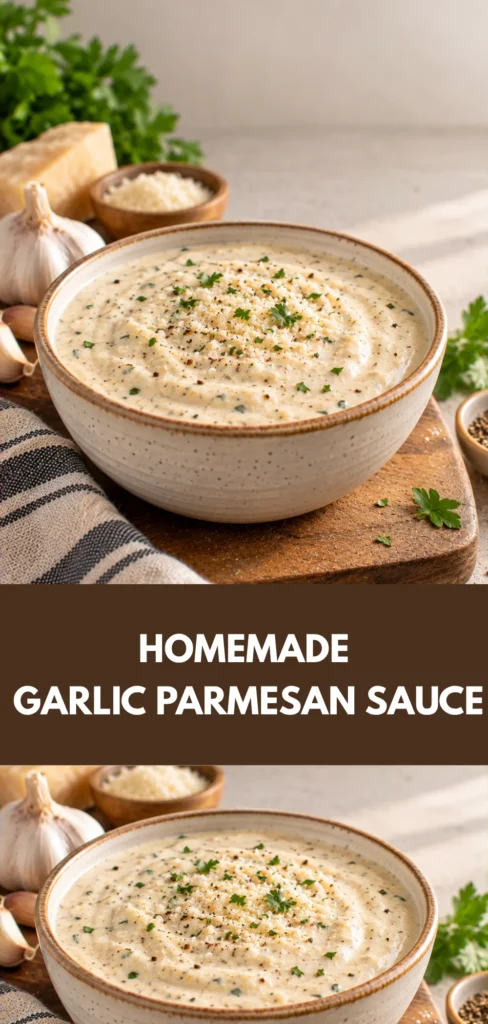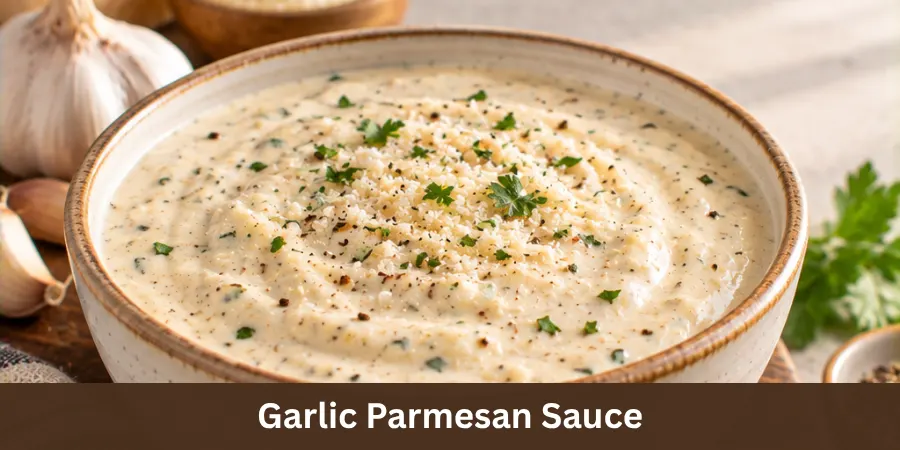
When I want a sauce that feels special without making the process complicated, this garlic Parmesan sauce is one of my favorite choices. It has a thick, creamy texture with a velvety richness, bold garlic flavor, and a savory Parmesan finish that works well with many different meals.
This homemade sauce uses simple ingredients and creates a restaurant-style flavor at home. Garlic, Parmesan cheese, heavy cream, and Italian seasonings come together to make a versatile sauce that can be used with chicken wings, pasta, pizza, vegetables, or served as a dipping sauce.
Garlic Parmesan Sauce–The Short Answer
What makes this sauce stand out is the balance between richness and flavor. The cream creates a smooth base, while the Parmesan adds cheesy depth and the garlic provides the main savory character without overpowering the sauce.
The garlic flavor comes from using both fresh minced garlic and garlic powder. Fresh garlic adds a sharper aromatic note, while garlic powder creates a deeper flavor that blends throughout the sauce. Together, they create a more complete garlic profile.
Freshly grated Parmesan also makes an important difference in the final texture. Parmesan grated directly from a wedge melts more smoothly than some pre-grated options, helping the sauce stay creamy instead of becoming grainy.
Why You’ll Love This Recipe
I like this garlic Parmesan sauce because it is simple enough for everyday cooking while still feeling rich and special. The straightforward ingredient combination makes it easy to prepare, and the finished sauce can be used in different ways instead of being limited to one meal.
This sauce is practical because it can be served warm immediately or prepared ahead and stored for later use. When stored properly in the refrigerator, it stays useful for future meals and can be reheated gently when needed.
The creamy texture makes it a great match for pasta, chicken wings, pizza, and vegetables. Its balanced garlic and Parmesan flavor adds richness without requiring a complicated cooking process.
One of my favorite uses is as a base for homemade pizza. The smooth sauce spreads easily over the pizza base and adds a creamy garlic and Parmesan flavor that pairs well with other toppings.
Ingredients Needed
For this garlic Parmesan sauce, use:
- 4 tablespoons unsalted butter
- 4 cloves fresh garlic, finely minced
- 3 tablespoons all-purpose flour
- 1 teaspoon garlic powder
- 1 teaspoon Italian seasoning
- 1¼ cups low-sodium chicken broth
- ¾ cup heavy cream
- 1 cup freshly grated Parmesan cheese
- ½ teaspoon fine salt
- ¼ teaspoon finely ground black pepper
Ingredients Notes
The sauce starts with butter, garlic, and flour to create a flavorful roux base. The butter adds richness, while the flour helps build the structure needed for a smooth and creamy sauce.
Fresh minced garlic provides the main garlic character with a sharper aromatic flavor. Garlic powder adds a deeper, more rounded garlic note that blends throughout the sauce. Using both creates a more layered garlic flavor instead of relying on only one type.
Italian seasoning adds herbal depth and supports the savory profile of the Parmesan and garlic. The controlled amount keeps the herbs balanced so they complement the sauce without overpowering the creamy base.
Low-sodium chicken broth creates the savory liquid foundation of the sauce, while heavy cream adds richness and helps create the smooth, velvety texture. Using low-sodium broth also gives better control over the final seasoning because Parmesan cheese already contributes saltiness.
Freshly grated Parmesan cheese provides the main cheesy flavor and helps create the final body of the sauce. Parmesan from a wedge is preferred because it melts more smoothly than some pre-grated varieties that may contain additives and can affect the texture.
Start seasoning with the measured salt and black pepper, then taste the finished sauce before adding more. The broth and Parmesan both contribute to the overall sodium level, so final seasoning adjustments are best made after the sauce has developed its full flavor.
How to Make Garlic Parmesan Sauce
Start by preparing the sauce base. Place a medium saucepan over medium-low heat and melt the butter. Add the minced garlic and cook for about 1 minute, stirring until fragrant. Keep the heat gentle so the garlic develops flavor without becoming dark brown.
Add the flour, Italian seasoning, garlic powder, and black pepper. Whisk continuously until the mixture forms a smooth, thick paste. This creates the roux that helps build the creamy structure of the sauce.
Keep the heat at medium-low and gradually add the chicken broth in several additions. Whisk after each addition until the liquid is fully incorporated and the mixture becomes smooth.
Adjust the heat to medium, then add the heavy cream and continue whisking until the sauce is evenly combined. Avoid bringing the sauce to a hard boil after adding the cream because gentle heating helps maintain a smooth texture.
Bring the sauce to a low simmer and cook for 5–8 minutes, whisking frequently as it thickens. The finished sauce should become creamy and lightly coat a spoon while still remaining easy to pour.
If the sauce becomes too thick before reaching the desired consistency, add a small amount of warm broth or cream and adjust gradually. If a noticeable raw flour taste remains after the initial simmer, allow it to cook for another 1–2 minutes over low heat while checking the texture.
Reduce the heat to low before adding the Parmesan cheese. Add the grated Parmesan gradually, stirring or whisking between additions. Allow the cheese to melt gently for about 1–2 minutes without boiling.
The finished sauce should be smooth, creamy, glossy, and moderately thick. Turn off the heat, taste the sauce, and adjust the salt and pepper only if needed.
Uses of Sauce
One of my favorite things about garlic Parmesan sauce is how easily it fits into different meals. It works especially well with chicken, including grilled chicken and roasted chicken, where the creamy garlic flavor adds richness without requiring complicated preparation.
Chicken wings are another popular option because the sauce creates a flavorful coating with a creamy Parmesan finish. It works well for casual meals, appetizers, or when you want an alternative to traditional wing sauces.
For pasta, this creamy sauce works naturally as a pasta sauce. Toss it with your favorite noodles to create a rich coating that adds garlic and Parmesan flavor while keeping the preparation simple.
It also pairs well with fried snacks and sides. French fries, onion rings, potato wedges, and similar appetizers work well with the sauce as a dipping option because their crisp texture contrasts with the creamy consistency.
For pizza-style meals, garlic Parmesan sauce can be used as a pizza sauce replacement. Spread a thin layer over the bread or pizza base to create a creamy garlic flavor that works especially well with white pizzas and different toppings.
Garlic Parmesan Sauce vs Alfredo Sauce
Garlic Parmesan sauce and Alfredo sauce share a creamy foundation, but they have different flavor profiles. This garlic Parmesan version starts with a flour and butter roux, then combines broth, heavy cream, and Parmesan to create its smooth texture.
Compared with traditional Alfredo sauce, this version has a more noticeable garlic flavor and a stronger savory character. The garlic remains an important part of the sauce instead of staying only in the background.
Italian herbs also give this sauce a more distinct flavor. They complement the garlic and Parmesan while keeping the creamy base balanced.
The result is a creamy sauce that feels rich and smooth while still allowing the garlic, herbs, and Parmesan flavors to stand out. This makes it useful for a wider range of meals, including wings, pasta, pizza, and dipping applications.
Storage
Once the garlic Parmesan sauce has cooled, transfer any leftover sauce to an airtight container and store it in the refrigerator. A mason jar can also work well for smaller portions.
The sauce may naturally separate as it sits, so stir it briefly before using. For the best quality and food safety, refrigerated leftovers should be used within 3–4 days.
When reheating, warm the sauce slowly over low to medium-low heat. Transfer it to a saucepan and stir frequently while it heats.
If the sauce begins to separate, gently whisk it over low heat to help bring it back together. If the sauce becomes too thick, add 1 tablespoon of cream or broth at a time and adjust gradually until the desired consistency returns.
The microwave can also be used when needed. Heat the sauce in a microwave-safe bowl using 15–20 second intervals, stirring after each interval.
Avoid overheating because excessive heat can make the sauce more oily and increase the chance of separation. Freezing is not recommended because the cream-based sauce may develop texture changes after thawing.
Tips
For a mild kick, add a small amount of red pepper flakes during the roux stage. This adds gentle heat while allowing the creamy garlic and Parmesan flavors to remain the main focus.
Continuously whisk the sauce while cooking to help prevent sticking and clumps. Proper whisking helps maintain a smooth texture while the roux, broth, cream, and cheese combine.
Before serving, taste the finished sauce and adjust the salt and pepper if needed. Parmesan cheese and chicken broth already contribute saltiness, so tasting at the end helps avoid unnecessary seasoning.
Freshly grated Parmesan remains important for the smoothest texture. Adding the cheese gradually over low heat helps it melt evenly into the sauce without creating a grainy consistency.
Nutrition
The nutrition information for this garlic Parmesan sauce is an approximation and can vary depending on the serving size and exact ingredients used.
One serving provides:
- Calories: 196 kcal
- Carbohydrates: 7 g
- Protein: 6 g
- Total Fat: 17 g
- Saturated Fat: 11 g
- Polyunsaturated Fat: 1 g
- Monounsaturated Fat: 4 g
- Trans Fat: 0.2 g
- Cholesterol: 50 mg
- Sodium: 416 mg
- Potassium: 59 mg
- Fiber: 0.4 g
- Sugar: 1 g
- Vitamin A: 615 IU
- Vitamin C: 1 mg
- Calcium: 179 mg
- Iron: 1 mg
These values are automatically calculated estimates and may vary slightly depending on ingredient brands, measurements, and serving sizes.
For this recipe, the engineered document gives an approximate range of:
- Calories: 180–210 kcal
- Carbohydrates: 7–9 grams
- Protein: 6–8 grams
- Total Fat: 15–17 grams
- Saturated Fat: 9–11 grams
- Sugar: 1–2 grams
- Sodium: 350–500 milligrams
This range provides a practical guide for the finished sauce while allowing for normal ingredient variation.
FAQ
How can I make the sauce thicker?
If the sauce is too thin after the cooking steps, allow it to simmer over low heat for another 30–60 seconds.
Check the consistency after each interval and repeat if needed. This gradual reduction helps the sauce thicken without adding extra flour directly.
Why is my sauce grainy?
A grainy sauce can happen when Parmesan is added over excessive heat or when the sauce boils after the cheese is added.
For a smoother result, use freshly grated Parmesan and reduce the heat to low before adding it. Add the cheese gradually and whisk as it melts.
Avoid vigorous boiling so the Parmesan incorporates evenly and the sauce remains smooth.
Pinterest Pins