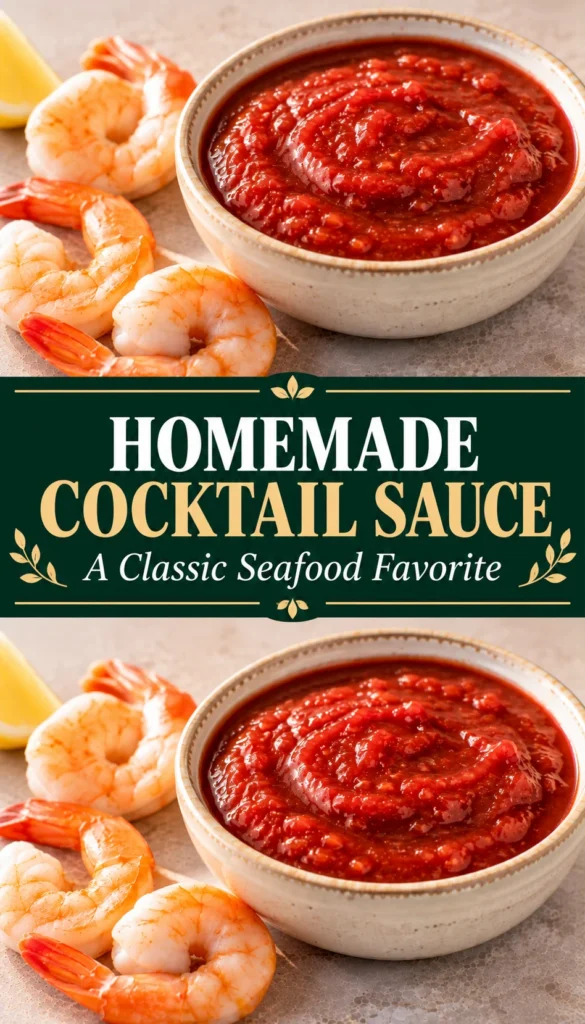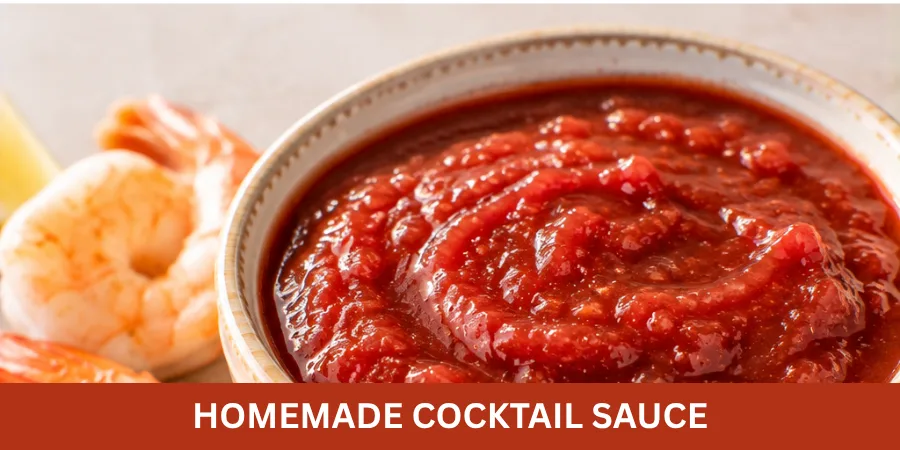
If you enjoy seafood, this homemade cocktail sauce is a simple way to add a zesty finish without relying on store-bought sauce. It uses staple ingredients and comes together from scratch in just 5 minutes.
I like making it at home because the flavor can be adjusted to your personal taste, whether you prefer more tang or a little extra heat.
Homemade Cocktail Sauce-The Short Answer
This homemade cocktail sauce recipe makes a perfect accompaniment for shrimp, oysters, clams, crab legs, and crab cakes.
It is especially good with chilled shrimp cocktail, but it can also be served with other seafood dishes. The simple preparation makes it easy to have a fresh dipping condiment ready whenever you need it.
The classic cocktail sauce recipe combines ketchup, prepared horseradish, lemon juice, and hot sauce for a balanced sweet-meets-heat flavor with a noticeable kick.
These pantry ingredients are mixed until smooth and chilled before serving, giving the flavors time to come together.
The result is a sauce with a tangy, spicy, and slightly sweet balance that works well alongside seafood.
Why You’ll Love It
This homemade cocktail sauce comes together in just 5 minutes with no cooking required.
Simply drain the prepared horseradish, stir it with the pantry ingredients, and chill the sauce for at least 1 hour.
The ketchup, lemon, Worcestershire sauce, hot sauce, salt, and pepper create a sweet and spicy flavor with a balanced tang.
The horseradish gives the sauce enough heat to add a noticeable kick without making it too sharp.
You can adjust the amount based on your taste preference.
I like serving this sauce with shrimp and shrimp cocktail, but it also works well with crab cakes, oysters, and even burgers.
What Is Cocktail Sauce?
Cocktail sauce is a popular seafood condiment commonly served as a dipping sauce with shrimp, crab legs, oysters, and clams.
Also known as seafood sauce, it has a thick consistency with a spoonable texture that makes it easy to serve alongside seafood.
Ketchup is the base ingredient, providing the sauce with its body and natural sweetness.
Horseradish, Worcestershire sauce, and lemon juice create the familiar tangy, sweet, and spicy flavor profile.
Keeping these ingredients balanced gives the sauce a clear flavor without allowing one element to overpower the others.
Additional seasonings can add more interest and variety while keeping the classic character of the sauce.
When making it at home, I find that keeping the mixture thick and balanced works best for dipping without making it watery or overly sharp.
History of This Sauce
The history of cocktail sauce goes back further than the often-repeated 1960s claim about its invention.
British celebrity chef Fanny Cradock has sometimes been credited with creating the sauce, but Constance Spry had already published a recipe for it more than 10 years earlier.
This suggests that the sauce was already known before Cradock became associated with its creation.
The sauce is believed to have originated in New England, a seafood-loving region of the United States, during the early 20th century.
The area had a busy fishing industry and active seafood markets, making it a natural setting for a sauce designed to accompany a variety of seafood dishes.
Over time, cocktail sauce became popular throughout the United States and developed into a favorite condiment among seafood lovers.
A similar sauce called Marie Rose Sauce is associated with Great Britain.
Although both sauces are related in their use with seafood, they developed within different culinary traditions.
Ingredients Needed
1 cup ketchup
2 tablespoons prepared horseradish, drained
1 tablespoon Worcestershire sauce
1 tablespoon fresh lemon juice
1 teaspoon hot sauce
¼ teaspoon fine sea salt
⅛ teaspoon finely ground black pepper
⅛ teaspoon garlic powder
⅛ teaspoon onion powder
¼ teaspoon smoked paprika (optional)
Ingredients Notes
The base of this homemade cocktail sauce starts with 1 cup ketchup.
Ketchup provides the main tomato base, body, and natural sweetness of the sauce.
It creates the foundation that allows the other ingredients to add tang, heat, and savory depth without making the mixture too sharp.
Prepared horseradish is the ingredient that gives cocktail sauce its classic kick.
The recipe uses 2 tablespoons prepared horseradish, measured after draining.
Draining the horseradish first is an essential step, not an optional one — removing the extra moisture keeps the sauce thick rather than watery, and measuring after draining keeps the heat level accurate.
Add 1 tablespoon Worcestershire sauce and 1 tablespoon fresh lemon juice.
Worcestershire sauce adds savory depth and helps build the overall flavor, while lemon juice provides acidity and brightness.
Together, they balance the sweetness of the ketchup and keep the sauce from tasting flat.
Use 1 teaspoon hot sauce to add extra heat while keeping horseradish as the main spicy element.
The amount can be adjusted depending on your preferred spice level.
The hot sauce should support the flavor of the sauce rather than overpower the ketchup, lemon, and horseradish balance.
Season the sauce with ¼ teaspoon fine sea salt, ⅛ teaspoon finely ground black pepper, ⅛ teaspoon garlic powder, and ⅛ teaspoon onion powder.
Fine sea salt dissolves well in the chilled sauce and helps distribute seasoning evenly.
Finely ground black pepper provides a smoother seasoning, while garlic and onion powder add background savory complexity without changing the classic cocktail sauce flavor.
For an optional smoky version, add ¼ teaspoon smoked paprika.
Keep this ingredient optional so the ketchup, horseradish, lemon, and Worcestershire sauce remain the main flavors.
Once all ingredients are combined, chill the sauce for at least 1 hour so the flavors can blend properly before serving.
How to Make Homemade Cocktail Sauce
This cocktail sauce recipe takes about 5 minutes to prepare, making it an easy option for a shrimp cocktail appetizer or other seafood dishes.
Start by preparing the horseradish first. Place a slightly larger amount than you need — about 3 tablespoons — into a fine-mesh sieve, then gently press down with the back of a spoon to release excess moisture.
Don’t press the horseradish completely dry, since a little moisture helps maintain the sauce’s intended flavor and texture.
Once it’s drained, measure out exactly 2 tablespoons of the drained horseradish to use in the sauce.
This step keeps the sauce thick rather than watery, and it keeps the final heat level accurate to the recipe.
Add 1 cup ketchup, the 2 tablespoons of drained horseradish, 1 tablespoon Worcestershire sauce, 1 tablespoon lemon juice, 1 teaspoon hot sauce, ¼ teaspoon fine sea salt, and ⅛ teaspoon finely ground black pepper to a small bowl.
Stir well until everything is evenly combined, scraping the sides and bottom of the bowl as you go.
The mixture should look uniform, with no separate liquid layer sitting on top.
The sauce can be served immediately, but chilling it for at least 1 hour gives the flavors more time to blend.
Resting allows the horseradish heat to balance with the ketchup, lemon, Worcestershire sauce, and hot sauce.
This is especially useful when preparing the sauce ahead of time.
When chilled, the sauce may become slightly gelatinous, which is normal.
Let it rest at room temperature for a few minutes, then stir well to loosen the texture before serving with cold shrimp or other seafood.
For storage, transfer the sauce to an airtight container, cover it, and refrigerate it.
It will keep for up to 1 week when properly stored, and if the texture becomes too firm after chilling, a small amount of lemon juice can help loosen it.
Variations To Try
For a subtle smoky flavor, add ¼ teaspoon smoked paprika to the cocktail sauce.
This gives the sauce extra depth without overpowering the ketchup, horseradish, or lemon flavors.
For a spicier version, gradually increase the horseradish by up to 1 tablespoon.
You can also add an extra ½–1 teaspoon of hot sauce depending on your preferred heat level.
Stir well and taste after each addition to keep the flavors balanced.
Easy Ways to Serve It
This popular dipping sauce is traditionally paired with seafood, especially shrimp.
For a simple shrimp cocktail, serve chilled cooked shrimp with the sauce in an individual dipping bowl or ramekin.
Lemon wedges can be served alongside for a fresh finish.
For a larger seafood platter, arrange:
- shrimp
- crab legs
- oysters
- clams
- crab cakes
Serve the sauce alongside the platter so it can be used as a dip with each seafood option.
It also works beyond seafood. Serve it with:
- burgers
- hot dogs
- mozzarella sticks
- onion rings
These savory options provide practical ways to use the sauce while keeping its traditional seafood pairing intact.
Storage and Make-Ahead
For the best texture and flavor, store the cocktail sauce in an airtight container in the refrigerator for up to 1 week.
If you keep it overnight or for a few days, the cold temperature can make the sauce slightly gelatinous.
This is a normal reaction after refrigeration and does not mean the sauce has gone bad.
If this happens, let the sauce rest at room temperature for a short time and stir it well.
A little lemon juice or salt can also help revive the flavors and loosen the texture if needed.
For a make-ahead option, prepare the sauce 1 day in advance, since the flavor develops as it chills.
Do not reuse the sauce after shrimp or other foods have been dipped into it, and avoid returning any leftover sauce to the original container once it has touched seafood, to prevent cross-contamination.
Freezing is technically possible, but it is rarely used.
If you freeze the cocktail sauce, divide it into small batches so you can defrost only the amount needed for dipping.
Fresh refrigerated storage is the preferred approach for maintaining the intended texture.
For the heat level, the base recipe uses 2 tablespoons of horseradish.
For a spicier variation, add 1 tablespoon more according to taste.
For a no-horseradish option, omit the horseradish and gradually add extra hot sauce and lemon to create a spicy-tangy alternative, adjusting the amount to create a milder shrimp dipping sauce when preferred.
Expert Tips
For the best flavor, use freshly squeezed lemon juice and freshly ground black pepper.
I also recommend making the cocktail sauce in advance so the flavors have time to develop.
Letting it rest for an hour is helpful, while preparing it the day before gives the ingredients more time to blend before serving.
You can adjust the recipe to suit your personal taste, especially when changing the level of horseradish, lemon juice, or hot sauce.
For seasoning, fine sea salt works well in a chilled sauce because it dissolves more easily and keeps the seasoning smooth.
Smoked paprika can add a subtle smoky flavor, while ginger can bring a different type of warmth.
If you enjoy more heat, mince peppers such as chile peppers or red pepper and add them gradually.
These small changes can increase the heat without taking away from the main flavor of the sauce.
There are also a few simple swaps you can try if you want to experiment.
Instead of ketchup, a bit of chili sauce or tomato paste can give a slightly different tomato base, and a little gochujang can bring an Asian-inspired depth and heat.
These swaps aren’t part of the tested recipe, so start with a small amount and adjust to taste.
If you prefer to leave out horseradish, omit it and add a few drops of hot sauce until you reach the desired flavor — the result will be closer to spicy ketchup, but it can still add plenty of flavor.
A well-balanced homemade cocktail sauce should be zesty, bold, and full of flavor without allowing one ingredient to overpower the others.
The bright kick from horseradish adds pleasant sharpness, while the tomato base gives the sauce a smooth texture.
The combination creates a balance of tangy, spicy, and slightly sweet notes that works well with seafood and other savory foods.
Nutrition Insight
A 2 tablespoon serving of homemade cocktail sauce contains approximately:
30 kcal
7.1 g carbohydrates
0.4 g protein
0.1 g total fat
0.02 g saturated fat
0.3 g fiber
5.5 g sugar
433 mg sodium
75 mg potassium
This serving size is about 30 g, and the values are based on dividing the full recipe into approximately 10 servings.
The nutritional information is a calculated estimate rather than laboratory-tested data.
Actual values may vary depending on the brands of ketchup, prepared horseradish, Worcestershire sauce, and hot sauce used.
Checking ingredient nutrition labels can provide a more accurate estimate when needed.
FAQs
How spicy is homemade cocktail sauce?
If you enjoy a little heat, this recipe makes a medium-spicy cocktail sauce with a balanced mix of tangy and savory flavors.
You can increase the horseradish up to 3 tablespoons for a spicier version with more heat, or add extra hot sauce gradually if you want more spice without changing the main flavor too much.
Can I make cocktail sauce without horseradish?
For a version without horseradish, leave it out and increase the hot sauce and lemon juice to taste.
This creates a zesty spicy ketchup with a sharper flavor.
It is a useful option if you do not enjoy horseradish or want a different variation.
Why does my cocktail sauce become thick?
A thick texture can develop because the combination of ketchup and prepared horseradish may become slightly gelatinous after chilling.
If this happens, let the sauce warm briefly at room temperature, then stir until smooth.
How do I make homemade cocktail sauce from scratch?
To make the sauce from scratch, drain the prepared horseradish first, then combine it with ketchup, Worcestershire sauce, lemon juice, hot sauce, fine sea salt, black pepper, garlic powder, and onion powder in a small bowl.
Stir until the ingredients are evenly combined.
It can be served immediately, but chilling it covered and refrigerated for at least 1 hour gives the flavors more time to blend before serving.
How long does homemade cocktail sauce last?
When stored properly, the sauce keeps for up to one week in the refrigerator.
Keep it in an airtight container or jar and give it a good stir before serving if separation occurs.
Storage time can also depend on the expiration dates of the ingredients used, so use your best judgment when storing it.
Pinterest Pins