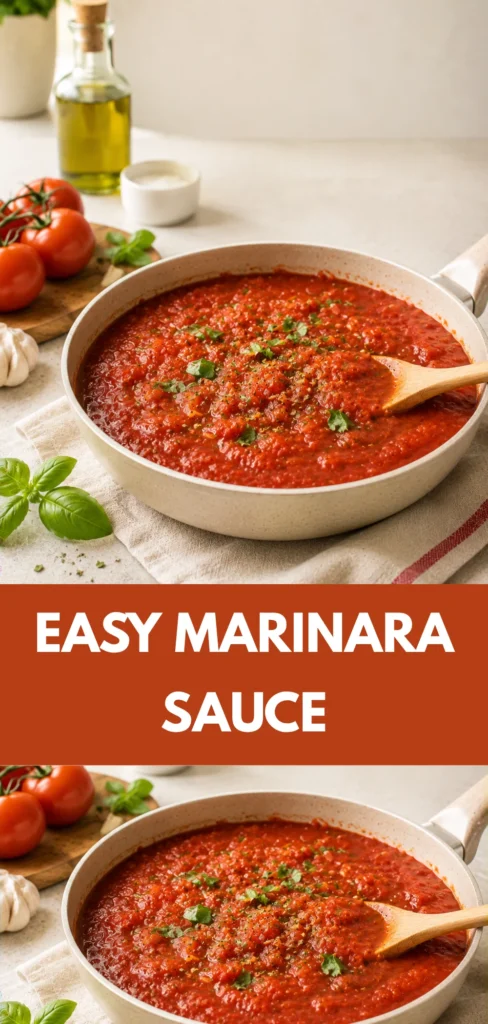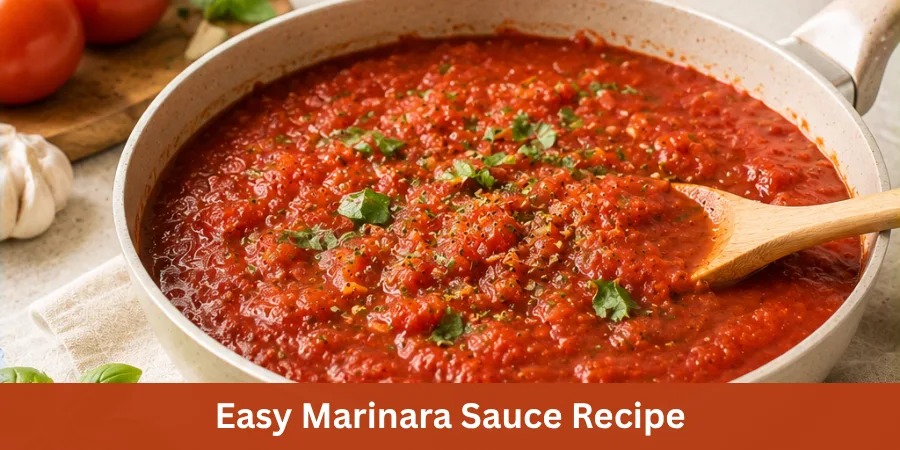
A homemade marinara sauce is a simple way to add fresh tomato flavor to everyday meals without a complicated process. This easy version can be prepared in about 30 minutes using familiar ingredients like tomatoes, onion, garlic, oregano, basil, olive oil, and tomato paste.
I especially enjoy making marinara sauce from scratch because it is budget-friendly and versatile. The finished sauce works well with pasta, meatballs, pizza, or as a dipping sauce, making it a useful recipe to keep ready for different meals.
Easy Marinara Sauce–The Short Answer
The flavor comes from building the sauce in layers. Onion and garlic create the aromatic base, while olive oil adds richness and tomato paste provides concentrated tomato depth. A gentle 15-minute simmer allows the ingredients to come together while keeping the tomato flavor at the center.
This homemade marinara sauce is practical because it can be adjusted to match your preference. The seasoning and consistency can be customized as it cooks, while fresh basil added at the end provides a bright herbal finish.
Once cooled, the sauce can also be stored in the freezer, making it convenient to prepare ahead. Having homemade marinara available means you can quickly add a flavorful tomato sauce to meals without starting from the beginning each time.
Why This Recipe
For home cooks, this easy marinara recipe is a straightforward way to make a flavorful tomato sauce with simple ingredients. Canned crushed tomatoes provide the main body of the sauce, while onion, garlic, oregano, and basil create a balanced tomato-forward flavor.
The controlled amount of olive oil keeps the sauce rich without making it overly oily, allowing the tomatoes to remain the main focus. Tomato paste adds extra depth and body while helping create a more developed flavor without requiring a long cooking time.
What I like about this recipe is how flexible it is while keeping the core formula simple. Fresh basil adds a bright herbal finish, while parsley can be used instead or combined with basil depending on the flavor you prefer.
The seasoning can also be adjusted after simmering so the finished sauce matches the meal it is served with. This makes it a practical go-to marinara sauce for everyday cooking without changing the foundation of the recipe.
Is Marinara Sauce Same as Spaghetti Sauce?
Marinara sauce and spaghetti sauce are related tomato-based sauces, but they are not always the same. Marinara sauce is typically a simpler combination of crushed tomatoes, garlic, onion, herbs, olive oil, and seasonings.
This combination gives marinara a lighter and fresher character while keeping the tomato flavor as the main focus. It is also practical for everyday cooking because it can be prepared quickly without requiring a long cooking time.
Spaghetti sauce can be more substantial because it may include additional vegetables, meat, or longer cooking times. Although marinara sauce and spaghetti sauce can sometimes be used interchangeably, their differences usually come from the ingredients included and the way they are prepared.
A pasta sauce or Italian tomato sauce may develop a deeper flavor through additional aromatics and extended cooking. This easy marinara version is simmered for 15 minutes, keeping the preparation simple while preserving the fresh tomato character.
The shorter ingredient list and quicker cooking process make this marinara sauce an easy choice when you want a homemade tomato sauce without a lengthy preparation method.
Can I Substitute Fresh Tomatoes?
Yes, fresh tomatoes can be used instead of canned tomatoes, but they require additional preparation. Use approximately 28 oz (794 grams) fresh tomatoes for this marinara recipe.
Cut the tomatoes in half and place them cut-side-down on a rimmed baking sheet. Broil for a few minutes until the skins begin to pucker and loosen.
Allow the tomatoes to cool enough to handle, then remove the skins. You can also use easy roasted tomatoes in this recipe if you prefer a deeper tomato flavor.
For comparison, 1 (28 oz) can of tomatoes provides about 3 cups undrained or 2.5 cups drained tomatoes. Fresh tomatoes should be prepared and crushed before being added to the sauce.
Because fresh tomatoes can vary in water content, the sauce may need additional cooking time to reach the correct consistency. After peeling and crushing the tomatoes, add them to the saucepan and simmer until the sauce reaches the desired texture.
This extra preparation can increase the total cooking time compared with using canned tomatoes. Canned tomatoes remain the simpler option when you want a quick homemade marinara sauce.
Ingredients Needed
This easy marinara sauce uses a short list of everyday ingredients that work together to create a balanced tomato flavor. Each ingredient has a specific role, from building the aromatic base to creating the final texture and seasoning.
For the base of the sauce, use:
- 2 tablespoons (30 ml) extra virgin olive oil
- ½ medium yellow onion, finely diced (approximately 75 grams or ½ cup chopped)
- 3 cloves garlic, finely minced (approximately 9 grams)
- 28 oz (794 grams) canned crushed tomatoes
- 2 teaspoons (10 grams) tomato paste
Olive oil helps create a flavorful base while the onion and garlic build the sauce’s aromatic foundation. Cooking the onion first allows it to soften and develop sweetness, while adding garlic briefly helps keep its flavor balanced.
Crushed tomatoes provide the main body of the marinara sauce. San Marzano tomatoes are a good option for a traditional Italian-style flavor, while plum tomatoes can also be used when making the whole-peeled tomato variation. Tomato paste adds concentrated tomato flavor and extra body while keeping the sauce tomato-forward.
For seasoning, use:
- ½ teaspoon dried oregano (approximately 1 gram)
- ½ teaspoon fine sea salt (approximately 3 grams)
- ¼ teaspoon freshly ground black pepper (approximately 0.5 gram)
- 1 bay leaf
The seasoning helps balance the natural acidity of the tomatoes while allowing the tomato flavor to remain the focus. Add more salt only after the sauce has reduced because the flavors become more concentrated during simmering.
For finishing the sauce, use:
- 1 tablespoon fresh basil, finely chopped (approximately 3 grams)
Fresh basil is added at the end of cooking to preserve its bright herbal flavor. Fresh parsley can also be used instead of basil or combined with it. If using parsley, add about 1 tablespoon (4–5 grams) roughly chopped.
The fresh herbs can also be used as a garnish when serving. Keeping the finishing herbs separate from the cooking process helps maintain their fresh flavor and gives the final marinara sauce a lighter finish.
How to Make
Start by heating a medium saucepan over medium heat and add 2 tablespoons (30 ml) olive oil. Add ½ cup chopped onion (approximately 75 grams) and cook for about 5 minutes, stirring often, until the onion becomes soft and lightly golden.
Add 9 grams minced garlic and cook for about 1 minute, just until fragrant. Avoid overcooking the garlic because it can develop a bitter flavor if it browns too much.
Stir in 2 teaspoons (10 grams) tomato paste and cook for approximately 30–60 seconds, stirring continuously. This short cooking step helps develop the tomato flavor before adding the crushed tomatoes.
Add 28 oz (794 grams) crushed tomatoes, ½ teaspoon oregano, ½ teaspoon salt, ¼ teaspoon pepper, and 1 bay leaf. Stir everything together and bring the mixture to a light boil.
Reduce the heat to low, partially cover the saucepan, and simmer for 15 minutes. Stir every 4–5 minutes while maintaining a gentle simmer. The sauce will gradually become thicker as it cooks and the flavors combine.
For a smoother texture, whole peeled plum tomatoes can be crushed and processed with a regular blender, food mill, or food processor before being added to the sauce. These are alternative preparation methods rather than additional steps in the standard recipe.
Parsley and white wine are optional variations and should not be added to the core version unless you are intentionally making one of those variations.
When the sauce reaches the desired consistency, remove the bay leaf and turn off the heat. Stir in 1 tablespoon (approximately 3 grams) chopped fresh basil.
The finished sauce should be thick enough to lightly coat a spoon while still remaining loose enough to mix easily with pasta. If the sauce is too thin, simmer it uncovered for another 2–5 minutes. If it becomes too thick, add water 1 tablespoon (15 ml) at a time until the desired consistency is reached.
Variations
Keeping the basic marinara formula simple makes it easy to adjust the flavor while maintaining the tomato-forward character of the sauce.
For a spicy marinara version, add ⅛–¼ teaspoon (approximately 0.25–0.5 gram) red pepper flakes along with the dried oregano. This adds gentle heat without changing the main structure of the recipe.
For extra richness, add a Parmesan rind while the sauce simmers. Allow it to cook with the sauce, then remove the rind before serving. This adds a deeper savory flavor while keeping the sauce balanced.
If you prefer a rustic texture, replace crushed tomatoes with 28 oz (794 grams) whole peeled San Marzano canned tomatoes. Crush the tomatoes by hand before adding them to the saucepan for a more traditional texture.
If the canned tomatoes taste acidic, balance the flavor by simmering the sauce with a peeled carrot or adding sugar. Start with ½ teaspoon sugar and adjust only if needed.
For a stronger basil flavor, increase the fresh basil added at the end of cooking. The standard recipe uses approximately 3 grams basil, while a basil-forward version can use approximately 6 grams.
Adding fresh basil after cooking helps preserve its bright herbal flavor while keeping the main marinara balanced.
Storage
Allow the homemade marinara sauce to cool completely to room temperature before storing it.
Transfer the cooled sauce to an airtight container or glass jar with a lid, then refrigerate it for up to 5 days. Proper storage helps maintain the flavor and texture while keeping the sauce ready for pasta, pizza, or other meals.
For longer storage, marinara sauce freezes well. Place the cooled sauce in a freezer-safe container or bag, leaving a little space for expansion.
If using freezer bags, remove excess air before sealing. Freezing the sauce flat in zip-top bags makes it easier to store portions and thaw only the amount needed.
Frozen marinara sauce can be stored for up to 3 months. When ready to use, thaw it in the refrigerator when possible, then reheat gently over low to medium-low heat while stirring occasionally.
If the sauce becomes too thick after reheating, add a small splash of water and stir until the desired consistency returns.
Notes
This recipe makes approximately 3 cups of sauce and provides 6 servings based on a serving size of approximately ½ cup.
The flavor develops from the combination of olive oil, onion, garlic, tomato paste, and herbs. Cooking the onion first allows the aromatics to soften and develop their flavor before the tomato ingredients are added.
The garlic is cooked briefly to keep its flavor balanced, while the tomato paste is cooked for a short time to add extra depth. Fresh basil is stirred in at the end to provide a fresh herbal finish.
If you prefer fresh tomatoes, 28 oz (794 grams) can be used instead of canned tomatoes. Prepare them by cutting the tomatoes in half, placing them cut-side-down on a rimmed baking sheet, and broiling until the skins loosen.
Allow the tomatoes to cool, remove the skins, crush them, and continue with the recipe. Easy roasted tomatoes can also be used for a deeper tomato flavor.
Fresh tomatoes may require additional cooking time because their water content can vary. Continue simmering until the sauce reaches the desired consistency.
For storage, allow the marinara sauce to cool completely before transferring it to an airtight container. Refrigerate for up to 5 days or freeze for up to 3 months.
Nutrition
A simple marinara sauce can fit into a balanced meal. Nutrition values may vary depending on the exact ingredients and brands used.
Available nutrition values from different original formulas are:
- Calories: 68 kcal per serving from one source and 90 kcal per serving from another source
- Carbohydrates: 6 g from one source and 11 g from another source
- Protein: 1 g from one source and 2 g from another source
- Fat: 5 g from both source estimates
Other available values include saturated fat, sodium, potassium, fiber, sugar, vitamin A, vitamin C, calcium, and iron.
These values should not be presented as the exact nutrition for this modified recipe because the final ingredient formula is different. The exact nutrition can vary depending on the specific tomatoes, olive oil, tomato paste, and other ingredients used.
For the most accurate nutrition information, the finished recipe should be calculated using the exact ingredients and quantities included in this version.
Pinterest Pins