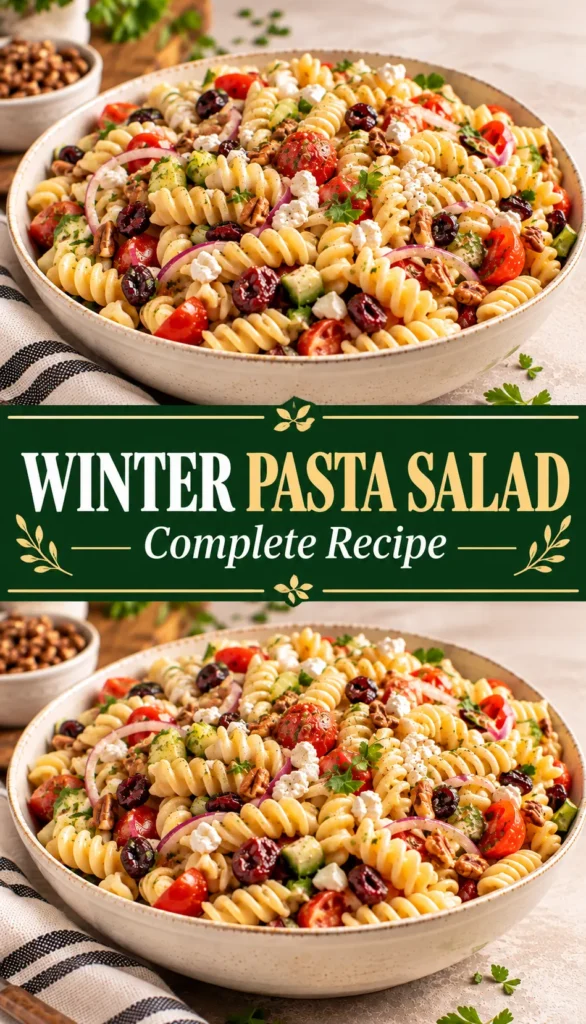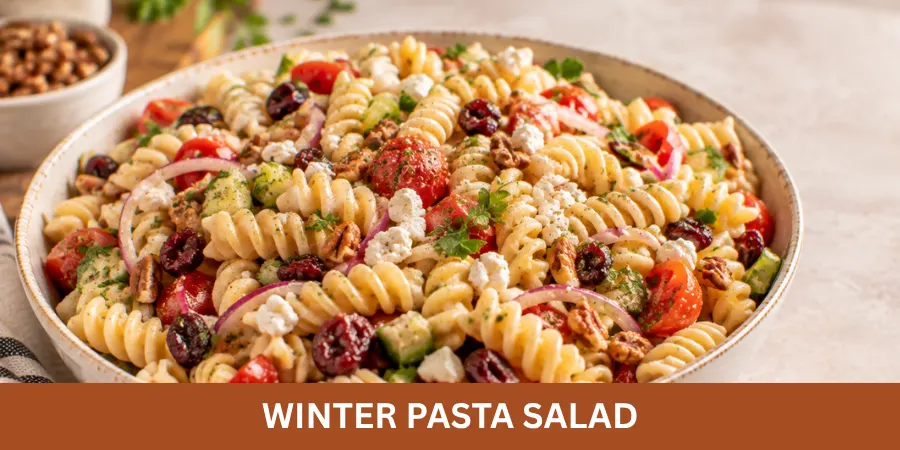
This winter pasta salad is a flavorful recipe built around nutrient-dense winter vegetables such as roasted butternut squash and Brussels sprouts.
A tangy balsamic dressing brings the vegetables and pasta together, while hearty kale, sweet dried cherries, salty feta, and crunchy pumpkin seeds create a balance of sweet, savory, and nutty flavors.
The combination feels cozy yet fresh, making it especially suited to the cooler months. For meal prepping, this make-ahead side dish is easy to prepare and works well for a family gathering or a crowd-pleasing winter meal.
Winter Pasta Salad-The Short Answer
The homemade dressing can be adjusted to suit different preferences, while the ingredients can be prepared ahead and combined later.
I find this approach especially useful when making it in advance because the components stay distinct and the salad can be adjusted before serving.
For added variety, crisp bell peppers, salty cheese, and tri-colored rotini work naturally with the same flavor profile.
I have made similar combinations several times this season, and this quick flavor-packed version remains a perfect companion for winter meals.
The roasted vegetables provide substance, while the fresh greens, dried fruit, and crunchy toppings keep each bite interesting.
Why You’ll Love It
Many pasta salad recipes are associated with the warmer months, but this winter-themed pasta salad is designed for chilly weather.
It combines rotini pasta with hearty winter vegetables such as butternut squash and shredded Brussels sprouts, then brings everything together with a tangy dressing.
The mix of roasted vegetables and fresh ingredients makes it an easy way to enjoy more vegetables during winter while still getting plenty of flavor.
Each serving contains about 5.8 grams of fiber and 11.6 grams of protein, which can help you feel full and satisfied.
It works well as a side dish, but you can turn it into a complete meal by adding a protein such as shredded chicken.
Since it tastes best when made in advance, it also works well for a winter potluck.
I recommend letting the salad sit for 30 minutes to an hour before serving so the dressing has time to blend with the other ingredients.
The recipe is easy to adjust with your favorite pasta, seasonal vegetables, and added proteins.
A simple homemade dressing adds another layer of flavor, while ingredients such as kale, dried cherries, feta, and pumpkin seeds add texture and variety.
It pairs naturally with grilled chicken, roasted chicken, or soup, making it practical for a winter family dinner, holiday lunch, or make-ahead lunch.
About This Recipe
Once the weather gets cooler, I like making a pasta salad that feels fresh but still comforting.
I’m obsessed with the balance of sweet, salty, creamy, and crunchy elements in this recipe.
The roasted butternut squash and Brussels sprouts bring warmth and depth, while dried cherries, feta, and pumpkin seeds add contrast.
Together, they give every bite a mix of flavor and texture without making the salad feel too heavy.
It has a distinctly winter feel but is still easy enough to enjoy all year round.
The dressing brings everything together with olive oil, balsamic vinegar, honey, Dijon mustard, and garlic.
Rather than using mayonnaise, the recipe gets its creamy contrast from feta, while the roasted vegetables add richness and the balsamic dressing keeps the flavors balanced.
This makes the salad feel cozy and satisfying while still tasting bright and fresh.
Pasta salad isn’t just for summer anymore.
Ingredients Needed
8 oz dry rotini pasta
2 cups small-diced butternut squash
2½ cups shaved Brussels sprouts
1 medium red bell pepper
½ small red onion
3 packed cups chopped kale, ribs removed
½ cup dried cherries
½ cup crumbled feta cheese
⅓ cup roasted unsalted pumpkin seeds
1 teaspoon olive oil (for tossing the cooked pasta)
For the roasted squash:
1 tablespoon olive oil
½ teaspoon garlic powder
½ teaspoon paprika
¼ teaspoon fine salt
⅛ teaspoon black pepper
For the Brussels sprouts:
1 teaspoon olive oil
⅛ teaspoon fine salt
⅛ teaspoon black pepper
1 teaspoon balsamic glaze
For the Winter Balsamic Dressing:
¼ cup extra-virgin olive oil
3 tablespoons balsamic vinegar
1 tablespoon honey
1 tablespoon Dijon mustard
1 small garlic clove
¼ teaspoon fine salt
¼ teaspoon black pepper
Optional: ½ teaspoon poppy seeds
Ingredients Notes
The salad starts with 8 oz dry rotini, which gives it a firm base that holds its texture after chilling.
Rotini works well because its shape helps hold onto the dressing and allows the flavors to distribute throughout the salad.
For the winter vegetables, use 2 cups small-diced butternut squash, 2½ cups shaved Brussels sprouts, 1 medium red bell pepper, ½ small red onion, and 3 packed cups chopped kale with the ribs removed.
The butternut squash adds roasted sweetness and substance, while Brussels sprouts develop browned edges during cooking.
Red bell pepper and red onion add color and freshness, while kale provides a hearty seasonal texture.
For the squash, use 1 tablespoon olive oil, ½ teaspoon garlic powder, ½ teaspoon paprika, ¼ teaspoon fine salt, and ⅛ teaspoon black pepper.
These seasonings help the squash develop a flavorful roasted finish while keeping the natural sweetness balanced.
The squash should be roasted until the center is tender and the edges are lightly browned.
Cook the Brussels sprouts separately with 1 teaspoon olive oil, ⅛ teaspoon fine salt, and ⅛ teaspoon black pepper.
Add 1 teaspoon balsamic glaze near the end so the Brussels sprouts develop a balanced sweet and savory finish.
This step helps bring more depth to the roasted vegetable portion of the salad.
Add ½ cup dried cherries, ½ cup crumbled feta, and ⅓ cup roasted unsalted pumpkin seeds.
The dried cherries provide a sweet-tart contrast, while feta adds a salty and creamy element.
Pumpkin seeds provide crunch and texture while keeping the recipe balanced.
Using unsalted pumpkin seeds also keeps the sodium level more consistent with the defined recipe.
The Winter Balsamic Dressing uses ¼ cup extra-virgin olive oil, 3 tablespoons balsamic vinegar, 1 tablespoon honey, 1 tablespoon Dijon mustard, 1 small garlic clove, ¼ teaspoon fine salt, ¼ teaspoon black pepper, and optional ½ teaspoon poppy seeds.
This combination provides the acidity, sweetness, savory depth, and richness needed to bring the vegetables, pasta, and other ingredients together.
For assembly, use 30 ml of the dressing to massage the kale.
Add 80–90 ml to the salad once the pasta and vegetables have cooled, then reserve 20–30 ml for later adjustment.
After chilling for 30–60 minutes, gently toss the salad and add some of the reserved dressing if the pasta has absorbed too much.
This keeps the final texture balanced without making the salad watery.
How to Make Winter Pasta Salad
Start by cooking the 8 oz dry rotini pasta in generously salted water until al dente, following the package directions.
Drain the pasta immediately, then rinse it with cold water to stop the cooking process and allow it to cool to room temperature.
Toss the cooled pasta with 1 teaspoon olive oil to reduce sticking.
While the pasta cooks, heat the oven to 425°F (220°C) and line a large baking sheet with parchment paper.
Add the small-diced butternut squash to the baking sheet and coat it with 1 tablespoon olive oil, garlic powder, paprika, salt, and pepper.
Roast for about 23–27 minutes, turning halfway through, until the center is tender when tested with a fork and the edges are lightly browned.
Let the roasted squash cool on the pan before assembling the salad, and make sure it has cooled to room temperature rather than just warm before combining it with the kale and other ingredients — squash that is still warm can wilt the kale or soften the feta.
Prepare the Brussels sprouts while the squash roasts.
Heat a medium sauté pan over medium heat, add 1 teaspoon olive oil, then cook the shaved Brussels sprouts with salt and pepper for 5–7 minutes.
They should become slightly softened with browned edges.
Add 1 teaspoon balsamic glaze and stir briefly to coat, then remove from the heat.
For the dressing, combine ¼ cup olive oil, 3 tablespoons balsamic vinegar, 1 tablespoon honey, 1 tablespoon Dijon mustard, 1 small garlic clove, ¼ teaspoon fine salt, ¼ teaspoon black pepper, and optional ½ teaspoon poppy seeds in a small bowl or mason jar.
Whisk for about 30–45 seconds until emulsified.
Taste and adjust the seasoning if needed.
For the greens, place the chopped kale in a large bowl and add about 30 ml of the dressing.
Massage the leaves gently for 60–90 seconds until they become softer and darker.
This step helps the kale absorb the seasoning and gives the finished salad a better texture.
In a large serving bowl, combine the cooled pasta, roasted squash, Brussels sprouts, massaged kale, red bell pepper, red onion, dried cherries, feta cheese, and pumpkin seeds.
Add about 80–90 ml of dressing and toss gently until the ingredients are evenly coated.
Avoid crushing the roasted squash during mixing.
Cover the salad and refrigerate for 30–60 minutes so the flavors can develop.
Before serving, toss gently and check the texture.
If the pasta has absorbed too much dressing, add 10–30 ml of the reserved dressing gradually and taste again.
If desired, add a small amount of additional feta, pumpkin seeds, or balsamic glaze before serving.
For extra crunch, prepare the optional crispy topping with panko breadcrumbs, finely chopped pistachios, olive oil, garlic powder, and a small pinch of salt.
Toast it over medium-low heat for 3–5 minutes until golden brown, transfer it to a plate, let it cool completely, and add it just before serving.
Variations To Try
For a heartier winter pasta salad, shredded chicken or rotisserie chicken can turn it into a complete balanced meal quickly.
White beans are another simple way to add more substance while keeping the salad filling.
For extra freshness, add leafy greens such as tender baby kale, peppery arugula, or baby spinach along with fresh herbs like parsley.
Other vegetables can also work well with this flavor profile.
Broccoli, sweet potatoes, cucumbers, shredded cabbage, and cherry tomatoes can add more color and texture while keeping the salad flexible.
These additions allow you to adjust the recipe based on seasonal vegetables or what you already have available.
For extra crunch, sprinkle slivered almonds, walnuts, or sunflower seeds over the salad.
Keep the pasta base aligned with the recipe by using rotini or fusilli.
The feta provides a creamy and salty contrast to the other ingredients, while the homemade dressing brings everything together.
A small amount of red pepper flakes can also add a kick of heat when you want a little more flavor.
Make Ahead
This winter pasta salad works especially well when prepared ahead because, like most pasta salads, the components can be prepared up to 24 hours in advance.
The pasta, roasted vegetables, Brussels sprouts, dressing, kale, and dried cherries can all be prepared ahead, while the crispy topping is best kept separate.
For the best texture, store the topping separately and keep the remaining dressing refrigerated.
Before assembling, make sure the pasta and vegetables are completely cool.
Add 80–90 ml of the dressing initially, then reserve the remaining dressing for later adjustment.
Right before serving, toss the salad gently and add the remaining dressing if the pasta has absorbed some of it.
Add the crispy topping immediately before serving so it stays crisp and does not soften from the dressing or vegetables.
Storage
When storing leftovers, place the pasta salad in an airtight container and keep it in the refrigerator for up to 4 days.
Keeping it covered helps maintain its texture and prevents it from becoming dry.
Before serving, gently stir the salad and check its consistency.
If the pasta has absorbed some of the dressing during refrigeration, add a little reserved dressing and toss gently until the texture is right.
To freshen up the flavor, finish with a light drizzle of balsamic glaze just before serving.
This matches the recipe’s storage and final dressing instructions.
Expert Tips
A good winter pasta salad should have a balanced dressing rather than an overly sweet flavor.
The balsamic vinegar provides a tangy and slightly acidic base, while honey softens the acidity and adds gentle sweetness.
If using poppy seeds, keep them as a subtle addition so they complement the other flavors instead of taking over.
Cook the pasta in well-seasoned boiling water until al dente, then drain and rinse it with cold water to stop the cooking process.
Once cooled, lightly coat it with olive oil before adding it to the salad.
This helps the pasta maintain a pleasant texture after chilling.
For the best texture, add the crispy topping just before serving.
Keeping it separate until the last moment helps it stay crunchy instead of becoming soft from the dressing or vegetables.
Notes
The dressing should have a balanced tangy and acidic flavor, with a little sugar added if you prefer a more classic sweet taste.
The poppy seed addition is optional.
When cooking the pasta, season the water before bringing it to a boil, then cook the pasta until al dente.
I recommend waiting until serving to add any crispy topping so it stays crunchy.
As the salad rests, the pasta will absorb some of the dressing, which can make it feel dry after refrigeration.
For a juicier pasta salad, use some of the reserved dressing just before serving rather than adding the entire amount at the beginning.
Rotini is my preference, while fusilli is another suitable shape.
Keeping the dressing separate until needed also makes it easier to adjust the texture without making the salad watery.
Keep the salad in an airtight container in the refrigerator for up to 4 days.
Before serving, stir it gently and check the consistency.
If the pasta has absorbed more dressing while chilling and the salad feels dry, add a small amount of the reserved dressing and toss gently.
Add the crispy topping at the last moment so it keeps its texture.
Nutrition Insight
Each serving size is 1/6 of the complete pasta salad recipe and provides about 425 kcal.
It contains:
54.4 g carbohydrates
11.6 g protein
19.3 g total fat
3.6 g saturated fat
5.8 g fiber
15.9 g sugar
Each serving also provides about 421 mg sodium and approximately 25 mg cholesterol.
Nutrition information is based on the specific ingredient quantities used in the base recipe and is an estimate.
Actual values can vary depending on the brands of pasta, feta, Dijon mustard, dried cherries, and other ingredients.
Optional panko-pistachio topping and garnish are not included in these calculations.
Frequently Asked Questions
Should I rinse pasta for cold pasta salad?
Yes, rinse the pasta when making a cold pasta salad.
After cooking, rinsing stops the cooking process and helps prevent a mushy or overcooked texture.
It also cools the pasta quickly so you can continue with the vegetables and fresh herbs without exposing them to heat.
For this recipe, cooking the rotini until al dente and rinsing it with cold water helps keep the pasta firm after chilling.
Can I make pasta salad the night before?
Yes, you can make pasta salad the night before.
Keep some extra dressing aside because pasta naturally absorbs dressing as it rests, which can leave the salad drier the next day.
Add the reserved dressing gradually before serving and toss gently until the texture feels right.
This make-ahead method helps keep the salad balanced without making it watery.
What is the secret to a good pasta salad?
A good pasta salad starts with a flavorful dressing and ingredients that give different textures and flavors in every bite.
Homemade dressing lets you balance the olive oil, balsamic vinegar, honey, Dijon mustard, garlic, salt, and pepper to suit the rest of the salad.
Cut the vegetables into fairly uniform pieces so they distribute evenly, and choose a noodle that can hold onto the dressing.
Rotini works especially well because its ridges help catch the dressing.
Pinterest Pins