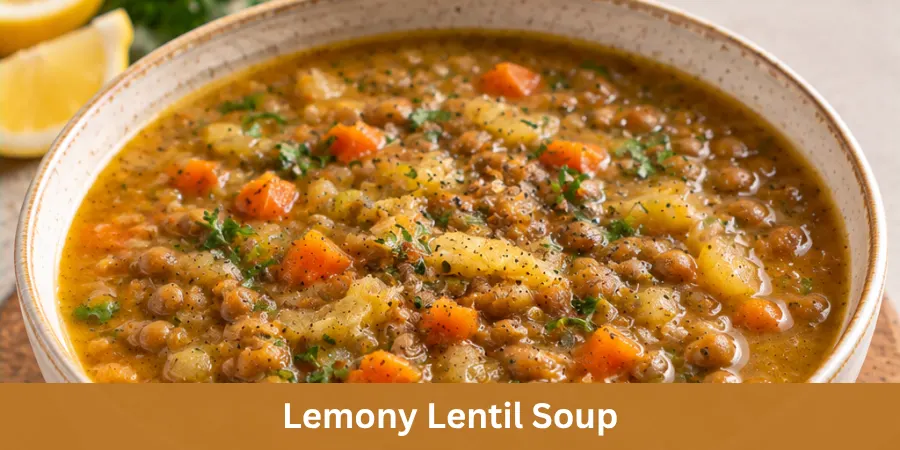
This lemon lentil soup combines red lentils, vegetables, and a flavorful vegetable broth to create a simple and comforting meal. Carrots, celery, spinach, and warm spices build the foundation, while cumin, turmeric, and other seasonings add depth without overpowering the fresh lemon flavor.
The soup develops a bright and balanced taste from the combination of lemon zest and fresh lemon juice. The zest adds aromatic citrus notes during cooking, while the lemon juice added at the end brings freshness and acidity that keeps the flavors lively.
Lemony Lentil Soup-The Short Answer
A partial blend creates a creamy texture while allowing tender lentils and vegetables to remain visible. Red lentils naturally soften as they simmer, helping create a thicker consistency without requiring a complicated process.
The texture can be adjusted depending on preference. Extra broth creates a lighter, more soupy consistency, while longer cooking results in a thicker, stew-like texture. The recipe takes about 30 minutes of stovetop cooking, making it practical for an easy homemade meal.
This soup is a vegan, gluten-free, and meatless option that provides plant-based protein and fiber. Corn and saffron can be included as optional variations for additional sweetness and aromatic complexity, while the core recipe remains focused on a simple red lentil soup with vegetables and warm spices.
Why This Recipe Works
This lemony lentil soup is easy to prepare while still delivering comforting and satisfying flavors. The combination of spices and lemon creates bright, tangy notes that prevent the soup from feeling plain or heavy.
The soup gets its creamy consistency from partially blending the cooked lentils and vegetables while keeping some texture throughout the bowl. Spinach adds freshness, while red lentils provide plant-based protein and help make the soup filling without making it overly rich.
Another reason this recipe works well is its convenience. The ingredients come together in a simple cooking process, and the soup stores well for leftovers. As it rests, the flavors continue to blend, making the next serving just as enjoyable.
Ingredients Needed
- 2 tablespoons olive oil
- 1 medium onion
- 3 medium carrots
- 2 celery stalks
- 4 garlic cloves, peeled and minced
- 1 ½ cups red lentils
- 6 cups vegetable broth
- 1 ½ teaspoons ground cumin
- ½ teaspoon ground coriander
- ½ teaspoon ground turmeric
- ¼ teaspoon chili flakes
- ½ teaspoon black pepper
- 2 bay leaves
- ½ teaspoon fine salt
- 2 teaspoons lemon zest
- 3 tablespoons fresh lemon juice
- 2 heaping cups fresh spinach
- ¼ cup fresh parsley or dill, chopped
Optional variations:
- Corn
- Saffron
- Kale
- Chard
- Additional greens
Ingredients Notes
Red lentils are the main ingredient that gives this soup its naturally creamy texture. They cook quickly, soften during simmering, and help create a thicker consistency without requiring soaking. Rinse and check the lentils before adding them to the broth.
The vegetable base starts with olive oil, onion, carrots, and celery. These ingredients create a savory foundation for the soup while adding sweetness, aroma, and depth. Garlic adds a fuller flavor and helps build the warm, savory character of the recipe.
Vegetable broth provides the main cooking liquid for the lentils and vegetables. The core recipe uses vegetable broth, while alternatives such as vegetable stock, homemade vegetable broth, or other broth options can change the final flavor.
The spice combination of cumin, coriander, turmeric, chili flakes, black pepper, and bay leaves creates warmth and depth while keeping the lentils and lemon as the main flavors. The measured amounts are designed to support the soup rather than overpower its fresh citrus character.
Salt is added during cooking and adjusted at the end because broth salt levels can vary. This helps maintain better control over the final seasoning.
Lemon zest and fresh lemon juice provide the signature bright flavor of the soup. The zest adds aromatic citrus notes during cooking, while the lemon juice adds fresh acidity when added near the end.
Fresh spinach adds color, texture, and freshness. It is added near the end of cooking so it gently wilts while maintaining its flavor and appearance. Kale, chard, or other greens can be used as variations.
Fresh parsley or dill adds a final herbal note before serving. Optional additions such as corn can add sweetness and texture, while saffron can provide extra aromatic complexity without changing the core red lentil soup formula.
How to Make Lentil Soup
Start by preparing the vegetables. Heat 2 tablespoons olive oil in a large stockpot, stock pot, soup pot, or Dutch oven over medium heat.
Add 1 medium yellow onion, 3 large carrots, and 2 celery stalks. Sauté the vegetables for 5–7 minutes, stirring occasionally, until they soften and the onion becomes translucent. Season with ½ teaspoon salt while the vegetables cook.
Add 4 cloves garlic along with 1½ teaspoons cumin, ½ teaspoon coriander, ½ teaspoon turmeric, ¼ teaspoon chili flakes, ½ teaspoon black pepper, and 2 teaspoons lemon zest.
Cook for 30–45 seconds, stirring continuously, until the garlic becomes fragrant and the spices bloom in the oil. The vegetables should soften and develop flavor without becoming deeply browned.
Add 6 cups vegetable broth, 1½ cups red lentils, and 2 bay leaves. Stir well to combine the ingredients, then increase the heat to medium-high and bring the soup to a boil.
Reduce the heat to medium-low, partially cover the pot, and simmer for about 15 minutes. Stir gently midway through cooking to help the lentils cook evenly.
The lentils should become tender, easy to mash, and begin breaking down, while the carrots should also become tender. The broth should visibly thicken as the lentils soften.
If the lentils are still firm, continue cooking for an additional 2–3 minutes. The final cooking window is about 15–18 minutes, but tenderness should be the main indicator rather than relying only on the timer.
Add 2 heaping cups fresh spinach and cook for 2–3 minutes, just until the spinach wilts.
Remove the bay leaves before blending. Use an immersion blender to partially blend the soup until it reaches your preferred consistency.
A partial blend creates a creamy texture while keeping some vegetables and lentils visible. You can leave it more brothy with visible pieces, partially purée it for a thicker texture, or blend more fully for a smoother soup.
Another option is to transfer about 2 cups of soup to a traditional blender and blend until smooth. Return the blended portion to the pot and stir to combine.
When blending hot soup, work carefully in small batches and use a heat-safe container to help reduce the risk of splashing or overflow.
Turn the heat completely off before adding 3 tablespoons fresh lemon juice and 15 grams chopped fresh herbs such as parsley or dill.
Taste the soup and adjust with additional salt, black pepper, or lemon juice if needed. If more brightness is desired, add lemon juice in small amounts, tasting after each addition.
Adding lemon zest during cooking and lemon juice at the end gives the soup both aromatic citrus depth and fresh acidity.
Serve warm with lemon slices, fresh parsley or dill, and crusty bread or pita. Corn and saffron are best kept as optional variations rather than part of the core recipe. This recipe serves 6.
Kale can replace spinach as a variation, while green lentils require a separate adjustment because they have a longer cooking time and maintain more texture.
Variations
You can customize this soup based on your preferred texture and flavor.
For a chunkier soup, use the partial blending method instead of blending the entire pot. This keeps some vegetables and lentils visible while the blended portion adds a creamy body.
If you prefer more heat, add a small amount of extra chili flakes while keeping the spice balanced with the lemon and lentil flavors.
For a fresh finishing touch, add chopped parsley or dill just before serving. These herbs work well with the lemon and warm spices while adding brightness.
You can also adjust the amount of fresh lemon juice depending on your preferred level of acidity. Since lemons vary in size and strength, taste the soup and add more gradually if needed.
For extra greens, stir fresh baby spinach into the soup during the final 2–3 minutes of cooking, then turn off the heat once it wilts.
If using chopped kale instead of spinach, allow it slightly more time to soften. These variations let you adjust the texture, spice level, and vegetables while keeping the main red lentil soup recipe intact.
Storage Notes
Once the soup is cooked, allow the leftovers to cool before transferring them to a food storage container or airtight container.
Store the soup in the refrigerator for 3–4 days. Proper storage helps maintain the flavor, texture, and freshness of the soup while making it convenient for leftovers.
If you plan to freeze the soup, transfer it into a freezer-safe ziplock bag or airtight container after it has cooled. Leave a little space for expansion during freezing.
Freezing the soup flat can make it easier to stack vertically and save freezer space. For the best quality, use frozen soup within 3 months.
When ready to serve, thaw the soup in the refrigerator overnight before reheating.
To reheat, transfer the soup to a pot and warm it on the stovetop over medium-low heat. Individual portions can also be reheated in the microwave.
Stir occasionally while reheating and warm until heated through. Since lentils continue to absorb liquid as the soup sits, the texture may become thicker after refrigeration.
If the soup becomes too thick, add a splash of broth or water and stir until the desired consistency returns.
Before serving reheated soup, taste it again and adjust the seasoning if needed. The lemon flavor may change slightly after chilling, so adding a small amount of fresh lemon juice can help restore brightness.
For the best texture, pay attention to how the vegetables are cooked. Sautéing onions, carrots, and garlic first helps develop a deeper flavor base.
Spinach or kale should be added near the end of cooking so they maintain better color and texture. Other vegetables such as red onion, shallots, bell pepper, parsnip, diced red baby potatoes, or sweet potatoes can be used as variations depending on the version being prepared.
If using a traditional blender to purée part of the soup, use caution because hot liquids can expand during blending. Work in small batches with a heat-safe container and follow blender safety instructions.
After blending, return the soup to the stockpot and continue with the recipe. Blending about 2 cups of soup gives the broth a creamy texture while keeping some lentils and vegetables visible.
Before serving, taste the soup and adjust the seasoning based on broth salt levels, pepper, chili flakes, and lemon brightness. Add lemon juice or zest near the end to keep the citrus flavor fresh.
Nutrition Insight
One serving is about 1 bowl and provides approximately:
- Calories: 240 kcal
- Carbohydrates: 36 grams
- Protein: 13 grams
- Fat: 5 grams
- Saturated Fat: 0.7 grams
- Fiber: 9 grams
- Sugar: 4 grams
The sodium content can vary depending on the broth and its salt level, so this should be considered when seasoning the soup.
The nutrition information is automatically calculated and should be treated as an approximation. Ingredient brands, broth sodium levels, vegetable weights, and serving sizes can affect the final nutritional values.
Pinterest Pins