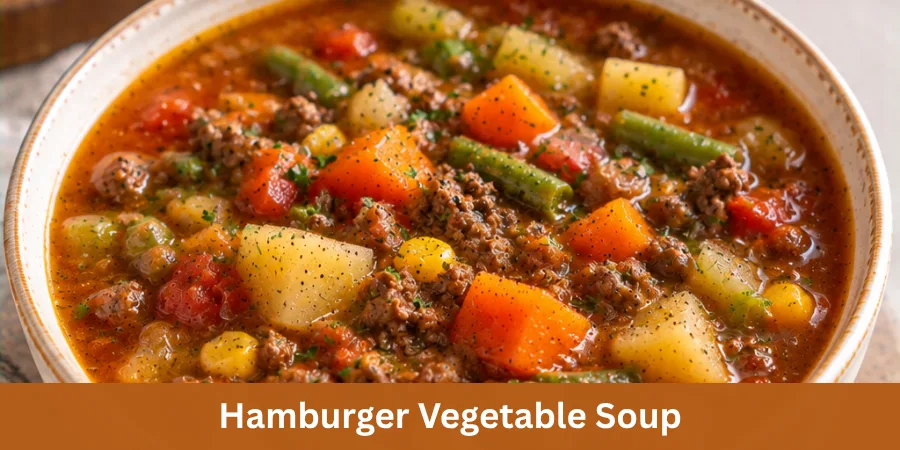
This hamburger vegetable soup is a hearty and practical meal made with ground beef, potatoes, tomatoes, and a generous amount of vegetables. It is a simple choice for a weeknight dinner and also works well when you want to use fresh vegetables already available in your kitchen.
The soup builds its flavor from onion, celery, garlic, tomatoes, and potatoes. The potatoes add satisfying texture and body, while the vegetables create a balanced mix of flavors throughout the tomato-based broth. From start to finish the recipe takes approximately 40–45 minutes, and one pot makes 8 generous servings.
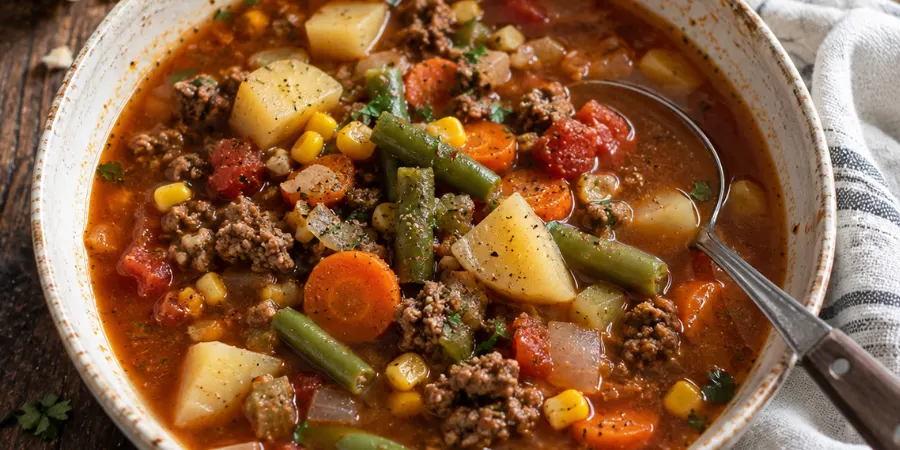
Hamburger Vegetable Soup – The Short Answer
Beef broth provides the savory foundation, while tomatoes add acidity and depth to the soup. A small amount of Worcestershire sauce adds extra savory character, and Italian seasoning with a bay leaf brings herbal notes without overpowering the main ingredients.
This recipe is flexible enough for different variations. Carrots, bell peppers, mushrooms, cabbage, zucchini, beans, or other vegetables can be added depending on preference. Tomato paste can also be used as an optional addition when you want a deeper tomato flavor.
The result is a comforting vegetable and beef soup with tender potatoes, flavorful broth, and a balanced combination of ingredients that makes it suitable for family meals, easy lunches, or simple weeknight cooking.
Why This Recipe Works
This hamburger soup brings together ground beef, potatoes, and mixed vegetables to create a filling meal with a naturally hearty flavor. The tomatoes, tomato sauce, and vegetables combine with the beef to create a rich flavor profile, while the potatoes add texture and make the soup more satisfying.
Using beef broth instead of relying on water or bouillon cubes gives the soup a deeper savory taste. The tomato-based liquid adds body and flavor while keeping the balance between the beef, vegetables, potatoes, and broth.
The proportions are deliberate. One pound (454 grams) of lean ground beef gives a clearly recognizable hamburger flavor while leaving room for vegetables and broth to be major parts of the bowl.
Around 300 grams of potatoes provide starch and satiety without turning the soup into a potato-heavy stew, and about 400 grams of vegetables keep the vegetable presence strong. About 1.2 liters of beef broth gives enough liquid for 8 servings without making the soup watery.
A small amount of Worcestershire sauce and the combination of Italian seasoning and bay leaf add extra layers of flavor without taking attention away from the main ingredients. This recipe is also practical because it uses simple ingredients and can be adapted based on what you have available.
Whether prepared as a regular weeknight meal or a clean-out-the-fridge soup, it provides a comforting and flavorful bowl with minimal complexity.
Ingredients Needed
Everything below is measured for one pot that makes 8 servings.
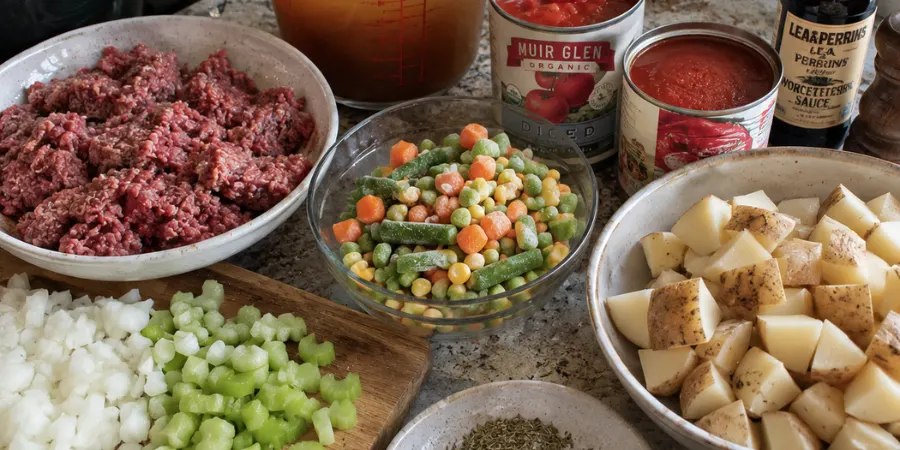
Beef and aromatic base
- 1 pound (454 grams) lean ground beef
- 1 teaspoon olive oil (about 5 ml)
- 1 medium yellow onion, diced (about 150 grams)
- 1 celery stalk, diced (about 40 grams)
- 2 garlic cloves, minced (about 6 grams)
Tomato and broth base
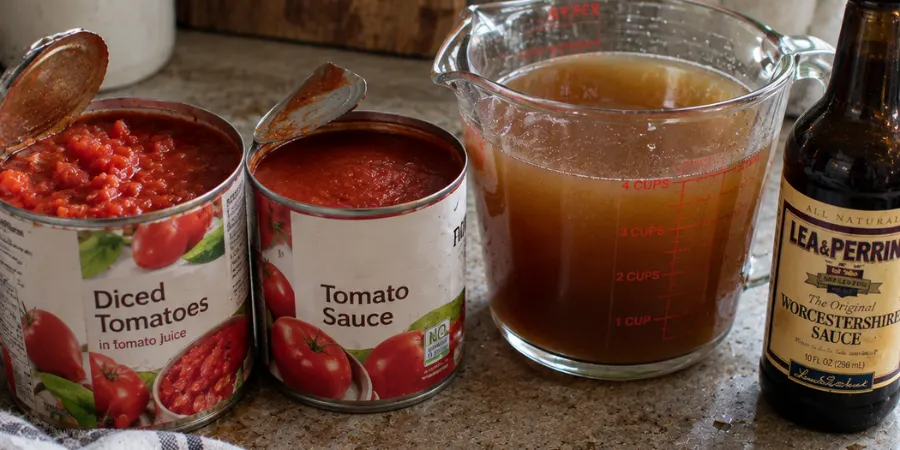
- 5 cups beef broth (about 1.2 liters)
- 1 can diced tomatoes with juices (15 ounces / 425 grams)
- 1 can tomato sauce (8 ounces / 227 grams)
- 2 teaspoons Worcestershire sauce (about 10 ml)
Vegetables
- 2 medium potatoes, peeled and diced (about 300 grams prepared weight)
- 3 cups frozen mixed vegetables (about 400 grams)
Seasoning
- 1 teaspoon Italian seasoning (about 3 grams)
- 1 bay leaf
- ½ teaspoon fine salt (about 3 grams)
- ¼ teaspoon black pepper
Optional additions
- 1 tablespoon tomato paste (about 16 grams)
- ⅛ teaspoon cayenne pepper for mild heat
- Carrots, bell peppers, mushrooms, cabbage, zucchini, green beans, or corn
- Pasta or beans for a different variation
Ingredients Notes
Lean ground beef creates the hearty base of this soup while adding savory flavor and protein. A leaner option helps reduce excess grease while keeping the rich taste expected from a hamburger-style soup.
Onion, celery, and garlic create the first layer of flavor. Potatoes add body, texture, and a satisfying quality, and they should be cut into similar-sized pieces so they cook evenly without breaking apart too quickly.
Frozen mixed vegetables provide convenience, color, and variety. They go in later in the cooking process so they keep their structure, and there is no need to thaw them first.
Beef broth is the main savory liquid, and a good-quality broth develops deeper flavor. Diced tomatoes and tomato sauce together create the tomato-based broth, with the diced tomatoes bringing texture and the sauce adding smooth body.
Worcestershire sauce adds savory depth without overpowering the vegetables, while Italian seasoning and bay leaf provide herbal notes. Since broth and canned tomatoes vary in sodium, final seasoning is best adjusted after the soup finishes cooking.
Equipment You Will Need
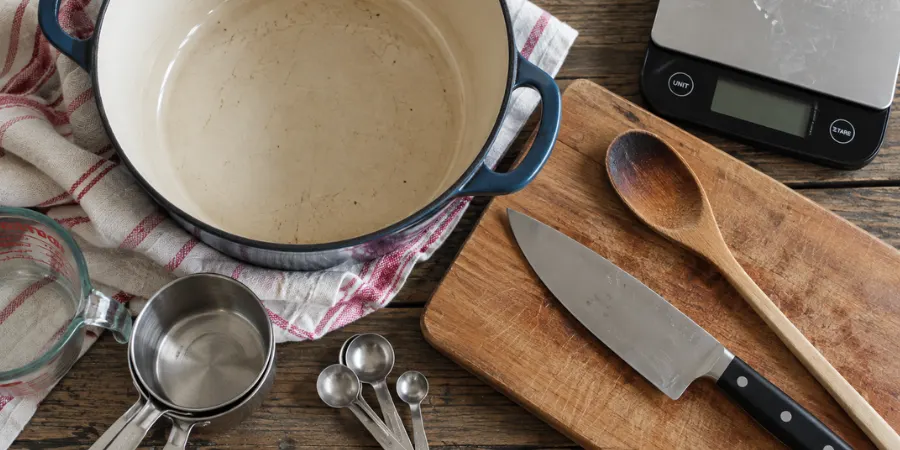
You do not need anything unusual for this soup. A 5–6 quart (about 4.7–5.7 liter) heavy-bottom soup pot or Dutch oven is the most important item, because it gives the beef room to brown and holds the full batch of about 12 cups comfortably.
Beyond the pot, keep these within reach:
- A digital kitchen scale, measuring cups, and measuring spoons
- A wooden spoon or heat-resistant spatula for breaking up the beef
- A chef’s knife and cutting board
- A can opener
- A ladle for serving
- A medium bowl to hold the prepared vegetables
Cooking Time at a Glance
Preparation takes approximately 10 minutes. Browning the beef takes about 5–7 minutes, and the garlic needs only 30–60 seconds. The potatoes then simmer for 10 minutes on their own, and the vegetable simmer adds another 15–20 minutes.
Put together, a practical total is approximately 40–45 minutes. That figure includes chopping and browning, which is why it is more realistic than counting only the simmering time.
How to Make Hamburger Vegetable Soup
Step 1: Prepare the Ingredients
Start by preparing everything before you turn on the heat so the process moves smoothly. Dice the onion into pieces of about 1 cm. Dice the celery into pieces of about 0.5–1 cm. Mince the garlic finely. Cut the potatoes into cubes of about 1.5 cm.
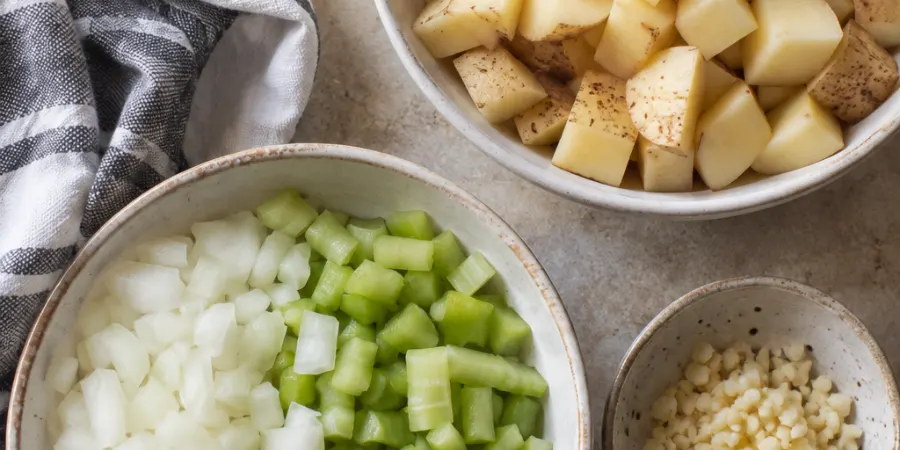
Try to keep the potato pieces roughly the same size, because even pieces cook evenly. Leave the frozen vegetables in the bag for now, and have the broth, tomatoes, tomato sauce, and seasonings ready.
Step 2: Brown the Beef
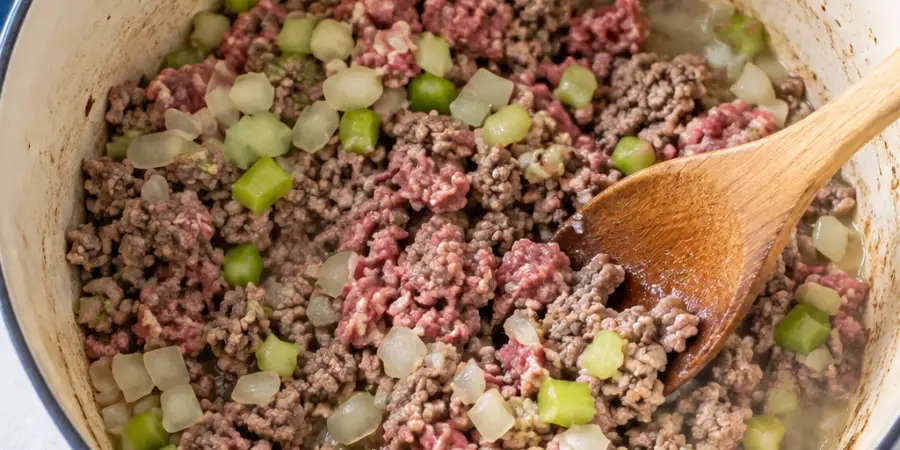
Heat a large soup pot or Dutch oven over medium-high heat for about 1–2 minutes. Add 1 teaspoon of olive oil, then add the ground beef along with the diced onion and celery.
Cook for about 5–7 minutes, breaking the beef apart with a spoon as it browns, until no pink remains and the vegetables have begun to soften. Browning the beef properly before any liquid goes in is what builds the base of flavor, so do not skip or rush this step.
Step 3: Add the Garlic and Drain the Fat
Add the minced garlic and cook for about 30–60 seconds, stirring continuously until fragrant. Avoid cooking the garlic too long because it can become bitter.
Next, look at the pot. If there is noticeable rendered fat, lower the heat for a moment and carefully drain the excess. Leave about 1 tablespoon or less of flavorful drippings to support the soup base.
Step 4: Build the Soup Base
Add the beef broth, diced tomatoes with their juices, tomato sauce, Worcestershire sauce, Italian seasoning, bay leaf, salt, and black pepper to the browned beef mixture.
If you are making the tomato-rich version, add the optional tablespoon of tomato paste now. Stir everything together until well combined.
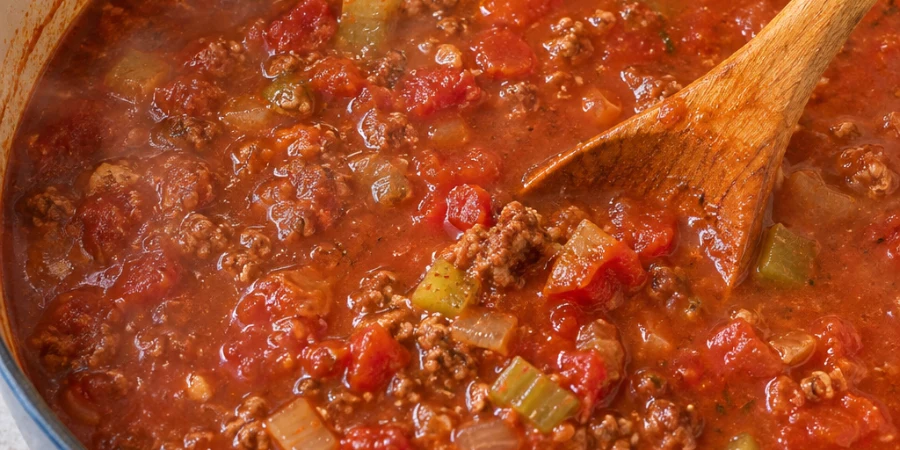
Step 5: Add the Potatoes
Add the diced potatoes and raise the heat to bring the soup to a gentle boil. As soon as it boils, reduce the heat to medium-low, cover the pot, and let it simmer for about 10 minutes. This gives the potatoes a proper head start.
Do not keep the soup at a hard rolling boil. A gentle simmer is enough to soften the potatoes, and it keeps the beef and vegetables from breaking down.
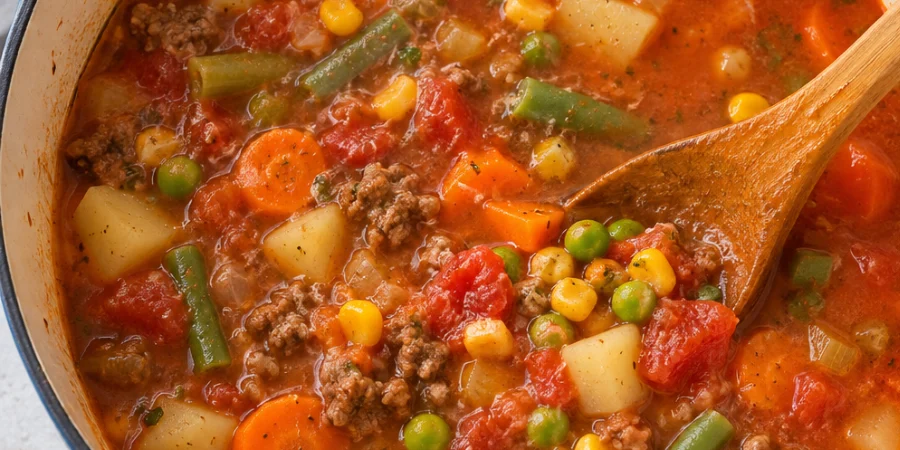
Step 6: Add the Frozen Vegetables
Add the frozen mixed vegetables, about 3 cups or 400 grams, and stir gently. Partially cover the pot and continue simmering over medium-low heat for another 15–20 minutes. Adding the vegetables at this later stage reduces the chance of them becoming overcooked and mushy.
Step 7: Check That the Potatoes Are Done
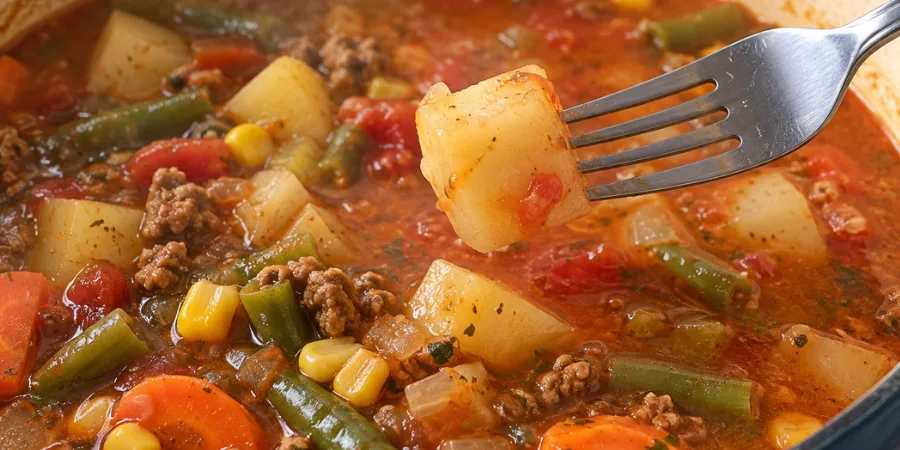
Check one potato cube with a fork at around the 15-minute mark. A properly cooked potato pierces easily and has no hard resistance in the center, yet it has not disintegrated.
If the potatoes still feel firm, simmer for an additional 3–5 minutes and test again. Avoid overcooking them, because they can break apart and affect the texture of the soup.
Step 8: Season and Serve
Remove the bay leaf. Taste the soup and adjust with additional salt or black pepper if needed. Seasoning at the end gives you better control over the sodium, because broth, canned tomatoes, and Worcestershire sauce differ from brand to brand. Serve the soup warm in bowls, as it is or with your favorite sides.
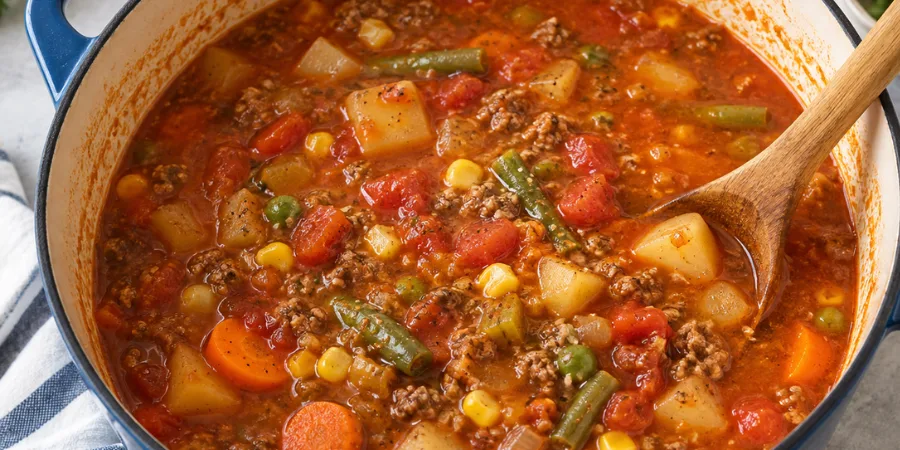
What the Finished Soup Should Look Like
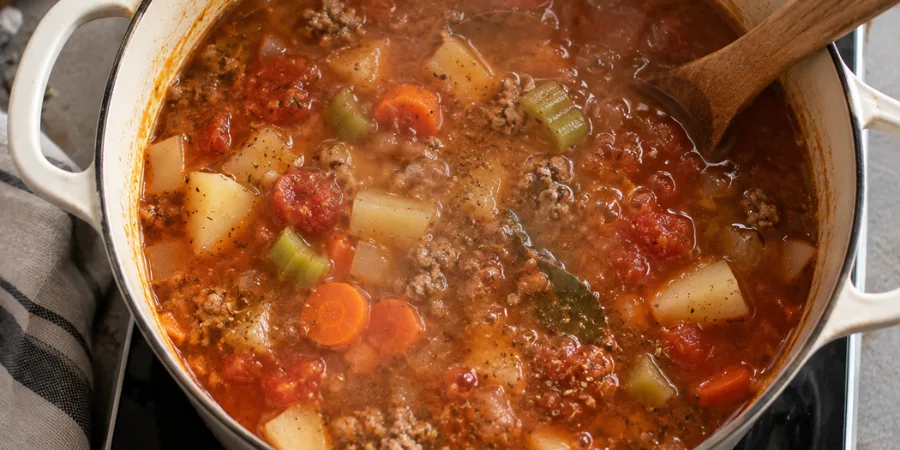
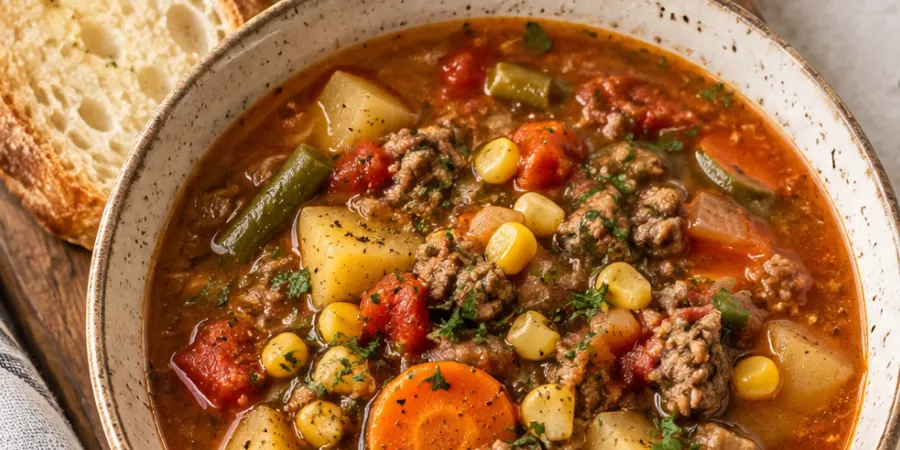
The finished soup should be brothy without being watery, and it should not be as thick as a stew. The beef should be evenly distributed throughout. The potatoes should be tender but still intact, and the vegetables soft-tender.
The tomato flavor should be noticeable without dominating, and there should be no excessive grease on the surface.
Serving
This soup is a complete and filling meal on its own. The recipe yields 8 servings of approximately 1½ cups each, or roughly 12 cups of finished soup. The yield can vary slightly with vegetable size and simmer intensity.
Serve it warm in bowls with crusty bread or warm dinner rolls to soak up the tomato-based broth. Cornbread is another good match, and a fresh green salad makes it a more balanced meal. A little freshly ground black pepper over the bowl just before serving adds a nice finishing touch.
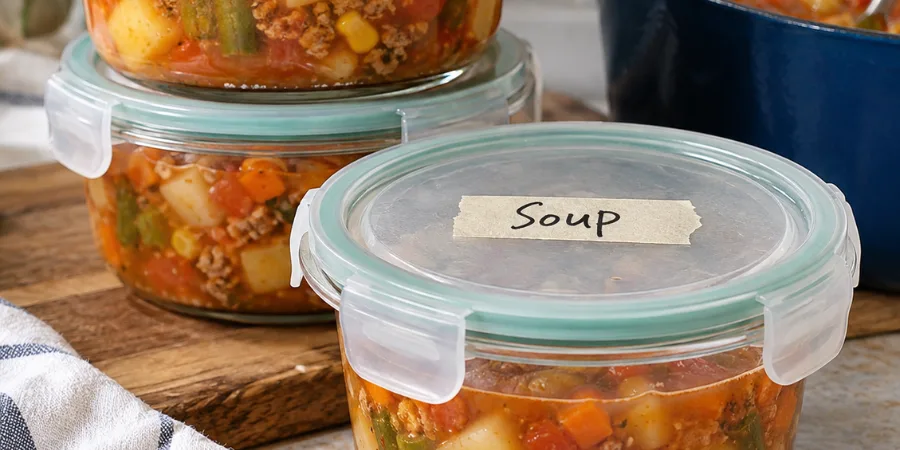
For leftovers, portion the soup into individual containers for easy lunches or quick dinners throughout the week.

Substitutions and Variations
Ground beef can be replaced with ground turkey, ground pork, ground chicken, or Italian sausage. Use the same 454 grams and follow the same cooking sequence, and make sure the meat is fully cooked before continuing. With ground pork, assess the rendered fat carefully and drain the excess.
You can replace the frozen mixed vegetables with about 400 grams of fresh vegetables, for example 150 grams of carrots, 100 grams of green beans, 100 grams of corn, and 50 grams of zucchini. Whatever mix you choose, keep the total near 400 grams.
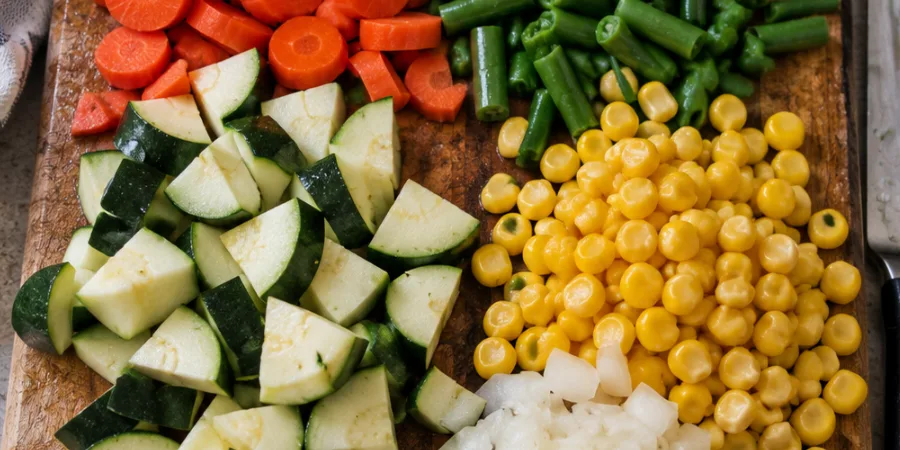
Here are the variations that work best:
- Tomato-rich: Add 1 tablespoon (about 16 grams) of tomato paste and keep the tomato sauce quantity the same.
- Mild spicy: Add ⅛ teaspoon of cayenne pepper, going up to a maximum of ¼ teaspoon if you want more heat.
- Mushroom: Use 100 grams of sliced mushrooms and 300 grams of mixed vegetables. Cook the mushrooms for 2–3 minutes after the beef browns, before adding the liquid.
- Cabbage: Use 100 grams of finely chopped cabbage and 300 grams of mixed vegetables.
- Bean: Add 1 can of beans (about 425 grams), drained and rinsed, during the final 5–10 minutes. You can reduce the potatoes from 300 grams to about 200 grams for a more balanced ratio of solids to liquid.
- Pasta: Leave out the potatoes, increase the beef broth to 6 cups (about 1.4 liters), and use 1 cup (about 100 grams) of dry elbow macaroni. Cook the pasta separately and add it just before serving so it does not turn mushy.
The optional tomato paste and cayenne are not included in the nutrition values below.
Common Mistakes to Avoid
- Adding broth before the beef has browned
- Leaving the beef in large pieces
- Keeping excess rendered fat in the pot
- Cutting the potatoes into very large cubes
- Adding the potatoes and frozen vegetables at the same time
- Putting the frozen vegetables into the first 10-minute potato simmer
- Letting the soup boil hard the whole time
- Adding too much salt at the beginning
- Using too much Worcestershire sauce
- Forgetting to remove the bay leaf
- Simmering for a long time after the potatoes are already tender
- Serving without tasting and adjusting the seasoning first
Troubleshooting
Soup too thin. The liquid may have been too much, or the soup may not have simmered long enough. Simmer partially uncovered for 5–10 minutes, or stir in 1 tablespoon of tomato paste.
Soup too thick. This can come from evaporation or from the potatoes releasing extra starch. Add ¼ cup (60 ml) of hot beef broth, stir, and simmer gently for 2–3 minutes. Add another ¼ cup if needed.
Potatoes still hard. The pieces may have been too large, the simmer too low, or the time too short. Simmer for another 3–5 minutes and test again after each interval.
Vegetables mushy. The frozen vegetables were probably added too early or simmered too long. Next time, add them only after the initial 10-minute potato simmer.
Soup too greasy. The beef may have been higher in fat, or the excess fat was not drained. Spoon the visible fat off the surface, and use leaner ground beef next time.
Soup too salty. High-sodium broth or canned products are common reasons. Start with ½ teaspoon of salt and adjust only at the end after tasting.
Tomato flavor too strong. This happens with too much tomato paste or too much evaporation. Add ¼ cup (60 ml) of unsalted or low-sodium broth, simmer for 2–3 minutes, and taste again.
Make-Ahead and Storage
This soup works very well as a make-ahead meal. You can prepare the onion and celery up to 24 hours in advance and keep them refrigerated, but cut the potatoes shortly before cooking. The complete soup can also be cooked in advance.
Store leftover soup in shallow airtight containers and refrigerate it promptly. For the best quality, use it within 3 days.
For freezing, let the soup cool completely, then divide it into individual portions in freezer-safe containers or bags. If you use rigid containers, leave about 1–2 cm of headspace, and label each one with the date.
Frozen soup keeps its best quality for up to 3 months. Potatoes may soften slightly after thawing, although the flavor stays good.
Thawing and Reheating
The preferred way to thaw is overnight in the refrigerator. For a quicker method, move the frozen soup to a saucepan and thaw and reheat it gradually over low heat, stirring occasionally.
On the stovetop, warm the soup over medium-low heat, stirring occasionally, until it is evenly steaming hot. In the microwave, heat a covered portion in 60–90 second intervals, stirring after each.
The soup may thicken after refrigeration, so stir in 2–4 tablespoons of broth while reheating to restore the preferred consistency.
Nutrition Insight
Each serving (approximately 1½ cups) provides approximately:
- Calories: 213 kcal
- Carbohydrates: 23 g
- Protein: 14 g
- Total Fat: 8 g
- Saturated Fat: 3 g
- Fiber: 4 g
- Total Sugars: 6 g
- Cholesterol: 38 mg
- Sodium: 820 mg
These values are calculated estimates for the base 8-serving recipe, based on the stated ingredient quantities and standard reference nutrition data.
They are not laboratory-verified. Ingredient brands, portion sizes, and substitutions can change the final numbers, since ground beef, broth, canned tomatoes, tomato sauce, and frozen vegetables all vary by brand and formulation.
Frequently Asked Questions
Can I use a different type of meat?
Yes. Ground turkey, ground pork, ground chicken, or Italian sausage can be used instead of ground beef. Each option will slightly change the flavor and texture, but they all keep the soup hearty and satisfying.
Can I add extra vegetables?
Yes. Carrots, bell peppers, mushrooms, cabbage, zucchini, green beans, corn, and other vegetables work well. Try to keep the total near 400 grams so the balance of the soup stays the same.
Can I make hamburger vegetable soup ahead of time?
Yes. Prepare the full recipe, allow it to cool, then store it in the refrigerator. Reheating gently helps maintain the texture and flavor.
Can I freeze hamburger vegetable soup?
Yes. Allow the soup to cool completely, then transfer it into freezer-safe containers or bags. For the best quality, use it within about 3 months, and thaw it in the refrigerator overnight before reheating.
How can I make this soup thicker?
Simmer it slightly longer uncovered so some liquid can reduce. You can also mash a small amount of potatoes into the broth to create more body.
How can I make it more flavorful?
Brown the beef well, add the garlic at the correct time, and use Worcestershire sauce and Italian seasoning. Adjusting salt and pepper at the end also helps balance the final taste.
Final Thoughts
This hamburger vegetable soup proves that a simple pot of beef, potatoes, tomatoes, and vegetables can deliver real comfort without much effort. It is flexible, it reheats well, and it fits easily into a busy week. Make a batch, keep a few portions in the freezer, and you will have a ready meal waiting for the next cold evening.
Pinterest Pins