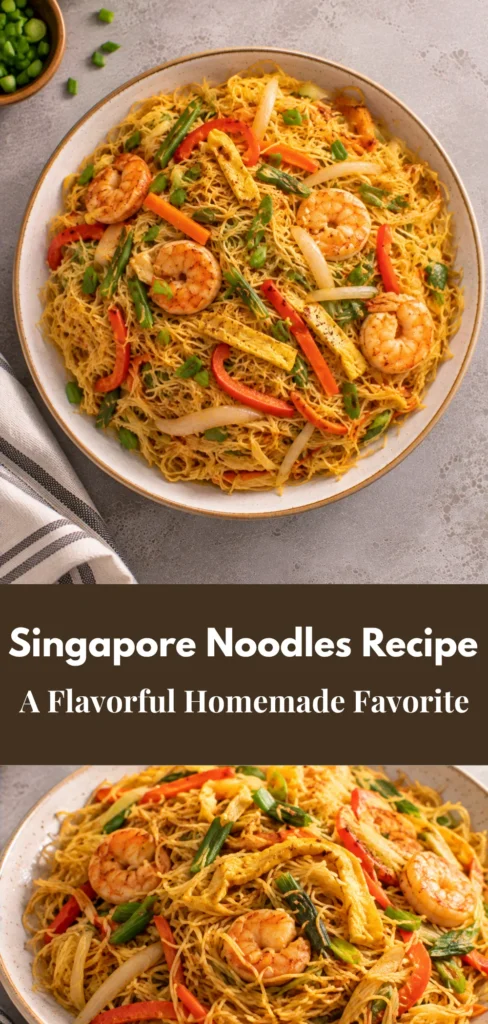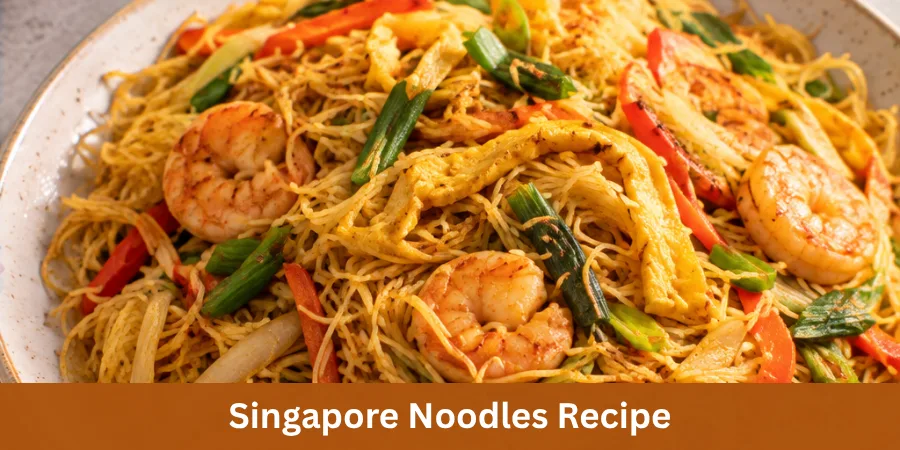
Singapore Noodles are a flavorful stir-fried dish made with thin rice vermicelli, shrimp, eggs and vegetables with curry seasoning. The noodles are soaked until tender but still slightly firm, then combined with the other ingredients during the final wok cooking stages. This helps keep the vermicelli flexible and separated rather than soft or mushy.
What gives these noodles their distinctive character is the curry powder supported by aromatics such as ginger, garlic and fresh chili. The vegetables add color and texture while bean sprouts are added later to preserve their fresh crunch. High-heat cooking also helps excess moisture evaporate giving the finished noodles the intended dry-style texture.
Singapore Noodles Recipe-The Short Answer
Make flavorful Singapore Noodles at home with tender rice vermicelli, juicy shrimp, crisp vegetables and curry seasoning. This tested method keeps the noodles dry, balanced and easy to cook.
For reliable results the recipe treats soaking and cooking times as reference points rather than rigid rules. Vermicelli brands can vary and home burners do not all produce the same heat so the noodles, shrimp, vegetables and sauce are judged by their visual doneness as well as the stated timings. This approach makes the recipe more practical across different home kitchens.
What Are Singapore Noodles?
Despite the name, Singapore Noodles did not originate in Singapore. They are commonly known as Singapore Mei Fun and are widely associated with Hong Kong-style Chinese cuisine.
The dish is built around thin rice vermicelli noodles stir-fried with vegetables, protein, eggs, and curry seasoning. In this recipe, shrimp is the main protein, while eggs are cooked separately and added back near the end to maintain their texture.
Madras curry powder gives the noodles their signature flavour and bright yellow colour. The seasoning works together with ginger, garlic, and fresh chili to create a savoury, aromatic profile that makes the dish recognizable.
A well-made version focuses on balance: the noodles should stay separated, the vegetables should retain some texture, and the seasoning should coat the ingredients without creating a wet or heavy sauce.
The finished dish has a savoury flavour with adjustable spice levels, making it suitable for different preferences. The recipe can be adapted with ingredients such as chicken or tofu, but those are variations rather than part of the core formula.
The main recipe focuses on the essential elements that define Singapore Noodles: properly prepared vermicelli, separate cooking of key ingredients, crisp vegetables, curry seasoning, and a controlled dry stir-fried finish.
Why This Recipe Works
This recipe focuses on creating a practical homemade version of Singapore Noodles while keeping the flavours and textures that make the dish enjoyable. The goal is to achieve the aromatic curry character and stir-fried texture often associated with takeout versions without making the process unnecessarily complicated.
The technique is an important part of the result. Cooking the ingredients in stages helps preserve individual textures, while high-heat stir-frying allows the flavours to combine without leaving the noodles soggy or clumped together.
The method builds flavour by layering the curry seasoning, aromatics, sauces, protein, and vegetables at the right stages. This creates a more balanced final dish compared with simply mixing all ingredients together at once.
The adaptable ingredients also make this recipe practical for home cooking. It can work well for a weeknight meal or meal preparation while allowing control over the seasoning, ingredients, and final texture.
The combination of aromatic spices, balanced sauces, tender protein, and crisp vegetables creates a satisfying noodle dish that brings together the familiar qualities of a Hong Kong-style Singapore Noodles recipe in a manageable home cooking method.
Ingredients Needed
- 200 g dried rice vermicelli noodles
- 200 g peeled and deveined shrimp
- 3 large eggs
- 2 tablespoons vegetable oil
- 1 tablespoon toasted sesame oil
- 1 medium onion, thinly sliced
- 1 red bell pepper, thinly sliced
- 2 cups bean sprouts
- 3 garlic cloves, minced
- 1 tablespoon fresh ginger, minced
- 1 fresh red chili, thinly sliced (optional)
- 2 tablespoons Madras curry powder
- 1 tablespoon light soy sauce
- 1 tablespoon Shaoxing wine or dry sherry
- 1 tablespoon oyster sauce
- 1 teaspoon white sugar
- ½ teaspoon white pepper
- ¼ teaspoon salt
- 2 green onions, sliced
Ingredients Notes
Rice vermicelli is the foundation of Singapore Noodles and provides the light, delicate texture that defines the dish. The noodles should be soaked until tender but still slightly firm so they can hold their shape during stir-frying. Over-soaking can make them too soft and increase the chance of clumping during cooking.
Shrimp provides the main protein in this recipe and adds a naturally savoury flavour that works well with the curry seasoning. Peeled and deveined shrimp are practical for stir-frying because they cook quickly and are easier to eat.
Eggs are cooked separately before being added back to the wok. This helps maintain their texture and prevents them from becoming lost among the noodles and other ingredients.
Vegetable oil is used for the main cooking process because it handles high-heat stir-frying well. Toasted sesame oil is added for flavour and gives the finished noodles a deeper, nutty aroma.
Onion and red bell pepper provide sweetness, colour, and texture. They are sliced thinly so they cook quickly while still maintaining some structure.
Bean sprouts are added later in the cooking process because they are meant to retain their fresh crunch. Adding them too early can cause them to release excess moisture and soften too much.
Garlic, fresh ginger, and red chili build the aromatic base of the dish. These ingredients work with the curry powder to create the distinctive flavour associated with Singapore Noodles.
Madras curry powder provides the signature curry flavour and yellow colour. It is one of the key ingredients that separates this dish from other stir-fried noodle recipes.
Light soy sauce adds saltiness and savoury depth, while Shaoxing wine or dry sherry contributes additional flavour complexity. Oyster sauce adds richness and helps create a balanced savoury taste.
White sugar is included in a small amount to balance the seasoning, while white pepper adds gentle warmth that works well with the other spices.
Salt is kept controlled because soy sauce and oyster sauce already contribute saltiness. Green onions are added at the end to provide a fresh finishing note.
How to Make Singapore Noodles
Start by preparing the rice vermicelli noodles. Use 250 g rice vermicelli and soak them in hot water according to the package directions. If no timing is provided, begin checking around 2½–3 minutes.
The noodles should become flexible and tender while still keeping a slightly firm texture. Drain them well, rinse with cold water for 10–15 seconds, and drain again. Cut the noodles into thirds using kitchen scissors, then loosen them with tongs so they are easier to toss during stir-frying.
Prepare all vegetables and aromatics before cooking. Slice the onion and red bell pepper thinly, julienne the carrot, prepare the snow peas and bean sprouts, and finely chop the garlic, ginger, and green chili.
Whisk the eggs with 0.5 g salt, and mix the curry powder with white pepper so the seasoning is ready before the wok cooking begins.
Heat an empty 30–35 cm wok over high heat for about 2 minutes so it becomes properly hot before cooking. Add 10 ml oil once the wok is heated.
Cook the 300 g shrimp in a single layer for 60–75 seconds on the first side and 45–60 seconds after flipping. If needed, cook the shrimp in two batches to avoid overcrowding, then transfer them to a plate.
Cooking times can vary depending on burner strength. A high-BTU gas burner is ideal, but weaker electric or home stoves may require slightly longer cooking stages. Use the stated times as reference points and judge the shrimp, vegetables, noodles, and sauce by their visual doneness.
Add another 5 ml oil and cook the eggs for 20–30 seconds until they form soft curds. Remove them after about 45–60 seconds total cooking time.
Add another 5 ml oil and cook the onion for 60–90 seconds. Add the ginger, garlic, and chili and cook for 30–45 seconds, then add the carrot, red bell pepper, and snow peas for about 2 minutes. Add the bean sprouts for 30–45 seconds so they keep their fresh crunch.
Add the prepared noodles and remaining 10 ml oil. Toss everything together for 60–90 seconds so the noodles begin absorbing the flavours from the wok.
Add the curry seasoning over the noodles and toss for 30–45 seconds. Keep the curry powder on the noodles rather than placing it directly on the bare wok surface, as this helps prevent it from burning.
Pour in the sauce mixture and cook for 60–90 seconds until the noodles become glossy and almost dry. Return the shrimp and eggs to the wok, toss everything together for 45–60 seconds, then turn off the heat.
Taste and adjust if needed. Add up to 5 ml soy sauce if the flavour needs more saltiness, up to 1–2 g extra curry powder if more curry flavour is needed, or chili flakes for additional heat.
Finish with spring onions and cilantro, then serve immediately.
Variations To Try
The flexibility of Singapore Noodles makes it easy to adjust the protein and vegetables while keeping the main cooking style the same.
Prawns are the main protein in the core recipe, but char siu pork, Chinese BBQ pork, or chicken can also be used. Char siu adds a sweet-savoury BBQ flavour that works well with the curry seasoning. Leftover meat can also be used; simply cut it into small pieces so it heats quickly and combines well with the noodles.
For a vegetarian or vegan version, use tofu instead of prawns and leave out the egg. Additional vegetables can also be added for variety.
Suitable options include sliced peppers, shredded carrots, broccoli, sweetcorn, mangetout, bean sprouts, onions, and Chinese cabbage. Snow peas add crunch, while red bell peppers contribute sweetness and colour.
These adjustments allow the dish to be adapted based on available ingredients without changing its overall character.
Troubleshooting
If the noodles start sticking together
If the noodles begin sticking together, make sure they were properly drained and loosened before adding them to the wok.
A light drizzle of oil after draining can help prevent the noodles from forming a clump. If they still stick during cooking, use tongs to gently separate them instead of pressing or chopping them.
If the noodles look pale or taste bland, check that the curry powder and sauce were distributed evenly. The curry powder should be added over the prepared noodles and tossed immediately so it develops its colour and flavour without burning.
If the noodles become wet or heavy
Noodles that turn wet or heavy are usually caused by excess moisture, too much sauce, low heat, or overcrowding the wok.
Continue stir-frying over medium-high to high heat until the extra liquid cooks off and the noodles become dry and glossy.
If your stove is weaker, reduce overcrowding by cooking in smaller batches if needed.
If the dish lacks heat or depth, make small adjustments near the end using chili flakes, soy sauce, or fish sauce.
Add salty seasonings gradually, especially if the sauce has already provided enough salt.
Why This Is a Hong Kong Classic
What makes Singapore Noodles interesting is their connection with Hong Kong and the way the dish combines thin rice noodles with vegetables, protein, and aromatic seasoning.
The recipe follows a quick cooking approach associated with Cantonese cooking, where ingredients are prepared separately and brought together at the correct stage. This approach helps keep the noodles light, the vegetables crisp-tender, and the overall texture balanced.
The cooking method follows traditional Chinese stir-fry techniques, with high heat helping the ingredients cook quickly while reducing excess moisture.
Curry powder provides the characteristic aroma and colour, while white pepper, ginger, garlic, and chili create a deeper savoury and spicy profile.
Keeping the curry seasoning with the noodles during the final cooking stage helps distribute it evenly without allowing it to burn on the hot wok surface.
This balance gives the recipe its Hong Kong-style character. The result is a flavorful stir-fry with a savoury aromatic profile while the thin vermicelli remains the main base of the dish.
Mistakes to Avoid
One common mistake is choosing a mild curry powder without considering the available brands.
Hot curry powder or Madras curry powder is preferred for a stronger curry flavour. However, the amount should still match the recipe rather than adding too much seasoning at once.
Adding the sauce too early can leave the noodles clumpy and wet. It is better to add it near the end and toss everything together so the sauce coats the noodles evenly.
This helps prevent the noodles from absorbing too much moisture and keeps the final texture dry rather than soggy.
Keep the wok properly hot and use high enough heat throughout the stir-fry.
Preheating the empty wok for about 2 minutes before adding the first 10 ml oil helps establish the heat needed for the shrimp. However, burner strength varies between home kitchens, so the stated cooking times should be treated as reference points.
If using an electric or weaker burner, allow extra time when needed and judge shrimp, vegetables, and sauce by their visual doneness.
For the egg, avoid overcooking the beaten egg. It should be just set and tender before being added back to the noodles.
Beat the eggs well before cooking to help keep the texture smooth and avoid noticeable egg white pieces.
Serving Ideas
Singapore Noodles are already a complete one-pan meal, but a few simple toppings can improve the flavour and texture.
Spring onions can be added just before serving for extra freshness and a light crunch. A small sprinkling of sesame seeds also works well without changing the main flavour of the noodles.
Sesame seeds add a mild sweet and nutty flavour, while spring onions provide fresh crispness.
These toppings are best added at the end so their texture stays fresh. This simple finish helps enhance the dish while keeping the noodles balanced and enjoyable.
Storage
Store leftover Singapore Noodles in an airtight container in the refrigerator for up to 4 days.
If the dish contains prawns or shrimp, it is better to eat the leftovers earlier rather than keeping them for the full storage period.
To reheat, place the noodles in a wok or pan over medium heat.
If they seem dry, add 5–10 ml water and heat for about 3–5 minutes until warmed through.
You can also use a microwave by reheating the noodles in a covered microwave-safe container in short intervals and stirring between intervals.
Avoid repeated reheating because it can gradually affect the texture of the shrimp and noodles.
Tips and Notes
Use 250 g rice vermicelli for this Singapore Noodles recipe.
Follow the package soaking instructions or begin checking after 2–3 minutes in hot water. The noodles should become flexible and slightly chewy, not overcooked or mushy.
Rinse the noodles with cold water and drain well. Cutting the vermicelli into thirds makes them easier to toss and helps prevent excess moisture.
Keep all ingredients prepared near the stove before cooking.
Slice the vegetables, beat the eggs, and measure the sauce ingredients in advance. Preheat an empty large wok for about 2 minutes over high heat before adding oil.
Use enough heat so the wok can recover quickly between ingredients.
Cook the protein separately and allow a crisp golden sear to develop before flipping.
Cook shrimp in batches if needed to avoid overcrowding. If using an electric or weaker stove, cooking may take longer than the stated reference times, so use visual doneness cues to guide the process.
Cook the scrambled eggs separately in larger pieces so they do not become mushy.
Add bean sprouts near the end to keep them crisp rather than soggy. Thin rice vermicelli and curry powder provide the defining character of the dish.
Hot or Madras curry powder gives a stronger spicy flavour, although the exact heat level can vary.
Add the sauce during the final stir-fry and cook until the liquid evaporates.
The finished dish should have a dry-style Chinese noodle texture rather than being overly saucy.
Sesame oil is already included in the measured sauce. Finish with green onions and cilantro for fresh flavour and visual appeal.
Nutrition Insight
Per serving, this Singapore Noodles recipe contains:
- 494 kcal
- 64.9 g carbohydrates
- 28.3 g protein
- 12.5 g total fat
- 4.8 g fiber
- 6.7 g total sugar
- 653 mg sodium
- 235 mg cholesterol
The recipe is divided into 4 equal servings, so these values represent one serving.
Nutrition information is automatically calculated from the measured ingredients in the recipe. Actual values may vary slightly depending on ingredient brands, especially rice vermicelli, soy sauce, fish sauce, curry powder, and other packaged ingredients.
These figures should therefore be treated as an approximation rather than an exact nutritional measurement.
Frequently Asked Questions
What type of noodles are best for Singapore noodles?
Thin rice vermicelli noodles, also known as rice stick noodles, are the usual choice for Singapore Noodles.
These translucent noodles are thinner than regular rice noodles and absorb the curry seasoning well. Glass noodles are different and are not the traditional choice for this dish.
Where did Singapore noodles originate?
Singapore Noodles are associated with Hong Kong, where the dish was developed by Cantonese chefs rather than in Singapore.
The name is often linked to Singapore’s role as a transportation hub connecting Chinese cuisines and Southeast Asian cuisines.
How do Singapore noodles get their yellow colour?
Curry powder gives the dish its characteristic bright yellow colour.
Curry powder brands can vary in colour intensity, so the final shade may differ. Madras curry powder and hot curry powder both work well, while a little turmeric can produce a brighter yellow hue.
Is there a vegetarian way to make Singapore noodles?
Yes. Use firm tofu instead of prawns and omit the eggs, or use vegan alternatives.
Vegetables such as bean sprouts, snow peas, red bell peppers, carrots, and broccoli can add variety and texture.
Which curry powder should I use for Singapore noodles?
Hot curry powder or Madras curry powder works well because it provides enough flavour to complement the other ingredients.
Avoid very mild curry powder if you want a stronger curry profile because the type of curry powder can noticeably affect the final taste.
What can I use instead of prawns for the protein?
Chinese BBQ pork, also called char siu, is a good alternative to prawns.
Chicken, beef, and other meats can also be used. For vegetarian versions, firm tofu works well. Leftover roast pork is another practical option that can add savoury flavour.
What causes Singapore noodles to become mushy?
Mushy rice vermicelli usually results from soaking the noodles in hot water for too long or adding too much liquid during cooking.
Follow the package instructions first, then check the noodles around 2–3 minutes if needed. They should be flexible and tender without becoming soft or mushy.
Drain them well and rinse with cold water to control carryover cooking. A hot wok also helps evaporate excess moisture during stir-frying.
What can I use in place of Chinese cooking wine?
Dry sherry is the closest substitute for Shaoxing wine, while white wine can also work.
Shaoxing wine has a deeper and slightly nutty flavour, but these substitutes can still work well in the dish.
Pinterest Pins