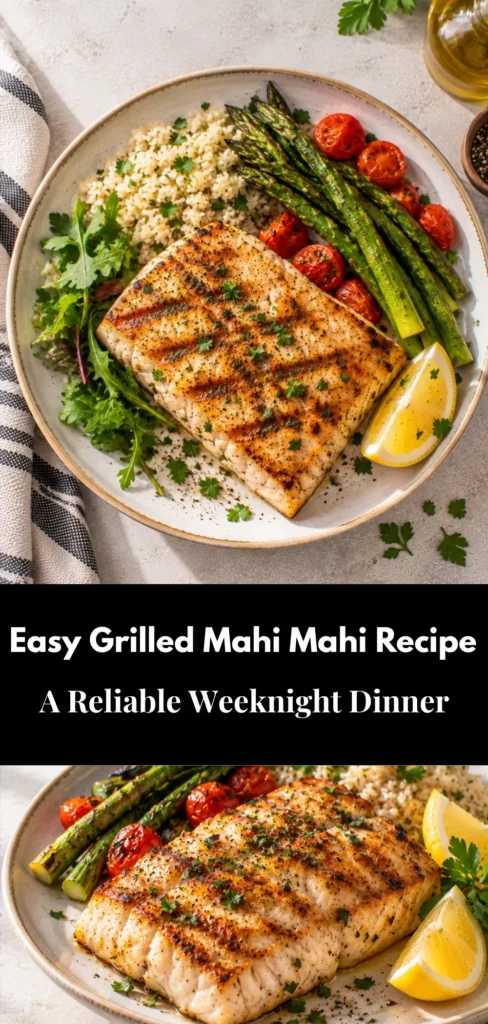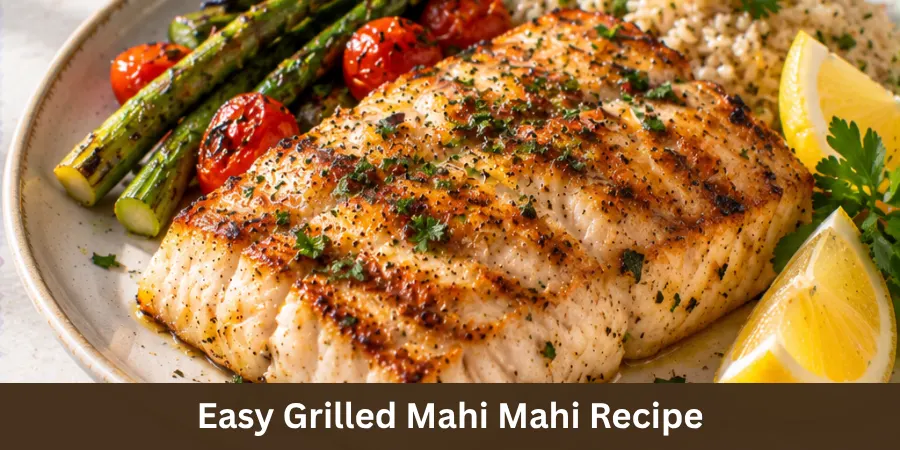
Mahi mahi is a white fish with firm flesh and a moist texture, which makes it ideal for grilling. Its firm structure helps it hold together well over medium-high heat, while a light coating of olive oil, lemon juice, garlic powder, paprika, and the other seasonings adds plenty of flavour without covering up the natural taste of the fish.
I especially like this combination because it keeps the preparation simple while giving the fillets a savoury, lightly spiced, lemon-bright finish.
Grilled Mahi Mahi-The Short Answer
For this easy recipe, prepare the mahi mahi fillets with the seasoning mixture, then place them on a properly heated grill, whether you are using an outdoor grill or a stovetop grill pan. A light brush of olive oil helps create an even coating and reduces sticking, while avoiding unnecessary movement allows the surface to sear properly.
For approximately ½-inch fillets, the engineered starting point is about four minutes on the first side and three minutes on the second side. The fish should be removed when it reaches 145°F / 63°C rather than relying on cooking time alone, which helps prevent it from becoming dry or rubbery.
Once grilled, the fish should be firm, opaque, and easily flaky. Serve it with grilled lemons for a bright citrus topping and fresh lemon finish that balances the seasoning.
Mahi mahi can also be pan-fried or baked when grilling is not practical. The firm fish and simple seasoning make this preparation suitable for an easy dinner any time of year.
Why This Recipe Works
Mahi mahi can seem a little intimidating if you are not used to preparing fish at home, but the good news is that this recipe is surprisingly simple.
You do not need special techniques or complicated equipment. With a properly heated grill and the right seasoning, you can make a flavorful dinner without much effort.
The fish has a mild flavour, so the seasoning adds warmth and savoury notes without overpowering its natural taste.
What I especially like about mahi mahi is its firm flesh and flaky texture, which helps it hold together on the grill instead of breaking into falling-apart pieces.
A balanced spice blend adds savoury depth and helps the surface develop a light sear without making the fish feel heavy.
From my experience, the key is to keep the fish dry, use a clean lightly oiled grate, and avoid moving it too early. That simple approach makes this seafood easy to prepare and gives you a nicely cooked result.
Ingredients Needed
3 mahi mahi fillets, approximately 6 oz / 170 grams each
2 tablespoons extra-virgin olive oil
1 tablespoon freshly squeezed lemon juice
½ teaspoon kosher salt
¼ teaspoon black pepper
1 teaspoon garlic powder
1 teaspoon paprika
½ teaspoon dried oregano
½ teaspoon ground cumin
A pinch of cayenne pepper
1 lemon
1–2 tablespoons chopped fresh parsley
Ingredients Notes
The 3 mahi mahi fillets are the main ingredient in this recipe. Each fillet should weigh approximately 6 oz / 170 grams, with a preferred thickness of about ½–¾ inch because this makes the cooking process more predictable.
Skinless fillets are easiest to handle, but skin-on fillets can also be used.
If the fish is frozen, defrost it in the refrigerator before cooking, then pat the fillets thoroughly dry. Removing excess moisture helps the seasoning and oil coating stay on the surface and supports better grilling.
The seasoning mixture combines extra-virgin olive oil, fresh lemon juice, kosher salt, black pepper, garlic powder, paprika, dried oregano, ground cumin, and a pinch of cayenne pepper.
This combination creates savoury, herbal, warm, and mildly spicy notes while allowing the natural flavour of the mahi mahi to remain noticeable.
The olive oil helps create an even coating and reduces the risk of the fish sticking to the grill.
Lemon juice adds acidity and brightens the dish without requiring a long acidic marinade.
The seasoning mixture should be combined in a small bowl and brushed evenly over both sides of the fillets. A thin coating is enough; there is no need to leave the fish in a long marinade.
Use 1 lemon for the fresh lemon finish.
Use 1 tablespoon of fresh lemon juice for the seasoning mixture, then cut the remaining lemon into halves or wedges for grilling and serving.
The grilled lemon develops a lightly charred citrus flavour and works as a simple garnish.
Finish each serving with 1–2 tablespoons chopped fresh parsley for added herbal freshness.
How to Make Grilled Mahi Mahi
Start by preparing the mahi mahi fillets. Pat the fillets thoroughly dry with paper towels before adding the seasoning mixture.
For 3 mahi mahi fillets, combine:
- 2 tablespoons olive oil
- 1 tablespoon lemon juice
- ½ teaspoon kosher salt
- ¼ teaspoon black pepper
- 1 teaspoon garlic powder
- 1 teaspoon paprika
- ½ teaspoon dried oregano
- ½ teaspoon ground cumin
- A pinch of cayenne pepper
in a small bowl.
Mix the seasoning mixture until all ingredients are evenly distributed.
Brush the mixture evenly over both sides of the fish fillets. The goal is to create a thin, even coating that adds flavour while allowing the natural taste of the mahi mahi to remain noticeable.
Avoid leaving excess seasoning mixture underneath the fish because a light coating is enough. Too much mixture can interfere with proper contact between the fish and the grill surface.
Preheat a gas grill, electric grill, or stovetop grill pan to medium-high heat.
Before cooking, lightly oil the grill grate to help reduce sticking.
Place the seasoned mahi mahi fillets on the hot surface and avoid moving them too soon.
Allowing the fish to stay in place helps the surface develop a proper sear and makes it easier for the fish to release naturally from the grill.
If using skin-on mahi mahi, begin cooking with the skin side down.
For approximately ½-inch fillets, use about 4 minutes on the first side as the starting point.
Turn the fish over once and cook the second side for about 3 more minutes.
These times are an engineered starting point rather than a fixed rule for every fillet because cooking time can change depending on fillet thickness and grill heat.
Thicker fillets may require additional cooking time, while thinner fillets may cook faster.
The most reliable indicator is the final internal temperature rather than time alone.
The mahi mahi is ready when the flesh becomes firm, opaque, and cooked through.
The surface should develop golden grill marks while the inside remains moist and flaky.
Check the thickest part of the fish using an instant-read thermometer and confirm that the internal temperature reaches 145°F / 63°C.
If the grill becomes too hot during cooking, reduce the heat to medium instead of allowing the outside of the fish to darken too quickly.
Controlling the heat helps the fish cook evenly and reduces the risk of the exterior becoming overdone before the centre is finished.
While the fish is cooking, prepare the grilled lemons.
Place the lemon halves or wedges cut side down on the grill and allow them to char until they develop visible grill marks and a warmer citrus flavour.
Once the mahi mahi reaches the correct internal temperature, transfer it to a serving plate.
Finish the fish with fresh lemon juice, grilled lemon, and chopped fresh parsley.
The grilled lemon adds a lightly charred citrus note that balances the savoury seasoning and complements the mild flavour of the fish.
Alternative Cooking Methods
Pan-Frying
If grilling is not practical, pan-frying is another simple way to prepare mahi mahi.
Season the fish fillets with salt, pepper, and garlic powder.
Heat a suitable cooking fat in a nonstick skillet over medium heat.
Add the fish to the skillet and cook for 3–4 minutes per side or until the fish is cooked through.
The exact amount of cooking fat can be adjusted depending on the size of the skillet and the amount needed to lightly coat the cooking surface.
Once cooked, transfer the fish to plates and drizzle the pan sauce over the top.
This method provides a straightforward alternative when an outdoor grill or grill pan is not available.
Baking
Baking is another option for preparing seasoned mahi mahi fillets.
Place the seasoned fillets on a parchment-lined rimmed baking sheet.
Bake the fish uncovered in a preheated oven at 425°F for approximately 15 minutes.
There is no need to flip the fish during baking.
Instead of relying only on cooking time, check the internal temperature and make sure it reaches 145°F / 63°C.
The fish should be firm, opaque, and easily flake with a fork when it is properly cooked.
Both alternative cooking methods provide a simple way to prepare the fish when grilling is not being used.
Regardless of the cooking method, checking the internal temperature is the most reliable way to confirm that the mahi mahi is fully cooked.
Variations To Try
For a smoky variation, replace regular paprika with smoked paprika.
This creates a deeper smoky flavour while keeping the rest of the seasoning approach the same.
For additional heat, add either a pinch of cayenne pepper or ¼ teaspoon of red pepper flakes.
Use only one of these options unless you prefer a noticeably hotter flavour.
The fresh parsley remains a simple herb garnish that adds freshness after cooking.
Finish the grilled mahi mahi with fresh lemon juice and grilled lemon.
The lemon adds brightness and helps balance the savoury seasoning without overpowering the natural flavour of the fish.
Where to Buy Mahi Mahi
When buying mahi mahi, look for fillets that are fresh and firm. A local fish market or grocery store may have fresh fish available.
Frozen fillets are also an excellent option when fresh mahi mahi is not available. Wild-caught frozen fillets can work well for this recipe.
Before grilling, defrost them in the refrigerator overnight so they are fully thawed and cook evenly.
How to Season Grilled Mahi Mahi
For this recipe, combine olive oil, lemon juice, kosher salt, black pepper, garlic powder, regular paprika, dried oregano, ground cumin, and a pinch of cayenne pepper.
Brush the mixture evenly over both sides of the mahi mahi fillets.
This combination creates a savoury, lightly spiced coating with warm herbal notes while allowing the natural flavour of the fish to remain noticeable.
If you want a smoky variation, replace regular paprika with smoked paprika. Smoked paprika is a variation rather than part of the base seasoning.
How Long to Grill Mahi Mahi
Preheat your gas grill, electric grill, or stovetop grill pan to medium-high heat.
Brush the fillets with the seasoning mixture and place them on the hot grill.
For approximately ½-inch fillets, start with about 4 minutes on the first side and 3 minutes on the second side.
Cooking time can vary depending on thickness and grill heat, so use the internal temperature as the final guide. The fish should reach 145°F / 63°C in the thickest part.
Once ready, finish the fish with fresh lemon juice while it is still hot. Avoid overcooking because mahi mahi can become dry.
Serving Ideas
Grilled mahi mahi is best served with fresh and simple sides that complement the mild flavour of the fish without overpowering it.
Grilled asparagus makes a simple side option, especially when served with fresh parsley and lemon.
You can also serve the fish with grilled zucchini, grilled lemon, or a simple side salad. These options keep the meal straightforward while adding variety to the plate.
For a fresh finish, add a wedge of lemon or a light squeeze of lemon juice over the cooked fish.
The grilled lemon develops a mild charred citrus note, while the parsley adds herbal freshness that balances the savoury seasoning.
Storage Instructions
Grilled mahi mahi is best enjoyed fresh from the grill, but leftovers can still make a delicious lunch or easy dinner the next day.
Allow the fish to cool completely before transferring it to an airtight container.
Keep the cooked mahi mahi in the refrigerator for up to 3 days.
For reheating, use a skillet over low heat and warm the fish gently to help prevent it from becoming dry.
You can also enjoy cold leftover mahi mahi by serving it flaked over a salad.
When reheating, avoid overheating the fish because mahi mahi is naturally lean and can become dry if exposed to excessive heat.
Tips
For the best results, start with good-quality mahi mahi.
It can sometimes be difficult to judge fish quality at first glance, so buying from a trusted fishmonger or reliable seafood supplier that supports sustainable sourcing can remove much of the guesswork when purchasing seafood.
If fresh mahi mahi is not available in your area, frozen fillets are an excellent alternative.
Thaw the fish completely in the refrigerator and pat it dry before seasoning and grilling.
This helps the seasoning and oil coating stay on the surface and supports better cooking results.
Before cooking, clean the grill grates and lightly oil them.
A folded paper towel can be used to spread the oil evenly across the grates, helping reduce sticking caused by leftover residue.
Since mahi mahi is naturally lean and cooks quickly, use a properly heated grill and keep a close eye on the fish.
The hot grill helps develop a flavorful exterior while keeping the inside tender and moist.
Stay nearby and pay attention if you notice flare-ups or hot spots.
If necessary, move the fish away from excessive heat to prevent scorching and promote more even cooking.
A large thin grilling spatula makes flipping easier because it can slide underneath the whole fillet cleanly and help keep it in one piece.
Once the fish is on the grill, avoid trying to move it too early.
When it is ready to flip, the fish should release naturally from the grates.
If you force it before it releases, the fillet can tear.
A single controlled flip is preferable to repeatedly turning the fish.
If the grill becomes too hot, reduce the heat to medium before flipping.
You can also prepare this recipe with other white fish such as cod or halibut if the fillets are about ½-inch thick.
A stovetop grill pan is another suitable option, and a pan that accommodates three fillets works well for this recipe.
Notes
This recipe is easy to make, but it is important to keep a close eye on the fish as it cooks.
Cooking time can vary depending on fillet thickness and grill heat, so the 4-minute first side and 3-minute second side timing should be treated as a starting point rather than an absolute rule. The fish is ready when its internal temperature reaches 145°F / 63°C.
Preheat the grill until fully heated, then clean the grill grates and lightly grease them with olive oil to reduce sticking. Seasonings such as salt are guidelines, so adjust according to taste.
Fresh mahi mahi or frozen mahi mahi can be used. If using frozen fish, defrost it in the refrigerator overnight and pat it dry before seasoning.
For a burst of flavour, finish the fish with lemon. The grilled lemon adds a lightly charred citrus note that works well with the savoury seasoning.
Tools for this recipe include:
- A grill
- Tongs or a large thin spatula for flipping the fish
- A knife for preparing lemons and garnishes
- An instant-read thermometer for checking doneness
- A serving plate
To pan-fry this fish, season the fillets with salt, pepper, and garlic powder. Heat a nonstick skillet over medium heat, add a suitable cooking fat, and cook the fish for 3–4 minutes per side.
Transfer the fish to plates and drizzle with pan sauce. To bake, place seasoned fillets on a parchment-lined rimmed baking sheet.
Bake uncovered for about 15 minutes in a preheated 425°F oven. Check with a thermometer and cook until the internal temperature reaches 145°F / 63°C.
The fish should be firm, opaque, and flake easily with a fork. Other white fish such as cod and halibut can work when they are about ½-inch thick.
A stovetop grill pan can accommodate three fillets, while a larger grill can cook more fillets with the remaining ingredients adjusted accordingly. Store leftovers in an airtight container in the refrigerator for up to three days.
To reheat, use the microwave while covered or gently reheat the fish in a skillet. You can also flake the fish and use it as a salad topping.
Nutrition Insight
One serving of 1 fillet contains approximately:
- Calories: 233 kcal
- Protein: 31 g
- Total Fat: 10 g
- Saturated Fat: 2 g
- Carbohydrates: 2 g
- Fiber: 1 g
- Sodium: 357 mg
- Cholesterol: 102 mg
- Sugar: 0 g
These nutrition values are calculated estimates based on the exact recipe formula. Actual amounts may vary slightly depending on the specific mahi mahi, olive oil, and kosher salt used.
FAQ’s
How do I know when the fish is done?
Check the thickest part of the fish with an instant-read thermometer. The internal temperature should reach 145°F / 63°C. The flesh should be firm, opaque, and easily flake with a fork.
Can I use fresh garlic?
The base recipe uses garlic powder as part of its seasoning blend. Fresh garlic is not included in the engineered base formula.
Is it OK to use frozen fish?
Yes. If using frozen fish, thaw it overnight in the refrigerator until fully thawed. Pat it thoroughly dry before seasoning and grilling.
How long can I keep the leftovers?
Allow the fish to cool, then place the leftovers in an airtight container in the refrigerator for up to three days.
To reheat, use a covered container in the microwave or gently reheat it in a skillet. Avoid overheating so the fish does not become dry. You can also flake the leftover fish and serve it cold as a salad topping.
Pinterest Pins