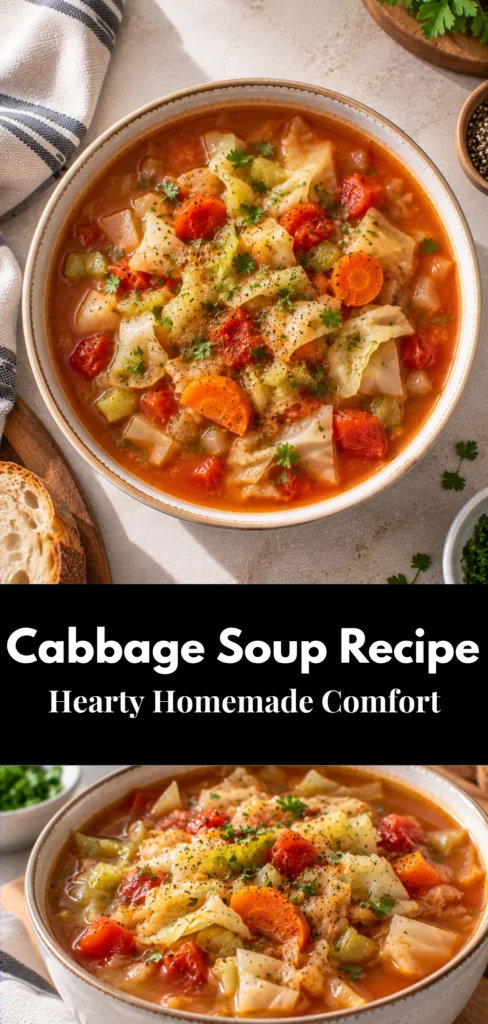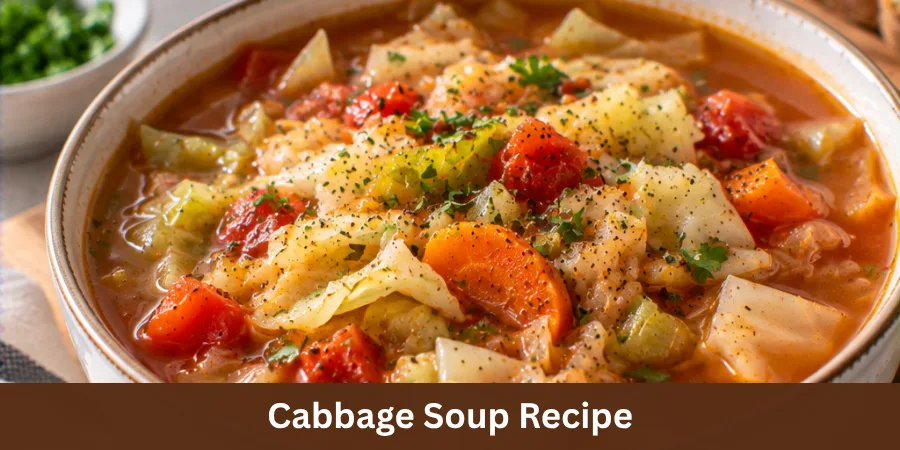
This Cabbage Soup recipe is a delicious and healthy way to enjoy a bowl of tender vegetables on cold fall and winter days. It is nourishing, warming, and full of comforting flavours, making it an easy meal for lunch or dinner.
If you have a head of cabbage in the fridge, this no-fuss recipe is a must-try for the whole family. It uses simple, wholesome ingredients that are easy to prepare in your kitchen.
Cabbage Soup Recipe-The Short Answer
Cabbage can sometimes seem bland or unexciting, but this brothy soup develops plenty of depth as the vegetables cook. The flavour comes together through layers of seasonings, garlic, ginger, and other vegetables, creating a satisfying taste without making the method complicated.
Start by chopping the vegetables, briefly cooking the garlic and ginger, then sautéing the vegetables until they soften and develop light browning. After adding the tomatoes and seasonings, add the cabbage and broth to the pot and simmer until the cabbage becomes tender.
If needed, the cabbage can be added in batches as it begins to wilt and creates more space in the pot.
Once everything is cooking, the soup is on its way to becoming a warming and flavourful meal. Let it simmer for about 30–40 minutes, checking the cabbage around the 30-minute mark rather than relying on a fixed time.
I like this approach because the vegetables develop deeper flavour while the cabbage still keeps its shape. Whip up a batch when you want something cozy and practical, then enjoy it again later.
The result is a soup packed with flavour and ready in around half an hour to 40 minutes, depending on how quickly the cabbage becomes tender.
Why You’ll Need
I especially like this cabbage soup recipe for meal prep because it stores well and makes an easy option for light lunches throughout the week.
With simple ingredients and a straightforward method, it is easy to make without requiring much fuss. I often prepare a big batch on the weekend so there is a comforting meal ready for busy nights or whenever I need something warm and satisfying.
The flavour is what makes this soup stand out. It is anything but bland, with garlicky, herby, and vegetable goodness balanced by the gentle brightness of lemon juice.
While it simmers, the inviting smell can fill the house, which makes it feel especially comforting.
It works well as a light lunch, a comforting starter with your favourite dinner recipes, or a simple part of dinner when you want the best kind of homemade soup without unnecessary complexity.
Ingredients Needed
- 2 tablespoons olive oil — 30 ml / approximately 27 g
- 1 medium-large yellow onion, diced — 190 g
- 3 medium carrots, sliced — 240 g
- 3 celery stalks, sliced — 100 g
- 1 medium green bell pepper, diced — 150 g
- 5 garlic cloves, minced — 15 g
- 1 teaspoon freshly grated ginger — 5 g
- 1 small-to-medium green cabbage, trimmed and chopped — 675 g
- 225 g frozen green beans
- 1 can diced tomatoes with juices — 793 g / 28 oz
- 1 can tomato sauce — 227 g / 8 oz
- 1,420 ml broth
- ½ tablespoon smoked paprika — 3.5 g
- 1 teaspoon dried oregano — 1 g
- ½ teaspoon dried thyme — 0.5 g
- ¼ teaspoon ground black pepper — 0.6 g
- ½ teaspoon fine salt initially — approximately 3 g
- 1 tablespoon lemon juice — 15 ml
- 15 g fresh parsley, finely chopped
Ingredients Notes
Start with 2 tablespoons olive oil, which provides the cooking base for the vegetables and aromatics. The oil helps the vegetables soften while they develop light browning, creating the savoury foundation of the soup.
The vegetable base is built from a mirepoix of yellow onion, carrots, and celery, along with green bell pepper, garlic, and ginger. These ingredients add layers of flavour as they cook together.
The onion, carrots, celery, and bell pepper should be sautéed until they soften and develop some light browning. This step builds a deeper savoury flavour before the broth and tomatoes are added.
Garlic and ginger are cooked briefly before adding the remaining vegetables. Cooking them for the right amount of time helps release their aroma without burning them.
The main vegetable is 1 small-to-medium green cabbage, trimmed and chopped into approximately 2.5 cm / 1-inch pieces.
Cabbage remains the dominant vegetable in this soup and provides the tender texture that defines the recipe.
Add 225 g frozen green beans for additional vegetable texture and variety.
The green beans are added during the final 8–10 minutes of simmering so they become tender while still keeping their shape and texture.
The tomato and broth base uses diced tomatoes with their juices, tomato sauce, and broth.
The diced tomatoes provide the main tomato flavour and acidity, while the tomato sauce gives the broth a smoother body.
For the broth, use vegetable broth for a vegetarian version or chicken broth for a non-vegetarian version.
The seasoning mixture includes smoked paprika, dried oregano, dried thyme, black pepper, and salt.
Smoked paprika adds a deeper savoury note, while oregano and thyme provide herbal flavour.
Start with the specified amount of salt, then adjust after tasting because broth and canned tomatoes can contain different levels of sodium.
Add 1 tablespoon lemon juice after cooking to brighten the finished soup.
The lemon juice helps balance the flavours and prevents the broth from becoming too heavy.
Finish the soup with 15 g finely chopped fresh parsley for a fresh herbal touch.
How to Make Cabbage Soup
Start by preparing all the vegetables so everything is ready before cooking.
Mince the garlic cloves, dice the onion and green bell pepper, peel and slice the carrots, slice the celery, and chop the cabbage into approximately 1-inch pieces.
In a large pot or Dutch oven, heat the olive oil over medium heat.
Add the garlic and ginger and cook for 45–60 seconds, stirring continuously, until fragrant.
Add the onion, carrots, celery, and green bell pepper. Sauté for 8–10 minutes, stirring periodically, until the vegetables are softened and develop some light browning around the edges.
Add the diced tomatoes with their tomato juices along with the tomato sauce, smoked paprika, oregano, dried thyme, and black pepper.
Stir well and cook for 1–2 minutes so the seasonings blend into the tomato base.
Add the chopped green cabbage.
If the pot is too full to stir comfortably, add half the cabbage first and let it wilt slightly before adding the remaining cabbage.
Pour in the vegetable broth or chicken broth and stir gently.
Increase the heat to medium-high and bring the soup to a boil.
Once boiling, reduce the heat to medium-low.
Place the lid on the pot and let the soup simmer for approximately 30–40 minutes, stirring once or twice during cooking.
Start checking the cabbage at about the 30-minute mark and continue cooking until it reaches your desired tenderness.
Add the frozen green beans during the final 8–10 minutes of simmering so they become tender while retaining their shape and texture.
Once the vegetables are ready, season with salt, starting with ½ teaspoon, then adjust the seasoning to taste.
Add lemon juice at the end and stir it through the broth.
The finished soup should taste bright and balanced rather than strongly lemony.
Finish with fresh parsley as a garnish.
Serve hot with crusty bread for dipping.
For leftovers, allow the soup to cool before transferring it to airtight containers.
Store it in the refrigerator for up to 5 days or freeze it for up to 3 months for best quality.
Tips
Start with a pot that is large enough for this recipe.
The full batch produces about 3.2–3.5 liters of soup, so a 6-quart or larger Dutch oven or soup pot gives the chopped cabbage enough room.
If your pot is smaller, cut the recipe in half.
Let the sautéed vegetables brown lightly over medium heat to develop more flavour and some browning, but do not cook them until they become dry.
Add the chopped cabbage in batches if needed, stirring each batch into the broth as it wilts.
The simmering time can vary depending on the size of the cabbage pieces, pot material, and stove, so use tenderness as the final guide.
The soup is ready when the cabbage is tender but still holds recognizable pieces.
Season with salt and pepper according to taste.
Start with the specified amount of salt and adjust gradually after tasting because regular broth, low-sodium broth, homemade broth, and canned tomatoes can contain different amounts of sodium.
If the soup tastes too acidic, first check the salt balance.
If needed, add a small amount of broth and adjust the seasoning gradually rather than adding a large amount of sweetener.
The base soup is a lighter vegetable soup, but it can become more satisfying with optional additions.
For a hearty cabbage soup, add chopped potatoes or diced potatoes with the cabbage.
Cooked rice or cooked orzo can also be added during the last few minutes of cooking.
For extra protein, use a cabbage soup with meat by adding cooked meats such as shredded chicken breast, pulled pork, browned ground beef, or ground turkey.
For a meatless option, use rinsed and drained canned white beans, kidney beans, or chickpeas.
Add beans during the last 5 minutes or final 5–10 minutes of cooking time so they can heat through without unnecessary overcooking.
This soup is also useful for using extra vegetables from the refrigerator.
Green beans, peas, bell pepper, and leafy greens such as spinach and kale are suitable additions.
For subtle heat, add red pepper flakes to taste.
Fresh herbs can brighten the finished soup.
Use 1½ tablespoons chopped fresh thyme instead of dried thyme, or choose fresh thyme, basil, oregano, or rosemary.
When turning the soup into a meal or light dinner, leftover shredded chicken or ground beef can be added as an optional protein.
Potatoes make the soup more substantial when added with the cabbage, while white beans should be added toward the end.
This keeps the optional ingredients from changing the carefully balanced base soup more than necessary.
Notes
For a hearty cabbage soup, I like to start with the basic recipe as a lighter vegetable soup, then make it more satisfying when needed.
Add chopped potatoes to the pot with the chopped cabbage, or stir in cooked rice or cooked orzo during the last few minutes of cooking.
For extra protein, you can turn this into cabbage soup with meat by adding cooked meats such as shredded chicken breast, pulled pork, browned ground beef, or browned ground turkey.
These additions create a more filling bowl without changing the character of the soup.
For a meatless version, use rinsed and drained canned white beans, kidney beans, or chickpeas.
Add them during the last 5 minutes of cooking time so they can heat through without becoming too soft.
This soup is also a practical way to use extra vegetables already in the refrigerator.
Green beans, peas, bell pepper, and leafy greens such as spinach or kale are all useful additions.
If you want subtle heat, add red pepper flakes to taste.
Storage and Serving
For the tomato base, petite diced tomatoes are my usual choice, although regular canned diced tomatoes also work well.
The tomato sauce adds a smoother tomato body alongside the diced tomatoes.
The secret ingredient is lemon juice added at the end.
Just a little bit brings brightness to the soup and keeps the flavours from becoming too heavy.
To store leftovers, place them in an airtight container in the fridge where they stay fresh for up to 5 days, making the soup convenient for meal prep.
To reheat, warm the desired portion on the stove or in the microwave.
The flavours can be even better the next day as the ingredients continue to come together.
To freeze, transfer the cooled soup to a freezer-safe container or zip lock bags and keep it for up to 3 months.
A serving size of approximately 2 cups / 480 ml per person works well as a light starter, while adding leftover proteins can turn it into a more substantial meal.
Nutrition Notes
This recipe makes 6 servings with a standard serving size of about 2 cups / 480 ml.
Each serving provides approximately:
- 235 kcal
- 39 g carbohydrates
- 7 g protein
- 8 g total fat
- 1 g saturated fat
- 11 g fiber
- 19 g total sugars
It also contains approximately:
- 1,050 mg sodium
- 1,250 mg potassium
- 145 mg calcium
- 3 mg iron
- 125 mg vitamin C
- 10,000 IU vitamin A
- 0 mg cholesterol
These nutrition figures are estimates for the base vegetable version and are based on the specified ingredient quantities.
The sodium amount can vary depending on the broth and canned tomato brands used.
If you make a variation with chicken, beef, beans, potatoes, or other additions, the nutrition profile will change and should not be treated as identical to the base recipe.
FAQ
How should I cut cabbage for soup?
When making this cabbage soup recipe, start with a whole head of cabbage.
Remove the outer leaves and core, then cut the cabbage into approximately 2.5 cm / 1-inch pieces.
Keeping the pieces similar in size helps them cook evenly and gives the soup a consistent texture.
What can I serve with cabbage soup?
For what to serve on the side, crusty bread or dinner rolls work well.
They add some heft to the meal and are ideal for helping soak up the flavorful broth.
The soup is satisfying enough to stand on its own, so a simple side is all you need.
How should I store cabbage soup?
To store the cabbage and vegetable soup, let it cool completely before transferring it to an airtight container.
Refrigerate it for up to 5 days.
When you are ready to eat it, reheat the amount you need in a medium pot or large pot over medium-low heat on the stovetop.
Gentle reheating helps keep the vegetables from becoming overly soft.
Can I freeze cabbage soup?
The soup also freezes well.
For convenient storage, divide it into individual portions or larger portions and place them in suitable freezer bags or freezer-safe containers.
I prefer single servings because they make it easy to thaw only what is needed.
For best quality, freeze the soup for up to 3 months.
Thaw it overnight in the refrigerator, then reheat on the stove until hot throughout.
Is cabbage soup nutritious?
Made with fresh vegetables such as cabbage, carrots, celery, bell pepper, and green beans, this recipe provides a hearty vegetable-based meal with useful nutrients and fiber.
It is a practical way to enjoy hearty vegetables in a flavorful, brothy soup without making the dish overly complicated.
Pinterest Pins