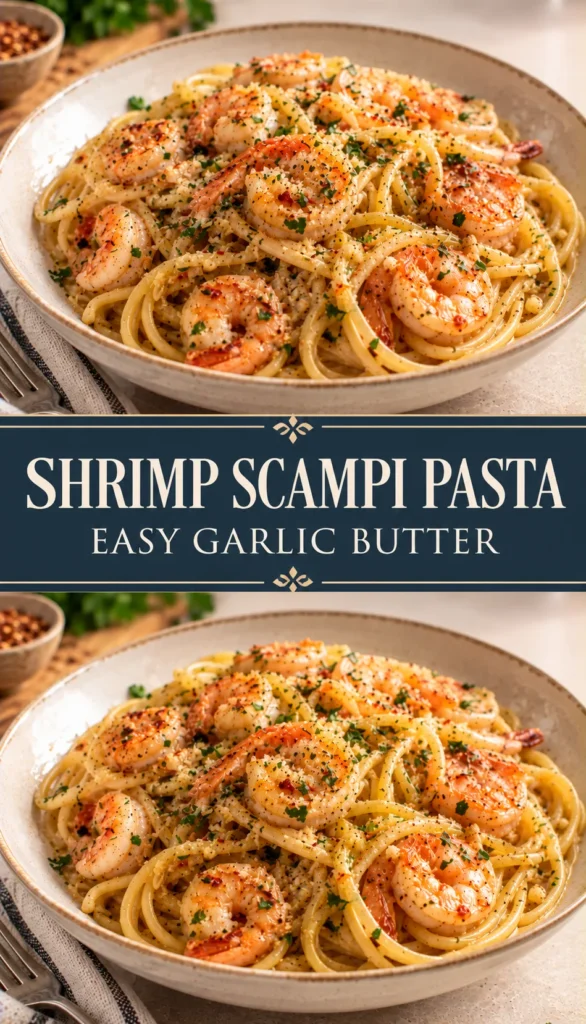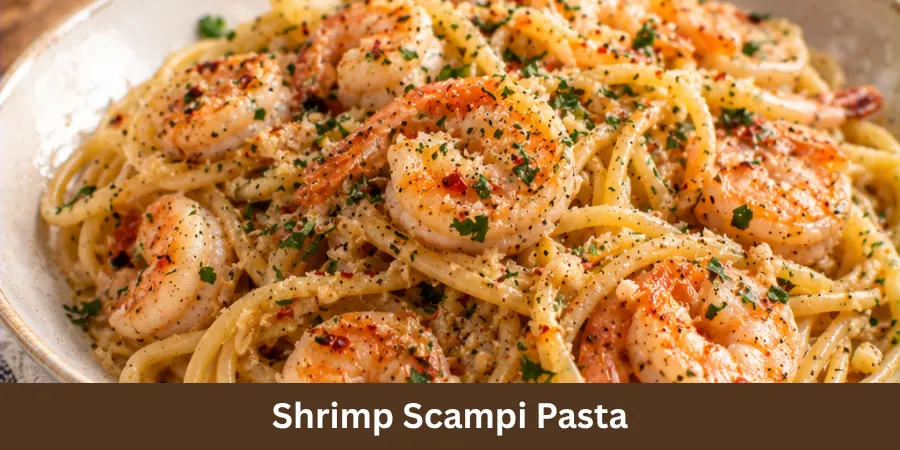
When I want a fast and easy dinner that still feels luxurious, Shrimp Scampi Pasta is a reliable choice. This recipe brings together plump shrimp, pasta, garlic, lemon juice, and butter to create a rich yet balanced sauce.
A splash of white wine can add a bright layer of flavor, while fresh lemon helps balance the richness of the butter. The shrimp are cooked separately and removed as soon as they become pink and opaque, which helps keep them tender instead of rubbery.
Shrimp Scampi Pasta-The Short Answer
The finished dish has a rich and buttery texture with vibrant lemon-garlic flavor. Reserved pasta water is especially useful here because its starch helps the sauce cling to the pasta while allowing you to adjust the consistency gradually.
A little Parmesan adds savory depth, while fresh parsley gives the sauce a lighter herbal contrast.
This is a perfect option for busy weeknight meals when you want something quick and comforting without complicated preparation.
The combination of tender shrimp, al dente pasta, and a smooth lemon-garlic sauce makes it easy for the whole family to enjoy.
Why You’ll Love This Shrimp Scampi Pasta
If you want a seafood meal that feels special without leaving home, this shrimp scampi pasta is an easy choice.
It combines everyday ingredients such as lemon, garlic, and buttery sauce elements to create a dish with a restaurant-quality feel.
This Italian-American classic uses a straightforward cooking process, so you can prepare a polished dinner without complicated techniques.
I especially like this simple recipe for guests because it looks gourmet and impressive while still being practical for home cooking.
It works well as a main course and is a useful addition to any seafood dinner repertoire.
This pasta is also a perfect option for a busy weeknight when you want something nourishing and hearty without spending hours in the kitchen.
The shrimp are cooked separately so their texture can be controlled before they are returned to the sauce, while reserved pasta water helps create the right consistency.
In my experience, homemade shrimp pasta is a practical choice because it can deliver a flavorful restaurant-style meal using simple ingredients at home.
You can also think of it as a bistro shrimp pasta recipe with simple ingredients, a rich lemon-garlic profile, and a practical cooking method that makes it enjoyable to prepare.
Ingredients Needed
1 pound / 454 grams raw large shrimp, peeled, deveined, tails removed
2 tablespoons olive oil (28 grams)
4 tablespoons unsalted butter (56 grams), divided
6 large garlic cloves, finely minced (about 18 grams)
1/2 teaspoon crushed red pepper flakes (about 1 gram)
1 teaspoon Italian seasoning (about 2 grams)
1/2 cup low-sodium chicken broth or seafood broth (120 ml)
3 tablespoons fresh lemon juice (45 ml)
1 teaspoon finely grated lemon zest (about 2 grams)
1/2 teaspoon fine salt
1/4 teaspoon black pepper
12 ounces linguine (340 grams)
3–4 liters water for pasta
28–30 grams salt for pasta water
1 cup reserved pasta water (240 ml)
1/4 cup freshly grated Parmesan cheese (about 25 grams)
1/4 cup fresh parsley (approximately 15 grams)
Lemon wedges, for serving
Optional:
Fresh basil or chives
Ingredients Notes
For this shrimp scampi pasta, use 1 pound or 454 grams of raw large shrimp.
The recommended size is 26–30 shrimp per pound because it gives the shrimp enough size to stay tender while cooking quickly.
The shrimp should be peeled, deveined, and have the tails removed before cooking.
Frozen shrimp can also be used when completely thawed and patted dry before cooking.
Smaller shrimp work as well, but they will need less cooking time.
The sauce uses 2 tablespoons olive oil and 4 tablespoons unsalted butter.
The olive oil provides the cooking fat for sautéing, while the butter gives the sauce its classic richness.
Divide the butter into two portions: 2 tablespoons for cooking the shrimp and 2 tablespoons for finishing the sauce.
Use 6 large garlic cloves, about 18 grams, finely minced.
Garlic creates the main savory flavor base of the sauce and works with the butter, lemon, and herbs to build the classic shrimp scampi flavor.
Add 1/2 teaspoon crushed red pepper flakes for mild heat.
The amount can be adjusted depending on your preferred spice level.
Italian seasoning adds a gentle herb flavor to the sauce.
Use 1 teaspoon, about 2 grams, to complement the garlic, butter, and lemon without overpowering the shrimp.
For the liquid and citrus components, use 1/2 cup low-sodium chicken broth or seafood broth, which equals 120 ml.
Add 3 tablespoons fresh lemon juice and 1 teaspoon finely grated lemon zest.
The lemon cuts through the richness of the butter and keeps the sauce bright without making it overly acidic.
Season the shrimp with 1/2 teaspoon fine salt and 1/4 teaspoon black pepper.
Adjust the final seasoning only as needed because the broth, Parmesan, and pasta water can also contribute salt.
For the pasta, use 12 ounces linguine, or 340 grams.
Spaghetti, angel hair, or fettuccine can also be used as alternatives, and gluten-free pasta works as well.
Cook the pasta in 3–4 liters of water with 28–30 grams salt.
Before draining, reserve 1 cup or 240 ml pasta water.
The pasta starch helps adjust the sauce and allows it to cling to the linguine, so the pasta should not be rinsed after cooking.
Finish with 1/4 cup freshly grated Parmesan, about 25 grams, and 1/4 cup fresh parsley, approximately 15 grams.
The Parmesan adds savory depth and helps with sauce adhesion, while parsley adds freshness and color.
Lemon wedges can be served alongside the finished pasta.
Fresh basil or chives can be used as optional variations, but they are not part of the base recipe.
This quantity makes 4 servings, with approximately 85 g dry pasta and 113.5 g raw shrimp per serving.
How to Make Shrimp Scampi Pasta
For this easy shrimp scampi recipe, begin by getting everything ready before cooking because the shrimp and sauce come together quickly.
If using frozen shrimp, thaw them in a colander under cool water, then pat them dry with paper towels.
If needed, devein the large shrimp during prep.
Have the garlic, red pepper flakes, lemon juice, lemon zest, parsley, Parmesan, and broth measured and ready so you can move smoothly from one step to the next.
Bring a saucepan of water to a boil and season it with salt.
Add the linguine and cook according to the package instructions until al dente.
Before draining, reserve 1 cup of pasta water, then drain the pasta without rinsing it.
Keeping some of this starchy water is important because it helps the sauce adhere to the pasta later and gives the finished dish a smoother, more glossy texture.
If the pasta finishes slightly before the sauce, keep it from sitting dry for too long.
Heat the olive oil and butter in a large skillet over medium-high heat until hot and bubbly.
Add the shrimp, season with salt, pepper, and red pepper flakes, then cook for about 60–90 seconds per side.
As soon as the shrimp become pink and opaque, transfer them to a plate with a slotted spoon.
Avoid letting them overcook because shrimp can quickly become rubbery.
Return the skillet to the heat and add the minced garlic.
Cook for about 30 seconds, just until fragrant without allowing it to brown.
Add the broth, lemon juice, lemon zest, and Italian seasoning.
Lower the heat to medium-low and let the sauce simmer for 3–4 minutes so it reduces slightly and the flavors come together.
Remove the skillet from high heat and swirl in the remaining butter until the sauce becomes smooth and lightly emulsified.
Return the shrimp and their juices to the skillet, then add the cooked linguine and toss everything together.
Start with about 1/3–1/2 cup reserved pasta water and add only what is needed to loosen the sauce and help it coat the pasta.
Finish with Parmesan and chopped fresh parsley, then taste and adjust the salt if needed.
Serve immediately with extra parsley and lemon wedges on the side.
The finished pasta should have a smooth lemon-garlic sauce that coats the linguine while keeping the shrimp tender and the flavors balanced.
Substitutions and Variations
You can easily customize this recipe to suit your tastes without changing the basic cooking method.
If you prefer less spicy flavor, reduce or leave out the red pepper flakes.
For a more herby flavor, add a dash of dried Italian seasoning with the garlic.
White wine gives the sauce a richer quality, but chicken broth can be substituted when needed while keeping the sauce flavorful.
For a gluten-free version, use gluten-free pasta.
A dairy-free version can use plant-based butter in place of regular butter, while omitting Parmesan cheese will make the sauce less savory and cohesive.
You can also replace the shrimp with diced chicken breasts or chicken thighs.
Sauté the chicken until cooked through, with no pink remaining in the middle.
For additional variety, use fresh herbs such as parsley or basil and sauté chopped asparagus with the shrimp for extra produce.
These simple customizations keep the dish delicious while letting you adjust the flavor according to your preference.
Reheating Instructions
For reheating, place the leftover pasta, sauce, and shrimp in a skillet over low to medium-low heat.
If the pasta looks dry, add 15–30 ml of water and gently toss as it warms.
This helps loosen the sauce and bring it back to a smooth consistency without adding extra fat.
Continue to toss slowly until everything is warmed through.
Avoid repeated reheating because the shrimp can become firm and lose their tender texture.
For easy shrimp scampi, gentle heating in a skillet is a simple reheating method that keeps the sauce and pasta together without overheating the seafood.
Storage and Leftovers
If you have leftover shrimp scampi pasta, a few easy steps can help maintain its texture and flavor.
The pasta and shrimp store better when kept separate.
After the shrimp is cooked, refrigerate it in an airtight container within two hours.
Keep the containers sealed in the fridge rather than leaving the food at room temperature.
For the best quality, use the leftovers within up to 3 days.
This is especially helpful with seafood dishes, which are generally best when freshly made.
To reheat, place the food in a small saucepan over low heat and warm it slowly until heated through.
Avoid letting the shrimp overcook because reheating it for too long can make the texture firm and dry.
If the sauce dries out slightly during storage, that is normal.
Add a small amount of water while reheating if needed to loosen the sauce and bring it back to a smoother consistency.
I would not recommend freezing leftover shrimp scampi.
The pasta can lose some of its texture after thawing, while the butter-based sauce may separate and the shrimp can become rubbery.
For this reason, refrigerated leftovers are a better choice when you plan to enjoy the dish again within its recommended storage time.
Expert Tips
For a delicious and easy shrimp scampi, the main thing to watch is overcooking.
Have the ingredients prepared before you start because shrimp cook quickly.
Heat the skillet and sauté the shrimp until they turn pink and opaque.
For the recipe’s large shrimp, cook the first side for 60–90 seconds and the second side for 45–90 seconds, then remove the shrimp from the heat.
This short cooking time helps prevent a rubbery texture.
Already cooked shrimp are more likely to become rubbery with double cooking, so uncooked shrimp are preferred.
For larger shrimp, devein them if the vein is noticeable.
Make a shallow cut along the back, then use the tip of your knife to lift out the vein.
For this recipe, the shrimp are peeled, deveined, and have the tails removed before cooking as part of the standard prep.
If your shrimp are already deveined from the store, you can skip this step.
If you need to remove the tails, doing so before cooking makes the shrimp ready for the main dish rather than serving them as an appetizer.
Start the pasta water before cooking the shrimp so the pasta and sauce can be ready around the same time.
Linguine is used in this pasta dish, while angel hair pasta can be used as an alternative when you want a quick meal, keeping in mind that it cooks much faster.
If you cook with wine, use it as the liquid base, or replace it in an equal ratio with chicken broth, vegetable broth, or seafood broth.
The broth provides a practical alternative while keeping the sauce flavorful.
Notes
If you have leftovers or a leftover portion of shrimp scampi pasta, store the shrimp and pasta separately for better texture.
Once cooked, refrigerate the shrimp in an airtight container within two hours and use it within 3 days for the best quality.
Keep the pasta and sauce in separate containers in the refrigerator.
The sauce may dry slightly during storage, but you can loosen it when reheating.
I prefer heating a little olive oil in a pan over low to medium-low heat, then adding the pasta, sauce, and shrimp.
If needed, add 15–30 ml water and toss gently until everything is warmed through.
Avoid repeated reheating because the shrimp can become rubbery.
This recipe comes together fast, so have the ingredients and equipment ready before you start.
You can use a different size shrimp than suggested, but the cooking time may need to be adjusted if they are much smaller or bigger than 26–30 count.
I often double the recipe for my family, so a large pan makes the job easier.
31–40 count shrimp also work well when you want a smaller bite.
If using frozen shrimp, make sure to thaw them first.
The red pepper flakes add a slight kick, but you can omit them if you prefer a milder dish.
For a gluten-free version, use gluten-free pasta.
For a dairy-free version, use plant-based butter and omit the Parmesan cheese.
These simple swaps keep the dish suitable for different dietary needs without changing its basic preparation.
Nutrition Insight
For one serving of this shrimp scampi pasta, the recipe provides approximately 629 kcal.
Each serving contains:
- 66.6 g carbohydrates
- 41.4 g protein
- 21.9 g total fat
- 5.2 g fiber
- 1.4 g sugar
These values are calculated by dividing the complete recipe into 4 equal servings.
Sodium is approximately 600–650 mg per serving.
The exact amount can vary slightly depending on the pasta, Parmesan, and broth brand used.
FAQ’s
How should I store leftover shrimp scampi pasta?
Store leftovers in an airtight container in the refrigerator for up to 3 days.
For reheating, place the pasta and shrimp in a skillet over low to medium-low heat and warm gently.
If it seems dry, add a little water and toss until the sauce loosens.
Can I use frozen shrimp?
Yes. Thaw, drain, and pat dry the shrimp before cooking.
For a quick method, place the shrimp in a colander under cold running water for a few minutes.
Drying the shrimp well helps maintain better cooking control.
What pasta works best for shrimp scampi?
This recipe uses linguine, but spaghetti and angel hair can also be used.
The sauce coats the pasta well, making it easy to twirl with a fork and enjoy with the shrimp.
Can I make shrimp scampi pasta with gluten-free pasta?
Yes. You can use gluten-free pasta instead of regular pasta.
Cook it according to the package directions, then combine it with the sauce while hot.
Can I use pre-cooked shrimp?
You can, but pre-cooked shrimp can overcook easily.
If using them, heat the shrimp gently in the sauce only until warmed through.
Avoid cooking them longer than necessary to help keep the texture tender.
Pinterest Pins