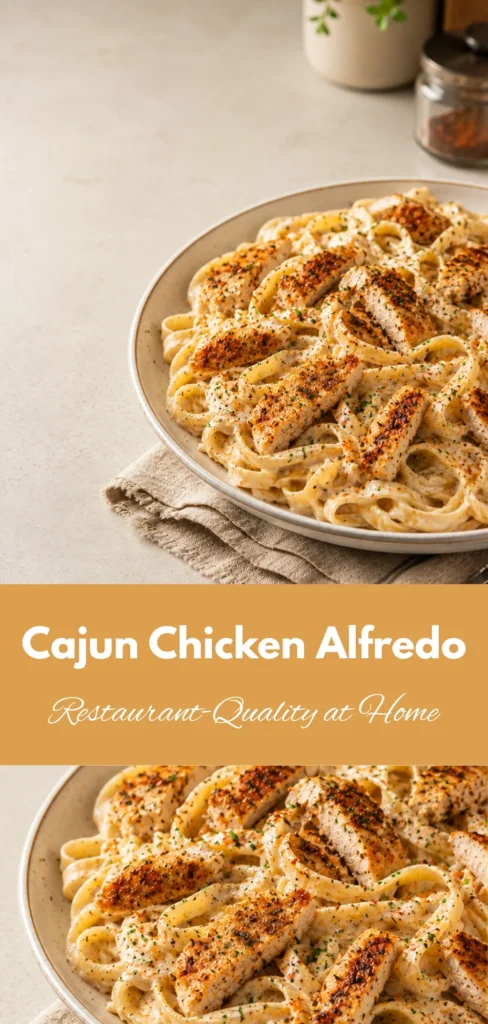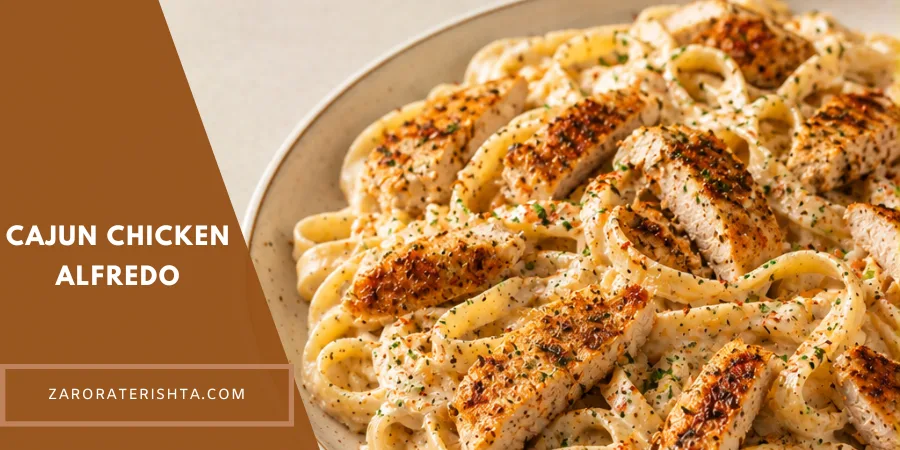
Cajun Chicken Alfredo combines tender Cajun-seasoned chicken with creamy Alfredo sauce and fettuccine for a comforting dinner that feels restaurant-inspired but remains practical for home cooking. The chicken is seared until browned, creating flavorful bits in the skillet that become part of the sauce and add extra savory depth.
The Cajun seasoning brings warmth and a mild kick that balances the richness of the cream and Parmesan. Instead of creating an overly spicy dish, the seasoning is used to add flavor while allowing the creamy Alfredo sauce and tender chicken to remain the main focus.
Cajun Chicken Alfredo-The Short Answer
The sauce comes together with garlic, chicken broth, heavy cream, and freshly grated Parmesan. The browned Cajun residue from the chicken blends into the sauce, while Parmesan gives it body and a smooth texture that coats the fettuccine evenly.
The pasta is cooked separately and kept slightly firm so it can finish cooking in the sauce. Reserved pasta water helps adjust the consistency and allows the sauce to cling to the noodles without becoming too thick or loose.
This Cajun Chicken Alfredo makes approximately 6 servings and works well as a weeknight dinner or a comforting meal for sharing. The combination of seasoned chicken, creamy sauce, and pasta creates a balanced dish with rich flavor and controlled seasoning.
Why This Recipe Works
This recipe works because each component is prepared separately before being combined. Searing the chicken first develops a browned exterior and leaves behind flavorful Cajun bits in the skillet, which become part of the Alfredo sauce rather than being left behind.
The separate pasta method provides better control over both pasta texture and sauce consistency. Cooking the fettuccine slightly less than the final desired doneness allows it to finish cooking while being tossed with the Alfredo sauce.
The Alfredo sauce is designed to stay creamy without becoming overly heavy. Chicken broth helps loosen the sauce and capture the browned skillet flavors, while heavy cream and Parmesan create the smooth, rich texture expected from Alfredo.
Seasoning balance is another important part of the formula. Cajun seasoning is used on both the chicken and sauce, but the recipe accounts for the salt that can already come from Parmesan, broth, and seasoning blends. Tasting before adding additional salt helps maintain a balanced final dish.
The result is a Cajun Chicken Alfredo that combines creamy comfort with savory spice, while keeping the chicken, sauce, and pasta in balance rather than allowing one element to overpower the others.
Ingredients Needed
This Cajun Chicken Alfredo recipe is built around three main components: seasoned chicken, creamy Parmesan Alfredo sauce, and fettuccine. Each ingredient has a specific role in creating the final balance of savory chicken, rich sauce, and properly coated pasta.
For the chicken component, use:
- 1½ pounds (680 g) boneless skinless chicken breasts, cut into 2.5–3 cm bite-size chunks
- 1½ tablespoons Cajun seasoning
- ½ teaspoon kosher salt
- 2 tablespoons olive oil for searing
The chicken should be cut into similar-sized pieces so it cooks evenly. Cajun seasoning provides the main spice profile, while the added salt should be adjusted depending on whether the seasoning blend already contains sodium.
Searing the chicken in olive oil creates a browned exterior and leaves flavorful Cajun bits in the skillet. These browned pieces are important because they add extra savory depth to the Alfredo sauce later.
For the Alfredo sauce, use:
- 1 tablespoon unsalted butter (14 g)
- 6 medium fresh garlic cloves (about 18 g), minced
- ½ cup chicken broth (120 ml)
- 1¼ cups heavy whipping cream (300 ml)
- ½ teaspoon Cajun seasoning
- ¼ teaspoon kosher salt, only if needed
- 1½ cups freshly grated Parmesan cheese (about 150 g)
The butter and garlic create the aromatic base of the sauce, while chicken broth helps loosen the browned Cajun residue from the skillet and incorporates those flavors into the Alfredo.
Heavy cream provides the rich, smooth foundation of the sauce, while Parmesan adds body and the creamy cheesy texture expected from Alfredo. Adding the cheese gradually over very low heat helps it melt smoothly and reduces the chance of clumping.
For the pasta and finishing ingredients, use:
- 1 pound (454 g) dry fettuccine
- ½–¾ cup (120–180 ml) reserved pasta water
- 2 tablespoons fresh parsley (about 8 g), minced
The fettuccine should be cooked slightly less than the final desired doneness because it finishes cooking when combined with the sauce. Reserved pasta water provides starch that helps loosen the sauce and allows it to cling evenly to the noodles.
These quantities create a balanced 6-serving formula using 680 g chicken, 454 g dry pasta, 150 g Parmesan, and 300 ml heavy cream. The result is a creamy Cajun Chicken Alfredo with substantial chicken presence, controlled seasoning, and a sauce consistency that coats the pasta without becoming watery or overly thick.
Variations
The base Cajun Chicken Alfredo formula is designed to stay balanced, but a few adjustments can create different versions while keeping the same cooking approach.
- Chicken Thigh Variation: Replace chicken breasts with boneless skinless chicken thighs for a richer flavor and slightly more tender texture. Keep the same seasoning and cooking method.
- Spicier Cajun Alfredo: Increase the Cajun seasoning slightly or add a small amount of cayenne pepper if you prefer more heat. Adjust gradually because seasoning blends vary in spice level.
- Shrimp Cajun Alfredo: Replace some or all of the chicken with cooked shrimp. Add the shrimp near the final tossing stage so it warms through without becoming overcooked.
- Vegetable Addition: Add cooked vegetables such as broccoli, spinach, or bell peppers for additional color and texture while keeping the Alfredo base unchanged.
- One Pot Adaptation: A one-pot Cajun Chicken Alfredo version is possible, but the separate pasta method remains the primary formula because it provides better control over pasta doneness and sauce consistency.
These variations are optional adjustments rather than changes to the tested base recipe. Keeping the original ingredient balance helps preserve the intended creamy sauce texture and Cajun flavor profile.
How to Cook Cajun Chicken Alfredo
Start by preparing the chicken. Cut 1½ pounds (680 g) boneless skinless chicken breasts into 2.5–3 cm bite-size pieces so they cook evenly. Pat the chicken dry with paper towels, then season it with 1½ tablespoons Cajun seasoning and ½ teaspoon kosher salt, making sure the seasoning is distributed evenly.
Heat 2 tablespoons olive oil in a large 30–32 cm skillet over medium-high heat. Add the chicken in a single layer without overcrowding the pan. Cook for approximately 3–4 minutes on the first side, then turn the pieces and continue cooking for another 2–4 minutes until browned and cooked through.
Check the largest piece with an instant-read thermometer to confirm it has reached 165°F (74°C). Transfer the cooked chicken to a clean plate and allow it to rest for about 5 minutes. Keep the browned Cajun residue in the skillet because it will add important flavor to the Alfredo sauce.
While the chicken cooks, bring 4–5 liters of water to a rolling boil in a large pot. Season the water with approximately 15–18 g kosher salt, then add 1 pound (454 g) dry fettuccine.
Cook the pasta 1–2 minutes less than the package’s stated al dente timing. The noodles should remain slightly firm because they will continue cooking when combined with the Alfredo sauce.
Before draining, reserve 180 ml pasta water. You may not need all of it, but keeping it available gives you better control over the final sauce consistency.
Reduce the skillet heat to medium and add 1 tablespoon (14 g) unsalted butter. Once melted, add 18 g minced garlic and cook for 30–60 seconds, stirring continuously until fragrant.
Avoid letting the garlic become dark brown because burnt garlic can add bitterness to the sauce. Add 120 ml chicken broth and scrape the browned bits from the bottom of the skillet. Allow it to cook for another 1–2 minutes so those flavors become incorporated.
Lower the heat and add 300 ml heavy cream. Stir until the mixture is combined, then allow it to reach a gentle simmer for 2–3 minutes.
The cream should be lightly bubbling rather than boiling aggressively. Controlled heat helps maintain a smooth sauce texture and reduces the chance of separation.
Reduce the heat to very low before adding 150 g freshly grated Parmesan cheese. Add the cheese in 4–5 small portions, stirring after each addition and allowing it to melt before adding more.
Once the Parmesan has melted smoothly, stir in ½ teaspoon Cajun seasoning. Taste the sauce before adding the optional ¼ teaspoon kosher salt because the Parmesan, chicken broth, and seasoning blend may already provide enough salt.
Add the drained fettuccine to the skillet and begin with 60 ml reserved pasta water. Toss continuously for approximately 60–90 seconds so the sauce coats the noodles evenly.
If the sauce appears too thick, add another 15–30 ml pasta water at a time, tossing after each addition. The goal is a glossy Alfredo sauce that clings to the pasta without pooling underneath.
Return the chicken to the skillet and gently toss for 30–60 seconds, just until it is warmed through and coated with the sauce. Finish with 8 g fresh parsley, remove from heat, and serve immediately.
The finished Cajun Chicken Alfredo should have tender chicken, creamy sauce, and fettuccine that remains slightly firm. The sauce should look smooth and glossy rather than watery, dry, or clumped.
Expert Tips for the Best Cajun Chicken Alfredo
For the best chicken texture, cut the pieces into similar sizes before cooking. Uneven pieces can cause some chicken to overcook while others are still finishing. Patting the chicken dry before seasoning also helps create better browning during searing.
Avoid overcrowding the skillet when cooking the chicken. If the pan is too small, cook the chicken in two batches instead of allowing it to steam. The browned Cajun bits left in the skillet are valuable because they add extra flavor to the sauce.
Keep the Alfredo sauce at a gentle heat throughout cooking. Hard boiling the cream or overheating the Parmesan can affect the smooth texture of the sauce. Adding freshly grated Parmesan gradually over very low heat helps it melt evenly.
Freshly grated Parmesan is preferred because some pre-shredded varieties contain anti-caking ingredients that can make the sauce less smooth. Fine grating also helps the cheese incorporate more easily into the cream.
Reserve pasta water every time, even if the sauce initially looks perfect. The starch in the pasta water gives you control over the final consistency and helps the sauce cling to the fettuccine.
Start with 60 ml pasta water and add more only when needed. Adding too much liquid at once can make the Alfredo thinner than intended, while adding it gradually allows you to reach the right creamy texture.
Taste the sauce before adding extra salt. Cajun seasoning, Parmesan, and chicken broth can all contribute sodium, so the final seasoning should be adjusted based on the actual ingredients used.
Serve the pasta immediately for the best texture. Cream-based sauces naturally thicken as they cool, so serving fresh helps maintain the smooth, glossy consistency of the Alfredo.
Notes
Cajun Chicken Alfredo is best served immediately because creamy Alfredo sauce naturally thickens as it cools. Freshly combined pasta and sauce have the smoothest texture, while reheated Alfredo may require a small amount of liquid to loosen the consistency.
If the sauce becomes thicker than desired after resting, add a small amount of warm water or reserved pasta water while gently tossing. Add liquid gradually because too much can make the sauce thinner than intended.
For the best final texture, use freshly grated Parmesan rather than pre-shredded cheese. Freshly grated cheese melts more smoothly and helps create the creamy consistency expected from Alfredo sauce.
The Cajun seasoning level can vary between brands, so taste the sauce before adding additional salt or seasoning. Parmesan, chicken broth, and Cajun blends can all contribute saltiness, making final adjustments important.
This recipe is designed around a separate pasta cooking method because it gives better control over pasta texture and sauce consistency. Cooking the pasta separately also allows the reserved pasta water to be used intentionally when adjusting the Alfredo sauce.
Storage and Reheating
Allow leftover Cajun Chicken Alfredo to cool before transferring it to an airtight container. Store it in the refrigerator and use within 3–4 days for the best quality.
When reheating, warm the pasta gently over low to medium heat rather than using high heat. Add a small splash of water, milk, or broth while stirring to help loosen the sauce as it warms.
Cream-based sauces can thicken during refrigeration because the Parmesan and cream continue to set as they cool. Gradual reheating with gentle stirring helps restore a smoother consistency.
Avoid overheating the leftovers because excessive heat can cause the sauce to separate and become oily. Warm only until heated through while maintaining as much of the creamy texture as possible.
Frequently Asked Questions
Can I Use Chicken Thighs Instead of Chicken Breast?
Yes, boneless skinless chicken thighs can be used as an alternative. They provide a slightly richer flavor and remain tender because of their higher fat content.
Keep the same seasoning approach and cook the chicken until it reaches 165°F (74°C) internally before combining it with the Alfredo sauce.
How Can I Make Cajun Chicken Alfredo Less Spicy?
To reduce the spice level, use a milder Cajun seasoning blend or decrease the amount used on the chicken and sauce.
You can also balance the heat by keeping the cream, Parmesan, and pasta portions unchanged because these ingredients help soften the intensity of the seasoning.
Why Did My Alfredo Sauce Become Too Thick?
Alfredo sauce naturally thickens as it cools because Parmesan continues to set and the cream loses heat.
If the sauce becomes too thick, add reserved pasta water a small amount at a time while tossing the pasta. The starch in the pasta water helps loosen the sauce while keeping the creamy texture.
Can I Make Cajun Chicken Alfredo Ahead of Time?
This dish is best served fresh because Alfredo sauce has its smoothest texture immediately after preparation.
If making it ahead, store the pasta and sauce properly in the refrigerator and reheat gently with a small amount of liquid to help restore the consistency.
Can I Freeze Cajun Chicken Alfredo?
Freezing is not recommended for the best texture. Cream-based sauces can change consistency after freezing and thawing, which may affect the smooth Alfredo texture.
For better results, prepare the dish fresh and store leftovers in the refrigerator for short-term use.
Nutrition Information
For one serving, based on dividing the complete recipe into 6 servings, the approximate nutrition is:
- Calories: 720 kcal
- Carbohydrates: 72 g
- Protein: 43 g
- Total Fat: 31 g
- Saturated Fat: 16 g
- Fiber: 3 g
- Sugar: 4 g
- Sodium: 980 mg
- Cholesterol: 145 mg
These values are estimates based on the complete recipe formula, including chicken, fettuccine, heavy cream, Parmesan cheese, olive oil, and seasonings.
Actual nutrition can vary depending on the specific brands of pasta, Cajun seasoning, broth, cream, and Parmesan used. Sodium levels may especially vary because seasoning blends, broth, and cheese can contain different amounts of salt.
Pinterest Pins