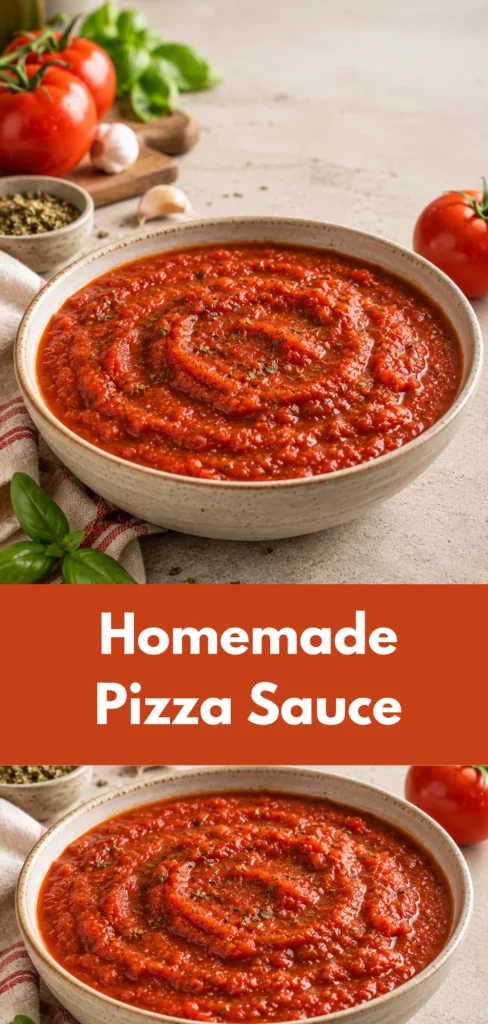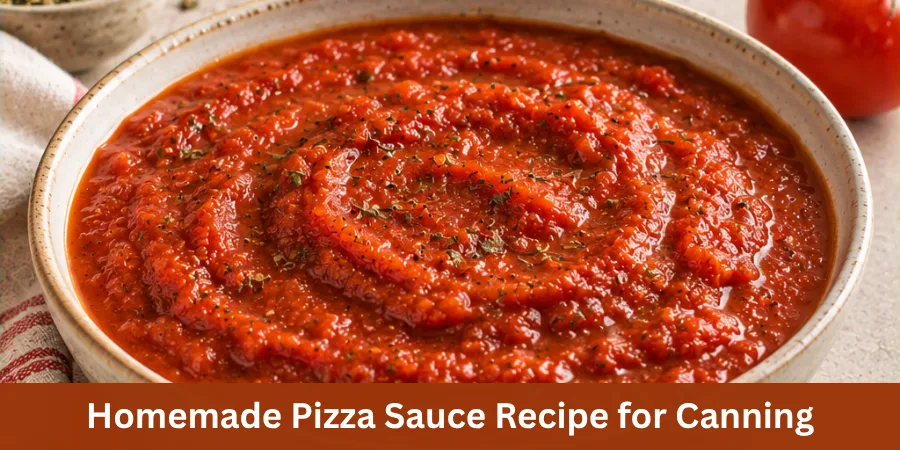
Store-bought pizza sauces can sometimes be watery or overly sweet, but making your own at home gives you more control over the richness, seasoning, and final texture. This easy homemade pizza sauce uses tomato paste, olive oil, garlic, and simple herbs to create a flavorful sauce with a pizzeria-style taste.
I prefer a thick pizza sauce because it adds concentrated tomato flavor without making the dough soggy. The balanced texture works well on homemade pizzas, pizzas, calzones, and also as a dipping sauce when you want a flavorful addition on the side.
Homemade Pizza Sauce Recipe for Canning-The Short Answer
The sauce develops its flavor through a simple cooking process. Onion and garlic create the aromatic base, while tomato paste adds depth and helps build the thicker consistency needed for pizza. A controlled simmer allows the tomatoes and herbs to blend while reducing excess moisture.
After cooking and reducing, allow the sauce to cool before storing it in the refrigerator or freezer. Making your own pizza sauce gives you control over the ingredients and makes it convenient to prepare portions ahead for future pizza nights.
For easier meal preparation, divide the cooled sauce into jars or storage containers and freeze individual portions. Start without adding water, then adjust the texture later only if the finished sauce needs more looseness.
Why You’ll Love This Recipe
A good pizza sauce recipe does not need to be complicated. This sauce combines a focused group of core ingredients with pantry-friendly spices to create balanced flavor while keeping the preparation straightforward.
I like this approach for homemade pizza because it provides a fresh sauce option without making the process feel difficult. The tomato base, herbs, garlic, and seasonings work together to create a sauce that complements the crust and toppings.
Having a reliable homemade sauce ready also makes pizza preparation easier. Instead of depending on store-bought pizza sauce, you can keep a homemade version available whenever you want to make pizza at home.
The simple ingredient combination makes it practical for regular use while still giving homemade pizzas a more developed flavor and texture.
What type of canned tomatoes works best for homemade pizza sauce?
Canned tomatoes are a practical choice when making homemade pizza sauce because they provide consistent flavor and texture throughout the year. For this recipe, canned crushed tomatoes create the main tomato base and work together with tomato paste to produce a thick, concentrated sauce.
The type of tomatoes you choose can affect the final flavor and texture. A good-quality canned tomato product can help create a sauce with better tomato flavor while supporting the thick consistency needed for pizza.
Crushed tomatoes are especially convenient because they reduce preparation time and provide the right starting texture for a pizza sauce. Tomato paste adds extra tomato concentration and helps the finished sauce become richer and thicker during cooking.
What is the best way to thicken homemade pizza sauce?
The key to a thick homemade pizza sauce is controlling the amount of liquid in the tomato mixture. Tomato paste adds concentrated tomato solids, which helps thicken the sauce while also increasing the depth of tomato flavor.
Simmering the sauce on the stove for around 20–30 minutes allows excess liquid to reduce gradually. This controlled reduction helps develop a thicker consistency while allowing the tomato and herb flavors to blend together.
If the sauce is still loose after the initial simmering time, continue cooking it uncovered for another 5–10 minutes and check the texture again. The goal is not a fixed maximum cooking time, but a sauce consistency that is thick enough for pizza without making the crust wet.
A properly thickened pizza sauce should spread smoothly over the dough while staying in place during baking.
Ingredients Needed
For a thick and flavorful pizza sauce, the ingredient balance is important. The recipe uses a concentrated tomato base along with aromatics, herbs, and seasonings to create a sauce that spreads smoothly on pizza dough without adding unnecessary moisture.
For the tomato base, use:
- 28 ounces (794 grams) crushed tomatoes
- 6 ounces (170 grams) tomato paste
Crushed tomatoes provide the main tomato flavor and liquid base, while tomato paste adds concentrated tomato solids that help create a thicker consistency. Together, they create the rich texture needed for pizza sauce.
For the aromatic base, use:
- ⅓ cup finely minced yellow onion (55 grams)
- 2 tablespoons olive oil (30 ml / 27 grams)
- 2 cloves garlic, finely minced (6 grams)
The onion adds depth and natural sweetness, while olive oil provides richness and helps carry the flavors of the aromatics. Garlic adds a clear savory note without overpowering the tomato base when cooked briefly.
For seasoning, use:
- 1 teaspoon dried basil (1 gram)
- ¾ teaspoon dried oregano (0.8 gram)
- ¼ teaspoon dried rosemary (0.3 gram)
- ½ teaspoon fine salt (3 grams)
- ½ teaspoon granulated sugar (2 grams)
- ¼ teaspoon freshly cracked black pepper (0.5 gram)
- 1 pinch crushed red pepper flakes (0.2 gram), optional
The herb combination creates a balanced Italian-style flavor while keeping the tomato as the main focus. The controlled amounts prevent the seasoning from becoming too strong and allow the sauce to pair well with different pizza toppings.
For adjusting the final texture, use:
- 0–30 ml water, only if needed
Water should not be added automatically because the tomatoes already provide the necessary liquid. After cooking and reduction, check the consistency and add water only if the sauce becomes thicker than desired.
The goal is a thick pizza sauce that spreads easily over the dough while staying in place during baking. Keeping the liquid adjustment optional helps maintain a concentrated flavor and prevents the sauce from making the crust overly wet.
How to Make Pizza Sauce
Start by preparing the aromatic base. Add 2 tablespoons olive oil to a sauce pot over medium heat. Add the finely minced onion and cook for about 3–4 minutes until it becomes softened and translucent.
Add the minced garlic and cook for about 30–60 seconds until fragrant. Avoid allowing the garlic to brown heavily because this can create a bitter flavor that affects the final sauce.
Add 6 ounces (170 grams) tomato paste and cook for about 1–2 minutes, stirring regularly. This step helps the tomato paste blend with the aromatics and develops a deeper tomato flavor before the crushed tomatoes are added.
Add 28 ounces (794 grams) crushed tomatoes along with the dried basil, dried oregano, dried rosemary, salt, sugar, freshly cracked black pepper, and optional crushed red pepper flakes.
Stir everything together until the tomato paste, aromatics, and seasonings are evenly combined. Bring the mixture to a gentle simmer, then reduce the heat to low and partially cover the pot.
Allow the sauce to simmer for 20–30 minutes, stirring occasionally. This controlled cooking process allows the tomato flavor to become more concentrated while the herbs and aromatics blend into the sauce.
After simmering, check the sauce consistency rather than relying only on the cooking time. The finished sauce should be thick enough to coat a spoon and spread smoothly over pizza dough without running.
If the sauce is still too loose, continue cooking it uncovered for another 5–10 minutes and check the texture again. If it becomes too thick, add a small amount of water and stir well before checking the consistency again.
Let the finished sauce rest briefly before using it. When spreading it over pizza dough, apply an even layer while keeping the edge uncovered. The sauce should stay in place during baking without adding excess moisture that could make the crust soggy.
Any remaining sauce can be cooled completely, transferred to a clean airtight container, and stored for later use.
How Long Does Homemade Pizza Sauce Last?
Homemade pizza sauce is easy to prepare ahead and store for future pizzas. After cooking, allow the sauce to cool promptly before transferring it to a clean airtight container.
Keep the sauce refrigerated and use it within 4–5 days for the best quality. Proper storage helps maintain the flavor and texture while keeping the sauce ready whenever you want to prepare homemade pizza.
For longer storage, divide the cooled sauce into convenient portions before freezing. Around 120 ml (½ cup) portions work well for future pizzas because they make it easy to thaw only the amount needed.
When reheating, warm the sauce gently and stir before using. If the sauce becomes thicker after storage, add a small amount of water only when needed and mix well until the desired consistency returns.
Making pizza sauce at home also gives you more control over the ingredients and final flavor. Having pre-portioned sauce ready can make future meal preparation easier.
Storage Notes
After cooking, allow the sauce to cool promptly before transferring it to a clean airtight container. Refrigerate the sauce and use it within the recommended storage period.
For freezing, divide the cooled sauce into convenient portions and transfer it into freezer-safe resealable containers or quart-sized freezer bags. Remove excess air when using freezer bags, then freeze until solid.
When reheating, place the desired amount in a pot over low heat. Stir occasionally until heated through. Gentle reheating helps maintain the sauce’s smooth consistency.
If the sauce becomes too thick after storage, add a small amount of water as needed and mix well. Add liquid gradually because the goal is to maintain the concentrated flavor and thick pizza sauce texture.
The herb amounts should follow the recipe formula rather than being changed freely. The cooking time should also not be the only indicator for finishing the sauce. Always check the final consistency and continue or stop the reduction based on the desired texture.
Nutrition Insight
A ¼-cup (60 ml) serving of this homemade pizza sauce contains an estimated:
- Calories: 67 kcal
- Carbohydrates: 7.2 grams
- Protein: 1.9 grams
- Total Fat: 3.4 grams
- Saturated Fat: 0.5 grams
- Fiber: 1.8 grams
- Total Sugars: 3.6 grams
- Added Sugars: 0.7 grams
- Sodium: 313 milligrams
- Cholesterol: 0 milligrams
These nutrition values are estimates based on the stated recipe formula. The actual values can vary slightly depending on the specific crushed tomatoes, tomato paste, olive oil, and salt used.
Ingredient brands and exact measurements can affect the final nutrition information. For the most accurate calculation, use the nutrition details from the exact products and quantities included in the final recipe.
Frequently Asked Questions
How does tomato paste make pizza sauce thicker and deepen its flavor?
Yes. Tomato paste adds concentrated tomato solids that help thicken the sauce while also increasing the depth of tomato flavor.
In this recipe, tomato paste works together with crushed tomatoes and controlled simmering to create a thicker pizza sauce consistency that spreads well over dough without adding excess moisture.
Is a food mill necessary when making pizza sauce with crushed tomatoes?
A food mill can be useful when making sauce from whole fresh tomatoes and when you want a smoother texture.
For this recipe, a food mill is not necessary because crushed tomatoes are already used as the main tomato base. The recipe is designed around a simple preparation method using canned crushed tomatoes.
What should I do if the pizza sauce becomes too thick?
If the finished sauce becomes thicker than desired, add a small amount of water and mix well.
Water should be added gradually only when needed because the recipe is designed to create a concentrated pizza sauce texture without adding liquid automatically.
What is the ideal simmering time for pizza sauce?
Start with 20–30 minutes of controlled simmering.
If the sauce is still loose after this stage, continue cooking it uncovered for another 5–10 minutes and check the consistency again. The final texture is more important than following only a fixed cooking time.
Is it necessary to add water to the sauce at the beginning?
No. Water should not be added automatically at the beginning.
The crushed tomatoes already provide the required liquid for the sauce. Add water only after cooking if the finished sauce becomes thicker than desired.
Can homemade pizza sauce be frozen for later use?
Yes. Homemade pizza sauce can be frozen for later use.
Allow the sauce to cool, divide it into convenient portions, and store it in freezer-safe containers or bags before freezing.
What is the best way to store pizza sauce in the freezer?
Let the sauce cool after cooking, then divide it into convenient portions.
Transfer the cooled sauce into freezer-safe containers or resealable freezer bags and freeze until needed. Portioning the sauce makes it easier to thaw only the amount required for future pizzas.
Does pizza sauce need to cool completely before freezing?
Yes. Allow the sauce to cool before transferring it into freezer-safe containers or bags.
Cooling the sauce before freezing helps with proper storage and makes it easier to handle before placing it in the freezer.
When is the best time to add salt to the sauce?
Add the measured 3 grams of salt with the other seasonings during cooking.
After the sauce has reduced, taste it and make a small final seasoning adjustment if needed. Reduction concentrates the flavors, so checking the seasoning at the end helps maintain balance.
Why is it important to taste the sauce after reducing it?
Reduction concentrates the tomato, herb, and seasoning flavors.
Tasting the sauce after reducing allows you to make small adjustments without accidentally adding too much seasoning before the flavors become concentrated.
Pinterest Pins