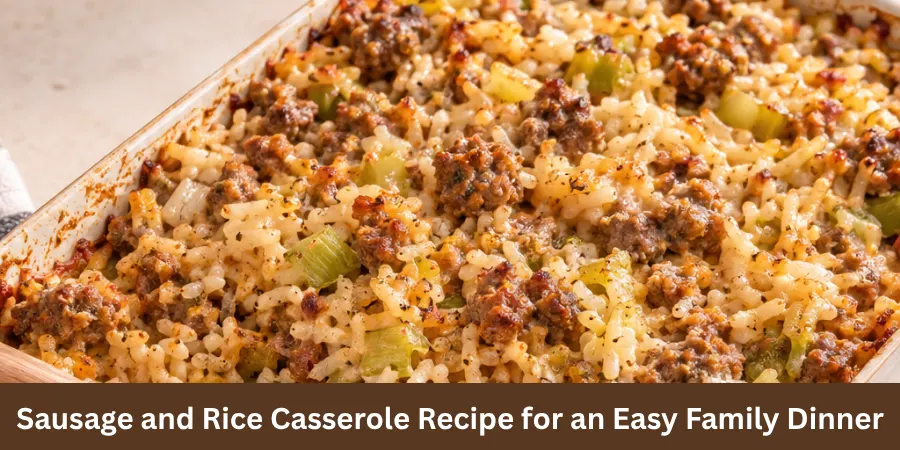
When you need a comforting dinner that feels familiar without requiring complicated preparation, this Sausage and Rice Casserole is a practical choice.
It combines smoked sausage, tender rice, and a flavorful vegetable base of onion, bell pepper, celery, and broccoli.
The creamy sauce and melted cheddar create a hearty texture that makes this casserole suitable as a filling main dish for a family meal.
Sausage and Rice Casserole-The Short Answer
The combination of sausage, rice, and vegetables gives this casserole its classic comfort-food appeal.
Smoked sausage adds a savory, slightly smoky flavor, while the vegetables provide freshness, color, and texture.
The recipe uses long-grain white rice because it is designed to cook directly in the creamy liquid during baking, creating the right consistency throughout the dish.
What makes this recipe especially practical is how easily the ingredients come together.
The sausage and vegetables are cooked first in a skillet before being combined with the rice, broth, and creamy sauce.
Everything is then transferred to a baking dish and baked until the rice becomes tender and the flavors blend together.
Broccoli is added partway through baking so it becomes tender while still keeping some texture.
The covered baking method helps the rice cook evenly and keeps the sauce creamy throughout the casserole.
This casserole can also be adjusted while keeping its basic character. Different vegetables, sausage varieties, and cheese options can be used depending on preference.
The result remains a creamy, smoky, and cheesy comfort meal that works well for busy weeknight dinners.
Why You’ll Love This Sausage and Rice Casserole
The combination of savory sausage, creamy sauce, and tender rice creates a satisfying casserole with familiar flavors.
Smoked kielbasa adds a deeper smoky taste, while chicken sausage provides a milder option. Spicy smoked sausage can also be used when you prefer more heat.
This recipe uses simple ingredients and straightforward cooking steps, making it a practical choice for a comforting homemade meal.
The preparation starts on the stovetop before the casserole finishes in the oven, helping build flavor while keeping the process organized.
For busy weeknights, this casserole is convenient because several ingredients can be prepared ahead of time.
Sliced sausage, chopped vegetables, broccoli, seasonings, and shredded cheese can all be prepared before cooking.
However, the uncooked casserole should not be assembled too far ahead because the rice can absorb the liquid before baking.
Preparing the components separately and combining them shortly before baking helps maintain the intended texture.
Leftovers can be refrigerated and reheated when needed, making this a practical comfort food option for any time of year.
About This Recipe
Sausage and Rice Casserole combines smoked sausage, rice, vegetables, and a creamy sauce into a complete one-dish meal.
The recipe is built around uncooked long-grain white rice, which cooks directly in the casserole while absorbing the broth and creamy sauce.
The smoked sausage provides the main savory flavor, while onion, bell pepper, celery, and broccoli add color, texture, and balance.
The cheddar topping finishes the casserole with a melted cheesy layer. The covered baking method allows the rice to cook evenly while helping the sauce stay creamy.
Adding broccoli later in the baking process helps prevent it from becoming overly soft. This approach creates a casserole that is hearty, practical, and easy to serve for family meals or weeknight dinners.
Ingredients Needed
1 pound (454 grams) smoked sausage, sliced into ½-inch rounds
1 cup (185 grams) uncooked long-grain white rice
1¼ cups (300 ml) low-sodium chicken broth
1 can (10.5 ounces / 298 grams) condensed cream of celery soup
1 medium onion (approximately 150 grams), finely chopped
1 medium green bell pepper (approximately 150 grams), diced
1 celery rib (approximately 40 grams), finely chopped
2 garlic cloves (approximately 6 grams), minced
2 cups (approximately 180 grams) broccoli florets
2 tablespoons unsalted butter (28 grams)
1 teaspoon dried parsley (1 gram)
½ teaspoon paprika (1 gram)
¼ teaspoon black pepper (0.5 gram)
¼ teaspoon red pepper flakes (approximately 0.5 gram, optional)
¼ teaspoon salt (approximately 1.5 grams)
1 cup shredded sharp cheddar cheese (approximately 113 grams)
2 tablespoons fresh parsley (approximately 8 grams), for garnish
Ingredients Notes
Smoked sausage provides the main savory flavor for this casserole. Use 1 pound (454 grams) smoked sausage sliced into approximately ½-inch rounds.
Fully cooked smoked sausage works well because it only needs browning before being combined with the other ingredients.
Kielbasa or other smoked sausage varieties can also be used while keeping the same casserole structure.
Long-grain white rice is the recommended rice for this recipe. Use 1 cup (185 grams) uncooked long-grain white rice.
The rice cooks directly in the casserole by absorbing the chicken broth and creamy sauce.
Quick-cooking or minute rice is not suitable for this formula because it does not require the same cooking time and liquid balance.
Low-sodium chicken broth and condensed cream of celery soup create the creamy cooking liquid.
Use 1¼ cups (300 ml) low-sodium chicken broth and 1 can (10.5 ounces / 298 grams) condensed cream of celery soup.
The broth provides moisture for cooking the rice, while the condensed soup adds creamy structure and flavor.
Do not increase the broth beyond the stated amount because the soup also contributes moisture to the casserole.
Onion, green bell pepper, celery, and garlic create the vegetable flavor base.
Use:
• 1 medium onion (approximately 150 grams)
• 1 medium green bell pepper (approximately 150 grams)
• 1 celery rib (approximately 40 grams)
• 2 garlic cloves (approximately 6 grams)
These vegetables add freshness, color, and savory depth while balancing the smoky sausage.
Broccoli adds vegetable bulk, color, and texture. Use 2 cups (approximately 180 grams) broccoli florets. Cut the florets into approximately 1-inch bite-size pieces.
Adding broccoli partway through baking helps it become tender without turning overly soft.
Unsalted butter provides the cooking fat for sautéing the vegetables. Use 2 tablespoons (28 grams).
It helps soften the vegetables and adds richness without making the casserole overly greasy.
Dried parsley, paprika, black pepper, red pepper flakes, and salt create the seasoning base.
Use:
1 teaspoon dried parsley
½ teaspoon paprika
¼ teaspoon black pepper
¼ teaspoon red pepper flakes (optional)
¼ teaspoon salt
These seasonings add flavor while allowing the smoked sausage, creamy sauce, and cheese to remain the main flavors. Salt is intentionally limited in this recipe.
The smoked sausage, condensed cream of celery soup, chicken broth, and cheddar cheese already contribute sodium. Taste before adding additional salt to maintain the right balance.
Sharp cheddar cheese creates the melted topping. Use 1 cup shredded sharp cheddar cheese (approximately 113 grams).
The cheese is added during the final baking stage so it melts over the casserole and creates a rich cheesy finish.
Fresh parsley is used as a finishing garnish. Use 2 tablespoons (approximately 8 grams). It adds a fresh contrast and improves the appearance of the finished casserole.
How to Make Sausage and Rice Casserole
Step 1: Prepare the Oven and Brown the Sausage
Preheat the oven to 375°F (190°C). Lightly grease a 9 × 9 × 2-inch baking dish with butter or nonstick cooking spray.
Heat a deep skillet over medium-high heat. Add the smoked sausage slices in an even layer.
Cook for about 4–5 minutes, turning occasionally, until the edges become lightly browned. Remove the sausage from the skillet and set it aside.
Leave about 1 tablespoon of rendered fat in the pan. If there is more excess fat, carefully spoon it out before continuing.
Step 2: Cook the Vegetables
Add the butter to the skillet. Cook the onion, bell pepper, and celery over medium heat for 5–6 minutes until the vegetables soften.
Add the minced garlic and cook for another 30–45 seconds until fragrant. The vegetables should become tender while keeping their flavor without heavy browning.
Step 3: Combine the Rice and Creamy Mixture
Add the uncooked long-grain white rice to the skillet. Stir for about 1 minute to coat the rice grains with the vegetable mixture. The rice should not be browned.
In a separate bowl, whisk together:
- Chicken broth
- Condensed cream of celery soup
- Dried parsley
- Paprika
- Black pepper
- Salt
- Optional red pepper flakes
Mix until the creamy liquid is reasonably smooth. Return the browned sausage to the skillet.
Pour in the creamy mixture and stir gently until the rice, vegetables, and sausage are evenly distributed. Cook the mixture over medium-low heat for 2–3 minutes, stirring, until it reaches a gentle simmer and the soup is smooth.
Do not allow it to boil aggressively. Keep the broccoli aside at this stage because it will be added later during baking.
Step 4: Bake the Casserole
Transfer the mixture into the prepared baking dish. Spread it evenly.
Place the dish on a rimmed baking sheet and cover it tightly with aluminum foil. Bake at 375°F for about 30 minutes.
The covered baking stage helps the rice cook evenly while keeping the creamy sauce and moisture inside the casserole. Carefully remove the foil.
Scatter the broccoli florets evenly over the surface. Press them lightly into the sauce without stirring the casserole.
Cover the dish again and continue baking for another 15–20 minutes. Adding the broccoli during this stage helps it become tender without becoming overly soft.
Step 5: Check the Rice and Finish Baking
After about 45 minutes of total baking time, check the rice. The grains should be tender without a hard center, and most of the liquid should be absorbed.
If the rice is still firm and the casserole looks dry, add ¼ cup hot chicken broth.
Stir gently once, cover the dish tightly, and bake for another 8–10 minutes. This allows the remaining steam to finish cooking the rice.
Step 6: Add Cheese and Rest
Once the rice is fully cooked, remove the foil. Spread the shredded sharp cheddar evenly over the top. Return the casserole to the oven uncovered for 5–8 minutes.
Bake until the cheese is melted and lightly bubbly. Remove the casserole from the oven and let it rest uncovered for 10 minutes.
This resting time allows the rice to absorb remaining moisture and helps the casserole set before serving.
Finish with fresh parsley and serve warm. The finished casserole should have tender rice, flavorful sausage, creamy sauce, vegetables, and a melted cheddar topping.
Variations to Try
There are several ways to adjust this sausage and rice casserole while keeping its creamy, comforting structure.
The main formula of smoked sausage, long-grain rice, creamy sauce, vegetables, and cheese can be customized depending on your preferences.
Sausage Options
Smoked sausage is the recommended choice because it provides the main savory flavor.
Kielbasa works well as a substitute and keeps the same smoky profile. For a lighter variation, use smoked turkey sausage or chicken sausage.
If you prefer more heat, spicy smoked sausage can add extra flavor without changing the basic casserole structure.
Rice Options
Long-grain white rice remains the recommended choice because the cooking time and liquid amount are designed specifically for it.
Brown rice is not a direct 1:1 replacement because it requires different liquid amounts and cooking time.
Wild rice also needs its own cooking adjustment and should not be substituted without changing the formula.
Vegetable Options
The recipe uses onion, bell pepper, celery, and broccoli as the vegetable base.
You can replace some or all of the broccoli with vegetables such as:
- Bell peppers
- Frozen peas
- Mushrooms
- Zucchini
Keep in mind that vegetables with higher moisture content may affect the liquid balance of the casserole.
Cheese Options
The cheddar topping can be adjusted depending on your preferred flavor and texture. Sharp cheddar provides a stronger flavor, while other options can create different results.
Mozzarella creates a softer, stretchier topping, while pepper jack adds additional heat. Add the cheese during the final 5–8 minutes of baking so it melts properly without drying out.
Seasoning Adjustments
The main seasoning uses parsley, paprika, black pepper, and optional red pepper flakes. You can increase the heat with additional red pepper flakes or use a spicier sausage variety.
Keeping the seasoning balanced allows the sausage, rice, vegetables, and creamy sauce to remain the main flavors.
Adjusting for Different Sausages
Different sausage varieties can release different amounts of fat while browning. Remove excess rendered fat when needed before cooking the vegetables.
Keeping the main formula of sausage, rice, creamy sauce, vegetables, and cheddar topping helps maintain the intended texture and flavor.
Storage
Storing Leftovers
Allow the sausage and rice casserole to cool before storing. Transfer leftovers to an airtight container and refrigerate within 2 hours.
The casserole will keep well in the refrigerator for 3–4 days. Proper covering helps prevent the rice, vegetables, and sausage from drying out.
Reheating and Freezing
To reheat a serving, place the casserole in a microwave-safe dish.
If the casserole has become dry, add 1 tablespoon of water or broth before heating. Heat for 60–90 seconds, then stir and check the temperature.
Continue heating in 20–30 second intervals until the casserole is steaming hot, with an internal temperature of 165°F (74°C).
For freezing, allow the casserole to cool completely. Transfer it to an airtight freezer-safe container or freezer bag. Freeze for up to 3 months.
When ready to serve, thaw the casserole overnight in the refrigerator. Reheat it in the oven or microwave until heated through.
The rice may become slightly softer after freezing and thawing, so the texture may not be exactly the same as freshly baked casserole.
Prepare Ahead of Time
You can prepare several components ahead to make assembly easier.
Slice the sausage, chop the vegetables, prepare the broccoli, and measure the seasonings before cooking. This helps reduce preparation time when you are ready to bake.
Avoid assembling the uncooked casserole too far ahead. The rice can gradually absorb the liquid while it sits, which can affect the final cooking texture.
Instead, keep the prepared components separate and combine them shortly before baking. This keeps the process convenient while helping the rice cook properly.
Tips for the Best Sausage and Rice Casserole
Pay close attention to the rice cooking progress instead of relying only on the suggested baking time. The rice should become tender without turning mushy.
Cook the vegetables until they are soft and fragrant before combining them with the remaining ingredients. This helps develop their flavor before the casserole goes into the oven.
The broth, rice, and cooking time all affect the final texture. If the rice is still firm after baking and the casserole looks dry, add ¼ cup hot broth.
Cover the dish tightly and continue baking for a few minutes to allow trapped steam to finish cooking the rice.
Add the cheese near the end of baking. This creates a melted topping with a rich texture without allowing the cheese to dry out. Adding broccoli during the middle of baking helps prevent it from becoming overly soft.
A little fresh parsley before serving adds color and a fresh contrast to the hearty casserole. Let the casserole rest for about 10 minutes before serving.
This allows the rice to absorb remaining moisture and helps the casserole settle, making it easier to serve.
Notes
For the best texture, keep the foil tightly secured during the covered baking stage.
This helps trap steam inside the dish so the uncooked rice can cook properly and prevents the casserole from drying out.
For leftovers, transfer the casserole from the baking dish into an airtight storage container. Keep it refrigerated for 3–4 days.
When reheating, place a serving in a microwave-safe dish. Add 1 tablespoon of water or broth if the casserole has become dry.
Heat for 60–90 seconds, stir, then continue heating in 20–30 second intervals until steaming hot, with an internal temperature of 165°F (74°C).
To freeze leftover casserole, allow it to cool completely before transferring it to an airtight freezer-safe container. Freeze for up to 3 months.
When ready to serve, thaw overnight in the refrigerator before reheating.
The rice may become slightly softer after freezing and thawing, so the texture may not be exactly the same as freshly baked casserole.
Nutrition Information
One serving is based on 1/6 of the finished casserole.
Each serving provides approximately:
- 520 kcal
- 35 g carbohydrates
- 18 g protein
- 34 g fat
- 13 g saturated fat
- 3 g fiber
- 4 g sugar
- 1,450 mg sodium
- 85 mg cholesterol
These nutrition values are calculated estimates based on the complete recipe divided into 6 equal servings.
The actual amounts may vary depending on the specific smoked sausage, condensed cream of celery soup, chicken broth, and cheddar cheese brands used.
Sausage and Rice Casserole FAQs
Can I Use Brown Rice Instead of White Rice?
Brown rice can be used, but it is not a direct 1:1 substitution for the long-grain white rice in this recipe.
Brown rice requires different liquid amounts and a different cooking time, so the recipe needs adjustment rather than simply replacing the rice.
Can I Use Different Types of Sausage?
Yes. Smoked sausage is the recommended choice, but kielbasa, smoked turkey sausage, chicken sausage, or spicy smoked sausage can also work.
Different sausage varieties will change the final flavor and heat level.
Can I Use Leftover Cooked Rice?
It is better to use uncooked rice for this casserole. The recipe is designed so the rice cooks directly in the broth and creamy mixture during baking.
Using cooked rice can change the liquid balance and may result in a softer texture.
Can I Make This Casserole Vegetarian?
Yes. For a vegetarian version, replace the sausage with a plant-based alternative and use vegetable broth instead of chicken broth.
Vegetables such as mushrooms or zucchini can also be added, but higher-moisture vegetables may require a liquid adjustment.
Can I Make the Casserole Spicy?
Yes. The heat can be adjusted with the sausage and seasonings.
Spicy smoked sausage or red pepper flakes can add more heat and flavor.
For a milder version, use mild sausage and skip the optional red pepper flakes.
What Vegetables Can I Add to Sausage and Rice Casserole?
The recipe uses onion, bell pepper, celery, and broccoli. You can also use vegetables such as mushrooms, zucchini, or frozen peas.
If using vegetables that release a lot of moisture, the liquid balance may need adjustment.
Is Sausage and Rice Casserole Good for Large Gatherings?
This casserole is better suited to a regular family dinner than a large gathering. The recipe is made in a 9 × 9 × 2-inch baking dish and makes about 6 servings.
The formula is written for a single batch and has not been tested at a larger size, so it is best to keep the quantities as written.
How Should I Store Leftover Casserole?
Transfer the casserole to an airtight container and refrigerate it within 2 hours of cooking.
It can be stored in the refrigerator for 3–4 days. For longer storage, freeze it in a freezer-safe container for up to 3 months.
Can I Freeze Sausage and Rice Casserole?
Yes. Allow the casserole to cool completely before transferring it to a freezer-safe container. Freeze for up to 3 months.
When ready to serve, thaw overnight in the refrigerator and reheat thoroughly in the oven or microwave.
Why Is My Rice Still Firm After Baking?
Rice can remain firm if the foil was not sealed properly, the oven temperature was too low, too much liquid evaporated, or the rice did not have enough steam to cook properly.
If needed, add ¼ cup hot broth, gently stir once, cover tightly, and bake for another 8–10 minutes.
Why Did My Rice Become Mushy?
Rice can become mushy when there is too much liquid, when it is overbaked, or when it is stirred too much during cooking.
Measure the broth carefully and avoid repeatedly stirring the casserole while it bakes.
Can I Put Uncooked Rice Directly Into the Casserole?
Yes. This recipe uses uncooked rice directly in the casserole.
The rice is combined with the sautéed vegetables and butter, then mixed with the broth and creamy soup mixture before baking.
Keeping the casserole tightly covered helps the rice cook evenly in the trapped steam.
How Do I Know When the Rice Is Fully Cooked?
The rice should be tender without being mushy. There should not be a hard white center in the grains.
The casserole should have a creamy, cohesive texture rather than being watery. Check the rice itself instead of using melted cheese as the main sign of doneness.
Pinterest Pins