After an early summer trip to the farmers market, I love making pasta primavera with fresh produce like asparagus, peas, zucchini, squash, and cherry tomatoes. This light and easy dinner is packed with colorful seasonal vegetables that are only available for a few weeks each year.
I usually cook 8 oz penne pasta, sauté the vegetables, and toss everything together with a light lemon cream sauce to celebrate fresh summer flavors. The mix of seasonal vegetables, fresh herbs, and bright citrus flavor makes the dish feel both comforting and refreshing.
Pasta Primavera-The Short Answer

Before you start, skim through the ingredients and steps below — I’ve kept everything super simple! And once you’re ready, there’s a quick video at the end to see exactly how it’s done.
What I enjoy most about this recipe is how simple and versatile it feels every time I make it. This veggie-packed pasta dish comes together in just 25 minutes, and you can easily use different ingredients already on hand for a reliable year-round meal.
Why Is Pasta Primavera So Popular?
Pasta Primavera is an American pasta dish created by chef Sirio Maccioni in New York City, made with fresh vegetables, garlic, parmigiano, and lemon flavor. Originally prepared with cream cheese, it later became famous through The New York Times as a light main dish or side dish for dinner and parties.
- The mix of vegetables gives the dish natural visual appeal with an enticing and colorful look.
- Even kids enjoy this balanced meal because it feels light while still tasting flavorful and satisfying.
- It fits well into the Mediterranean diet, a healthy way of eating inspired by the traditional dietary patterns of the Mediterranean region.
- This lifestyle encourages a variety of quality food groups in reasonable quantities, with pasta playing an important role.
Light and Fresh Primavera Ingredients
I love making pasta primavera during spring because fresh market produce gives the dish a vibrant and comforting feel. I usually cook 8 oz dry Barilla Penne Pasta, penne, or fusilli since these short pasta shapes hold vegetables perfectly in every bite.
For a fresh and colorful version, I normally use:
- 2 cups broccoli florets
- 1 bunch asparagus
- 1 yellow squash
- 1 zucchini
- 1 red bell pepper
- 1 carrot
- 1 cup peas or fresh shell peas
- 1/2 cup frozen peas
- green beans
- fresh basil
- mint
- parsley
- other fresh herbs
These ingredients create a naturally bright flavor while keeping the spring pasta light and balanced.
Balanced Lemon Cream Sauce Ingredients
To keep the sauce fresh instead of heavy, I gently cook 3 to 4 garlic cloves in 2 tablespoons extra-virgin olive oil until fragrant and softened. Then I mix in 3 tablespoons fresh lemon juice, lemon zest, light cream sauce, and 1/2 cup pasta water for a smooth finish.
For a soft and lightly creamy texture, I usually add:
- Parmesan cheese
- Parmigiano-Reggiano
- Pecorino Romano
- 1/2 cup shredded Parmigiano
The combination creates a silky lemon cream sauce without making the pasta feel too rich or heavy.
Seasonal Vegetable Combinations
One reason I keep returning to this recipe is how easily the vegetables can change with the season. I often use 1 bunch asparagus, 1 yellow squash, 1 zucchini, 1 cup cherry tomatoes, 1 cup thinly sliced red onion, and 2 cups broccoli florets for extra texture and gentle crunch.
Vegetables cook beautifully when they are:
- peeled
- minced
- sliced into matchsticks
- sliced into quarter portions
- sliced into thin half-moons
I especially enjoy adding grape tomatoes and cherry tomatoes because they become soft and juicy while releasing flavorful juices that lightly coat the pasta.
Flavor and Herb Finishing Ingredients
The finishing ingredients are what make this simple pasta dish feel fresh every time I prepare it. I usually add 2 teaspoons dried Italian seasoning with fresh basil leaves, chopped fresh parsley, fresh herbs, and sometimes 1/4 cup fresh tarragon for extra aroma.
For balance and gentle heat, I finish the pasta with:
- red pepper flakes
- 1 teaspoon sea salt
- freshly ground black pepper
- a splash of vegetable broth or chicken broth
This keeps the pasta fresh, balanced, and perfect for a lighter Mediterranean-style dinner.
How To Cook Pasta Primavera
I love making pasta primavera during spring and summer because the fresh seasonal vegetables give the dish a light and comforting flavor. This Mediterranean-inspired pasta feels colorful, fresh, and easy enough for a quick weeknight dinner.
Cook the Pasta
Fill a large pot with salted water and bring it to a gentle boil. Follow the package instructions to cook pasta until perfectly al dente with a slight chew. Before draining the penne pasta or other pasta, always reserve 1 cup pasta water because the extra starch helps the sauce cling to the noodles later.
Sauté the Vegetables
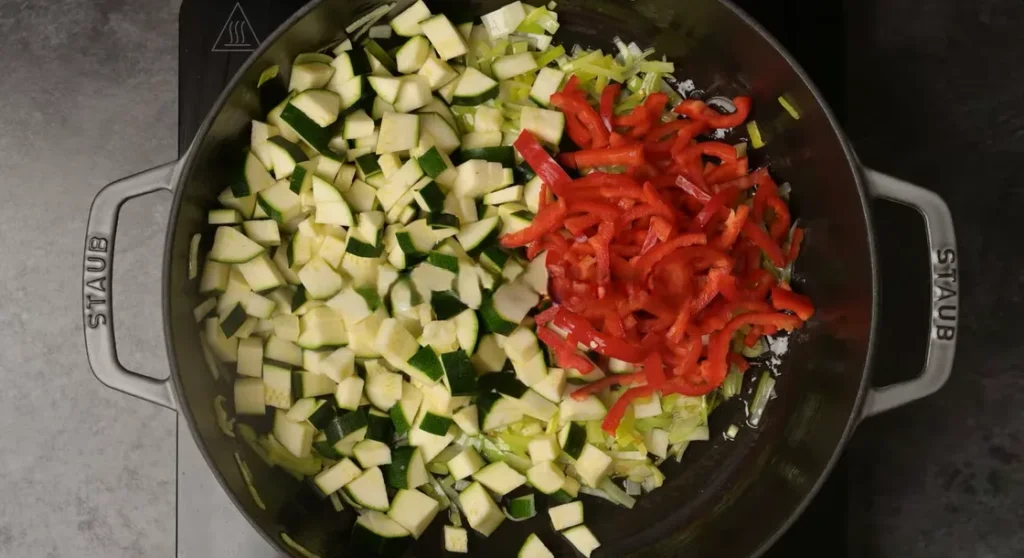
Heat olive oil in a large skillet or deep skillet over medium heat. Start the vegetable sauté with broccoli, carrot, red onion, and asparagus since these heartier vegetables need a little more cooking time.
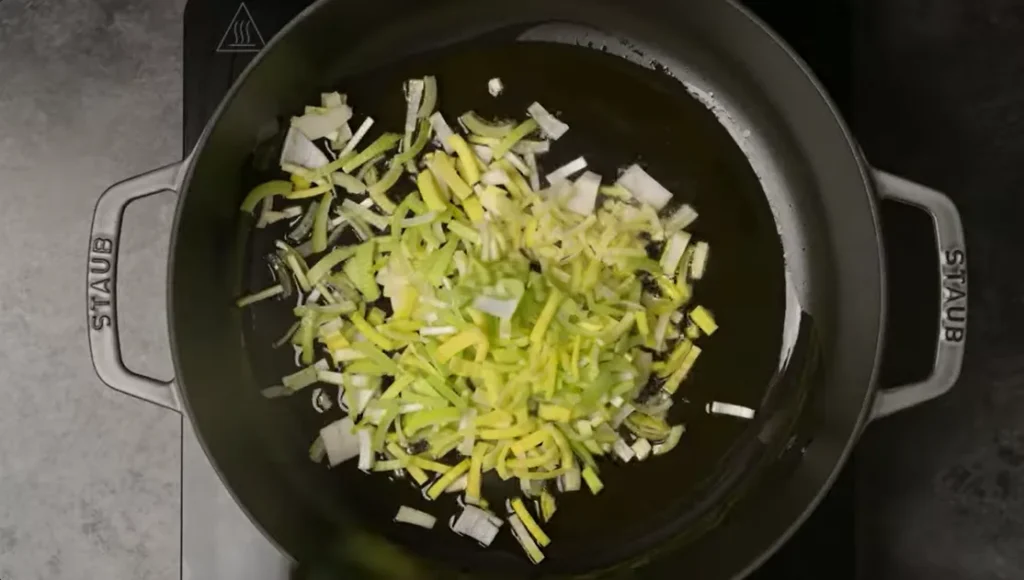
After 2 to 3 minutes, add:
- zucchini
- yellow squash
- bell pepper
- peas
- spinach
- cherry tomatoes
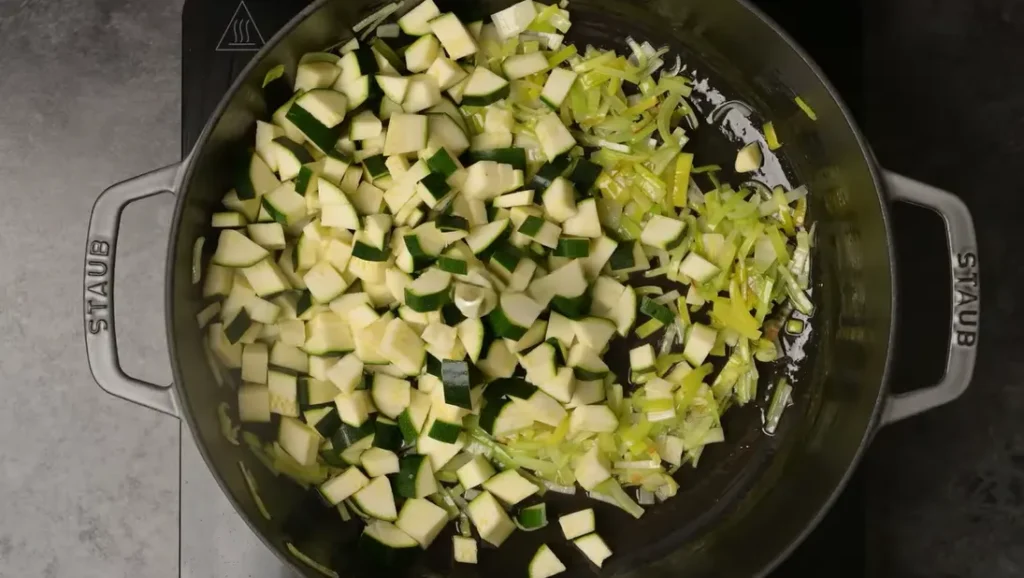
Keep stirring occasionally until the vegetables become perfectly tender without turning mushy. I like leaving the vegetables slightly crisp because they give the dish better texture and fresher flavor.
Make the Lemon Sauce
In the same skillet, gently cook garlic in olive oil until fragrant. Add lemon juice, lemon zest, a splash of vegetable broth or chicken broth, and a little cream to create a smooth light sauce with bright citrus flavor.
Season with:
- Italian seasoning
- salt
- pepper
- red pepper flakes
Let the sauce simmer briefly until it develops a soft creamy texture.
Toss Everything Together
Return the cooked pasta and tender vegetables to the warm skillet and gently toss everything together until the sauce coats the pasta evenly.
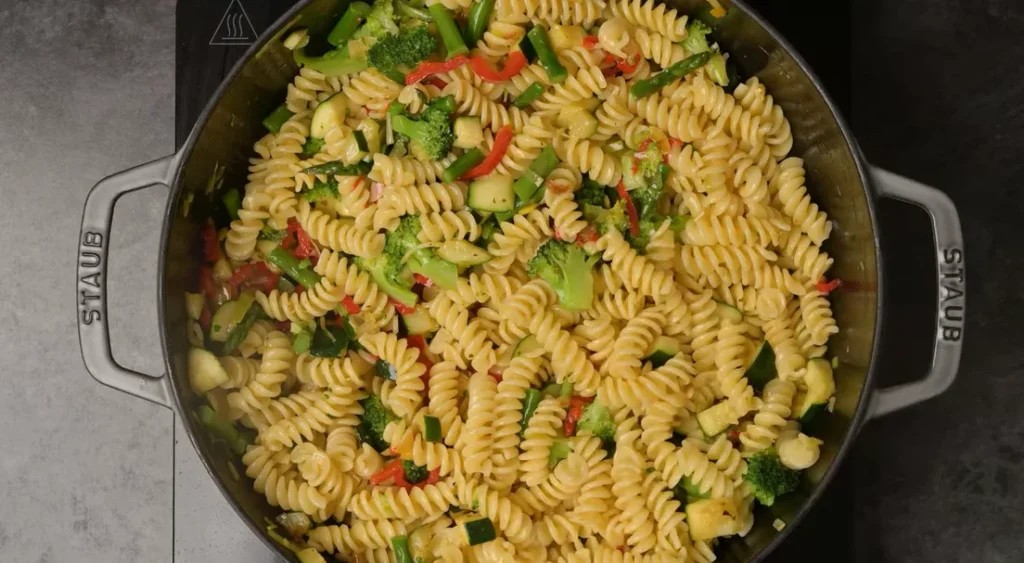
If needed, add a splash of the reserved pasta water to loosen the sauce.
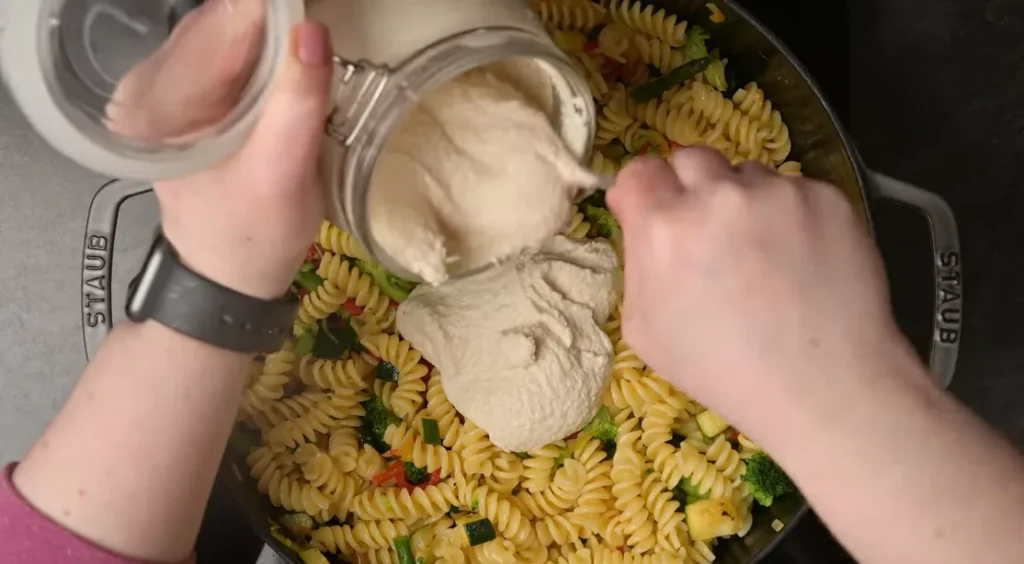
For extra richness, stir in:
- Parmesan cheese
- Parmigiano
- pecorino cheese
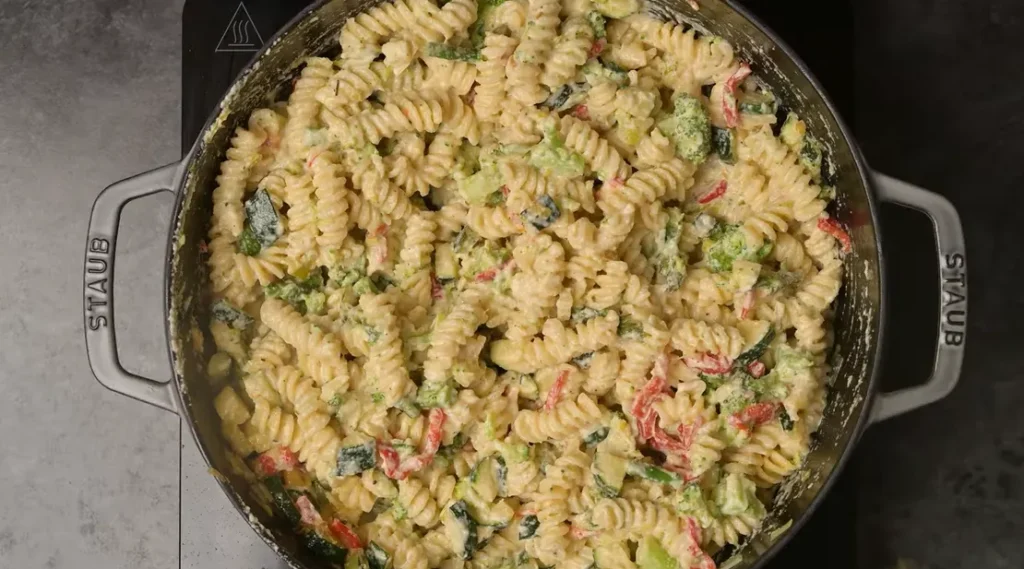
The melted cheese creates a smooth pasta coating without making the dish feel heavy.
Finish and Serve
Top the pasta with fresh basil leaves, parsley, fresh herbs, and extra lemon zest before serving. The fresh ingredients, colorful vegetables, and creamy lemon flavor make this one of the most reliable easy pasta recipes for a relaxed Mediterranean-style meal.
Expert Tips
- When I make pasta primavera, I never overcook the pasta because the right texture is key to a flavorful pasta dish. I always season the pasta water generously with salt to boost flavor while the pasta cooks.
- I prefer cooking vegetables until they are tender with a faintly crisp texture rather than soft or mushy. My go-to mix includes green beans, asparagus, red onion, bell peppers, kale, spinach, snow peas, frozen edamame, and cherry tomatoes for a fresh and balanced flavor.
- For a cheesier finish, I sometimes add extra parmesan cheese or even 1 cup parmesan for a richer texture. During reheating, a small splash of broth or water over low heat helps keep leftover pasta fresh while storing it in an airtight container in the fridge for up to 4 days.
- If needed, add extra seasoning or additional parmesan before serving. Fresh vegetables naturally make the dish more flavorful and vibrant.
Nutrition Insight
When I first tried this recipe at home, I was surprised by how balanced pasta primavera could feel while still being rich in flavor and satisfying.
A single serving contains around 485 calories, making it filling without feeling too heavy. The mix of vegetables and pasta provides around 66g carbohydrates for energy, while the 14g protein and 4.8g dietary fiber help make the meal more satisfying after a long day.
Even with a lightly creamy texture, the balance of 18g fat, moderate sodium, and natural sugars keeps this dish enjoyable for anyone looking for comfort food with a mindful approach to eating.
FAQs
Can I Swap the Vegetables?
This versatile recipe works well with different kinds of vegetables you already have on hand. I enjoy using shelled peas, asparagus, spinach, green beans, eggplant, and cauliflower since they are all great choices for quick pasta meals. I also love the idea of making an autumn version with cozy fall vegetables.
Which Pasta Shapes Work Best?
I usually keep penne pasta on hand because it holds sauce really well. If you want to try something different, medium pasta shapes like farfalle, bowties, fusili, ziti, mastacoli, gemelli, and penne are all excellent options for this dish.
What Protein Can You Add?
I like adding protein to this recipe with grilled chicken breasts, rotisserie chicken, or sautéed shrimp. Both chicken and shrimp are great additions that make the pasta more satisfying without losing its fresh flavor.