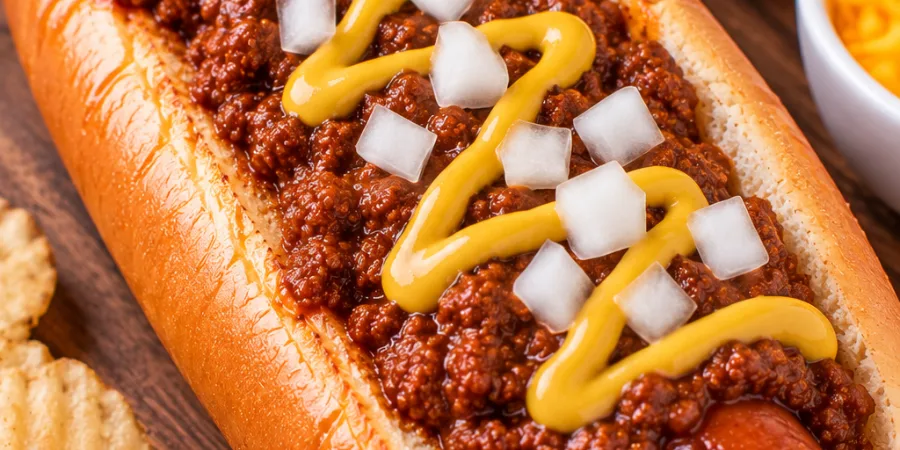
Hot dog chili is made to complement a hot dog. Regular chili is made to be a meal in a bowl. That one difference changes the sauce.
Hot dog chili is slightly sweeter than regular chili. Ketchup gives it the familiar hot dog stand taste. Light brown sugar rounds out the tomato acidity. Chili powder stays mild, so the sauce never becomes too spicy.
Regular chili has chunks of meat. Hot dog chili has very fine meat. The sauce is fine enough to spread over the hot dog and stay on the bun.
Hot Dog Chili Sauce Recipe-The Short Answer
The texture comes mostly from how the ground beef is cooked. This recipe simmers the beef in water, not in a dry pan. The water keeps the meat from clumping. It lets the beef break into very small pieces. Lean 90/10 beef also helps. It controls the fat without draining the pan, so no flavor is lost.
The uncovered simmer removes extra liquid. The sauce becomes thick and cohesive. A potato masher or an immersion blender finishes the texture.
These adjustments look small. They make a clear difference in the final sauce. The result is thick, smooth, moist and spoonable. It has enough body to stay on the bun and enough softness to spread. That is what separates it from the chunkier chili you eat from a bowl.
Ingredients Needed
The amounts below make 3½ to 4 cups of sauce. Weigh the ingredients for the best result.
Meat
- 1¼ lb 90/10 ground beef (about 567 grams)
Aromatics
- 1 cup finely diced sweet onion (about 160 grams)
- 2 garlic cloves, finely minced (about 6 grams)
- 1 tablespoon olive oil (about 14 grams)
Tomato Base
- 1 tablespoon tomato paste (about 16 grams)
- One 8 oz can tomato sauce (about 227 grams)
- ½ cup ketchup (about 120 grams)
Seasonings
- 2 teaspoons chili powder (about 5 grams)
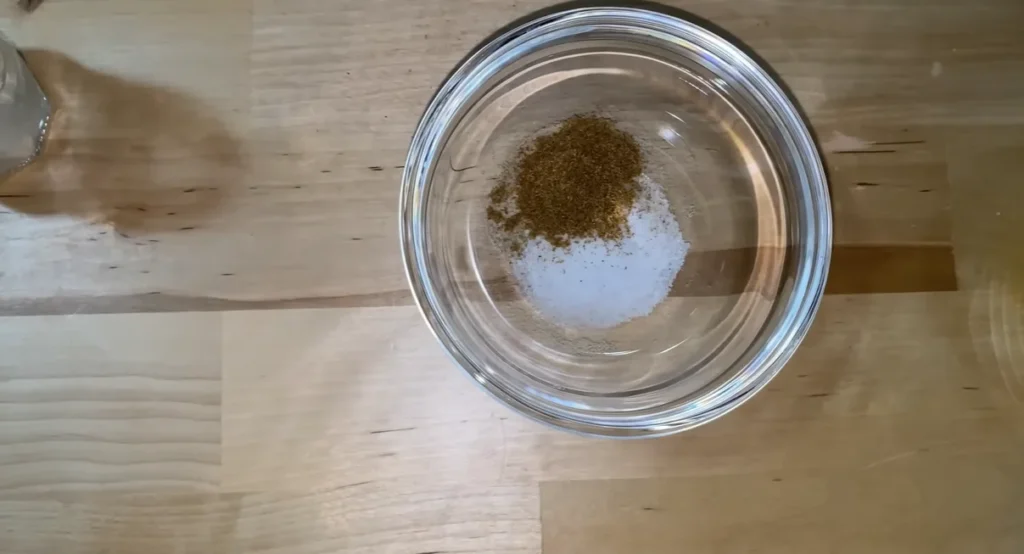
- 1 teaspoon ground cumin (about 2 grams)
- ½ teaspoon celery salt (about 1.5 grams)
- ½ teaspoon black pepper (about 1 gram)
- ½ teaspoon fine salt (about 3 grams)
Flavor Balance
- 1 tablespoon light brown sugar (about 13 grams)
- 2 teaspoons Worcestershire sauce (about 10 milliliters)
- 1 tablespoon yellow mustard (about 15 grams)
Cooking Liquid
- 1 cup water (about 240 milliliters)
For a deeper beef flavor, replace the 1 cup of water with 1 cup of low-sodium beef broth.
Ingredient Notes: Why This Formula Works
Every ingredient has one clear job. Here is what each one does.
Ground beef. 567 grams of 90/10 ground beef gives the sauce real meat flavor. It does not make the sauce heavy. The fat level stays controlled. An 80/20 beef is richer, but 90/10 keeps the base formula balanced.
Onion and garlic. 160 grams of sweet onion supports the beef flavor and adds mild sweetness. 6 grams of garlic adds a background aroma. Both are cut very small, so they disappear into the sauce.
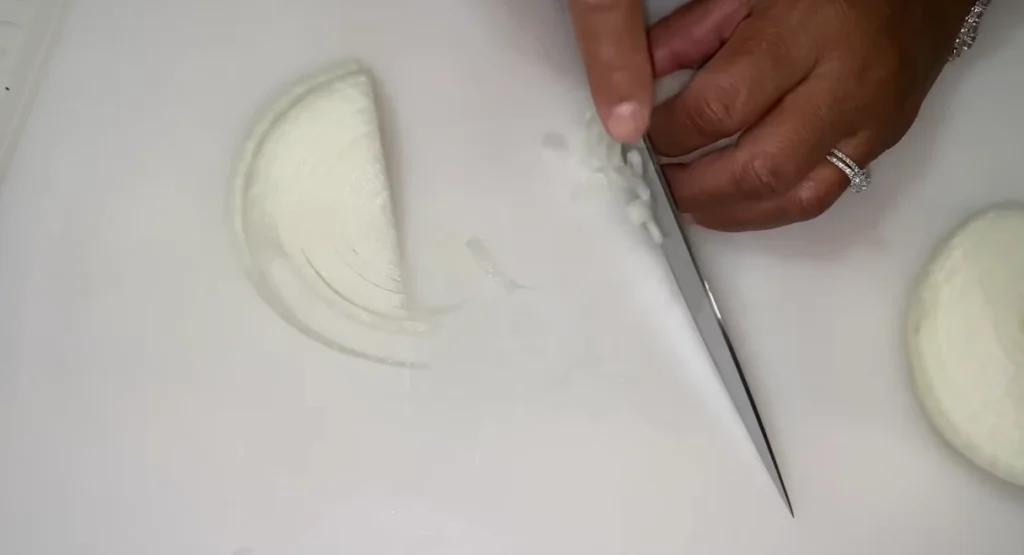
Olive oil. 14 grams is enough to sauté the onion and garlic. It is not enough to make the finished chili greasy.
Tomato paste. 16 grams adds concentrated tomato flavor and depth. Cooking it for a short time in the oil removes the raw taste.
Tomato sauce. 227 grams builds the smooth tomato base. It also adds the moisture the sauce needs during the simmer.
Ketchup. 120 grams adds sweetness, acidity and the familiar hot dog sauce flavor.
Brown sugar. 13 grams balances the tomato acidity. It rounds the flavor without making the sauce too sweet.
Worcestershire sauce. 10 milliliters adds umami and a tangy depth.
Yellow mustard. 15 grams adds sharpness. It balances the sweetness of the ketchup and sugar.
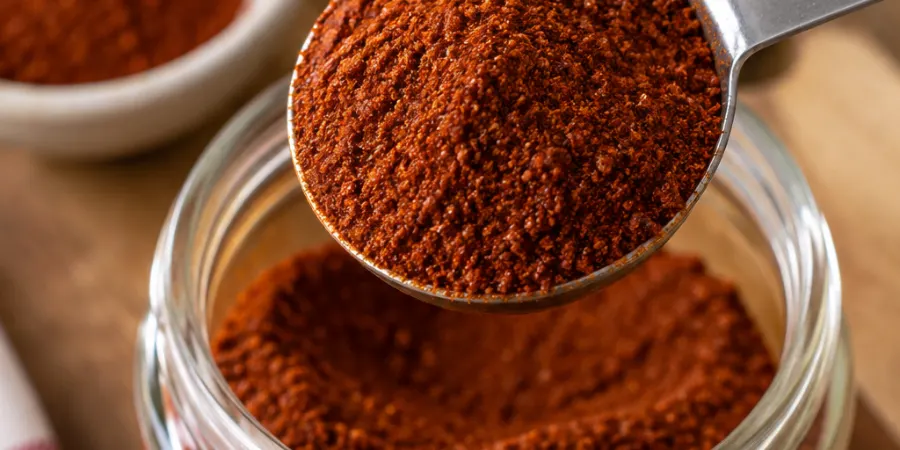
Chili powder. 5 grams gives a clear chili flavor. The heat stays mild.
Cumin. 2 grams adds a warm background note.
Celery salt. 1.5 grams adds the traditional savory note of hot dog chili.
Salt. 3 grams seasons the whole sauce. It also keeps the sodium lower than a full-teaspoon version.
Water. 240 milliliters separates the beef into fine pieces. It also gives the sauce liquid to reduce during the simmer.
The simmer ties these parts together. The 25 to 30 minute uncovered simmer reduces extra liquid and concentrates the flavor. A potato masher or an immersion blender then makes the final texture finer than regular bowl-style chili.
Equipment
You need basic kitchen tools. A scale and a masher matter most.
- Digital kitchen scale
- Measuring cups and measuring spoons
- 12-inch heavy-bottom skillet (or a deep-sided sauté pan)
- Wooden spoon
- Potato masher (use a silicone or wooden masher in a non-stick pan)
- Silicone spatula
- Immersion blender and a deep pot or tall container for blending
- Ladle
- Shallow airtight storage containers
- Instant-read thermometer (recommended for food safety)
How to Make Hot Dog Chili Sauce
Follow these 10 steps in order. Each step has a reason, and the reason is written under it.
1. Prepare the Beef
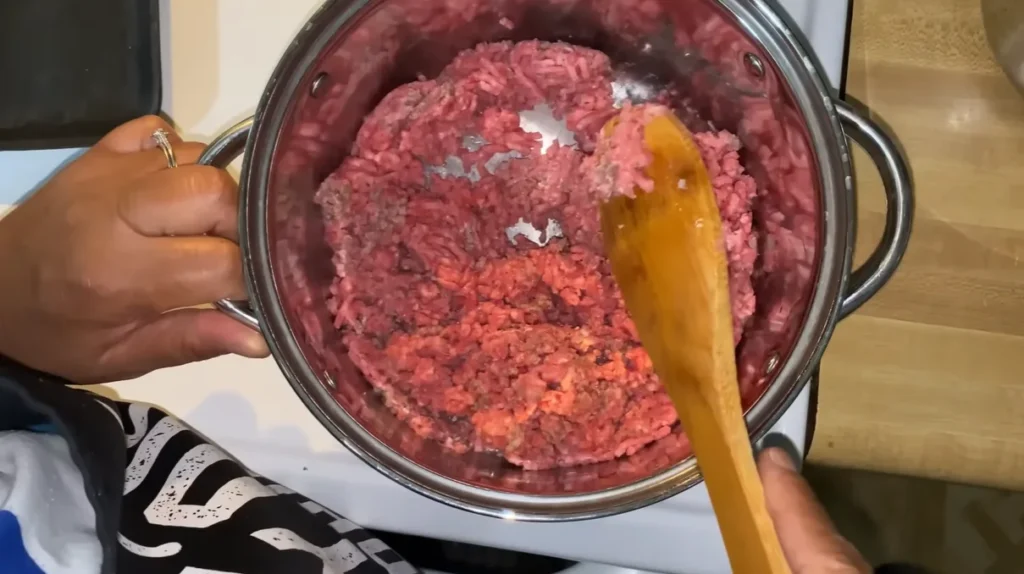
Put the ground beef in a large bowl. Add 240 ml of water. Mix with a wooden spoon and break the beef into very small pieces. No large chunks should remain.
The water separates the beef into fine pieces. The beef simmers in this water. It does not brown.
2. Sauté the Onion
Place the skillet over medium heat. Add 14 grams of olive oil and 160 grams of diced onion. Cook for 4 to 5 minutes. The onion should be soft and translucent.
3. Add Garlic, Tomato Paste and Spices
Add the garlic, tomato paste, chili powder, cumin, celery salt and black pepper. Stir constantly for about 1 minute. The garlic should smell fragrant. The paste should turn slightly darker. Do not let the garlic brown.
Cooking the paste and spices in oil reduces the raw tomato taste. It also deepens the flavor.
4. Cook the Beef
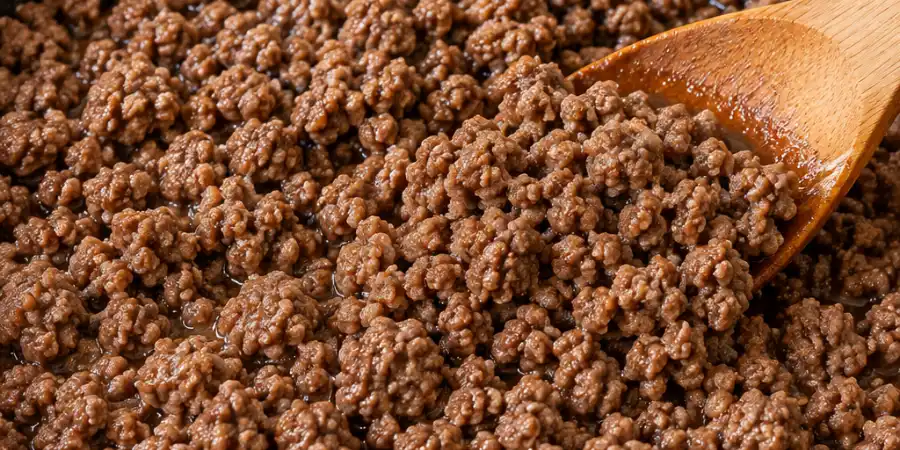
Add the beef and water mixture to the pan. Cook over medium heat for 6 to 8 minutes. Keep breaking the beef with the wooden spoon or the potato masher.
The beef is ready when no pink remains and the pieces are very small and uniform. The internal temperature must reach 160°F (71°C). Skim any fat floating on the surface with a spoon.
5. Add the Sauce Ingredients
Add the 227 grams of tomato sauce, 120 grams of ketchup, 15 grams of yellow mustard, 10 ml of Worcestershire sauce, 13 grams of brown sugar and 3 grams of salt. Mix well.
6. Bring to a Simmer
Raise the heat to medium-high. Bring the mixture to a gentle boil. Do not boil it hard. When bubbling starts, reduce the heat to low. Keep the pan uncovered. Simmer for 25 to 30 minutes. Stir every 4 to 5 minutes.
The open pan lets steam escape. That reduces the liquid and concentrates the flavor.
7. Check the Texture
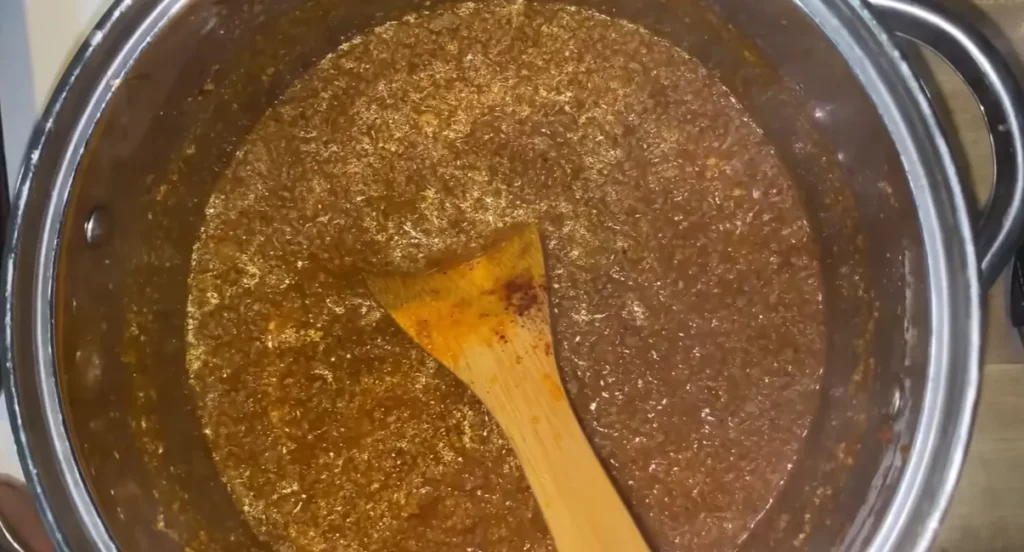
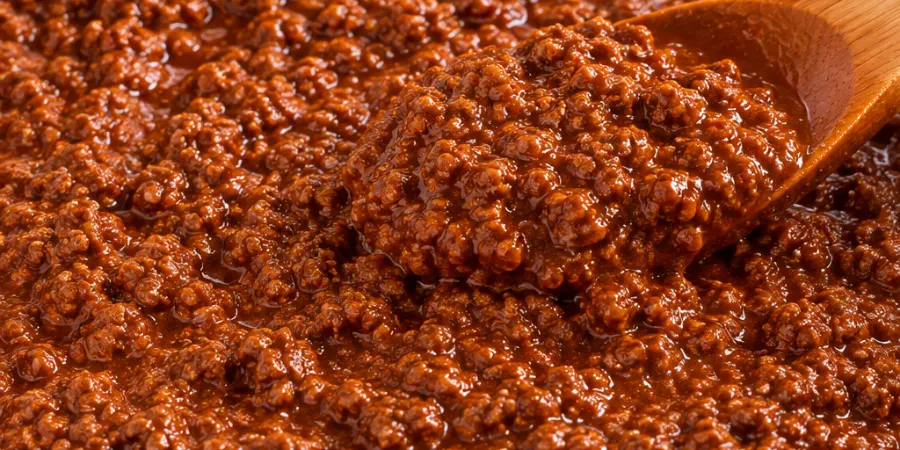
Check the consistency after about 20 minutes. The sauce should coat the spoon. It should sit on a hot dog. It should not be watery. It should not look like dry paste.
Use this visual cue. Drag the spoon across the bottom of the pan. If the line closes slowly, the consistency is right. If the line closes at once, the sauce is still thin. If the pan bottom stays open for a long time, the sauce is too thick.
8. Create a Finer Texture
Mash the sauce with a potato masher for 30 to 60 seconds. For an extra-smooth sauce, use an immersion blender. The next section explains both methods.
9. Taste and Adjust
Turn off the heat and taste the sauce. Adjust with a pinch of salt, up to ½ teaspoon of brown sugar, or a little mustard or Worcestershire sauce. The troubleshooting section below covers sauce that is too sweet, tangy or spicy.
10. Rest
Let the sauce rest for about 5 minutes before serving. The final texture is thick, smooth, spoonable, moist and fine. The sauce should spread on a hot dog bun without running off at once.
Getting the Fine Texture
Texture is what makes this sauce a hot dog chili. Two tools give you that texture.
Potato masher. Mash the sauce for 30 to 60 seconds. The masher breaks the remaining beef pieces. Use a silicone or wooden masher in a non-stick pan.
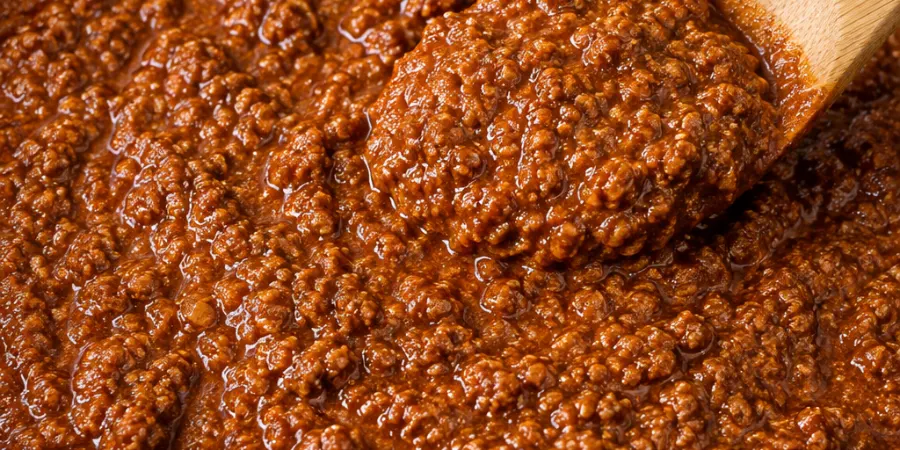
Immersion blender. Use it for an extra-smooth sauce. Move the hot sauce into a deep pot or a tall container. Blend in short pulses. Do not blend in a wide skillet. The sauce will splatter, and the blender can damage the non-stick coating.
Do not puree the sauce completely. Small meat particles are fine. They give the chili its body.
If the sauce is too thick. Add 1 tablespoon of water or beef broth. Stir and simmer for 1 to 2 minutes. Repeat if needed.
If the sauce is too thin. Simmer it uncovered for 5 to 10 more minutes.
The final weight target is about 950 to 1,000 grams. Do not thin the sauce only to reach a bigger volume.
Hot Dog Chili Variations
The base formula stays the same in every variation. Only the listed change applies.
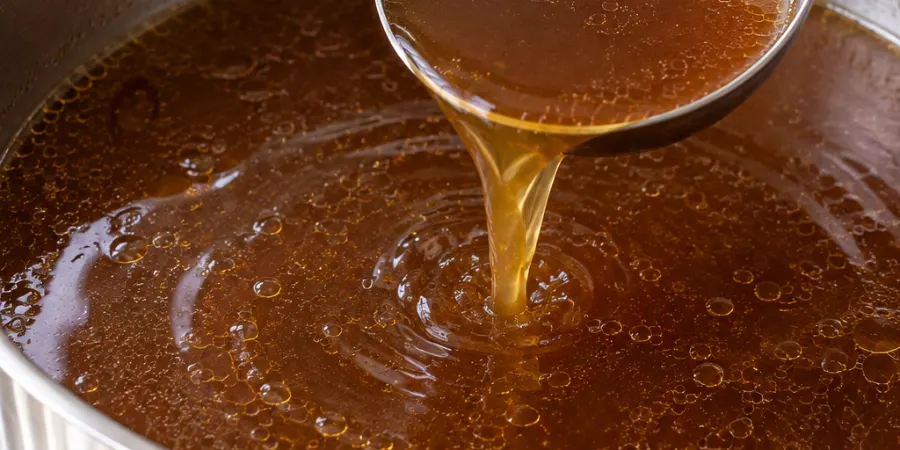
Beef broth version. Replace the 240 ml of water with 240 ml of low-sodium beef broth. The beef flavor becomes deeper. Keep the salt the same at the start and taste at the end. Full-sodium broth makes the sauce saltier and changes the sodium value.
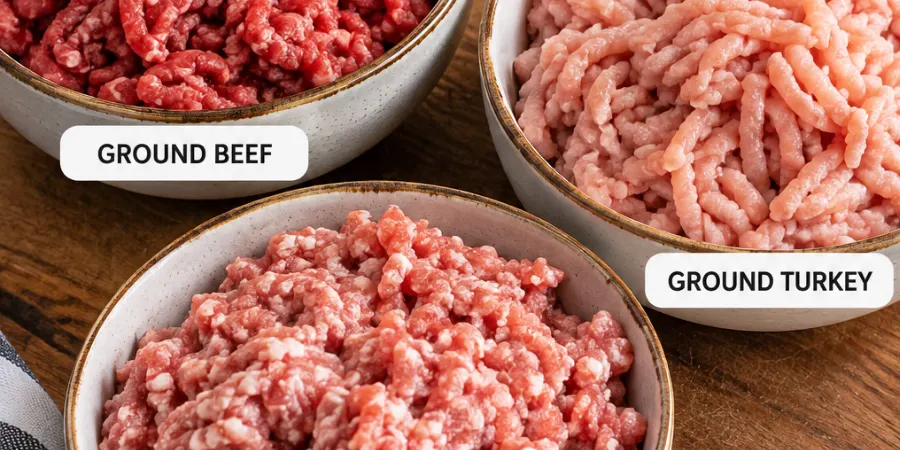
Turkey chili sauce. Use 567 grams of 93/7 ground turkey. Do not use 99% breast meat. It turns dry. Keep the 14 grams of olive oil. The turkey must reach 165°F (74°C). This version has a lighter flavor than beef.
Pork chili sauce. Use 567 grams of ground pork. Reduce the olive oil to 1 teaspoon. Pork gives more fat, so skim the surface during cooking.
Spicy version. Add ¼ teaspoon of cayenne pepper with the garlic in step 3. Add more in ⅛ teaspoon steps if you want more heat. Keep the chili powder at 2 teaspoons.
Sweeter version. Raise the brown sugar from 13 grams to 30 grams (2 tablespoons). Keep the ketchup at 120 grams. Do not add other sugar. The sweetness is clearly noticeable, but the sauce structure stays the same.
Common Mistakes and Troubleshooting
Most problems come from heat, pan size or liquid. Avoid these mistakes first.
- Do not leave the beef in large chunks.
- Do not brown the beef in a dry pan. This recipe simmers the beef in water.
- Do not skip the 240 ml of starting water.
- Do not let the garlic turn dark brown.
- Do not raise the chili powder. The heat should stay mild.
- Do not boil the sauce hard.
- Do not cover the pan during the simmer.
- Do not reduce the sauce until it becomes paste.
- Do not add extra salt at the start. Taste at the end.
- Do not puree the sauce completely, unless you want a very smooth texture.
- Do not serve the sauce watery.
Pan size matters. A deep pot like a Dutch oven can leave the sauce thin at the same simmer time. Follow the 12-inch skillet size.
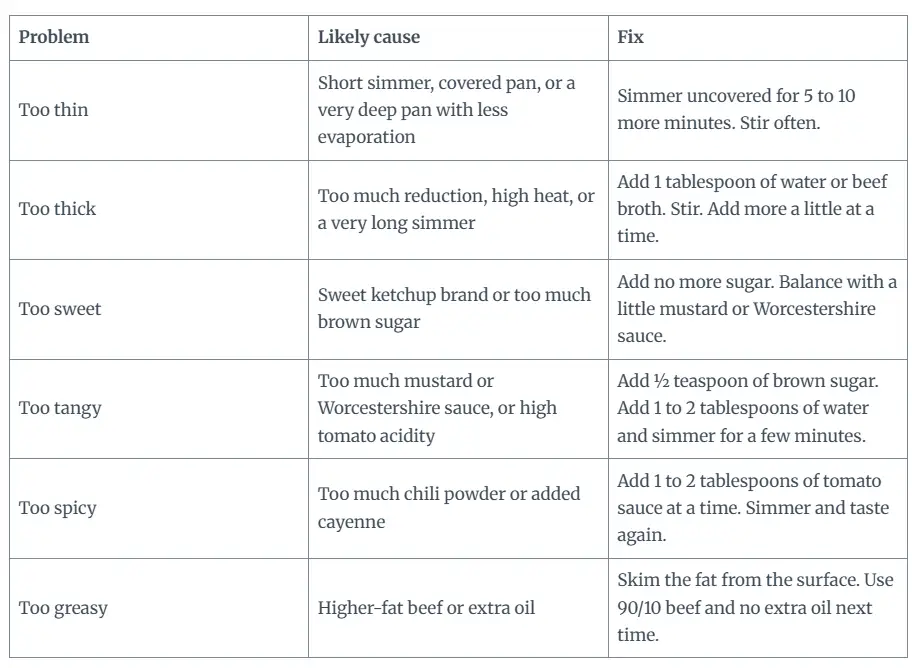
If the sauce still has a problem, use this table.
Make-Ahead, Storage and Reheating
This sauce is a good make-ahead recipe. Cooking it a day early gives the flavors time to combine.
Cooling
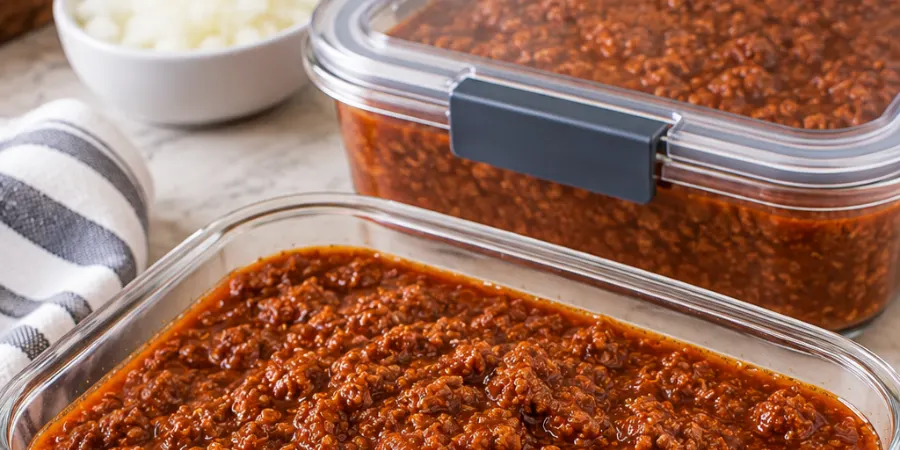
Cool the cooked chili within 2 hours. Divide it into shallow airtight containers, 1 to 2 inches deep. A deep container holds 4 cups of chili hot for too long. Let it cool on the counter for a few minutes first. Then move it to the refrigerator.
Refrigerator and Freezer
Store completely cooled chili in an airtight container for 3 to 4 days. Reheat only the portion you need.
For the freezer, use a freezer-safe container or bag. Freeze small portions. Use them within about 3 months.
Thawing
Thaw frozen chili in the refrigerator overnight. This is the best method. You can also reheat it straight from frozen in a saucepan over low heat. That takes longer and needs frequent stirring. A little water or broth helps.
Reheating
Every method must bring the chili to 165°F (74°C).
- Stovetop: Put the portion in a saucepan. Heat over low to medium-low heat for 5 to 8 minutes. Stir often. Add 1 to 2 tablespoons of water if needed.
- Microwave: Use a microwave-safe bowl. Cover it loosely. Heat in 30-second intervals. Stir after each one. Continue until the chili is steaming hot all the way through.
- Slow cooker (warm holding only): Heat the chili to 165°F (74°C) on the stovetop first. Then move it to the slow cooker on Warm or Low. Never heat cold chili in a slow cooker. It stays in the danger zone of 40 to 140°F (4 to 60°C) for too long.
How to Serve Hot Dog Chili
The classic chili dog is simple. A grilled hot dog goes in a toasted bun. About ⅓ cup of chili goes on top. Add yellow mustard and finely diced onion.
Classic chili dog
- 1 grilled hot dog
- 1 toasted hot dog bun
- About ⅓ cup of hot dog chili
- Yellow mustard
- Finely diced onion
Optional toppings
- Shredded cheddar cheese
- Pickle relish
- Jalapeños
- Coleslaw
Other Uses
The sauce is also a versatile meat sauce. Use it on:
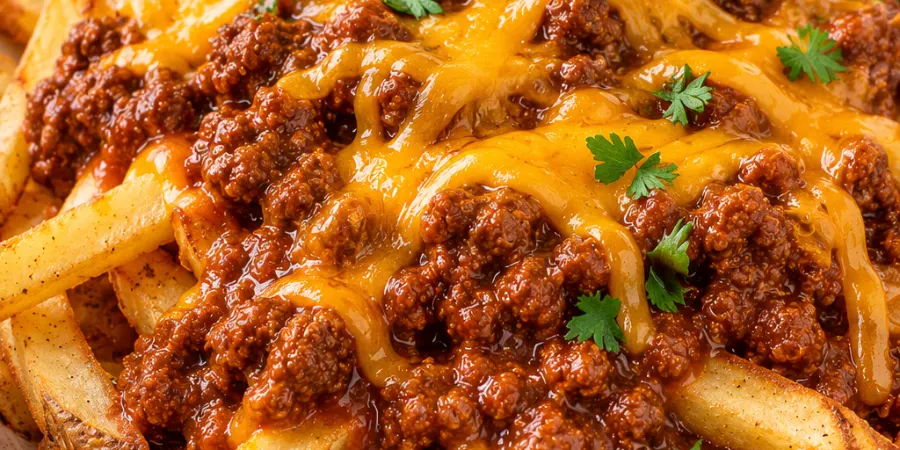
- Chili cheese fries
- Loaded baked potatoes
- Chili burgers
- Bratwurst
- Grilled sausage
- Nachos
- Mac and cheese
Nutrition
One ⅓ cup serving contains about 125 calories. The values are calculated from the base beef formula for 12 servings, without skimming the fat.
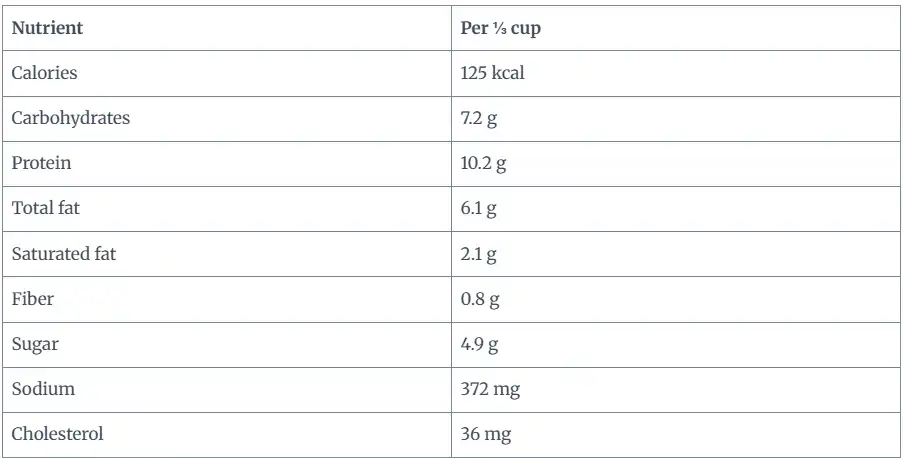
Skimming surface fat can lower the calories and fat a little. These values apply to the chili sauce only. Hot dogs, buns, cheese, mustard and other toppings are not included. The exact numbers change with the brands of ground beef, ketchup, tomato sauce, mustard and Worcestershire sauce.
FAQs
Is Hot Dog Chili Sauce Better the Next Day?
Yes, it can be. When the chili rests in the fridge overnight, the flavors have more time to combine. Reheating brings them together. This makes the sauce a useful make-ahead recipe. It is still good fresh from the pan, so you do not have to wait.
Why Do You Cook the Beef in Water?
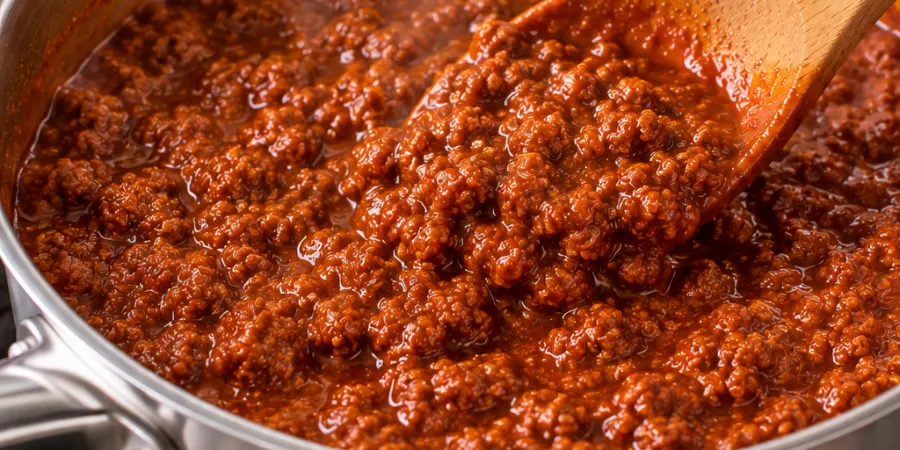
Water separates the beef into very small pieces. The beef simmers in it instead of browning. This gives the fine, condiment-style texture that a hot dog chili needs. Browning the beef in a dry pan makes larger, firmer crumbles.
Can I Use Beef Broth Instead of Water?
Yes. Use 240 ml of low-sodium beef broth. The beef flavor becomes deeper. Keep the salt the same at the start and taste at the end. Full-sodium broth makes the sauce saltier.
How Thick Should the Sauce Be?
The sauce should coat the spoon and sit on the hot dog. It should not be watery. It should not be dry like paste. Drag a spoon across the pan bottom. The line should close slowly.
Can I Freeze Hot Dog Chili?
Yes. Cool it completely and freeze it in small portions. Use it within about 3 months. Thaw it overnight in the refrigerator, then reheat it to 165°F (74°C).
What Do Ground Beef Ratios Mean?
A ground beef ratio shows the proportion of lean meat to fat. A label such as 70/30, 80/20, 85/15 or 90/10 gives lean first and fat second. A 90/10 beef is 90% lean and 10% fat. The exact fat content can vary by product, producer and market.
A higher-fat beef, such as 70/30, gives a juicier but greasier result. A leaner beef gives a drier result with less grease. Ground chuck is often sold around 80/20. Ground round is commonly leaner. Ground sirloin is often available around 90/10.
This recipe uses 90/10 ground beef. It gives enough beef flavor. It also keeps the grease under control, so you do not need to drain the pan. An 80/20 beef makes a richer sauce, but the base formula in this recipe is built around 90/10. result: higher fat can contribute flavor and moisture, while leaner options can reduce excess grease.
Pinterest Pins