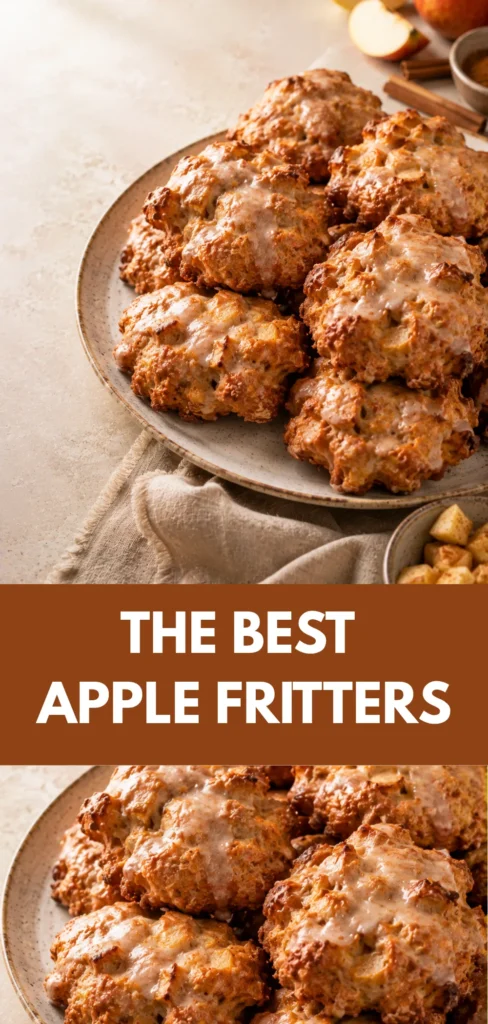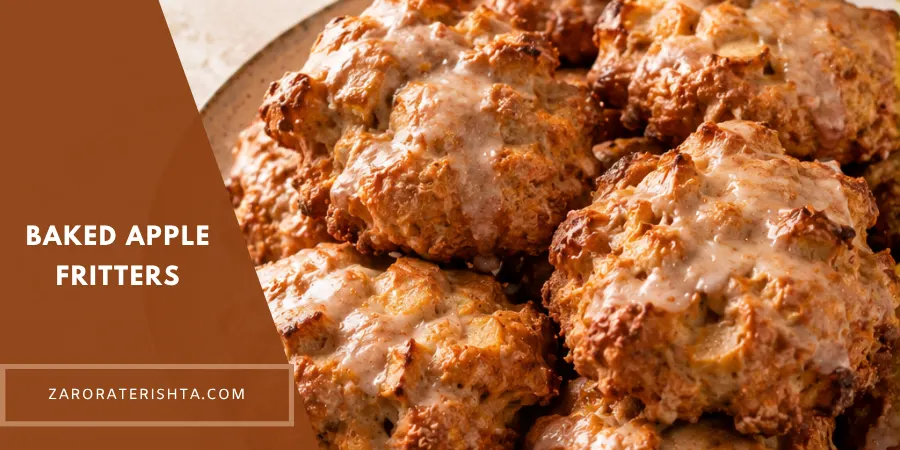
A traditional fritter is known for its crispy, airy, and golden texture, but frying also brings extra time, effort, and mess. This baked version takes a simpler approach while keeping the character of a classic apple fritter. The result is a soft, tender interior with a texture similar to a scone, making it an easier way to enjoy a homemade apple dessert without deep frying.
The batter is filled with chopped apples so every fritter has real fruit throughout. Using firm apples helps them maintain some texture during baking instead of breaking down completely. A warm blend of cinnamon, nutmeg, and allspice enhances the apple flavor, while brown sugar adds gentle caramel depth without overpowering the fruit.
Baked Apple Fritters-The Short Answer
What makes these Baked Apple Fritters especially satisfying is the glaze. A thin vanilla glaze is brushed over the warm fritters and then broiled, allowing the sugar to bubble and lightly caramelize. A second layer of glaze added afterward brings back a smooth sweetness and creates a contrast between the crisp caramelized exterior and the soft, tender center.
These fritters are a fun choice for a fall breakfast, especially when served with coffee, but they also work well as an afternoon treat or simple homemade dessert. The dough uses straightforward ingredients and avoids the extra work of frying while still creating a recognizable baked apple fritter experience.
Ingredients
The ingredient list is simple, but each component has an important role in creating the right texture and flavor. The base ingredients provide structure, sweetness, moisture, and the warm apple-spice character that defines these baked fritters.
For the fritter batter, use:
- 1 1/2 cups all-purpose flour (approximately 188 g)
- 1/2 cup packed light brown sugar (approximately 100 g)
- 2 teaspoons baking powder (approximately 8 g)
- 1 teaspoon ground cinnamon
- 1/2 teaspoon ground nutmeg
- 1/4 teaspoon ground allspice
- 1/4 teaspoon fine salt
- 1 cup finely chopped firm apple (approximately 150 g)
- 6 tablespoons cold unsalted butter (approximately 85 g)
- 1 large egg (approximately 50 g without shell)
- 1/2 cup whole milk (120 ml)
- 1 teaspoon pure vanilla extract (approximately 5 ml)
All-purpose flour provides enough structure while keeping the fritters soft and tender. Brown sugar adds sweetness and mild caramel flavor that pairs naturally with apples, while baking powder provides the lift needed for a lighter baked texture.
Firm apples work best because they maintain some texture during baking. Honeycrisp and Granny Smith are excellent choices, while Braeburn or other firm sweet-tart varieties can also work well. Cut the apples into pieces approximately 6–8 mm in size so they distribute evenly through the batter.
Cold unsalted butter is important for the final texture. Small pieces of cold butter remain in the mixture and create a tender, biscuit-like crumb as they melt during baking.
The wet ingredients bring the batter together while adding moisture and richness. The egg provides structure, whole milk keeps the fritters tender, and vanilla enhances the apple and spice flavors without overpowering them.
For the vanilla glaze, use:
- 1 cup confectioners’ sugar (approximately 120 g)
- 2 tablespoons whole milk (30 ml)
- 1 teaspoon pure vanilla extract (approximately 5 ml)
The glaze should have a thick but brushable consistency. Confectioners’ sugar works best because it dissolves smoothly into the glaze. If the mixture is too thick, add milk in 1-teaspoon increments until it becomes easy to brush over the warm fritters.
How to Make Baked Apple Fritters
Start by preparing the apples. Peel and core the apple, then cut it into small pieces approximately 6–8 mm in size. This size helps the apple distribute evenly throughout the batter while still maintaining some texture after baking.
Prepare a large baking sheet by lining it with parchment paper and lightly greasing it. Preheat the oven to 400°F (200°C) so it is fully heated before the fritters go in.
In a large bowl, combine the flour, brown sugar, baking powder, cinnamon, nutmeg, allspice, and salt. Whisk the dry ingredients together until the spices and leavening are evenly distributed throughout the flour.
Cut the cold butter into small cubes and add it to the dry mixture. Use a pastry cutter or your fingertips to work the butter into the flour until the mixture resembles coarse crumbs with small visible pieces of butter remaining.
In a separate bowl, whisk together the egg, milk, and vanilla extract until smooth. Add the wet mixture to the dry ingredients and stir gently just until combined.
The batter should be thick and scoopable rather than smooth like cake batter. Avoid overmixing because developing too much gluten can make the baked fritters dense instead of tender.
Fold the chopped apples into the batter until they are evenly distributed. Make sure the apple pieces are mixed throughout without overworking the dough.
Using a 1/4-cup scoop or spoon, divide the batter into 8 equal portions on the prepared baking sheet. Leave space between each fritter so they can bake evenly.
Bake the fritters at 400°F (200°C) for approximately 14–18 minutes. They are ready when the tops are lightly golden, the centers are set, and the internal temperature reaches approximately 200–205°F (93–96°C).
Allow the baked fritters to cool on the baking sheet for about 5 minutes before adding the first glaze layer. This short resting period helps them firm slightly while remaining warm enough for the glaze to absorb.
For the glaze, whisk together the confectioners’ sugar, milk, and vanilla extract until smooth. The consistency should be thick enough to coat the fritters while still being easy to brush.
Brush a thin layer of glaze over the warm fritters. Place them under the broiler for approximately 30–60 seconds, watching carefully until the glaze bubbles and lightly caramelizes.
Remove the fritters from the oven and allow them to cool for another 5–10 minutes. Apply the remaining glaze over the top to create a smooth finish.
The finished Baked Apple Fritters should have a lightly caramelized glaze, a tender interior, and visible apple pieces throughout. Serve warm or allow them to cool completely before storing.
Storage
Baked Apple Fritters are best enjoyed the same day because the glaze and baked texture are at their best when fresh. The outside stays more enjoyable shortly after baking, while the inside remains soft and tender.
Once completely cooled, store the fritters in an airtight container at room temperature for up to 2 days. If storing multiple fritters together, place parchment paper between layers to help prevent them from sticking.
For longer storage, the fritters can be refrigerated in an airtight container for up to 4 days. Keep in mind that refrigeration can slightly change the texture and make the exterior less crisp.
To refresh refrigerated fritters, warm them gently in the microwave for about 10–15 seconds or reheat them briefly in a low oven until warmed through. Avoid overheating because it can dry out the tender interior.
Tips And Notes
Use firm apples rather than softer varieties because they hold their shape better during baking. Honeycrisp and Granny Smith work especially well, while Braeburn and other firm sweet-tart apples can also provide good flavor and texture.
Cut the apples into pieces approximately 6–8 mm in size. Smaller pieces distribute more evenly through the batter, while larger chunks can add too much moisture and make the fritters harder to shape.
Keep the butter cold when mixing the batter. Cold butter creates small pockets that contribute to the tender, biscuit-like texture. If the butter becomes too warm before baking, the final fritters may become denser.
Avoid overmixing the batter after adding the wet ingredients. Stir only until the ingredients are combined and the flour is no longer visible. Overmixing can develop excess gluten and make the baked fritters tougher.
The batter should be thick and scoopable rather than loose. If the batter feels unusually thin, check that the flour measurement is accurate before making adjustments.
The glaze consistency affects the final finish. It should be thick enough to coat the fritters but still easy to brush. Add milk gradually if the glaze is too thick, or add more confectioners’ sugar if it becomes too thin.
The first glaze layer is brushed onto the warm fritters before broiling. This allows the glaze to bubble and lightly caramelize, creating a more traditional fritter-style finish. The second glaze layer is added afterward to provide a smooth, sweet coating.
For the best results, allow the fritters to cool slightly before serving. This gives the crumb time to set while keeping the apple flavor and glaze texture enjoyable.
Nutrition
The nutrition information below is based on dividing the complete recipe into 8 equal Baked Apple Fritters. Each serving includes the baked fritter and the vanilla glaze used in the recipe.
Approximate nutrition per 1 fritter:
- Calories: 300 kcal
- Carbohydrates: 49 g
- Protein: 4 g
- Total Fat: 10 g
- Saturated Fat: 6 g
- Fiber: 2 g
- Sugar: 25 g
- Sodium: 250 mg
- Cholesterol: 40 mg
These values are approximate and can vary depending on the exact ingredients used, especially the type of apple, flour brand, butter, milk, and confectioners’ sugar.
The nutrition estimate is based on the full recipe formula, including the baked fritter batter and the vanilla glaze. Changes such as using different apples, adjusting the glaze amount, or making ingredient substitutions can slightly affect the final values.
Pinterest Pins