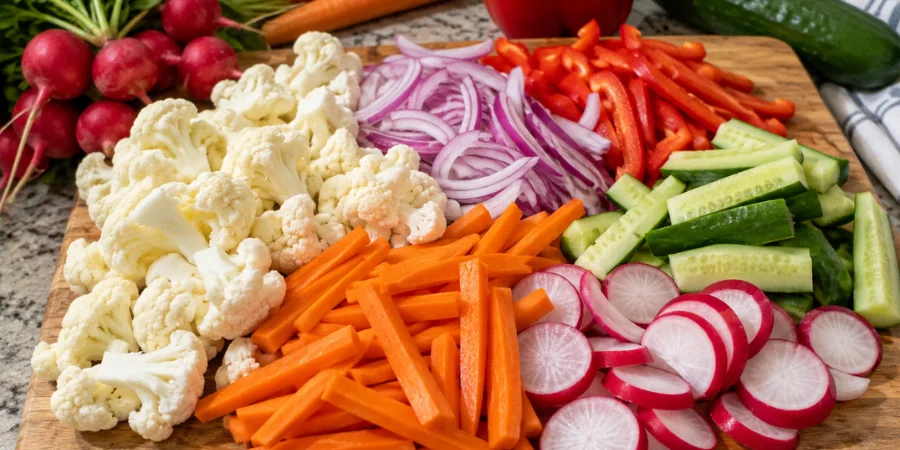
Quick Fridge Pickled Vegetables are an easy way to add bright color, tangy flavor, and satisfying crunch to everyday meals. This simple recipe combines fresh carrots, radishes, English cucumber, red onion, cauliflower, and red bell pepper in one colorful vegetable mix.
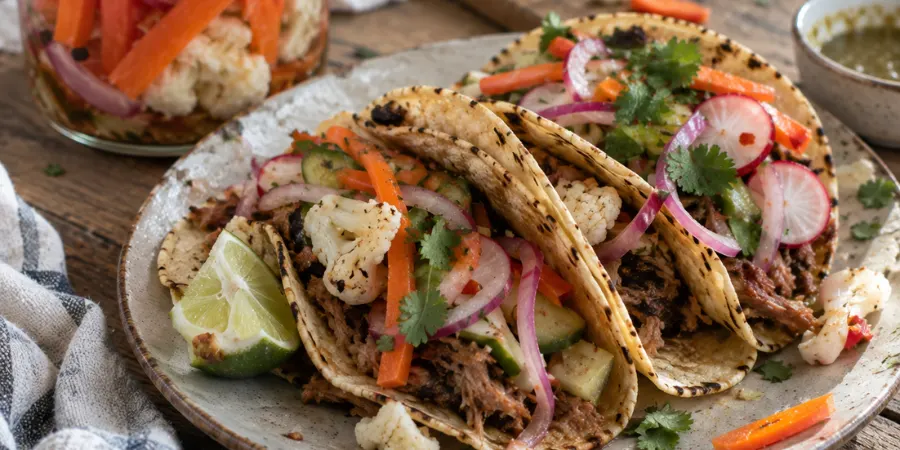
These refrigerator pickled vegetables make a fresh, flavorful topping for tacos, burgers, sandwiches, rice bowls, and salads. They are also a practical way to use extra vegetables from the crisper drawer before they go to waste.
This beginner-friendly refrigerator-pickling method requires no canner, water bath, or special equipment. The fresh vegetables are packed into clean glass jars with garlic, mustard seeds, coriander seeds, black peppercorns, and dried dill. A warm brine made with distilled white vinegar, water, sugar, and salt adds balanced tangy flavor.
With about 15 minutes of hands-on preparation, the vegetables can be enjoyed after 24 hours. Their flavor becomes deeper and more balanced after 2–3 days in the refrigerator while the vegetables maintain their bright colors and naturally crisp textures.
Quick Fridge Pickled Vegetables — The Short Answer

Why You’ll Love These Quick Pickled Vegetables
- Quick preparation: These refrigerator pickled vegetables require only about 15 minutes of hands-on preparation.
- No special equipment: You do not need a canner, water bath, or special pickling equipment.
- Colorful vegetable mix: Cauliflower, carrots, radishes, cucumber, red onion, and red bell pepper provide different colors, flavors, and textures.
- Fresh and crunchy: The vegetables maintain their naturally crisp texture while absorbing the seasoned vinegar brine.
- Easy to customize: Swap the vegetables or adjust the spices according to your taste and the fresh produce you have available.
- Mild or spicy: Add thinly sliced jalapeño or crushed red pepper flakes for extra heat.
- Useful for everyday meals: Serve the pickled vegetables with tacos, burgers, sandwiches, salads, rice bowls, wraps, and savory snacks.
- Practical recipe: This is an easy way to use extra vegetables from the crisper drawer before they go to waste.
Ingredients You’ll Need
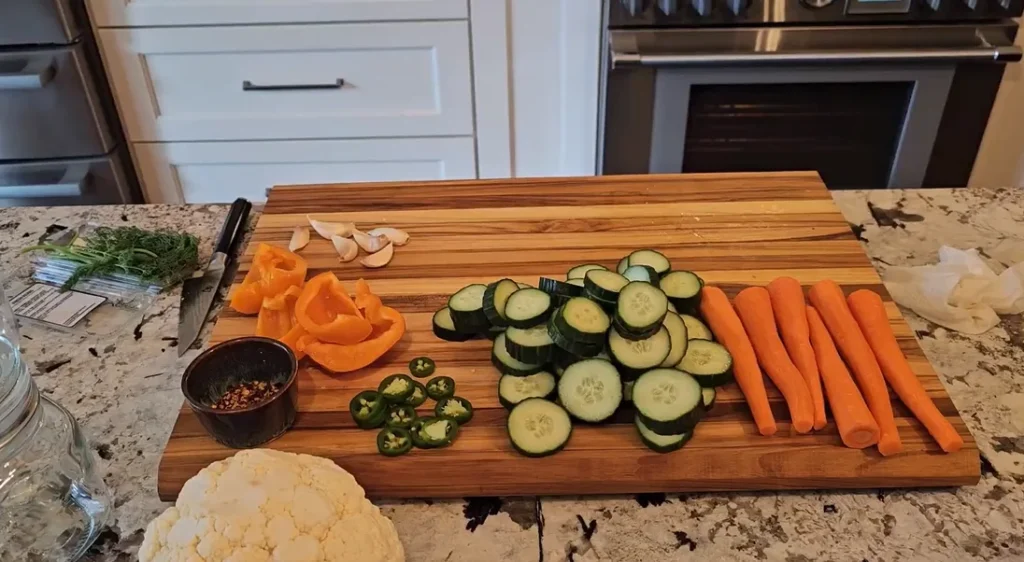
This recipe combines fresh, firm vegetables with a simple distilled white vinegar brine and balanced pickling spices. Cut the vegetables into similar-sized pieces so they absorb the brine and pickle more evenly.
Fresh Vegetables
1 cup (100g) small cauliflower florets: Add a firm texture and satisfying crunch.
½ cup (60g) carrots, cut into thin matchsticks: Add mild natural sweetness, bright color, and crisp texture.
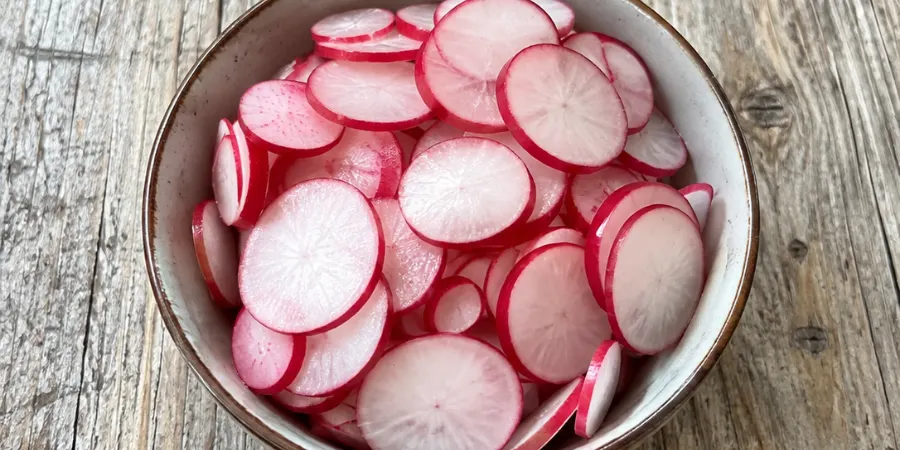
½ cup (55g) radishes, thinly sliced: Provide a fresh, lightly peppery flavor.
½ English cucumber (approximately 100g), cut into thin matchsticks: Adds a cool, fresh flavor and crisp bite.
½ small red onion (approximately 60g), thinly sliced: Quickly absorbs the tangy brine and adds sharp, savory flavor.
½ medium red bell pepper (approximately 75g), cut into thin strips: Adds bright color, mild sweetness, and fresh crunch.
Vinegar Brine
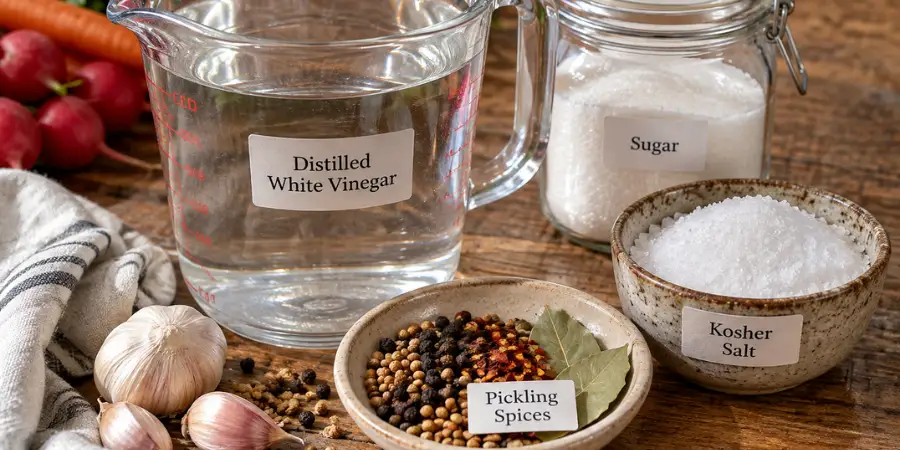
- 1½ cups (360ml) distilled white vinegar with 5% acidity: Creates a clean, sharp, and tangy pickling base.
- 1 cup (240ml) water: Balances the acidity while maintaining the intended vinegar-to-water ratio.
- 2 tablespoons (25g) granulated sugar: Softens the sharp acidity without making the vegetables overly sweet.
- 1 tablespoon (15g) kosher or pickling salt: Seasons the vegetables and balances the flavor of the brine.
- 2 whole garlic cloves, peeled: Add mild savory depth as the vegetables marinate.
Pickling Spices
- 1 teaspoon mustard seeds: Add a mild, warm, and traditional pickling flavor.
- ½ teaspoon coriander seeds: Provide subtle citrusy and aromatic notes.
- ½ teaspoon whole black peppercorns: Add gentle peppery warmth.
- ½ teaspoon dried dill: Gives the vegetables a light herbal flavor.
Optional Heat
- ½ small jalapeño, thinly sliced: Adds fresh chile flavor and noticeable heat.
or
- ¼ teaspoon crushed red pepper flakes: Adds mild heat without changing the texture of the vegetable mix.
Use either jalapeño or crushed red pepper flakes according to your preferred spice level.
Ingredient Notes and Substitutions
Cauliflower
Choose fresh cauliflower with firm, tightly packed florets. Cut it into small, bite-sized pieces so it fits easily into the jars and absorbs the brine evenly.
Cauliflower maintains a firm crunch after pickling and provides a satisfying contrast to softer vegetables such as cucumber and red onion.
Avoid using large florets because they may take longer to absorb the seasoned brine.
Carrots
Fresh, firm carrots add natural sweetness, bright color, and crisp texture.
Cut the carrots into thin matchsticks so they pickle at a similar rate to the cucumber and bell pepper. A sharp knife, mandoline, or vegetable slicer can help create more consistent pieces.
Avoid cutting the carrots too thick because they may remain noticeably firmer than the other vegetables.
Radishes
Thinly sliced radishes provide a fresh, lightly peppery flavor that becomes milder as they absorb the vinegar brine.
Choose firm radishes without soft spots or damaged areas. Slice them evenly so their flavor and texture remain consistent throughout the mixture.
The natural color of red radishes may lightly tint the brine during refrigerator storage. This is normal.
English Cucumber
English cucumber adds a cool, refreshing flavor and crisp texture.
Its thin skin does not usually need to be peeled. Cut the cucumber into thin matchsticks that are similar in size to the carrots.
Because cucumber is more delicate than carrots and cauliflower, avoid pouring steaming-hot brine directly over it. Allowing the brine to cool slightly helps reduce unnecessary softening.
Red Onion
Red onion quickly absorbs the tangy vinegar brine and adds bright color and savory flavor.
Slice it thinly so it pickles evenly with the other vegetables. Its sharp raw flavor becomes milder and more balanced after resting in the refrigerator.
The red onion may gradually add a light pink color to the brine and nearby vegetables. This natural color change does not affect the flavor.
Red Bell Pepper
Red bell pepper adds mild sweetness, bright color, and fresh crunch.
Remove the stem, seeds, and white inner membrane before cutting the pepper into thin strips.
Yellow or orange bell peppers can be used for a similar sweet flavor. Green bell pepper has a stronger and slightly more bitter flavor but can also be used if preferred.
Distilled White Vinegar
Distilled white vinegar with 5% acidity provides a clean, sharp flavor while allowing the natural colors and flavors of the vegetables to remain noticeable.
Apple cider vinegar can be used for a slightly milder and fruitier flavor. White wine vinegar creates a softer and more delicate taste.
If using another vinegar, choose one labeled with 5% acidity. Keep the amount of vinegar and water unchanged to maintain the intended balance of the brine.
Avoid dark-colored vinegar because it may change the bright appearance of the vegetable mixture.
Granulated Sugar
Sugar balances the sharp acidity of the vinegar without making the vegetables taste overly sweet.
For a more tangy flavor, reduce the sugar slightly or leave it out. Keep the vinegar and water amounts unchanged.
Kosher or Pickling Salt
Kosher salt or pickling salt seasons the brine and enhances the natural flavor of the vegetables.
Different types of salt vary in crystal size, so measurements may not always be equal by volume. Use the listed quantity as the recipe guide.
Avoid heavily iodized salt when possible because it may affect the appearance of the brine.
Garlic
Whole peeled garlic cloves add mild savory flavor as the vegetables marinate.
Divide the garlic evenly between the two jars. For a stronger garlic flavor, add one additional clove, but avoid adding too much because it may overpower the fresh vegetables and pickling spices.
Mustard Seeds, Coriander Seeds, and Black Peppercorns
Mustard seeds add mild warmth and traditional pickling flavor.
Coriander seeds provide subtle citrusy notes, while whole black peppercorns add gentle peppery depth.
Whole spices gradually flavor the brine without leaving a powdery texture throughout the jars.
Dried Dill
Dried dill creates a mild herbal flavor that complements the vinegar, garlic, and vegetables.
Fresh dill can be used for a stronger and fresher herbal flavor. Add a small sprig to each jar rather than adding too much at once.
Jalapeño or Crushed Red Pepper Flakes
Add thinly sliced jalapeño for fresh chile flavor and more noticeable heat.
Keeping the jalapeño seeds and inner membrane creates a spicier result. Remove some of them for a milder flavor.
Crushed red pepper flakes provide a simple alternative when you want mild heat without adding another fresh vegetable.
How to Make Quick Fridge Pickled Vegetables
These quick fridge pickled vegetables are easy to prepare and require no water-bath canning or special pickling equipment. Prepare the vegetables, divide them between clean jars, add the garlic and pickling spices, then cover everything with the warm vinegar brine.
Step 1: Prepare the Vegetables
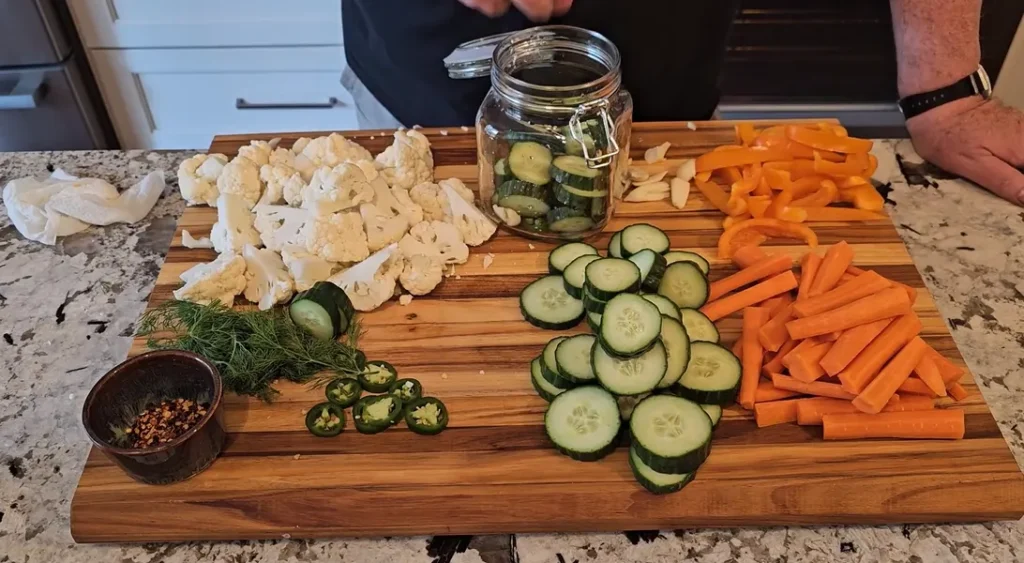
Wash and dry all the fresh vegetables before cutting.
Cut the cauliflower into small, bite-sized florets.
Slice the carrots and English cucumber into thin matchsticks. Keeping them similar in size helps them absorb the brine more evenly.
Thinly slice the radishes and red onion.
Remove the stem, seeds, and white inner membrane from the red bell pepper, then cut it into thin strips.
If using jalapeño, slice it thinly. Keep the seeds and inner membrane for more heat, or remove some of them for a milder flavor.
Try to keep the vegetable pieces relatively even in size. The vegetables do not need to look identical, but very large or thick pieces may take longer to pickle.
Step 2: Prepare the Jars
Wash two clean glass jars and their lids thoroughly with hot, soapy water.
Rinse well and check the jars for cracks, chips, or damaged rims before filling.
Divide the following ingredients evenly between the jars:
- 2 peeled garlic cloves
- 1 teaspoon mustard seeds
- ½ teaspoon coriander seeds
- ½ teaspoon whole black peppercorns
- ½ teaspoon dried dill
Add the optional sliced jalapeño or crushed red pepper flakes if you prefer spicy pickled vegetables.
Step 3: Pack the Vegetables
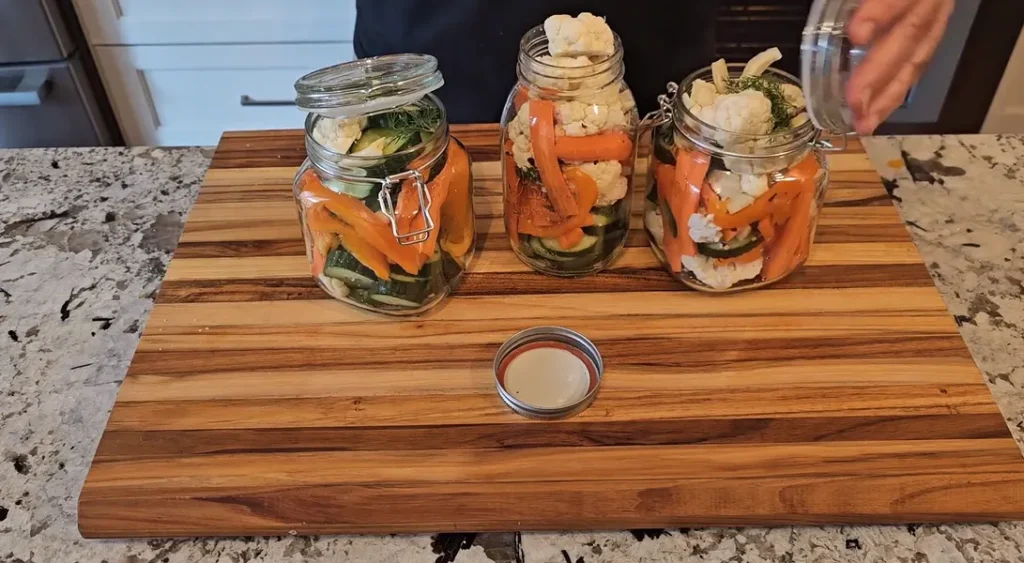
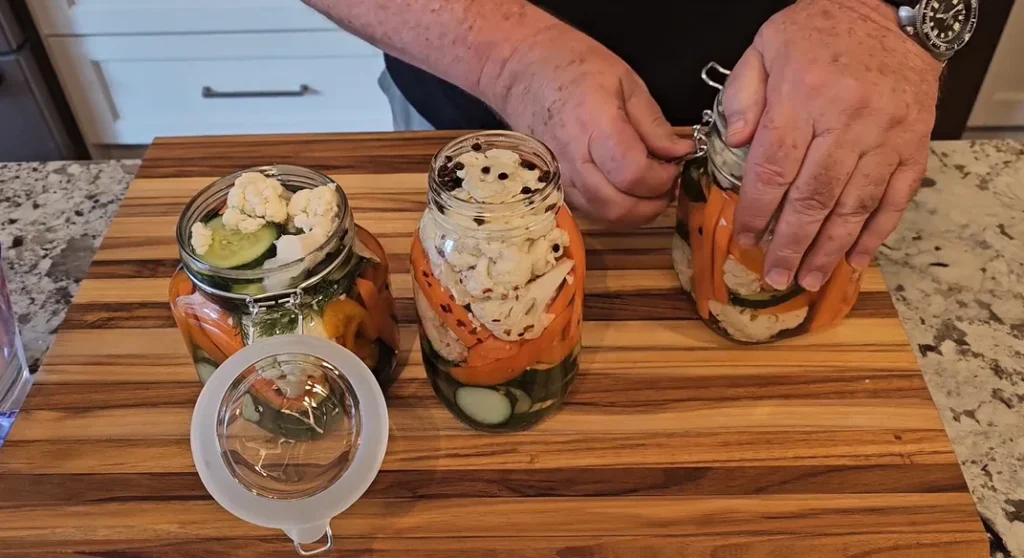
Divide the prepared cauliflower, carrots, radishes, English cucumber, red onion, and red bell pepper evenly between the jars.
Arrange the vegetables closely so each jar contains a balanced mixture of colors, flavors, and textures.
Pack the vegetables firmly enough to reduce large empty spaces, but do not crush or tightly compress them.
Leave approximately ½ inch of space at the top of each jar so there is room for the brine to cover the vegetables.
Step 4: Make the Vinegar Brine
Add the following ingredients to a medium non-reactive saucepan:
- 1½ cups (360ml) distilled white vinegar with 5% acidity
- 1 cup (240ml) water
- 2 tablespoons (25g) granulated sugar
- 1 tablespoon (15g) kosher or pickling salt
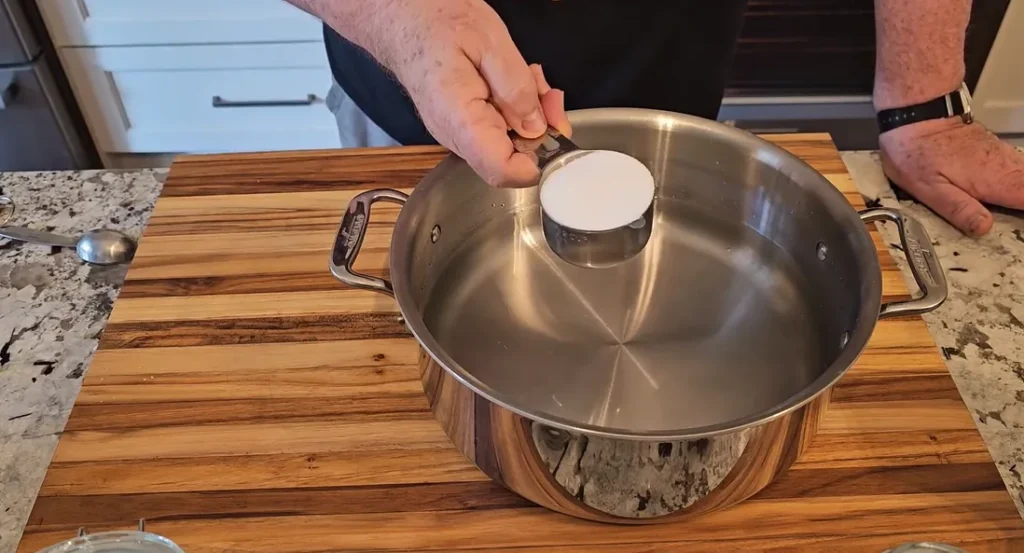
Place the saucepan over medium heat.
Stir the mixture occasionally until the sugar and salt have completely dissolved.
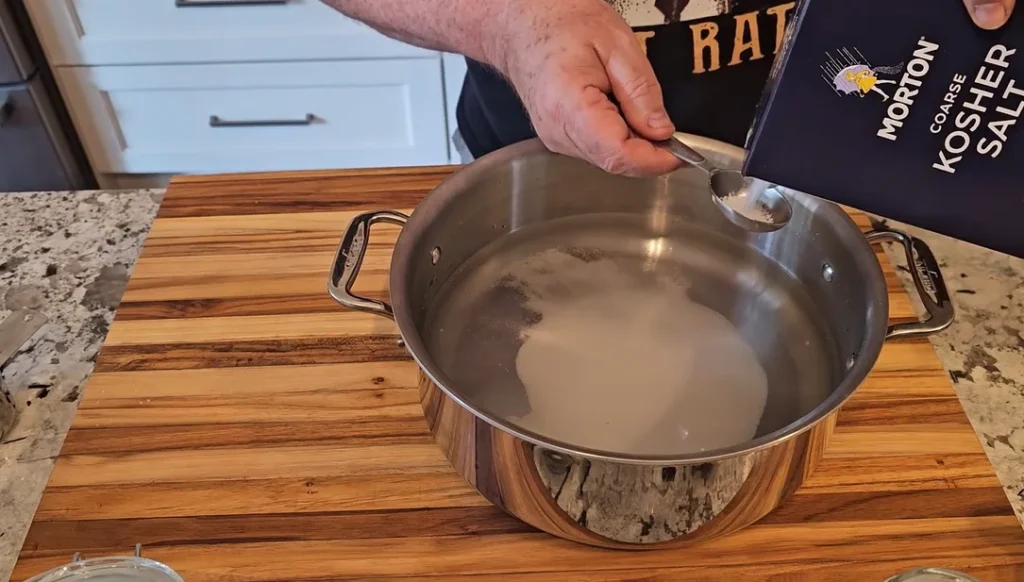
Bring the brine to a gentle simmer, then remove the saucepan from the heat.
The brine does not need to boil for an extended time. Heating it only until the sugar and salt dissolve helps keep the preparation quick and simple.
Step 5: Allow the Brine to Cool Slightly
Let the brine cool for approximately 10 minutes, or until it is warm rather than steaming hot.
Cooling the brine briefly helps protect the texture of delicate vegetables such as cucumber, red onion, and bell pepper.
Do not allow the brine to become completely cold before pouring unless preferred. A warm brine helps the vegetables begin absorbing the vinegar, salt, sugar, garlic, and pickling spices.
Slowly pour the warm vinegar brine over the vegetables.
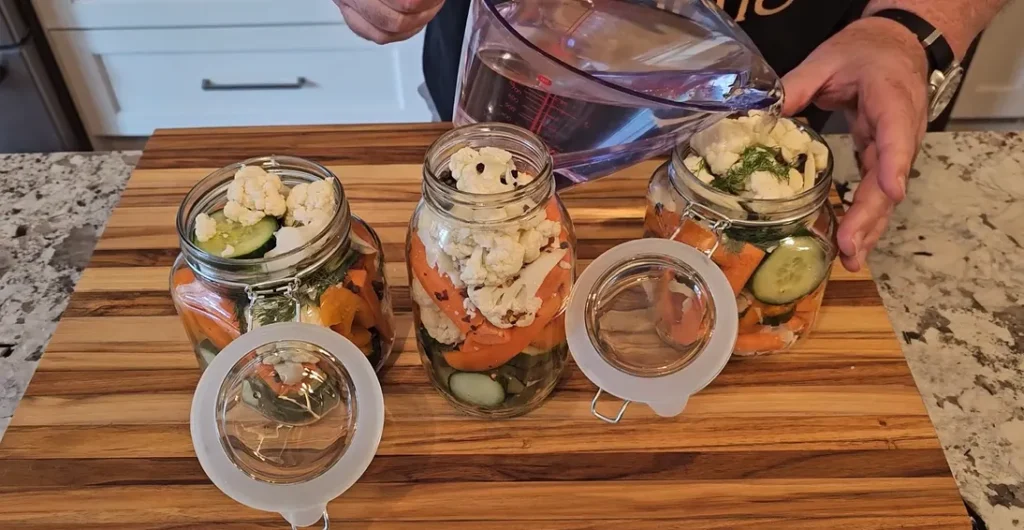
Step 6: Pour the Brine into the Jars
Divide the liquid evenly between the jars and make sure the vegetables are completely covered.
Gently tap each jar on the counter or run a clean, non-metallic utensil around the inside edges to release trapped air bubbles.
If the liquid level drops, add more brine until the vegetables are submerged.
Avoid forcing extra vegetables into the jars if there is not enough room for the brine. The liquid needs space to move around the vegetables for more even pickling.
Step 7: Cool and Refrigerate
Allow the filled jars to cool briefly until they are no longer hot.
Secure the lids and place the jars in the refrigerator.
Do not leave the filled jars at room temperature for an extended period.
These are refrigerator pickles and are not intended for room-temperature or shelf-stable storage.
Step 8: Allow the Vegetables to Pickle
Refrigerate the vegetables for at least 24 hours before serving.
After 24 hours, the vegetables will have a fresh, tangy flavor while maintaining much of their natural crunch.
For a deeper and more balanced pickled flavor, allow them to rest in the refrigerator for 2–3 days.
The vegetables will continue to absorb the seasoned brine during storage. Their flavor may become stronger over time, while some vegetables may gradually soften.
Pickling Timeline
The flavor and texture of quick fridge pickled vegetables change as they rest in the refrigerator.
After a Few Hours
The vegetables begin absorbing the vinegar brine, but the flavor may still be light and uneven.
The cucumber and red onion may develop tangy flavor more quickly than the carrots and cauliflower.
After 24 Hours
The vegetables are ready to eat.
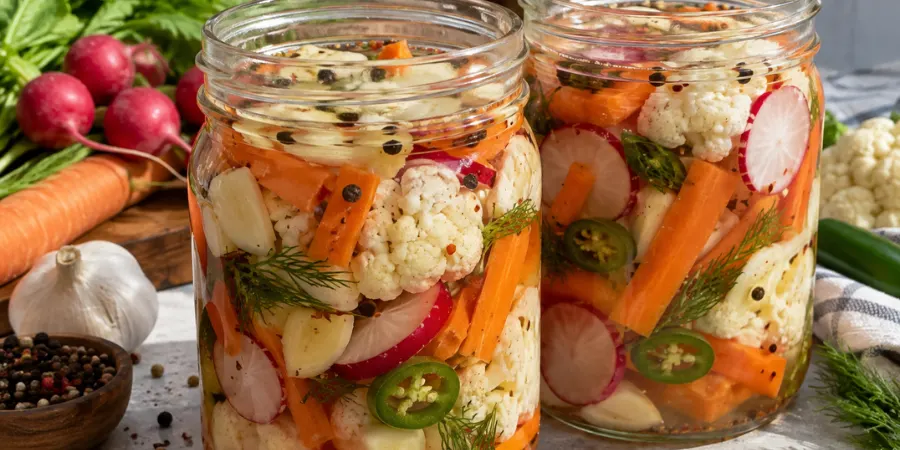
They will taste fresh, crisp, and tangy, with noticeable flavor from the garlic, mustard seeds, coriander seeds, black peppercorns, and dill.
After 2–3 Days
The vinegar, sugar, salt, garlic, and spices become more evenly distributed throughout the vegetable mixture.
This resting period creates a deeper and more balanced flavor while the vegetables still maintain a satisfying crunch.
After 1 Week
The pickled flavor becomes stronger and more developed.
The red onion and radishes may lightly tint the brine, while delicate vegetables such as cucumber may become slightly softer.
These natural changes in color and texture are expected during refrigerator storage.
Expert Tips
Use fresh, firm vegetables without soft spots or damaged areas for the best texture.
Cut the vegetables into similar-sized pieces so they absorb the brine at a more consistent rate.
Keep cauliflower florets small and cut carrots into thin matchsticks because firm vegetables take longer to pickle.
Use distilled white vinegar labeled with 5% acidity for a clean, sharp flavor.
Keep the vinegar-to-water ratio unchanged. Adjust the sugar or spices for flavor rather than reducing the amount of vinegar.
Allow the brine to cool until warm rather than steaming hot before pouring it over the vegetables.
Pack the vegetables closely but avoid crushing or tightly compressing them.
Make sure all vegetables remain covered with brine during refrigerator storage.
Wait at least 24 hours before serving. For a deeper and more balanced flavor, allow the vegetables to pickle for 2–3 days.
Use clean tongs, a fork, or a spoon whenever removing vegetables from the jars.
Keep the jars refrigerated at all times because this recipe is not intended for shelf-stable storage.
Common Mistakes to Avoid
Do not use old, soft, wilted, or damaged vegetables. Fresh and firm vegetables provide the best color, flavor, and texture.
Avoid cutting the vegetables into very different sizes. Thick carrot pieces and large cauliflower florets may take longer to absorb the brine than thin cucumber, radish, or onion slices.
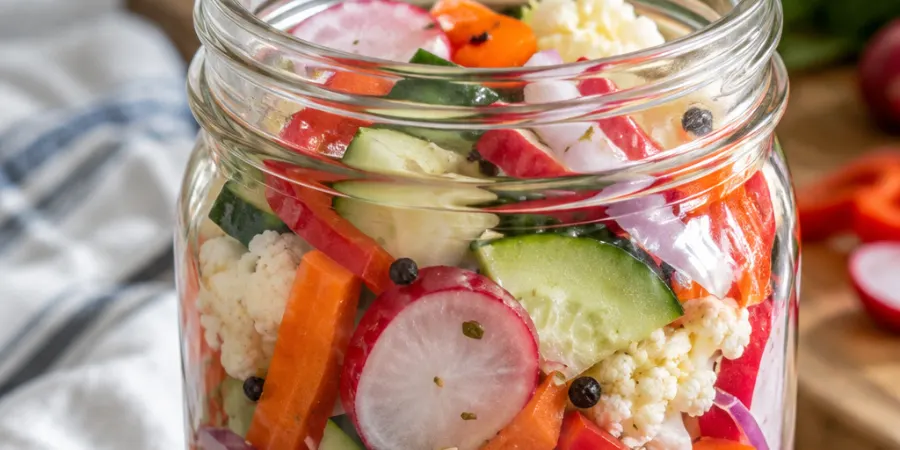
Do not pack the vegetables so tightly that the brine cannot move between them. Leave enough room for the liquid to surround and cover the vegetable pieces.
Avoid pouring steaming-hot brine directly over the vegetables. Very hot liquid may unnecessarily soften delicate ingredients such as cucumber and red onion.
Do not reduce the amount of vinegar or add extra water. Keep the vinegar-to-water ratio unchanged to maintain the intended acidity and flavor of the recipe.
Avoid using vinegar with unknown acidity. Choose distilled white vinegar or another suitable vinegar labeled with 5% acidity.
Do not leave vegetables above the brine during storage. Keep them fully submerged so they pickle more evenly.
Avoid expecting a fully developed flavor immediately after preparing the jars. Wait at least 24 hours before serving, or 2–3 days for a deeper and more balanced taste.
Do not use dirty utensils or fingers to remove vegetables from the jars. Clean utensils help reduce contamination and protect the quality of the remaining pickles.
Do not store the jars in a pantry or at room temperature. These quick pickled vegetables must remain refrigerated.
Do not freeze the pickled vegetables. Freezing and thawing can damage their crisp texture and make them soft or watery.
Recipe Variations
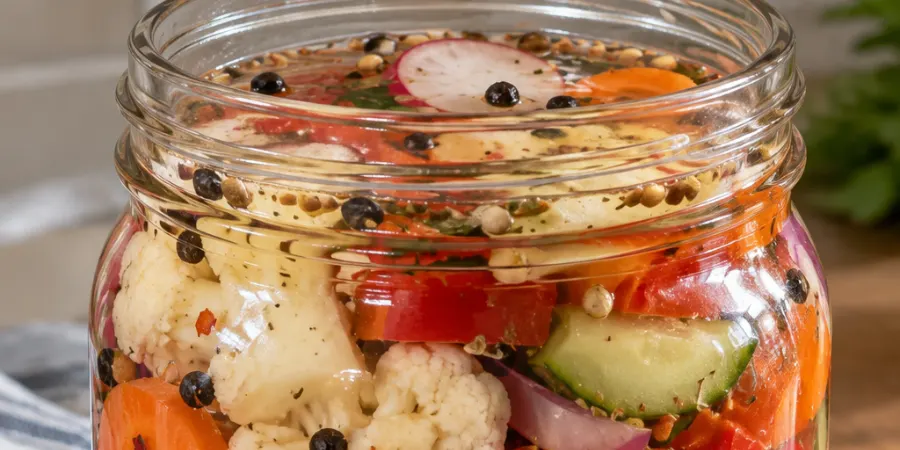
These quick fridge pickled vegetables are easy to customize with different vegetables, vinegars, herbs, and spices. Keep the original vinegar-to-water ratio unchanged, then adjust the vegetables and seasonings according to your taste.
Spicy Pickled Vegetables
Add ½ small jalapeño, thinly sliced, to the jars for fresh chile flavor and noticeable heat.
Keep the jalapeño seeds and inner membrane for a spicier result, or remove some of them for a milder flavor.
You can also use ¼ teaspoon crushed red pepper flakes instead of fresh jalapeño. Start with a small amount because the heat may become stronger as the vegetables rest in the refrigerator.
Apple Cider Vinegar Version
Replace the distilled white vinegar with apple cider vinegar labeled with 5% acidity.
Apple cider vinegar creates a slightly milder and fruitier flavor. It may also give the brine and vegetables a warmer color.
Keep the vinegar and water quantities unchanged.
White Wine Vinegar Version
Use white wine vinegar with 5% acidity for a softer and more delicate vinegar flavor.
This variation works especially well with cucumber, red onion, radishes, and fresh herbs.
Avoid reducing the amount of vinegar or adding extra water.
Fresh Dill and Garlic Version
Replace the dried dill with a small sprig of fresh dill in each jar.
For a stronger garlic flavor, add one additional peeled garlic clove. Divide the garlic evenly between the jars.
Avoid adding too much garlic because its flavor becomes stronger as it sits in the brine.
Extra-Crunchy Vegetable Mix
Replace some of the cucumber with thin green beans, small asparagus pieces, or additional carrots and cauliflower.
Blanch firm green beans or thick asparagus briefly if needed, then cool and dry them before adding them to the jars.
Keep the vegetable pieces thin and similar in size so they absorb the brine more evenly.
Sweet and Mild Version
Use sweet onion instead of red onion and add yellow or orange bell pepper for a mild, naturally sweet vegetable mix.
Keep the original 2 tablespoons of sugar for balanced sweetness. If you prefer a more tangy flavor, reduce the sugar slightly without changing the vinegar or water amounts.
What to Serve with Quick Fridge Pickled Vegetables
Quick fridge pickled vegetables add tangy flavor, bright color, and satisfying crunch to rich, creamy, or savory meals.
Serve them as a topping for tacos, burgers, sandwiches, hot dogs, wraps, shawarma, rice bowls, grain bowls, and salads. Their acidity helps balance rich meats, creamy sauces, cheese, and hearty fillings.
Add the vegetables to charcuterie boards, cheese boards, snack plates, or appetizer platters. They pair well with hummus, crackers, olives, cheese, cold meats, and fresh bread.
The pickled cucumber, red onion, carrots, radishes, cauliflower, and bell pepper also work well with grilled corn, quinoa salad, potato salad, roasted potatoes, sweet potato fries, and baked vegetables.
For extra flavor, finely chop the pickled vegetables and use them as a quick relish for burgers, sandwiches, grilled chicken, fish, or savory bowls.
How to Store Quick Fridge Pickled Vegetables
Keep the jars refrigerated at all times. These are refrigerator pickles and should not be stored in a pantry or at room temperature.
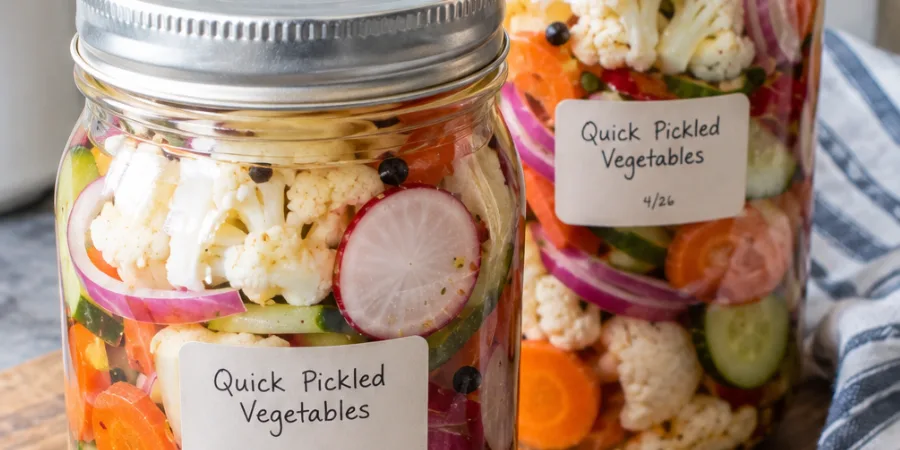
Make sure the vegetables remain fully submerged beneath the vinegar brine. If some pieces float, gently reposition them with a clean utensil or use a suitable food-safe pickling weight.
Always use clean tongs, a fork, or a spoon when removing vegetables from the jars. Avoid using fingers or utensils that have touched other foods because they may introduce contaminants into the brine.
For the best flavor and texture, use the pickled vegetables within approximately 2–3 weeks. Delicate vegetables such as cucumber may soften sooner than carrots and cauliflower.
The red onion and radishes may gradually tint the brine pink or purple. This natural color change is normal and does not affect the flavor.
Do not freeze the pickled vegetables. Freezing and thawing can damage their crisp texture and make them soft or watery.
Discard the entire jar if you notice mold, an unpleasant smell, unexpected bubbling, unusual cloudiness accompanied by other spoilage signs, a leaking lid, or an unexpected change in texture. When in doubt, do not taste the vegetables.
Is This Recipe Safe for Water-Bath Canning?
No. This recipe is designed for refrigerator storage and has not been tested for shelf-stable water-bath canning.
Washing the jars and using vinegar does not make the finished vegetables safe for pantry storage. Keep the jars refrigerated during the entire pickling and storage period.
If you want shelf-stable mixed pickled vegetables, use a scientifically tested canning recipe from a trusted home-preservation source. Follow its exact vegetable quantities, vinegar strength, jar size, preparation method, and processing time.
Do not use this quick refrigerator-pickle method as a substitute for tested water-bath canning instructions.
Nutrition Insight
Quick fridge pickled vegetables can add color, flavor, and crunch to meals without requiring a large serving.
One serving contains approximately 33 calories, although the exact nutrition values may vary depending on the vegetables used, serving size, vinegar, amount of sugar and salt, and how much brine the vegetables absorb.
Because most of the pickling liquid remains in the jars rather than being consumed, nutrition calculations based on the entire batch of brine may overestimate the sugar and sodium in each serving.
Treat automatically calculated nutrition information as an estimate rather than an exact measurement.
More Fresh and Flavorful Recipes
If you enjoy colorful vegetables and easy homemade appetizers, try these related recipes next.
- Baked Brie with Cranberry Sauce — Pair creamy baked brie with sweet and tangy cranberry sauce for a simple appetizer that works well on holiday and snack boards.
- 10-Minute Refreshing Cucumber Salad — Make a cool and crisp cucumber salad when you want a quick side dish with fresh flavor.
Frequently Asked Questions
How Soon Can You Eat Quick Pickled Vegetables?
Quick pickled vegetables can be eaten after approximately 24 hours in the refrigerator.
For a deeper and more balanced flavor, allow them to rest for 2–3 days. During this time, the vegetables absorb more flavor from the vinegar, garlic, salt, sugar, and pickling spices.
How Long Do Quick Fridge Pickled Vegetables Last?
For the best flavor and texture, use the refrigerated pickled vegetables within approximately 2–3 weeks.
Keep the vegetables fully submerged in the brine and use clean utensils whenever removing them from the jars.
Do Quick Pickled Vegetables Need to Be Refrigerated?
Yes. This is a refrigerator-pickle recipe and the jars must remain refrigerated.
The recipe has not been tested for shelf-stable storage or water-bath canning.
Which Vegetables Can I Add?
You can use cauliflower, carrots, radishes, cucumber, red onion, bell pepper, green beans, asparagus, or other firm vegetables.
Choose fresh vegetables and cut them into similar-sized pieces. Keep in mind that delicate vegetables may soften more quickly than firm vegetables such as carrots and cauliflower.
Which Vinegar Is Best for Quick Pickled Vegetables?
Distilled white vinegar with 5% acidity creates a clean, sharp flavor and helps preserve the bright appearance of the vegetables.
Apple cider vinegar provides a slightly fruitier taste, while white wine vinegar creates a softer flavor. If using another vinegar, choose one labeled with 5% acidity and keep the original vinegar-to-water ratio unchanged.
Can I Reduce or Leave Out the Sugar?
Yes. Sugar balances the sharp acidity but is not intended to make the vegetables strongly sweet.
Reduce the sugar slightly or leave it out if you prefer a more tangy flavor. Keep the vinegar and water quantities unchanged.
Why Did My Pickled Vegetables Become Soft?
Soft vegetables may result from using older produce, cutting the pieces too thin, pouring steaming-hot brine over delicate vegetables, or storing the pickles for an extended period.
Use fresh, firm vegetables and allow the brine to cool until warm rather than steaming hot before filling the jars.
Can I Reuse the Pickle Brine?
Reusing old brine for another full batch of vegetables is not recommended because its acidity, salt, sweetness, and flavor may change after contact with the original vegetables.
If the leftover brine still looks and smells fresh, use a small amount in salad dressings, marinades, sauces, or savory dips. Keep it refrigerated and discard it if you notice signs of spoilage.
Are Quick Pickled Vegetables Healthy?
Quick pickled vegetables can add vegetables, flavor, and crunch to meals.
However, the brine contains salt and sugar, and the amount absorbed may vary. Nutrition values depend on the vegetables, serving size, and amount of brine consumed.
Can I Freeze Quick Pickled Vegetables?
Freezing is not recommended because the vegetables may become soft and watery after thawing.
For the best texture, keep the jars refrigerated and use the vegetables within the recommended storage period.
Final Thoughts
These Quick Fridge Pickled Vegetables combine fresh cauliflower, carrots, radishes, English cucumber, red onion, and red bell pepper with garlic, pickling spices, and a simple vinegar brine.
The recipe requires about 15 minutes of hands-on preparation and does not need a canner, water bath, or special equipment. Refrigerate the vegetables for at least 24 hours, or wait 2–3 days for a deeper and more balanced tangy flavor.
Serve them with tacos, burgers, sandwiches, salads, wraps, rice bowls, snack boards, or savory meals whenever you want extra color, acidity, and crunch. Keep the jars refrigerated and use the vegetables within approximately 2–3 weeks for the best flavor and texture.