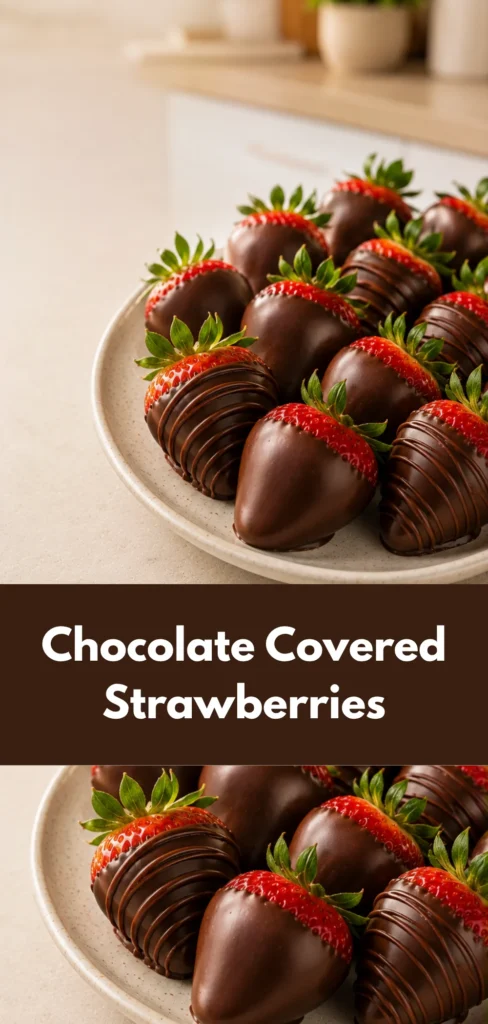
When you want a fast and simple dessert that still feels special, Chocolate Covered Strawberries are an easy way to upgrade fresh strawberries. This recipe uses 3 core ingredients, making it simple to prepare without a complicated process.
With a little care, especially drying the fruit properly, these chocolate-covered berries are easy to make at home and can impress guests at parties. They are especially appealing when fresh strawberries are plentiful.
Chocolate Covered Strawberries-The Short Answer
What makes this Chocolate Covered Strawberries Recipe so useful is how versatile the finished treat can be. The basic ingredients create a smooth chocolate coating, while an optional drizzle and toppings allow you to customize the final appearance.
The most important steps are not rushing the preparation. The strawberries need to be completely dry before dipping, and the chocolate should be melted gradually rather than overheated.
This recipe keeps the method straightforward while creating a polished homemade treat. The process stays simple: dry the strawberries well, melt the chocolate carefully, dip the berries, and allow the coating to set properly.
Why This Recipe Works
Chocolate Covered Strawberries work because the recipe focuses on the small details that affect the final result. Fresh strawberries provide the best flavor and appearance, but they need proper preparation before they meet the chocolate.
Rinse the strawberries gently, remove excess water, and pat each berry completely dry with paper towels. Allowing them to stand at room temperature helps remove remaining surface moisture, which improves chocolate adhesion.
The chocolate coating method is designed to create a smooth and even finish. Melting the chocolate in short 15–20-second microwave intervals with thorough stirring helps prevent overheating.
Reserving a small portion of the chocolate before melting and stirring it into the mostly melted mixture helps finish the melting process while keeping the chocolate smooth and fluid enough for dipping.
The finished chocolate should be lump-free and easy to work with without being excessively hot. This creates a cleaner coating and a more polished appearance.
Allowing the coated strawberries to set at room temperature gives the best texture and finish. If faster setting is needed, a short 10–15 minute refrigerator rest can be used.
Ingredients Needed
This Chocolate Covered Strawberries recipe uses a few simple ingredients, but each one affects the final flavor, texture, and appearance. Choosing fresh strawberries and preparing the chocolate properly are the most important steps for creating a smooth coating.
For the base recipe, use:
- 1 lb. fresh strawberries (about 454 grams)
- 8 oz. semi-sweet chocolate melting wafers (about 227 grams)
- 1 tablespoon coconut oil (about 14 grams)
Choose strawberries that are firm, bright red, and free from soft spots, bruising, or mold. After washing, the strawberries should be dried thoroughly because moisture on the surface can prevent the chocolate from sticking properly.
Depending on berry size, 1 lb. of strawberries will usually provide approximately 20–24 chocolate-covered strawberries. Larger berries are often easier to dip, but the final quantity can vary.
For the chocolate coating, melting wafers or baking bars provide a smooth dipping consistency. Chocolate chips, dark chocolate, milk chocolate, or chopped chocolate can also be used depending on the flavor and finish you prefer.
Reserve approximately 28 grams of the chocolate before melting. Melt the remaining 199 grams with the coconut oil, then stir the reserved chocolate into the mostly melted mixture. This helps complete the melting process while reducing unnecessary microwave heating.
The coconut oil helps keep the melted chocolate smooth and easier to dip. If the chocolate becomes too thick during dipping, add ½ teaspoon coconut oil (about 2–2.5 grams) and stir well. Add another ½ teaspoon only if necessary because too much oil can make the coating too thin.
For an optional drizzle, use:
- 2 oz. white chocolate (about 57 grams)
- ¾ teaspoon coconut oil (about 3.5 grams)
White chocolate creates a sweeter contrast and a decorative finish. While the chocolate is still wet, you can also add toppings such as chopped pistachios, finely shredded coconut, sprinkles, freeze-dried strawberry pieces, or a light sprinkle of flaky sea salt.
Which Chocolate Is Best for Chocolate-Covered Strawberries?
The best chocolate depends on the flavor and appearance you want. Dark or semi-sweet chocolate creates a deeper contrast with the sweetness of the strawberries, while milk chocolate provides a sweeter and creamier finish.
White chocolate is another option when you want a sweeter coating or a strong visual contrast. All three types can work well, so the choice depends on your preferred taste.
For the smoothest dipping consistency, melting wafers or baking bars are preferred because they are designed to melt evenly. Chocolate chips, chocolate bars, and chopped baking chocolate can also work when melted carefully.
If using regular chocolate instead of melting wafers, the recipe uses coconut oil to help create a smoother coating texture. The important part is choosing chocolate you enjoy and melting it gradually to avoid overheating.
Whether you choose dark, milk, semi-sweet, or white chocolate, careful melting and proper strawberry preparation are what create the best final result.
How to Make Chocolate-Covered Strawberries
Start by preparing the strawberries carefully. Choose berries that are ripe, firm, plump, and brightly red. Avoid strawberries with soft spots, bruising, blemishes, or mold because they may not hold their texture well after dipping.
Gently rinse the strawberries in a colander and drain the excess water. Pat each berry thoroughly with paper towels, then leave them at room temperature for about 30 minutes. The strawberries should have no visible water droplets or damp patches because moisture can prevent the chocolate from sticking properly.
Line a baking sheet with parchment paper and prepare the chocolate coating. Measure 227 grams chocolate and 14 grams coconut oil. Reserve approximately 28 grams of the chocolate and place the remaining 199 grams chocolate with the coconut oil in a small microwave-safe bowl.
Heat the chocolate in 15–20-second intervals, stirring thoroughly after each interval. Continue until the chocolate is mostly melted but a few small pieces remain. Remove the bowl from the microwave and add the reserved 28 grams chocolate.
Stir continuously until the remaining chocolate melts and the mixture becomes smooth, glossy, and fluid. Avoid unnecessary additional heating because excessive heat can affect the texture of the chocolate. The finished chocolate should be warm enough to remain fluid but not excessively hot.
Hold each strawberry by the stem or leaves and dip it into the melted chocolate while leaving a small portion uncovered near the top. Aim to cover approximately ¾ to ⅞ of the berry and gently swirl it so the coating spreads evenly.
Lift the strawberry slowly and allow excess chocolate to drip back into the bowl. Gently slide the bottom of the berry along the bowl’s inner edge to remove extra chocolate and prevent a thick layer from collecting underneath.
Place the coated strawberries on the parchment-lined tray and continue with the remaining berries. If the chocolate starts to thicken during dipping, microwave it for 10–15 seconds and stir thoroughly before continuing.
If the chocolate remains too thick after stirring, add up to ½ teaspoon additional coconut oil and mix well. Avoid adding too much oil because it can make the coating too thin.
For an optional drizzle, melt 57 grams white chocolate with 3.5 grams coconut oil using short microwave intervals and thorough stirring. Transfer the melted chocolate to a small resealable plastic bag, cut a tiny corner, and drizzle thin lines over the strawberries.
Add toppings while the chocolate is still wet. Chopped pistachios, finely shredded coconut, sprinkles, freeze-dried strawberry pieces, or flaky sea salt can be added depending on the finish you prefer.
Allow the coated strawberries to sit undisturbed at room temperature so the chocolate can firm up naturally. If faster setting is needed, place them in the refrigerator for approximately 10–15 minutes. Once the coating is firm, serve the strawberries the same day for the best texture and appearance.
Tips and Notes
Fresh strawberries make a major difference in the final result. Choose berries that are bright red, plump, and firm with fresh green leaves. Avoid soft or bruised strawberries because excess moisture can affect the chocolate coating.
Drying the strawberries completely is one of the most important steps. After rinsing, remove excess water, pat each berry carefully, and allow them to stand at room temperature for about 30 minutes. Even small amounts of moisture can prevent the chocolate from sticking properly.
The recipe uses 227 grams chocolate with 14 grams coconut oil for the coating. Reserving approximately 28 grams chocolate, melting the remaining 199 grams, and stirring the reserved chocolate back in helps create a smoother coating without unnecessary heating.
Chocolate melting wafers, baking bars, chocolate chips, or chopped chocolate can all work depending on the flavor and texture you want. Semisweet, dark, milk, and white chocolate are suitable options when melted carefully.
When dipping the strawberries, hold them by the stem or leaves and gently swirl them through the chocolate. Removing excess chocolate along the bowl edge helps create a cleaner finish and prevents a thick chocolate base.
Add toppings while the chocolate is still wet so they adhere properly. Let the strawberries set at room temperature whenever possible, or chill them for 10–15 minutes if faster setting is needed.
For the best quality, serve chocolate-covered strawberries the same day. If refrigeration is necessary, store them in a single layer inside an airtight container and avoid stacking them because moisture can eventually affect the chocolate coating.
Storage
These chocolate-covered strawberries are best enjoyed the same day when their texture and appearance are at their best. Fresh strawberries contain moisture, so the longer they sit, the more likely the chocolate coating is to lose some of its original finish.
If you need to store them, arrange the strawberries in a single layer inside an airtight container rather than stacking them. This helps prevent the chocolate coating from pressing against other berries and keeps the finish cleaner.
If refrigeration is necessary, keep the container chilled and avoid storing the strawberries longer than needed. Condensation can develop after refrigeration and may affect the chocolate coating, causing it to become less smooth or attractive.
For the best texture and appearance, serve the strawberries fresh on the same day whenever possible. Allowing the chocolate to set properly before serving helps maintain the clean coating and fresh fruit texture.
Nutrition
The base recipe makes approximately 20–24 chocolate-covered strawberries depending on strawberry size and the amount of chocolate used on each berry. Based on 454 grams strawberries, 227 grams chocolate, and 14 grams coconut oil used in the base coating, 1 chocolate-covered strawberry is approximately 55–65 kcal.
Approximate nutrition per strawberry:
- Calories: 55–65 kcal
- Carbohydrates: 7–9 g
- Protein: 0.7–1 g
- Total Fat: 3–4 g
- Saturated Fat: 2–3 g
- Fiber: 1–2 g
- Sugar: 5–7 g
- Sodium: 5–15 mg
These figures are approximate because the amount of chocolate remaining in the bowl, strawberry size, chocolate brand, and coating thickness can change the final values.
The calculation does not include optional white chocolate drizzle, nuts, cookies, coconut, sprinkles, or other toppings. Adding these extras will change the final nutrition values.
FAQ
What Are the Best Toppings for Chocolate Covered Strawberries?
Toppings are optional, but they can add extra texture, flavor, and visual appeal. Good choices include chopped pistachios, finely shredded coconut, sprinkles, freeze-dried strawberry pieces, or a light sprinkle of flaky sea salt.
Add toppings while the chocolate is still wet so they stick properly to the coating. Once the chocolate has fully set, toppings will not adhere as effectively.
How Do You Get Chocolate to Stick to Strawberries?
The strawberries need to be completely dry before dipping. After rinsing them in a colander, drain excess water and pat each strawberry thoroughly dry with paper towels.
Let the strawberries stand at room temperature for about 30 minutes before dipping. Any moisture left on the surface can prevent the chocolate from sticking properly and may create an uneven coating.
Why Add Coconut Oil to the Chocolate?
Coconut oil helps create a smoother dipping consistency and makes the melted chocolate easier to work with.
The recipe uses 1 tablespoon, about 14 grams, with 227 grams chocolate. If the chocolate becomes too thick during dipping, up to ½ teaspoon additional coconut oil can be stirred in. Add another ½ teaspoon only if necessary because too much oil can make the coating too thin.
Can You Use a Microwave to Melt Chocolate?
Yes, the microwave works well when the chocolate is heated gradually. Use 15–20-second intervals and stir thoroughly between each one.
Reserve approximately 28 grams chocolate before melting and add it after the remaining 199 grams is mostly melted. Continue stirring until the reserved chocolate melts and the mixture becomes smooth and fluid.
What Type of Bowl Is Best for Dipping Strawberries?
A small, deep bowl works well because it creates a deeper pool of chocolate. This makes it easier to coat the strawberries evenly without needing an unnecessarily large amount of chocolate.
A deeper bowl also allows you to swirl the berries more easily and helps create a cleaner coating.
Should Chocolate Covered Strawberries Be Refrigerated?
They are best served the same day for better texture and appearance. Let them set at room temperature whenever possible.
If faster setting is needed, place them in the refrigerator for about 10–15 minutes. Avoid prolonged refrigeration because condensation can eventually affect the chocolate coating.
Pinterest Pins