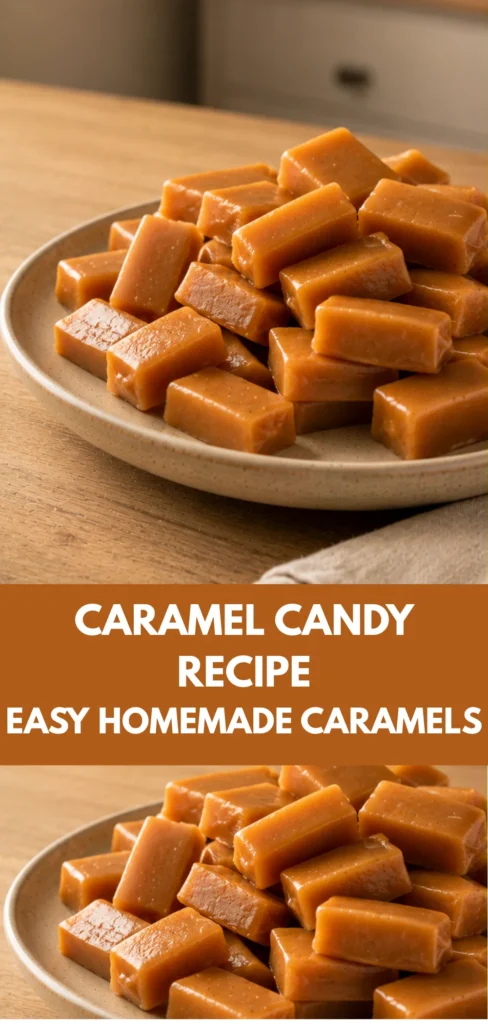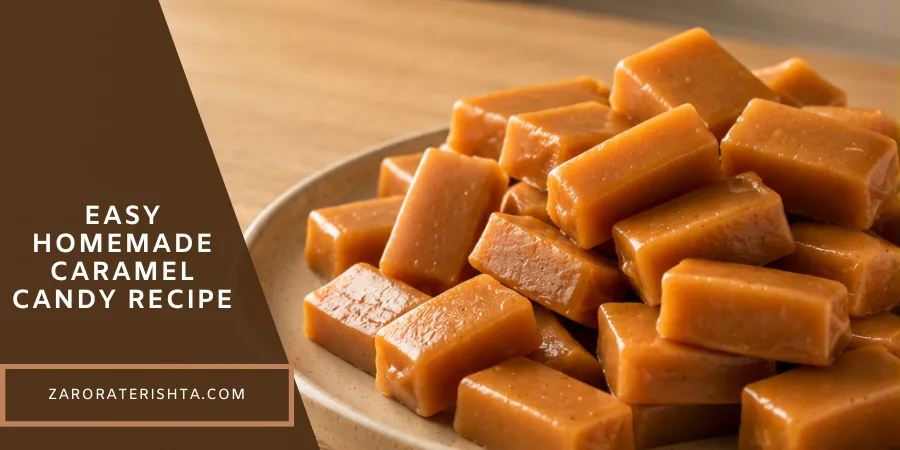
This homemade caramel candy has a soft chewy texture with enough structure to hold its shape. The recipe uses a balanced combination of sugar, dairy, butter, salt, and vanilla to create a smooth caramel with a rich flavor. Although the process takes some time, the method is simple and straightforward when each step is followed carefully.
The key to achieving the best soft-but-sturdy caramel texture is cooking the mixture to the correct temperature. Cook the caramel to 240–243°F (116–117°C), with 241°F (116°C) as the primary target. An ice-water test can also help confirm that the caramel reaches a firm but pliable consistency rather than becoming too soft or too hard.
Caramel Candy Recipe-The Short Answer
Once cooled and cut, these caramels can be enjoyed plain, topped with sea salt, or dipped in chocolate for a more indulgent treat. Overnight refrigeration helps the caramel become firm enough for clean cutting and wrapping, while allowing it to return to room temperature restores the intended soft and chewy texture.
Why This Recipe Works
This recipe is designed to create soft and chewy caramels with a smooth and creamy texture. The combination of granulated sugar, light brown sugar, corn syrup, butter, cream, and evaporated milk creates a balanced caramel with enough structure for clean cutting while keeping the finished candy tender.
The key is the cooking process rather than simply following the ingredient list. Warm the dairy first, then add it gradually to the caramel base while stirring continuously. Keeping the heat at medium helps prevent scorching, while steady bubbling allows the mixture to concentrate without cooking too aggressively.
For the best texture, cook the mixture to 240–243°F (116–117°C), with 241°F (116°C) as the primary target. An ice-water test can also confirm the consistency. The cooled caramel should form a firm but pliable ball rather than becoming brittle. This extra check is useful because the final texture can be affected by cooking conditions and thermometer accuracy.
Once cooked, pour the caramel into an 8×8-inch pan and let it cool before chilling it thoroughly. Allow the caramel to cool at room temperature for about 2–3 hours, then refrigerate for at least 4–6 hours. Chilling it for 8–12 hours or overnight makes it easier to cut cleanly into approximately 18–20 gram pieces, while bringing the pieces back to room temperature restores the intended soft and chewy texture.
They can then be individually wrapped for serving or gifting.
Ingredients
This caramel uses a balanced combination of sugar, dairy, fat, and flavoring. Each ingredient plays an important role in creating a smooth caramel with the right balance of sweetness, richness, and chew.
- 1 ½ cups (300 grams) granulated sugar
- ½ cup (100 g) light brown sugar
- ¾ cup (255 grams) light corn syrup
- 1 ½ cups (354 ml / 354 grams) evaporated milk
- 1 ½ cups (approximately 360 ml / 360 grams) heavy cream
- ½ cup (113 grams) unsalted butter
- 1 teaspoon fine salt
- 1 teaspoon pure vanilla extract (5 ml)
Granulated sugar provides the main sweetness and helps create the caramel structure, while light brown sugar adds deeper caramel flavor and moisture. Light corn syrup helps reduce crystallization and supports a smooth texture, making it an important part of the formula for soft, chewy caramel.
Unsalted butter adds richness and helps create the tender chew expected from homemade caramel candy. The dairy base combines evaporated milk and heavy cream to create a creamy texture while maintaining the right balance of milk solids and fat.
Evaporated milk contributes concentrated milk solids, while heavy cream adds richness and a smooth mouthfeel. Whipping cream, double cream, and heavy whipping cream are related cream terms, but this engineered formula specifically uses heavy cream for the intended texture.
Sweetened condensed milk is a different ingredient from evaporated milk and should not be treated as the same component because it contains added sugar and changes the balance of the recipe.
The final flavor adjustment comes from fine salt and vanilla. Add the vanilla after removing the caramel from the heat to help preserve its aroma.
How to Make Caramel Candy
Line an 8-inch square pan with parchment paper, leaving extra paper on two opposite sides to create a sling. This makes it easier to lift the chilled caramel from the pan later.
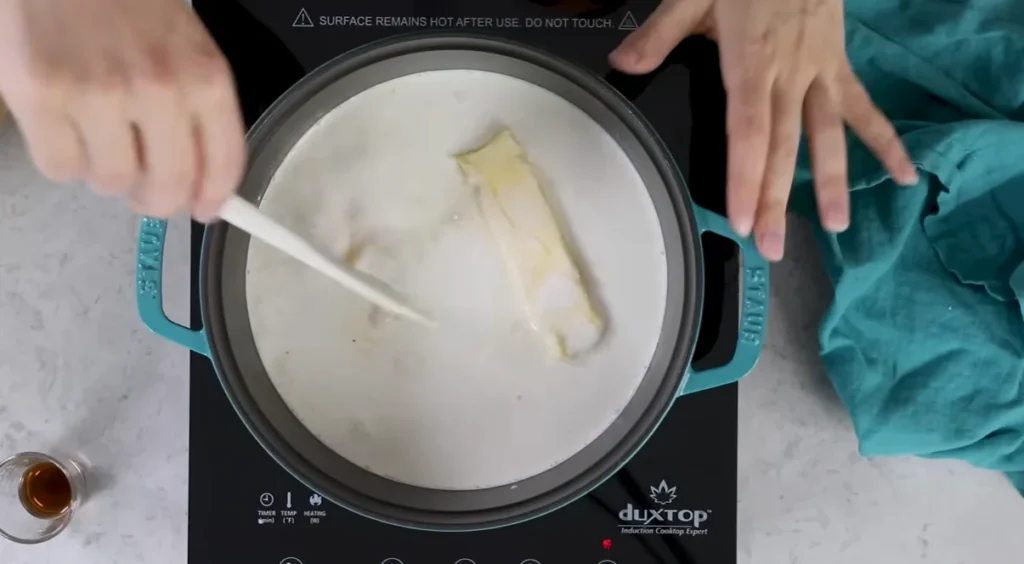
In a heavy-bottom saucepan, combine 300 grams granulated sugar, 100 grams light brown sugar, 255 grams light corn syrup, 113 grams unsalted butter, and 5–6 grams fine salt. Cook over medium heat while stirring continuously with a silicone spatula or wooden spoon until the butter has fully melted and the mixture looks smooth and evenly combined.
While the sugar mixture cooks gently, warm 354 grams evaporated milk and 360 grams heavy cream to about 40–50°C (104–122°F). Do not boil the dairy.
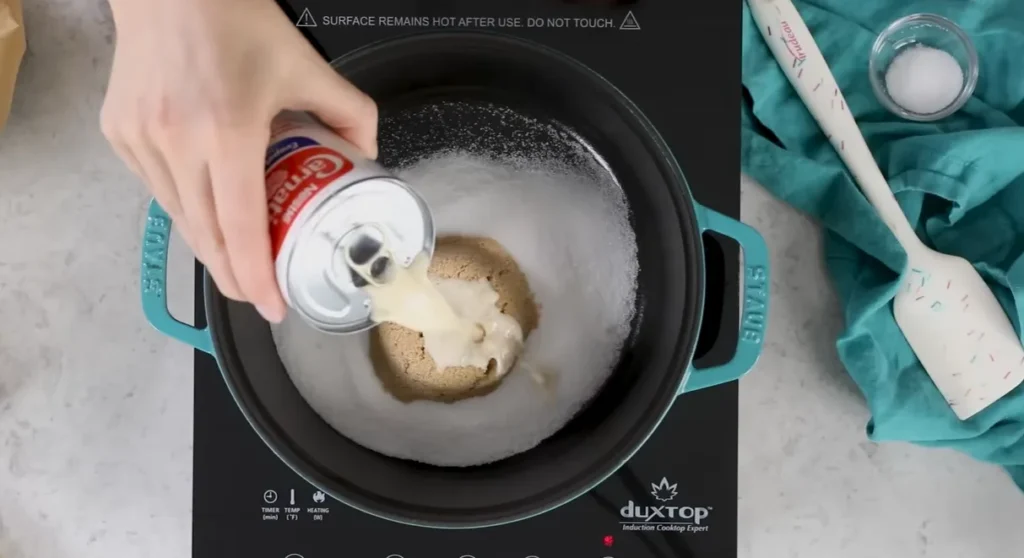
Add the warm dairy gradually in 6–8 additions, stirring continuously after each addition. The entire dairy addition process should take about 10–15 minutes.
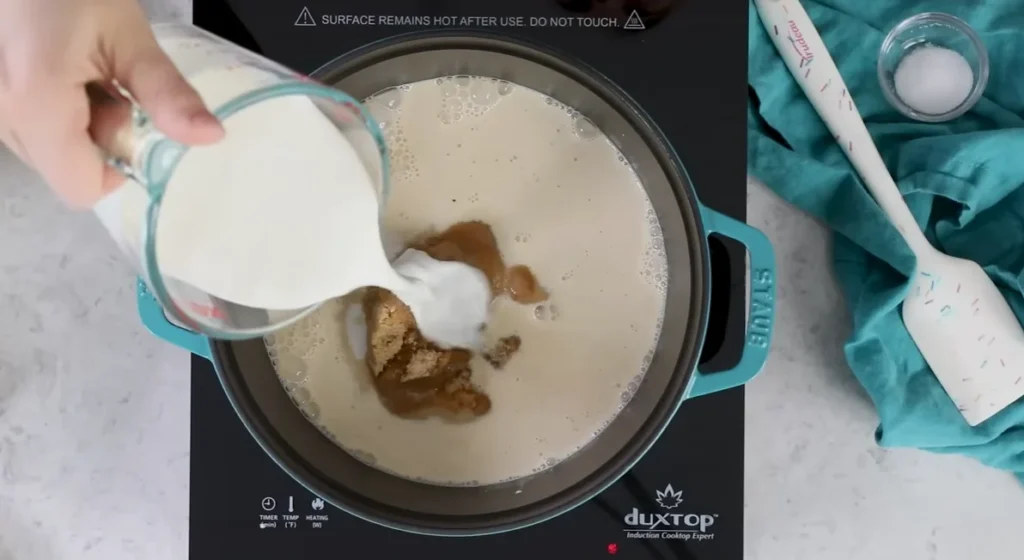
Keep the caramel bubbling steadily and allow it to return to a steady bubble if the heat drops after each addition. This gradual approach helps prevent a sudden temperature change and keeps the mixture stable while allowing the caramel to cook evenly.
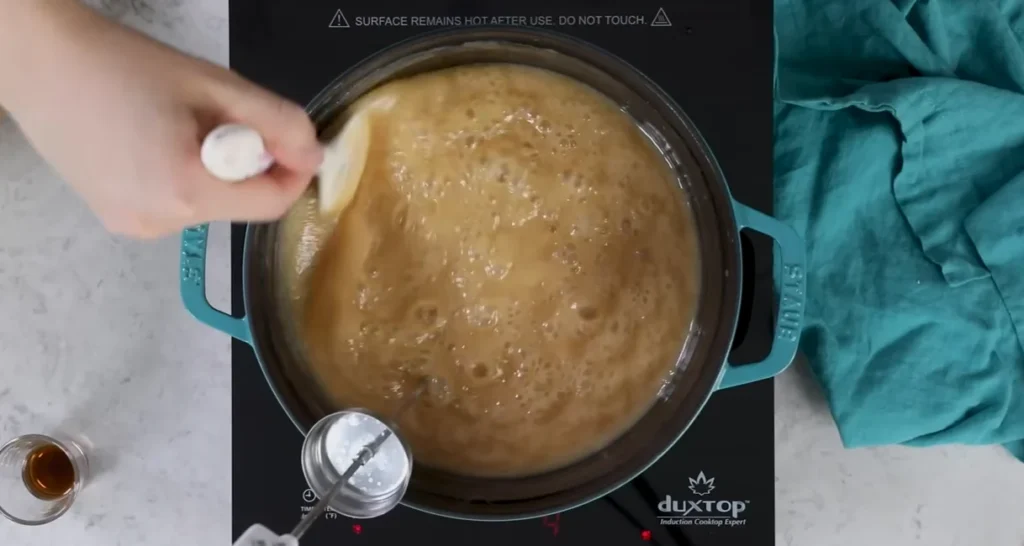
Attach the candy thermometer to the side of the saucepan, making sure the tip does not touch the bottom. Continue cooking over medium heat while stirring and scraping the bottom and corners of the pan.
The caramel will gradually become darker, thicker, and glossier as it cooks. For a soft chewy texture, cook it to 240–243°F (116–117°C), with 241°F (116°C) as the main target.
You can also use the ice-water test as a secondary check. Drop about ½ teaspoon of the hot caramel into a small bowl of cold water and ice. Let it cool, then gently shape it. It should form a firm, pliable ball without becoming brittle.
When the caramel reaches 240–243°F (116–117°C), remove the saucepan from the heat. Stir in 5 ml of vanilla extract for about 10–15 seconds.
Immediately pour the caramel into the prepared pan and gently level the surface. Avoid repeatedly stirring or aggressively spreading it because this can affect the final texture.
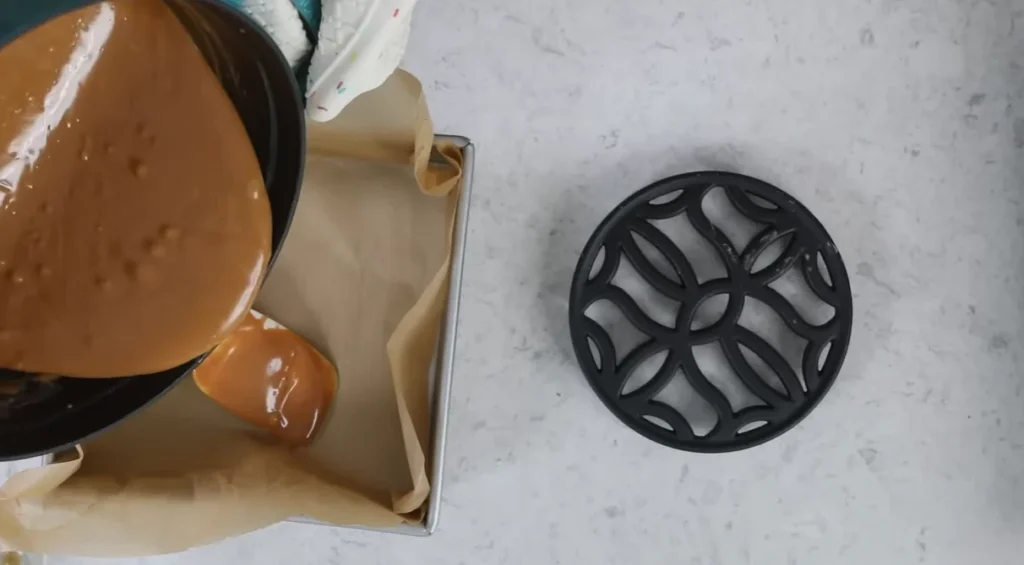
Let the caramel cool at room temperature for about 2–3 hours, then refrigerate for at least 4–6 hours. For the cleanest cuts, chilling it for 8–12 hours or overnight works best.
Once completely chilled, lift the caramel from the pan using the parchment sling. Trim the edges if needed and cut the slab into about 42 medium pieces, aiming for 18–20 grams each.
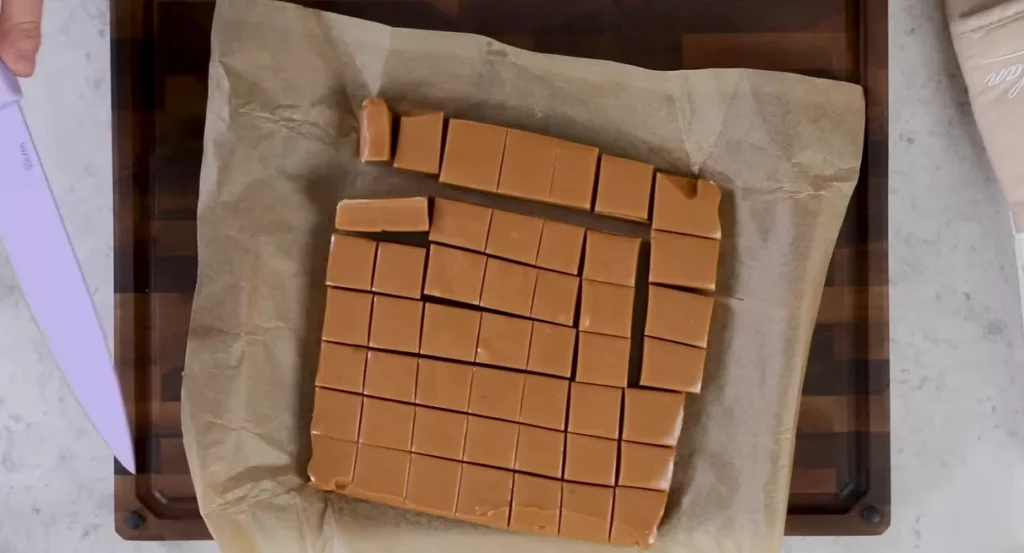
Keeping the caramel cold while cutting helps create cleaner edges. Wrap each piece individually in wax paper or cellophane wrappers, twisting the ends to secure them.
Before serving, allow the caramels to come back to room temperature so they regain their intended soft chewy texture.
Tips/Notes
The biggest key to smooth caramels is controlling the heat and adding the dairy gradually. Keep the pan over medium heat and maintain a steady boil without trying to speed up the cooking process.
Add the warm evaporated milk in small amounts while stirring continuously after each addition. This gradual process helps prevent a sharp temperature drop and keeps the mixture cooking evenly. The recipe also uses heavy cream to create a richer texture and smoother mouthfeel.
A candy thermometer is the main guide for doneness, with 241°F (116°C) as the primary target for a soft chewy caramel. The preferred cooking range is 240–243°F (116–117°C).
Because cooking conditions can be affected by altitude and humidity, an ice-water test is helpful for confirming the final texture. Drop a small amount of hot caramel into ice water, allow it to cool, then gently shape it. It should form a firm but pliable ball.
If the finished caramel is too soft, it likely needs more cooking. If it becomes too hard, it was cooked too long.
For clean cuts, let the caramel cool completely before handling it. Making it a day ahead works especially well because overnight refrigeration firms the slab and makes cutting easier.
Keep the caramel refrigerated until it is firm enough to cut, then allow the pieces to return to room temperature before serving. This brings back the soft chewy texture that makes homemade caramels enjoyable.
Storage
For storage, wrap each cooled caramel piece individually in wax paper or cellophane and place them in an airtight container.
At room temperature, the caramels are best within about:
- 2–3 weeks
Refrigerated caramels can be kept for about:
- 3–4 weeks
Individually wrapped pieces can be frozen for:
- 2–3 months
Allow refrigerated or frozen caramels to come back to room temperature before serving so they regain their intended soft and chewy texture.
Nutrition
With a batch yield of approximately 42 pieces, each caramel provides about:
- Calories: 116 kcal
- Carbohydrates: 15.2 g
- Protein: 0.8 g
- Total Fat: 5.8 g
- Saturated Fat: 3.7 g
- Sugar: 14–15 g
- Sodium: 72 mg
These values are estimates calculated from the main ingredients in the recipe, including granulated sugar, brown sugar, light corn syrup, butter, evaporated milk, and heavy cream.
The actual numbers may vary slightly depending on the brands used, the exact amount of salt and vanilla, and the final number of caramels cut from the batch.
Frequently Asked Questions
Can I dip my caramel candy in chocolate?
Yes. Once the caramel has chilled and become firm, cut it into squares of about 18–20 grams each.
Dip the pieces in melted:
- Semisweet chocolate
- Dark chocolate
- Milk chocolate
Then place them on a parchment-lined tray until the chocolate coating sets.
The caramel is firm enough to hold its shape while still keeping a soft chewy center.
Can I make caramel without a candy thermometer?
A candy thermometer is the most reliable way to know when the caramel mixture is ready.
For this recipe, aim for:
- 240–243°F (116–117°C)
with:
- 241°F (116°C)
as the main target for a soft chewy and sturdy texture.
You can also use an ice-water test to check the texture. Drop about ½ teaspoon of hot caramel into cold water with ice. Let it cool, then gently shape it.
It should form a pliable firm ball without becoming brittle.
How can I make caramel without corn syrup?
For this recipe, I recommend keeping the light corn syrup because it helps control crystallization and keeps the caramel smooth.
The formula uses:
- 255 grams light corn syrup
and reducing the amount can lead to grainy caramel.
Because of this, a corn syrup substitute is not recommended if you want the same smooth texture and consistency.
Pinterest Pins