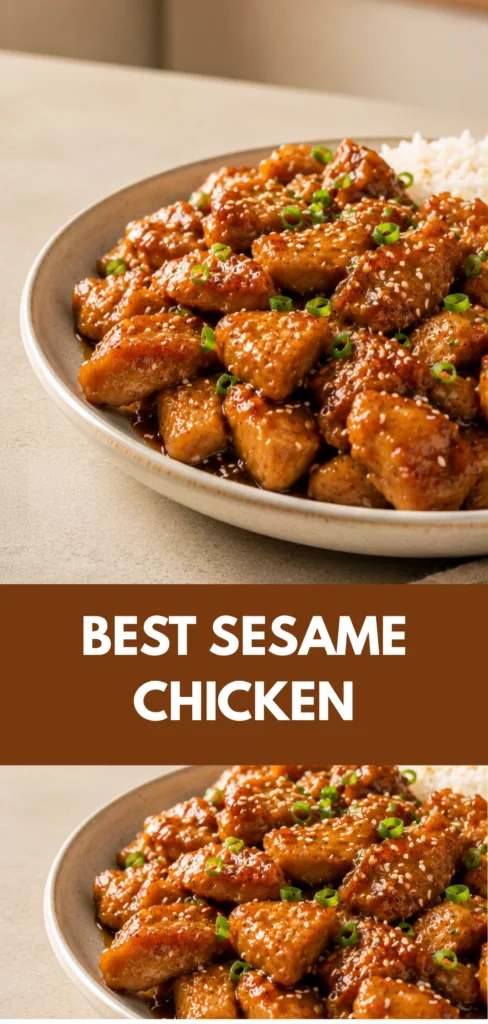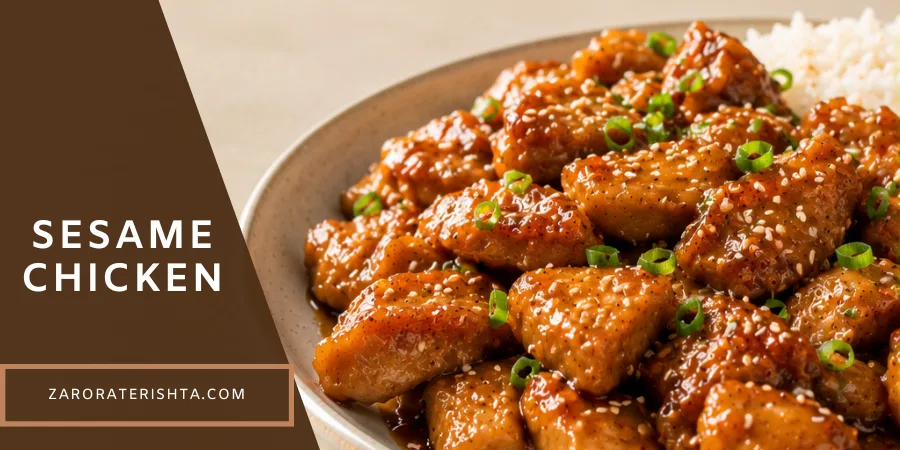
Sesame chicken is a Chinese-American favorite made with tender pieces of chicken, a lightly crisp coating, and a sweet savory glaze. This easy recipe comes together in about 30 minutes, making it a practical option for a reliable weeknight dinner.
I prefer the skillet method because it uses a controlled amount of oil instead of deep frying, keeping the cooking process simple while still giving the chicken a lightly crisp exterior. The result is a homemade version that delivers the familiar appeal of takeout-style sesame chicken without requiring a full deep-frying setup.
Sesame Chicken-The Short Answer
The chicken is cut into small pieces and coated with egg, cornstarch, and flour before being cooked in a hot pan. Cooking the pieces in two batches gives them enough space to brown properly instead of steaming. This approach helps create a lightly crisp coating while keeping the chicken tender inside, making it a useful balance for anyone who wants crispy chicken with a simpler cooking method.
The sauce brings the dish together with honey, soy sauce, brown sugar, rice vinegar, toasted sesame oil, ginger, and garlic. Honey and brown sugar provide sweetness, while rice vinegar balances the savory flavor from the soy sauce. Sesame seeds add texture and reinforce the toasted sesame flavor.
Once the sauce is simmered in the same skillet, it thickens into a glossy glaze that clings to the chicken. The result is a balanced combination of sweet, savory, tangy, and toasted flavors rather than an overly heavy sauce.
This homemade sesame chicken has the familiar comfort of restaurant-style takeout recipes while using ingredients that are easy to keep on hand. It also works well for meal prep, although the coating is best when served soon after the chicken is tossed with the sauce.
For an even crispier result, the chicken can be deep-fried, but the main method focuses on convenience, controlled oil use, and creating a flavorful honey sesame sauce with a simple skillet approach.
Ingredients
The ingredient list is built around 1½ lb (680 g) boneless, skinless chicken thighs cut into 1-inch pieces.
For the chicken coating, use:
- 2 large eggs
- 2 tablespoons (16 g) cornstarch
- ½ cup (60 g) all-purpose flour
- ½ teaspoon salt
- ¼ teaspoon black pepper
This coating combination gives the chicken a light layer that browns well in the skillet without becoming overly thick. The egg helps the coating adhere, while the cornstarch and flour create the lightly crisp exterior.
For cooking the chicken, use:
- ¼ cup (60 ml) neutral cooking oil, divided between two batches
Canola, vegetable, or avocado oil are suitable choices. Dividing the oil between batches helps maintain better contact between the chicken and the hot skillet while reducing the chance of overcrowding the pan.
For the sesame sauce, use:
- ¼ cup (60 ml) low-sodium soy sauce
- ¼ cup (60 ml) water
- 3 tablespoons (63 g) honey
- 2 tablespoons (30 g) ketchup
- 1½ tablespoons (about 19 g) packed light brown sugar
- 1 tablespoon (15 ml) rice vinegar
- 2 teaspoons (10 ml) toasted sesame oil
- 2 teaspoons (about 4 g) finely grated fresh ginger
- 2 garlic cloves, finely minced
- 2 teaspoons (about 6 g) cornstarch
These quantities create a sweet, savory, and tangy sauce with enough cornstarch to thicken it into a glossy glaze without making it overly dense. Honey and brown sugar provide sweetness, while soy sauce, vinegar, sesame oil, ginger, and garlic create the balanced flavor that defines sesame chicken.
For finishing and serving, use:
- 1 tablespoon (about 9 g) sesame seeds
- 2 green onions, thinly sliced
Serve the finished chicken with cooked jasmine rice or another rice option such as white or brown rice.
How to Make Sesame Chicken
This sesame chicken comes together with a simple skillet method that keeps the chicken lightly crisp while creating a glossy sauce that coats every piece.
Start by preparing the sauce. In a medium bowl, combine the soy sauce, water, honey, ketchup, brown sugar, rice vinegar, toasted sesame oil, fresh ginger, garlic, and cornstarch.
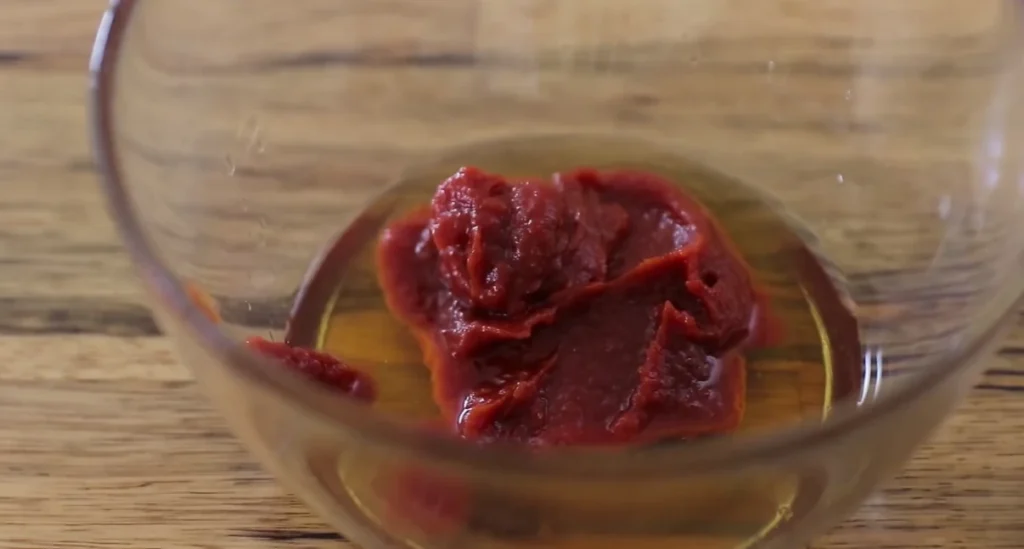
Whisk for about 30–45 seconds until the mixture is smooth and no visible cornstarch lumps remain.
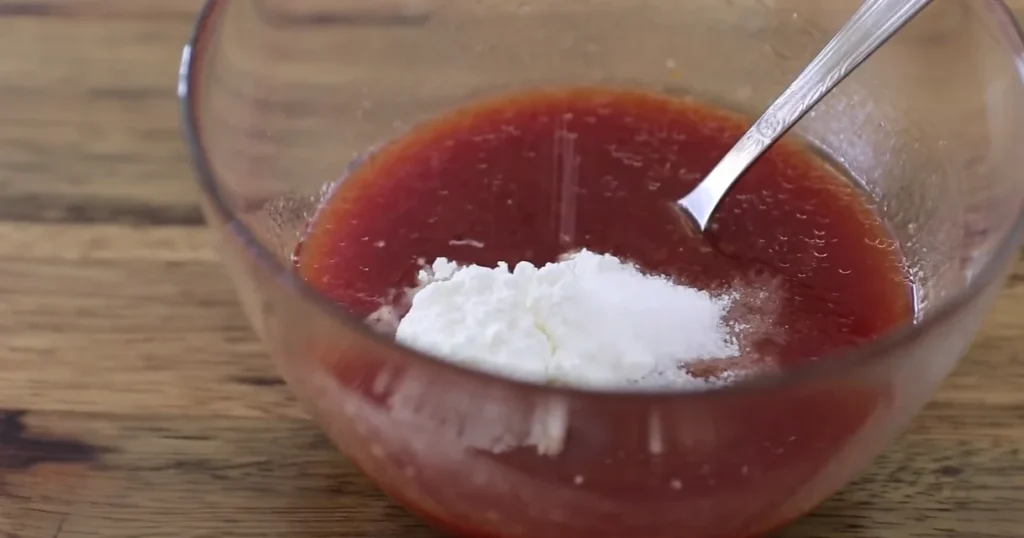
Set the sauce aside and whisk it again just before adding it to the skillet. If preparing it ahead, the sauce can be refrigerated for up to 24 hours.
Cut the chicken thighs into approximately 1-inch pieces and pat them dry with paper towels. Drying the chicken helps the coating stick better and supports better browning during skillet cooking.
In one shallow dish, whisk together the eggs, cornstarch, salt, and pepper. Place the flour in a second shallow dish.
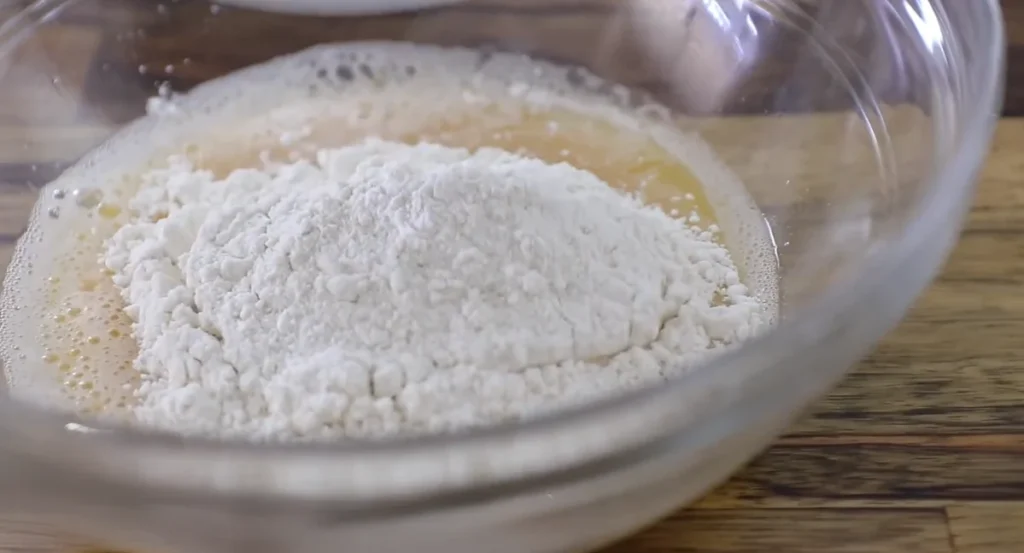
Dip each chicken piece into the egg mixture, allowing any excess coating to drip off briefly.
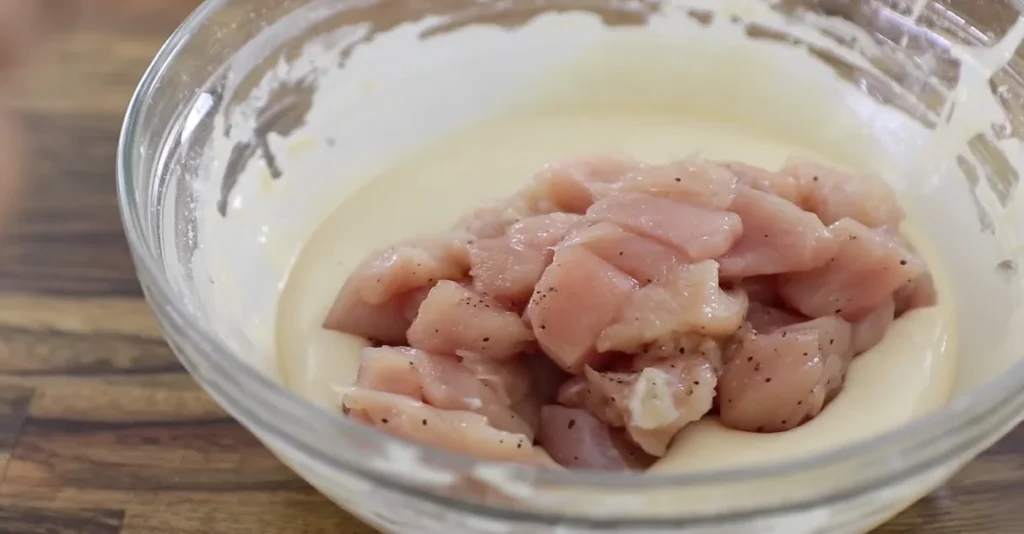
Transfer the chicken to the flour and turn gently until lightly coated. Shake off any loose flour and place the coated pieces on a clean plate or wire rack in a single layer.
Working in two batches helps prevent the skillet temperature from dropping too much and allows the chicken pieces to brown instead of steaming.
Heat 2 tablespoons (30 ml) of the cooking oil in a 12-inch skillet over medium-high heat until the oil reaches approximately 350°F (175°C).
Add half of the chicken in a single layer, leaving space between pieces when possible. Cook undisturbed for 3–4 minutes, then carefully flip the pieces and cook for another 3–4 minutes.
Turn smaller pieces as needed for even browning. The first batch should take approximately 7–9 minutes total. Transfer the cooked chicken to a wire rack.
Add the remaining 2 tablespoons (30 ml) oil to the skillet and allow it to heat back up before cooking the second batch. Adjust the heat as needed if the chicken browns too quickly.
Avoid overcrowding the pan because excess moisture can cause the coating to steam instead of brown. The chicken should reach 165°F (74°C) in the thickest piece before moving to the sauce.
After the second batch is cooked, reduce the skillet heat to medium. Whisk the prepared sauce again, then pour it into the skillet.
Bring the sauce to a gentle simmer and cook for approximately 1½–2½ minutes, stirring frequently, until it becomes glossy and thick enough to lightly coat the back of a spoon.
Return all of the cooked chicken to the skillet and gently toss for 30–60 seconds, just until every piece is evenly coated.
Keep the heat low during this final step. Avoid simmering the chicken in the sauce for several minutes because prolonged cooking can soften the coating and reduce the crisp texture.
Serve immediately with sesame seeds and sliced green onions over rice. Quinoa, chow mein noodles, and zucchini noodles are also suitable serving options.
Notes
I like to cut the chicken into 1-inch pieces because this size helps the chicken cook evenly and quickly. Keeping the pieces similar in size also makes it easier to reach the recommended internal temperature without some pieces becoming overcooked.
If the coating starts browning too quickly before the chicken is cooked through, reduce the heat slightly. When flipping the chicken, use tongs and turn the pieces gently so the coating stays attached.
The sauce can be made up to 24 hours before serving. Keep it refrigerated in a covered container and whisk it again before adding it to the skillet because the cornstarch settles as the mixture stands.
For the chicken, I prefer chicken thighs because they stay juicy and tender and are less likely to dry out during skillet cooking. Chicken breast can also be used. If using breast meat, avoid cutting the pieces larger than 1 inch and remove them from the heat as soon as they reach 165°F (74°C).
Brown sugar adds a deeper caramel-like sweetness that balances the saltiness of the soy sauce and the acidity of the rice vinegar. Honey provides a softer sweetness and also contributes to the glossy finish. Using both sweeteners gives the sauce more depth than relying on only one.
For the best flavor, use fresh ginger rather than dried ginger. Fresh ginger provides a brighter, more peppery flavor that works especially well with the honey and sesame oil. Extra fresh ginger can be stored in the freezer for convenient future use.
The nutritional information for this sesame chicken is calculated without cooked rice. If jasmine rice is served alongside the chicken, its nutritional contribution should be added separately. Green onions and sesame seeds are included in the chicken calculation.
Nutrition
For 4 servings, one serving of sesame chicken provides approximately:
- Calories: 560 kcal
- Carbohydrates: 43 g
- Protein: 39 g
- Total fat: 28 g
- Saturated fat: 6 g
- Fiber: 2 g
- Sugar: 19 g
- Sodium: 1,050 mg
- Cholesterol: 150 mg
These values are estimates based on the listed ingredients, typical boneless skinless chicken thigh nutrition, and partial absorption of the cooking oil.
Actual nutrition can vary depending on the chicken, soy sauce, ketchup, honey, oil absorption, and serving size.
When served with 1 cup cooked jasmine rice, each serving adds approximately:
- Calories: 205 kcal
- Carbohydrates: 45 g
- Protein: 4 g
- Fat: 0.5 g
This brings the complete meal to approximately:
- 765 kcal per serving
Pinterest Pins